Bill Gates: D5 Conference joint interview
On Apple and Microsoft: Rivalry, Partnership, and the Future

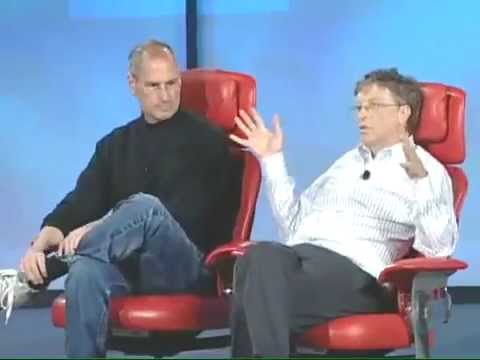
What Gates talks about
Bill Gates joined Steve Jobs for this interview at the D5: All Things Digital conference on May 30, 2007, discussing their careers, Apple and Microsoft’s rivalry, and the future of computing.
Also known as: Steve Jobs and Bill Gates Together at D5 Conference 2007; D 2007 - Steve Jobs and Bill Gates Historic Interview; Steve Jobs & Bill Gates interview 2007.
Bill Gates discusses Microsoft’s long relationship with Apple, from early Mac software work to the later decision to move past a destructive rivalry. He explains why he saw Apple as a software company and why both companies benefited when they focused on their strengths.
He also talks about the future of computing: richer client software, cloud services, phones, tablets, and specialized devices. Gates argues that the best products will combine local software responsiveness with online services rather than relying on a browser alone.
Walt Mossberg and Kara Swisher moderate, with a few audience questions and a short Microsoft representative segment.
Key points
- Microsoft’s work on the Mac helped define an important partnership between the two companies.
- Gates says Apple and Microsoft both benefited when competition stopped being zero-sum.
- He argues Apple’s success comes from treating itself as a software company.
- He believes rich client apps plus cloud services are more powerful than a browser-only model.
- He expects PCs to remain important while phones, tablets, and other specialized devices keep growing.
- He emphasizes that innovation, taste, and great teams matter as much as engineering.
Full transcript: Bill Gates, D5 Conference joint interview (2007)
Walt MossbergI have invited here today three industry experts to have a panel discussion on software.
Kara SwisherAnd now, ladies and gentlemen, the Macintosh software dating game.
Walt MossbergWelcome to the Macintosh software dating game. Software CEOs, could I please ask you to introduce yourselves? Hi. Fred Gibbons, president of Software Publishing Corporation.
Audience member / panelistHi. I'm Mitch Kapor, president of Lotus. We do a product called one two three.
Bill GatesMy name is Bill Gates. I'm chairman of Microsoft. And during 1984, Microsoft expects to get half of its revenues from Macintosh software.
Walt MossbergSoft... Software magnate number three. When when was your first date with Macintosh?
Bill GatesWe've been working with the Mac, for almost two years now, and we put some of our our really good people on it.
Walt MossbergSoftware CEO number three. Will Macintosh be the third industry standard?
Bill GatesWell, to create a new standard, it takes something that's not just a little bit different. It takes something that's really new and really captures people's imagination. And the Macintosh, of all the machines I've ever seen, is the only one that meets that standard. Software
Walt MossbergCEO number three. Describe your ideal relationship with Apple.
Bill GatesWell, we'll be selling our software independently. So the key thing is that Apple gets a lot of consistent standard machines out there quickly.
Kara SwisherWell, sorry, Steve. Time's up. We'd like to give Steve a few moments to decide today's winner. Okay, Steve. Who's the winner?
Walt MossbergApples are red. IBM's blue. If Mac's gonna be the third milestone, I need all of you.
Steve JobsNow I'd like to talk about meaningful partners. Apple lives in an ecosystem, and it needs help from other partners. It needs to help other partners. And relationships that that are destructive don't help anybody in this industry as it is today. So during the last several weeks, we have looked at some of the relationships, and one has stood out as a relationship that hasn't been going so well but had the potential, I think, to be great for both companies. The discussions actually began because there were some patent disputes. And rather than...
I know. Rather than repeating history, I'm extremely proud of both companies that they have resolved these differences in a very, very professional way. And I happen to have a special guest with me today via satellite downlink. And if we could get him up on the stage right now. Some
Bill Gatesof the most exciting work that I've done in my career has been the work that I've done, with Steve on the Macintosh. Whether it's the first introduction, or doing products like Mac Excel, these have been major milestones. We're
Microsoft representativevery excited about the new release we're building. This is called Mac Office 98. We do expect to get it out by the end
Bill Gatesof this year. I think it's going to really set a new benchmark for doing a good job with performance and exploiting unique Mac features. In many ways, it's more advanced than what we've done on the Windows platform. We're also excited about, Internet Explorer, and we've got a very dedicated team that's down in California that works on that product. And the code is really specially developed for the Macintosh. It's not just a port of what we've done in the Windows environment. We look forward to the feedback from all of you as we move forward doing more Macintosh software. Thanks. The
Steve Jobsera of of setting this up as a as a competition between Apple and Microsoft is over as far as I'm concerned. This is about getting Apple healthy, and this is about Apple being able to make incredibly great contributions to the industry to get healthy and prosper again.
Audience reaction / host promptSo thank you all for coming. I look forward to hearing the grilling in the chair tonight and in the days to follow.
Kara SwisherWell, thank you.
Walt MossbergBefore we get started, I I think, you know, there were some pioneers. Of course, we have the pioneers here on stage, but there were some other really important pioneers in the video we just saw and a couple of them are here in the audience. So Mitch Kapoor, who is a regular D, could you stand up and...
Kara SwisherWherever you are. There he is. And
Walt Mossbergand Fred Gibbons, who has not come to d before, but is here tonight. Fred.
Audience reaction / host promptThere you go. There you go.
Kara SwisherThere's Fred.
Steve JobsRight there.
Kara SwisherAnd I don't know if he is in the room, but I do want to
Walt Mossbergrecognize our fellow journalist, Brent Schlender from Fortune, who did the last, to my knowledge, the last joint interview these guys did. It was not on a stage, but it was a Fortune Magazine interview. Brent, I don't know if you're in the room. If you are, can you stand, maybe he is?
Kara SwisherWay back there.
Walt MossbergOver there.
Microsoft representativeSo
Kara Swisherlet's get started. I wanted to ask, there has been a lot of like mano, mano catfight kind of thing in a lot of the blogs and the press and stuff like that. And we wanted to the first question I currently was interested in asking is what you think each has contributed to the computer and technology industry, starting with you, Steve, for Bill and vice versa?
Steve JobsBill built the first software company in the industry. And I think he built the first software company before anybody really in our industry knew what a software company was, except for these guys. And that was huge. That was really huge. And the business model that they ended up pursuing turned out to be the one that worked really well for the industry. So I think but the biggest thing was Bill was really focused on software before almost anybody else had a clue that it was really the software. That's what I see. I mean, a lot of other things you could say, but that's the high order bit. And I think building a company is really hard and it requires your greatest persuasive abilities to hire the best people you can and keep them at your company and keep them working, doing the best work of their lives, hopefully.
And Bill has been able to stay with it for all these years.
Walt MossbergSo Bill, how about contribution Well, of Steve and
Bill Gatesfirst, I want to clarify, I'm not fake Steve Jobs. What Steve's done is quite phenomenal. If you look back to 1977, that Apple II computer, the idea that it would be a mass market machine, the bet that was made there by Apple uniquely, there were other people with products, but the idea that this could be an incredible empowering phenomena, Apple pursued that dream. Then, one of the most fun things we did there was the Macintosh. That was so risky. And people may not remember that Apple really bet the company. Lisa hadn't done that well. And, some people were saying, okay, that general approach wasn't good. But the team that Steve built, even within the company, to pursue that, Even some days, it felt a little ahead of its time.
I don't remember that Twiggy disk drive.
Steve Jobs128 ks.
Kara SwisherYes. And... The Twiggy disk drive.
Walt MossbergYes.
Bill GatesSteve gave a speech once, which is one of my favorites, where he talked about, in a certain sense, we build the products that we want to use ourselves. And so he's really pursued that with incredible taste and elegance that has had a huge impact on the industry. And his ability to always come around and figure out where that next bet should be, has been phenomenal. Apple literally was failing when Steve went back and reinfused the innovation and risk taking that have, been phenomenal. So the industry has benefited immensely, from his work. We've both been lucky to be part of it, but, I'd say he's contributed as much as anyone.
Steve JobsWe've also both been incredibly lucky to have had great partners that we started the companies with, and we've attracted great people. I mean so everything that's been done at Microsoft and at Apple has been done by just remarkable people, none of which are sitting up here today. Well,
Walt Mossbergnot us. Well, you're sort of the not us. You're sort of so you're in a way, you're the stand ins for all
Steve Jobsthose Yes. Other a way, we are in a very tangible way.
Walt MossbergSo Bill mentioned the Apple II in 1977 and thirty years ago, and there were a couple of other computers with, which were aimed at the idea that average people might be able to use them. And looking back on it, a really average, average person might not have been able to use them by today's standards, but it certainly broadened the base of who could use computers. I actually looked at an Apple ad from 1978. It was a print ad that shows you how ancient it was. And it said, thousands of people have discovered the Apple computer, thousands of people. And it also said, you don't want to buy one of these computers where you put a cartridge in. I think that was a reference to one of the Atari or something. You want a computer you can write your own programs on.
And so the world and obviously, people had some
Steve Jobsvery strange ads back then. We had one where it was in a kitchen and there was a woman that looked like the wife and she was typing in recipes on the computer with the husband looking on approvingly in the back, stuff like that.
Walt MossbergHow did that work for you? I don't think well. So, but just think back to, I know that you started Microsoft prior to 1977. You, I think Apple started the year before in 'seventy six, Microsoft in 'seventy four was 'seventy four, five. Right?
Bill GatesThen yes, then we did the ship the basic in 'seventy five.
Walt MossbergOkay. Most people, some people here, but I don't think most people know that there was actually some Microsoft software in that Apple II computer. Do you want to talk about what happened there? How that occurred? Yes. There
Bill Gateshad been the Altair and a few other companies, actually about 24 that had done various machines. But the '77 group included the PET, TRS-eighty... Commodore. Yes, Commodore PET, TRS-eighty and the Apple II. The original Apple II Basic, the Integer Basic, we had nothing to do with. But then there was a floating point one where, and I mostly worked with Woz on that. I made Let
Steve Jobsme tell this story. Woz, my partner, we started out this guy named Steve Wozniak, brilliant, brilliant guy. He writes this basic that is like the best basic on the planet. It does stuff that no other basic has ever done. You don't have to run it to find your error messages. It finds them when you type it in and stuff. It's perfect in every way except for one thing, which is it's just fixed point, right? It's not floating point. And so we're getting a lot of input that people want this basic to be floating point. And like we're begging laws, please, please make this floating point.
Walt MossbergWho is we? How many people are in Apple? Well, me.
Steve JobsWe're begging laws to make this floating point, and he just never does it. And he wrote it by hand on paper. I mean, he didn't have an assembler or anything to write it with. It was all just written on paper and he type it in. He just never got around to making a floating Why? Well, this is one of the mysteries of life. I don't know, but he never did. And Microsoft had this very popular, really good floating point basic that we ended up going to them
Walt Mossbergand saying, help. And how much was the I think you were telling us earlier.
Bill GatesThat was $31,000
Walt MossbergThat Apple paid you for
Bill Gatesthe floating point basic. And I flew out to Apple. I spent two days there getting the cassette. The cassette tapes were the main ways that people stored things at
Walt Mossbergthe time.
Bill GatesRight. And that was fun. I think the most fun is later when we worked together.
Walt MossbergBut what was the most fun? Tell the story about the most fun that was later.
Kara SwisherAnd maybe later, not the most fun.
Steve JobsLet them talk then.
Kara SwisherI'm teasing. I'm teasing.
Bill GatesWell, Steve can probably start it better. The team that was assembled there to do the Macintosh was a very committed team. And there was an equivalent team on our side that just got totally focused on this activity, Jeff Harbors, a lot of incredible people. And we really had bet our future, because we on the Macintosh being successful and then hopefully, graphics interface in general being successful. But first and foremost, the thing that would popularize that being the Macintosh. And so we were working together. The schedules were uncertain. The quality was uncertain. The price. When Steve first came up, it was going to be a lot cheaper computer than it ended up being, but that was fine.
Kara SwisherSo you worked in both places in both...
Bill GatesWell, we were in Seattle, and we But flied down Microsoft,
Walt Mossbergif I remember correctly, from what I've read, wasn't Microsoft one of the few companies that were allowed to even have a prototype of the Mac at the time?
Steve JobsWhat's interesting, what's hard to remember now is that Microsoft wasn't in the applications business then. They took a big bet on the Mac because they this is how they got into the apps business. I mean Lotus dominated the apps business on the PC back then.
Bill GatesRight. We had done just multi plan, And which was a hit on the Apple then Mitch did an incredible job betting on the IBM PC, and 123 came in and ruled that part of the business. So the question was, what was the next paradigm shift that would allow for an entry? WordPerfect, we had Word, but WordPerfect was by far the strongest in word processing, dBase and database.
Walt MossbergAnd Word was a that was a kind of a DOS, a text
Bill GatesAll of these products I'm saying were DOS based
Walt Mossbergproducts because
Bill GatesWindows wasn't in the picture at the time. That's more in the early '90s that we get to that. And so we made this bet that the parent time shift would be graphics interface, in particular, that the Macintosh would make that happen with 128 ks of memory, 22 ks of which was for the screen buffer, 14 ks was for the operating system. So it was
Walt Mossberg14 ks. Yes. 14 ks. Yes. The original Mac operating system was 14 ks.
Bill Gates14 ks that we had to have loaded when our software ran. So when the shell would come up, it had all the 128 ks.
Steve JobsThe OS was bigger than 14 ks. It was in the 20s somewhere.
Walt MossbergI see. So we
Steve Jobsship these computers now with a gigabyte, two gigabytes of memory, and nobody remembers 128 ks.
Walt MossbergI remember that. I remember paying a lot of money for computers with 100 and So 28 ks in those the two companies worked closely on Mac project because you were maybe not the only, but the principal or one of the principal software creators for it, right? Is that right?
Steve JobsWell, Apple did the Mac itself, but we got Bill and his team involved to write these applications. And we were doing a few apps ourselves. We did Mac Paint and Mac Draw and stuff like that. But, Bill and his team did some great work.
Kara SwisherNow in terms of going moving forward, when after you left and your company grew more and more strong, how did you what did you think was going to happen to Apple after sort of the disasters that occur after Steve left?
Bill GatesWell, Apple's fate hung in the balance. We continued to do Macintosh software and Excel, which Steve and I introduced together in New York City. That was kind of a fun event. That went on and did very well. But then Apple just wasn't differentiating itself well enough from, the higher volume platform.
Walt MossbergAnd Meaning Windows, right? I mean...
Bill GatesDOS Okay. And
Walt MossbergBut especially Windows in the '90s began
Bill Gatesto take off. By 1995, Windows became popular. The big debate wasn't sort of Mac versus Windows. The big debate was character mode interface versus graphics mode interface. And when the three eighty six came and we got more memory and the speed was adequate and some development tools came along, that paradigm bet on GUI paid off for everybody who'd gotten in early and said, this is the way that's going to go.
Walt MossbergAnd so... But Apple wasn't able to leverage its
Bill GatesThey weren't. After the 05/12 ks Mac was done, the product line just didn't evolve, as fast, Steve wasn't there, as it needed to. And we were actually negotiating a deal to invest and and make some commitments and things with Gil Emilio. Yeah. And... No, seriously. And we were... Don't be mean.
Kara SwisherDon't be mean to him. Him.
Bill GatesI'm sorry?
Kara SwisherJust saying the words Guilh Emilio. You can see it just
Bill GatesAnd so I was calling him up on the weekend and all this stuff. And next thing I knew, Steve called me up and said, don't worry about that negotiation with Guilh Emilio. You can just talk to me now. And I said, wow.
Steve JobsGil was a nice guy, but he had a saying. He said, Apple is like a ship with a hole in the bottom, leaking water. And my job is to get the ship pointed in the right direction.
Bill GatesOkay. So... And meanwhile,
Walt Mossbergthrough all this, I mean, I wanna get back to the thing we saw in 1997, at Macworld there, but Windows was just going great guns. I mean, Windows '95, to whatever extent, earlier versions of Windows had not had all the features, all the gooey stuff that the Mac had. Windows '95 really was an enormous, enormous leap.
Bill GatesYes. Windows '95 is when graphics interface became mainstream and when the software industry realized, wow, this is the way applications are going to be done. And it was amazing that it was ridiculed sort of in 'ninety three, mainstream. And then in 'ninety five, the debate was over. It was kind of just a common sense thing. And it was a combination of hardware and software, maturity getting to a point that people could see it. So I don't want to go
Walt Mossbergthrough every detail, the whole history of how you came back.
Steve JobsThank you.
Bill GatesYou had
Walt Mossbergbut you, in that video we all saw, you said you had decided to that it was destructive to have this Now competition with obviously, Apple was in a lot of trouble, and I presume that there was some, tactical or strategic reason for that as well as just wanting to be a nice guy. Right? I mean...
Steve JobsYou know, Apple was in in very serious trouble. And what was really clear was that if the game was a zero sum game where for Apple to win, Microsoft had to lose, then Apple was going to lose. But that's a lot of people's heads were still in that place.
Kara SwisherWhy was that from your perspective?
Steve JobsWell, lot of people's heads were in that place at Apple, and and even in the customer base because, you know, Apple had invented a lot of this stuff and Microsoft was being successful and Apple wasn't and there was jealousy and this and that. There was just a lot of reasons for it that don't matter. But the net result of it was, was there were too many people at Apple and in the Apple ecosystem playing the game of for Apple to win, Microsoft has to lose. And it was clear that you didn't have to play that game because Apple wasn't going to beat Microsoft. Apple didn't have to beat Microsoft. Apple had to remember who Apple was because it forgot who Apple was. And so to me, it was pretty essential to break that paradigm. And it was also important that Microsoft was the biggest software developer outside of Apple developing for the Mac. And so that was it was just crazy what was happening at that time.
And Apple was very weak. And so I called Bill up and we tried to patch things up.
Bill GatesYes. And since that time, we've had a team that's fairly dedicated to doing the Mac applications, and they've always been treated kind of in a unique way so that they can have a pretty special relationship with Apple. And that's worked out very well. In fact, every couple years or so, there's been something new that we've been able to do on the Mac and...
Steve JobsWe have
Bill Gatesa great... It's a great business for us. And
Steve Jobsit's actually the relationship between the Mac development team at Microsoft and Apple is a great relationship. It's one of our best developer relationships.
Kara SwisherAnd do you look at yourself as rivals now today as this landscape has evolved? And we'll talk about the Internet landscape and everything else and other companies that have come forward. But how do you look at yourselves in this landscape today?
Walt MossbergBecause you I mean, you are competitors in certain ways, which the American way. Right? The commercials. You get annoyed at each other from I time to
Kara Swisherhave to confess. I like PC guy better.
Steve JobsYeah. He's great.
Kara SwisherI like him.
Steve JobsYou know, the art of those the art of those commercials is not to be mean, but it's actually for the guys to like each other. Thanks. PC guy is PC guy is great. I like to Not a big part.
Bill GatesHis mother loves him.
Steve JobsHis mother loves him. I'm telling you. I
Kara Swisherlike PC guy totally better. Wow. I do. I am a lot. He's endearing. The other guys
Steve Jobsare guys what makes it all work, actually. Yeah. Alright. It's worth thinking about.
Kara SwisherSo how do you
look at yourselves? Let
Walt Mossbergme just ask you, Bill. You, obviously, Microsoft is a much larger company. Here in many more markets, many more types of products than Apple is. When you were running the company or when Steve Baumer is running the company, you think obviously about Google, you think about, I don't know, Linux in the enterprise, you think about lots of, I mean, Sony in the game area. How often is Apple on your radar screen at Microsoft in a business sense?
Bill GatesWell, they're on the radar screen as an opportunity. And in a few cases like the Zoom, that if you go over to that group, they think of Apple as a competitor. They love the fact that Apple has created a gigantic market, and they're going to try and come in and contribute something to that. That...
Steve JobsAnd we love them because they're all customers. I
Walt MossbergI have to tell you, I was actually told by Jay Allard, I'm serious, that because of the nature of the processor, the development platform they used to develop a lot of the software for the Xbox three sixty was Macs. And he claimed that at one point, they had, like, placed the biggest order for whatever the Mac tower was at the time of anybody, and it was Microsoft.
Bill GatesI don't know if it was the biggest. But yes, we had a... The same processor essentially that the Mac had. This is one of those great ironies is they were switching away from that processor while the Xbox three sixty was adopting it, but for good reasons, actually, in both cases because we're not in a portable application, and that was one of the things that, that processor road map didn't have. But yes, we did. It shows pragmatism, but we try and do things that way. So that was the development system for the early people getting their software ready for the introduction of Xbox three sixty.
Steve JobsAnd we never ran an ad on that. See.
Walt MossbergAdmirable restraint. That's wonderful. There were hundreds of them.
Bill GatesSteve is so known for his restraint.
Kara SwisherHow do you look at Microsoft from an Apple perspective? I mean, you compete in computers and
Steve JobsI mean, you could say
Walt Mossbergyou don't compete, you know, the era of destructive whatever that... Whatever you said in 1997, but you think you're you're consciously aware of what they're doing with with computers. You followed Vista closely, I think.
Steve JobsKnow? What's what's really interesting is, and we talked about this earlier today, if you look at the reason that the iPod exists and that Apple is in that marketplace, it's because these really great Japanese consumer electronics companies who kind of own the portable music market, for a long, long invented it and owned it, couldn't write couldn't do the appropriate software, couldn't conceive of and implement the appropriate software because an iPod is really just software. It's software in the iPod itself. It's software on the PC or the Mac and it's software in the cloud for the store. And it's in a beautiful box, but it's software. If you look at what a Mac is, it's OS X, right? It's in a beautiful box, but it's OS X. And if you look at what an iPhone will hopefully be, it's software.
And so the big secret about Apple, of course, not so big secret maybe, is that Apple views itself as a software company. And there aren't very many software companies left and Microsoft is a software company. And so we look at what they do and we think some of it's really great. We think some of it's little bit of it's competitive and most of it's not. We don't have a belief that the Mac is going to take over 80% of the PC market. We're really happy when our market share goes up a point, and we love that and we work real hard at it. But Apple is fundamentally a software company and there's not a lot of us left and Microsoft is one of
Walt MossbergBut you may be fundamentally a software company, but you've been known at least to your customers and to most journalists as the company that kind of pays a lot of attention integrating software and hardware. Microsoft has made some recent moves to be a little more like that, obviously, not in your core biggest businesses, but with Xbox and Zoom and the surface computing device we saw today is another example. These aren't markets that hold up in size to Windows or Office, but they're some of your more recent initiatives. Are the companies' approaches to this
Steve JobsAlan merging a little Kay had a great quote back in the '70s, I think. He said, people that love software want to do their own hardware.
Walt MossbergWell, Bill loves software.
Bill GatesI can resist that. The question is, are there markets where the innovation and variety you get is a net positive? The negative is that in the early stage, you really want to do the two together. So you want to do prototyping and things like that, really is one thing. And then let's take the phone market. We think we're on 140 different kinds of hardware. We think it's beneficial to us that even if we did a few ourselves, it wouldn't give us what we have through those partnerships. Likewise, if you take the robotics market, very undeveloped. We have over 140 all tiny volume robots using Microsoft software. And the creativity, building toys, security things, medical things, we love the innovation and the ecosystem that's going to grow up, who knows when, but we're patient around that, and we'll have a great asset with this robotic software platform.
So there are things like PC, phone and robot where I the Microsoft choice, is to go for the variety. It's Apple's it's great. They're for them, they do what works super well for them. And there's a few markets like Xbox three sixty, Zoom. And this year, we have two new ones, the Surface thing and this roundtable, which is the meeting room thing, where we'll actually, through subcontractors, but it's our the P and L on the risk and all that for the hardware, the design is completely a Microsoft thing.
Walt MossbergThe roundtable, is that something you've announced? Or were you just...
Bill GatesWe've shown prototypes of it. It's... That's the thing where it's got the three sixty d d
Walt Mossbergcameras and all those... It's like Cisco has something in that market and HP too, right? Or...
Bill GatesNo. HP has a very high end thing, that's a tiny bit like it. But anyway
Walt MossbergAll right. You know? Do you ever regret... Was there something you might have wanted to do differently? And maybe this all... You feel like this happened after you left Apple. Something you might have done differently that where you could have had a much bigger market share for the Mac?
Steve JobsWell, before I answer that, let me make a comment on Bill's answer there, which is it's very interesting in the consumer market and the enterprise market, are very different spaces. And in the consumer market, least, I think one can make a pretty strong case that outside of Windows, on PCs, it's hard to see other examples of the software and hardware being decoupled working super well yet. It might in the phone space over time. It might. But it's not clear. It's not clear. You can see a lot more examples of the hardware software coupling working well. And so I think this is one of the reasons we all come to work every day is because nobody knows the answer to some of these questions, and we'll find out over the coming years, maybe both will work fine or maybe they won't.
Bill GatesYes. It's good to try both approaches. In some product categories, take music players, this the solo design worked better. In the PC market, the variety of designs, at this stage has a higher share.
Walt MossbergIt has a higher share? Yes. It has a lot higher share.
Bill GatesWell, it's not that much different than music players the other way around.
Walt MossbergIs there some moment you feel like I should have done this or Apple should have done that and we could have had? Oh, stuck with this
Kara Swisheridea of these hardware software integration, and it's working very well now.
Steve JobsThere's a lot of things that happens that I am sure I could have done better when I was at Apple the first time. And a lot of things that happened after I left that I thought were wrong turns, but it doesn't matter. It really doesn't matter and you kind of got to let go of that stuff and we are where we are. So we tend to look forward. And one of the things I did when I got back to Apple ten years ago was I gave the museum to Stanford and all the papers and all the old machines and kind of cleared out the cobwebs and said, let's stop looking backwards here. It's all about what happens tomorrow. And because you can't look back and say, well, gosh, I wish I hadn't gotten fired. I wish I was there. I wish this. I wish that. It doesn't matter. And so let's go invent tomorrow rather than worrying about what happened yesterday.
Kara SwisherWe're going to talk a little bit about tomorrow, but let's talk about today, the landscape of how you see the different players in the market and how you look at what's developing now. What has surprised both of you since having been around for so long and still very active in everything? I mean, your companies are still critically key companies, but there are many, many companies that are becoming quite powerful. How do you look at the landscape at this moment and what's happening, especially in the Internet space?
Steve JobsI think it's super healthy right now. I think there's a lot of young people out there building some great companies who want to build companies, who aren't just interested in starting something and selling it to one of the big guys, but who want to build companies. And I think there's some really exciting companies getting built out there, some next generation of stuff that some of us play catch up with and some of us find ways to partner with and things like that. But there's a lot of activity out there now, wouldn't you say?
Bill GatesYes. I'd say it's a healthy period. The notion of what the new form factors look like, what natural interface can do, the ability to use the cloud, the Internet, to do part of the task in a complementary way to the local experience. There's a lot of invention that, the whole approach of start ups, the existing companies who do research, it will look back at this as one of the great periods of invention.
Steve JobsI think so, too. There's a lot of things that are risky right now, which is always a good sign. And you can see through them, you can see to the other side and go, yes, this could be huge, but there's a period of risk that nobody has ever done it before.
Kara SwisherDo have an example that would for example
Steve JobsI do, but I can't say. Okay. And so but I can say when you feel like that, that's a great thing. That's what keeps you coming to work in the morning and it tells you there is something exciting around the next corner. Okay. But... So the two of you have,
Walt Mossbergcertainly, you're you're involved every day with the Internet. You have Internet products. You have a whole slew of stuff on the Internet. You have iTunes and dot Mac and and all of that. But on another level, you're the guys who represent the rich client, the personal computer, the big operating system and all that. And there is a certain school of thought, and I'm sure it's shared by some people in the room, that this is all migrating to the cloud, and you'll need a fairly light piece of hardware that won't have to have all that investment, all the kind of stuff you guys have done throughout your careers. So as much as people might think of you as rivals, one way to think of you is the two guys...
Steve JobsThey're both dinosaurs? Were both dinosaurs.
Walt MossbergDinosaurs or whatever. I can talk about that. No. Seriously, is there in five years in five years, is the personal computer still going be the linchpin of all this stuff?
Bill GatesWell, you can say that it will be predicted that it won't be. The network computer, took us over about, what, five years ago, we disappeared. Remember the single function computer? There was somebody who said that these general purpose things are kind So a dumb that took us over. The mainstream is always under attack. The thing that people don't realize is that you're going to have rich local functionality, I mean, at least our bet, where as you get things like speech and vision, as you get more natural form factors, it's a question of using that local richness together with the richness that's elsewhere. And as you look at the device, say, that's connecting to the TV set or connecting in the car, there are lighter weight hardware Internet connections.
But when you come to the full screen rich, edit the document, create things, I think we're nowhere near where we can be on making that stronger.
Steve JobsI'll give you a concrete example. I love Google Maps, use it on my computer, in a browser. But when we were doing the iPhone, we thought wouldn't it be great to have maps on the iPhone. And so we called up Google and they had some they've done a few client apps in Java on some phones and they had an API that we worked with them
Bill Gatesa little
Steve Jobson. And we ended up writing a client app for those APIs, they would provide the back end service. And the app we were able to write since we're pretty reasonable writing apps, blows away any Google Maps client, just blows it away. Same set of data coming off the server, but the experience you have using it is unbelievable. It's way better than the computer and just in a completely different league than what they put on phones before. And that client is the result of a lot of technology on the client, that client application. So when we show it to them, they're just blown away by how good it is. And you can't do that stuff in a browser. So people are figuring out how to do more in a browser, how to get persistent state of things when you're disconnected from a browser, how do you actually run apps locally using apps written in those technologies so they can be pretty transparent whether you're connected or not.
But it's happening fairly slowly, and there's still a lot you can do with a rich client environment. At the same time, the hardware is progressing to where you can run a rich client environment on lower and lower cost devices, on lower and lower power devices. And so, there are some pretty cool things you can do with clients.
Walt MossbergSo are you okay. So you're saying rich clients still matter, but maybe I misunderstood you, but your example was about a rich client that is not a personal computer as we have thought of a personal computer.
Steve JobsWhat I'm trying to say is, I think the marriage of some really great client apps with some really great cloud services is incredibly powerful. And right now can be way more powerful than just having a browser on the client.
Kara SwisherAre talking about a software company, being a software and services company rather than a I
Steve Jobsam saying the marriage of these services plus a more sophisticated client is a very powerful marriage.
Walt MossbergBill, you're
Bill GatesArchitecturally, the question is, do you run just in the cloud and all you have down locally is the browser? And that is the same question for the phone as it is for the full screen device. There'll always be different screen sizes because these are the eight the five inches screen does not really compete with the 20 inches screen does not compete with the big living room screen. Those are, things that there'll be some type of computing behind all of those things, all connected to the Internet. But the idea that locally, you have the responsiveness of immediate interaction without the latency or bandwidth limitations that you get if you try and do it all behind, That's what leads to the right balance.
Kara SwisherWhat does that device look like in five years? What would you be your principal device? Is there one or...
Walt MossbergIs it a I think you use I could be wrong. I think you carry a tablet, Right. Which has not necessarily Yeah. Stormed the world
Bill GatesThis is like Windows 1992, I think. That is I'm un... Unrepentant on, my belief in
Walt MossbergBut to go back to Cara's point, what would you each imagine that you would carry as your principal, let's say, thing to do
Kara SwisherI mean, Jeff Hawkins showed a very lightweight all that kind of
Audience memberYeah.
Walt MossbergI don't know if you guys saw it, but Jeff Hawkins showed a Linux based, a very small I think he called it a companion to a smartphone today.
Kara SwisherA phone companion. It sounded a little naughty, frankly.
Walt MossbergIt doesn't matter you weren't there. But what would you think each would be I assume you carry a tablet PC. I don't know what brand it is. Maybe you change them up. I don't know. You obviously carry a MacBook Pro, I would guess, or a MacBook Yes.
Steve JobsWell, and an iPhone.
Walt MossbergAnd an iPhone.
Kara SwisherDo you have one? I do. Right here?
Walt MossbergYes. Well, he has when he took it out before.
Kara SwisherWhat
Walt Mossbergreally, flashed his iPhone earlier today.
Kara SwisherAnyway, go ahead. So what is your device? What's
Walt Mossbergyour device in five years that you rely on the most?
Bill GatesI don't think you'll have one device. I think you'll have a full screen device that you can carry around, and you'll do dramatically more reading off of yes. I mean I believe in the tablet form factor. I think you'll have voice. I think you'll have ink. You'll have some way of having a hardware keyboard and some settings for that. And then you'll have the device that fits in your pocket, which the whole notion of how much function should you combine in there. There's navigation computers. There's media. There's phone. Technology is letting us put more things in there. But then again, you really want to tune it so people know what they expect. So there's quite a bit of experimentation in that pocket sized device. But I think those are natural form factors, and that we'll have the evolution of the portable machine and the evolution of the phone will both be extremely high volume complementary.
That is if you own one, you're more likely to own the other.
Kara SwisherAnd then at home, you'd have a setup that they all plug into?
Bill GatesWell, home, you'll have your living room, which is your 10 foot experience, and that's connected up to the Internet. And there, you'll have gaming and entertainment. And there's a lot of experimentation in terms of what content looks like in that world. And then in your den, you'll have something a lot like you have at your desk at work. The view is that every horizontal and vertical surface will have a projector, so you can put information. Your desk can be a surface that you can sit and manipulate things.
Walt MossbergCan I please have a room in my house that doesn't have a screen and a projector in it?
Bill GatesYou bet. Thanks. The bathroom.
Kara SwisherThat's the perfect place for it, actually.
Walt MossbergSo what's your five year outlook at the devices you will carry?
Steve JobsIt's interesting. The PC has proved to be very resilient because as Bill said earlier, I mean, the death of the PC has been predicted every few years.
Walt MossbergWhen you're saying PC, you mean personal computer in general, not just Windows PCs?
Steve JobsI mean personal computer in general. And there was the age of productivity, if you will, the spreadsheets and word processors and that's kind of got the whole industry moving. And it kind of plateaued for a while and was getting a little stale. And then the Internet came along, right? And everybody needed more powerful computers to get on the Internet. Browsers came along and it was this whole Internet age that came along, access to the Internet. And then some number of years ago, you could start to see that the PC that was taken for granted, things had kind of plateaued a little bit and innovation wise, at least. And then I think this whole notion of the PC, we called it the digital hub, but you call it anything you want, sort of multimedia center of the house started to take off with digital cameras and digital camcorders and sharing things over the Internet and kind of needing a repository for all that stuff. And it was reborn again as sort of the hub of your digital life.
And you can sort of see that there's something starting again. It's not clear exactly what it is, but it will be the PC maybe used a little more tightly coupled with some back end Internet services and some things like that. And of course, PCs are going mobile in an ever greater degree. So I think the PC is going to continue. This general purpose device is going to continue to be with us and morph with us, whether it's a tablet or a notebook or a big curved desktop that you have at your house or whatever it might be. So I think that will be something that most people have, at least in this society and others maybe not, but certainly in this one. But then there's an explosion, that's starting to happen in these, what you call post PC devices, right? You call the iPod one of them. There's a lot of things that are not... You can
Walt Mossbergget into trouble for using that term. I want you to know that. What? I'm kidding. Post PC devices. Why? People write letters to the editor, they complain about it. Anyway, go ahead.
Steve JobsOkay. Well, anyway, I think there's just a category of devices that aren't as general purpose, that aren't that are really more focused on specific functions, whether they're phones or iPods or Zooms or what have you. And I think that category of devices is starting is going to continue to be very innovative, and we're going see lots of them.
Kara SwisherYou mean an example of what would that be?
Steve JobsWell, an iPod is a post PC A phone is a post PC device.
Walt MossbergIs the iPhone and are some of these other smartphones, and I know you make you believe that the iPhone is much better than these other smartphones at the moment, but is the are these things aren't they really just computers in a different form factor? I mean, when you say we're getting point where everything to
Steve Jobsis a computer in a different form factor. So what, right? So what if it's built with a computer inside it? It doesn't matter. It's what is it? How do you use it? You know, how does the consumer approach it? And and so who cares what's inside it anymore? So what are
Walt Mossbergthe core functions of the device formerly known as the cell phone, whatever we want to call it, the pocket device? What would you say the core functions? Like five years out, what are the core functions of that pocket device?
Bill GatesHow quickly all these things that have been somewhat specialized, the navigation device, the digital wallet, the phone, the camera, the video camera, how quickly those all come together, it's hard to chart out. But eventually, you'll be able to pick something that has the capability to do every one of those things. And yet, given the small size, you still won't want to edit your homework or edit a movie on the screen of that size. And so you'll have something else that lets you do the reading and editing and those things. Now if we could ever get a screen that would just roll out like a scroll, then, you might be able to have the device that did everything.
Walt MossbergYou know, in the very first D conference, we had these guys from E, Inc. Here.
Kara SwisherYeah. I'm
Walt Mossbergsure you've both talked to them. They were talking about that. That was five years ago. It's always five years out.
Bill GatesDo you do you... Yes. We can't... There's some advances in projection technology that are more likely deliberate, I think, than the flexible material guys. But it's not even on the horizon, no matter which of the two approaches
Kara SwisherMany can are follow.
Bill GatesWe have some Microsoft research people who work on that. There's a lot of investment, but it's at least in the five year time frame.
Walt MossbergYou five years from now, what's going to be on that I pocket
Steve Jobsdon't know. And the reason I don't know is because I wouldn't have thought that there would have been maps on it five years ago. But something comes along, gets really popular, people love it, get used to it, you want it on there. So people are inventing things constantly. And I think the art of it is balancing what's on there and what's not on there is the editing function. And clearly, most things you carry with you are communications devices. You want to do some entertainment with them as well, but they're primarily communications devices, and they're going to that's what they're going to be.
Kara SwisherOutside of the computing area, what are the exciting areas in the Internet space at all that you're looking at that you find that's interesting to each of your companies and in general for you? Any social networking, any kind of the wikis, those kind of things, things we've talked about in the past couple of today, essentially.
Steve JobsWe are working on some things that I can't talk about. Again. Yes. There used be Very beautiful. There used to be a saying, isn't it at Apple? Blow us though,
Audience reaction / host promptBlow when you away. Can't
Kara SwisherWow,
Steve Jobsit's There used to be a saying at Apple, isn't it funny a ship that leaks from the top? So
Audience reaction / host promptthe That's kind
Kara Swisherof like a sweater without sleeves is a vest. I don't get that.
Steve JobsThat was what they used to say about me when I was in my 20s. Okay. There's a zillion interesting things going on, on the Internet. The most interesting things to me are these incredible new services that people are bringing up.
Kara SwisherSurrounding entertainment or?
Steve JobsThere's a lot of them surrounding entertainment, but there's a lot of them that have to do with just sort of figuring out how to navigate through life a little more efficiently. And I think it's really great when you show somebody something and you don't have to convince them they have a problem that this solves. They know they have a problem. You can show them something, they go, oh my God, I need this. And I think you're going see a lot of things like that happen over the next year or two.
Walt MossbergDo you, you obviously have a very large Internet business with iTunes, and you sell a lot of stuff on the, in the Apple Store. But you were early with this idea that when you bought a computer from Apple, you had this kind of Internet service back end, and it was called. Mac. And I think a lot of people feel it. You haven't developed it very much.
Steve JobsI couldn't agree with you more, and we'll make up for lost time in the near future.
Walt MossbergAnd in your case, you obviously have huge things like Hotmail, for instance, which is, I guess, and Windows Messenger, which are both widely used and I don't even know how many users.
Kara SwisherA gazillion.
Walt MossbergHuge numbers. But on the other hand, you haven't as Steve Ballmer was talking about today, you have other people have much stronger positions in things like search and other parts of the Internet. So are you guys, because you are the personal computer companies that are best associated with that, not as nimble as some of these competitors at this point? Do you worry about not being as nimble, both of you? I mean, obviously, Microsoft is a much bigger company, but you're a big company, Steve, Apple is. Do you worry about not being as nimble as somebody sitting out there with, you know, the kind of 10 employees that you guys had in 1977?
Bill GatesWell, there's always going to be great new things that come out of other companies, and you want to be in a position to benefit from those, to have those inventions drive demand for Windows and personal computers and then some of those upstream things you want to participate in. I hope Steve mentioned we are going to participate in search, hopefully, a higher degree in the future.
Walt MossbergHe did mention that, yes.
Bill GatesThen at present. So we'll see what we can do there. A lot of the applications are more specialized, so they're not areas we'll go into. Take what can happen with education now that video is mainstream and all these tools that let you do rich interactions are very mainstream. I'm very excited about that. The idea of empowerment goes back to the very beginning of our industry. And some of those dreams that this would be used by students or that teachers could get better and learn from each other in these new ways. We've we're just at the threshold where some of those things can happen. And yes, our companies, can contribute to that. But as a whole, it's the ecosystem jumping on and building on each other where you can finally say, finally, technology did something for education.
Steve JobsSee, I look at this a little bit differently, which is we're not trying to do a lot of this stuff, because it's not what we do. We don't think one company can do everything. So you've got to partner with people that are really good at stuff. Like we're not I mean, maybe Microsoft is great at search. We're not. We're not trying to be great at search. So we partner with people that are great at search. And we don't know how to do maps on the back end. We know how to do a great the best maps client in the world, but we don't know how to do the back end. So we partner with people that know how to do the back end. And what we want to do is be that consumer's device and that consumer's experience wrapped around all this information and things we can deliver to them in a wonderful user interface, in a coherent product. And so in some cases, we have to do more work than others. In the case of iTunes, there wasn't a music delivery service that was any good and we had to do one.
So we'll do one. But in other cases, there's companies doing a way better job because we're not as good at this stuff as other people are and we love to partner with them. And so we selectively do that. And I think it's really hard for one company to do everything.
Kara SwisherLet's talk about entertainment. That's complex. You're both in the entertainment world entertainment is important to both your companies for yours music right now. And as you get into Apple TV, Microsoft has been within the Hollywood area. Where do you see that going in the era of YouTube? We've had a couple of network people here, talking about changes that are happening in Hollywood and everything else. What is happening now to entertainment delivery? And where do you all play? You'll be the delivery mechanism in one way or the other for most people.
Bill GatesWell, the big milestone is where the delivery platform is the Internet, and so you bring the richness and the interactivity. I think you can get a little bit of a glimpse of the future of TV more from looking at community type things like Xbox Live, where people are talking to each other, finding friends, watching things together, talking about those things. That, as you map that on to genres like, educational shows or sports shows or watching the Olympics or the elections, that ability to navigate becomes very, very powerful. And we're not an entertainment company. Yes, we do Halo, which is this big video game. But by and large, we're a platform. And so it's the tough software things, whether it's the speech or the ink or the deep graphics, that's where things that take ten years to get done.
The IPTV stuff, the foundation there, it took ten years to get it done. Now it's finally, coming to fruition, and we have people like, AT and T betting their company on, putting that together. So we're just at the start of having a scale, entertainment delivery vehicle, through both through PCs, unfortunately not connected up to the TV set in most cases, but, that's a point of innovation. And now things, like IPTV and Xbox that are connected up in the living room. Steve, you were today, Bill, you weren't here, but Steve showed a
Walt Mossbergnew function of Apple TV that brings YouTube directly to the TV. Is there gonna be more of that from you? Do you do you see yourself, the way Bill says, as an enabler of entertainment? Or... Well... I mean, putting aside your Disney role, but your Apple...
Steve JobsI mean, I think I think people want to enjoy their entertainment when they want it and how they want it on the device that they want it on. So ultimately, that's going to drive the entertainment companies into all sorts of different business models. And that's a good thing. I mean, if you're a content company, that's a great thing. More people wanting to enjoy your content more often in more different ways, that's why you're in business. But the transitions are hard sometimes. And the music industry, it turned out that the Internet got fast enough to download songs pretty easily. There was no legal alternatives and maybe they made some bad choices and how they reacted to that. But they're still trying to make the transition to a very different way of doing business or ways of doing business while they're under attack from piracy. And we can all highlight some of the mistakes that have been made, but still it's a tough job.
And Hollywood, I think, has watched what's happened in music, learned some things to do, some things not to do. But they're still trying to map this out. How do they make some of these transitions, some new business models, different platforms, allowing their customers way more freedom on when they want to watch stuff and how they want to watch it. And I think there's a tremendous amount of experimentation and thought going on that's going to be good, that's going to be really good
Walt Mossbergif you're a content owner. Can I ask about, the user interface of the personal computer for a minute? Vista has just come out, which is your best version of Windows, you've done, has some UI improvements in it. You're about to do yet another version of the macOS called Leopard in the fall, which, from what you've shown publicly, at least so far, some improvements. But fundamentally, these are still the kind of file icon, folder icon, drop down menu. I know I'm minimizing. There's a lot of other things. There's gadgets and widgets and all kinds of other cool things in there now. But it there you can see that it's still all built on what you started with, what Xerox did research on.
Is there a in the offing in the next four or five years, is it possible there's a new paradigm for organizing the user interface of the personal computer? Let's leave cell phones and things out for a minute, but just the personal computer, Bill.
Bill GatesOne of the things that's been anticipated for a long time is when three d comes into that interface. And there was a lot of experimentation, sites on the Internet where you'd kind of walk around and meet people. But in fact, the richness, the speed, it just didn't sustain itself. Now we're starting to see with some of the mapping stuff, a few of the sites that the quality of that graphics, the tools and things are getting to the point where three d can really come in. So I definitely say that when you go to a store, bookstore, you'll be able to see the books lined up the way you might be interested in or lined up the way they are in the real store. So three d is a way of organizing things, particularly as we're getting much more, media information on the computer, a lot more choices, a lot more navigation than we've ever had before. And we can take that into this communications world where the PC is playing a much more central role, kind of taking over what was the PBX, sort of one of the last mainframes in the business environment.
That will be a big change, that will come to it. And as we get natural input, that will cause a change
Walt Mossbergto And what about this multi touch stuff? It's really interesting. Obviously, Steve showed some of it on the iPhone when he introduced the iPhone. Steve Ballmer today showed a bunch of it with the surface computing device. It happens, although it's not part of our program, that HP, which is a sponsor of this conference, has a multi touch sort of display, over here, out in the foyer. Is this will this make its way So minority report,
Kara Swisherthis kind of thing.
Walt MossbergYes. Will this make its way into... Maybe you call it direct manipulation of objects with your hands and your fingers. Will this make its way into mainstream, let's say, laptop computers as a new UI or an additional part of the UI? Or is that just
Bill Gatesa... Well, but go beyond the
Walt Mossberglaptop.... Specialized devices.
Bill GatesSoftware is doing vision. And so imagine a game machine where you just can pick up the bat and swing it or the tennis racket and swing it. We have one
Kara Swisherof those. We.
Bill GatesNo. No. That's Well, that's we not it. You can't pick up your tennis Oh, your
Walt Mossbergtennis racket. And swing it.
Bill GatesYou can't sit there with your friends and do those natural things. That's a three d positional device. This is video recognition. This is a camera seeing what's going on. And in a meeting, like you're on a video conference, you don't know who's speaking, when they're audio only, things like that. The camera will be ubiquitous. Now of course, we have to design the way that people's expectations about privacy are handled appropriately. But software can do vision, and it can do it very, very inexpensively. And that means this stuff becomes pervasive. You don't just talk about it being in a laptop device. You talk about it being part of the meeting room or the living room or... But on the laptop, the way that... And maybe I'm wrong maybe this is what we
Walt Mossberghave is great, and we don't need any new big radical change. But when I turn on my laptop, whether it's my Vista laptop or my Mac laptop, it's kind there have been improvements, but it's a lot like it was 10 ago. It's much better. The graphics are better and all that.
Kara SwisherAnd you talked about that radical change.
Walt MossbergYou have the mouse.
Kara SwisherFor both your companies.
Walt MossbergYou have the icons you move around. You have the I mean and you talked about what a big gamble it was in 'eighty four to do that and then follow on with with Windows. We still essentially have that approach. And I'm just wondering, is that gonna change?
Bill GatesTouch, ink, speech, vision, those things come in, but they don't come in as a radical substitute. I think you're also underestimating the degree of evolution, because you've lived with it year by year. Say we'd sent you away for ten years and you came back and you said, wow, there's a search paradigm, and that's more at the center of how you find these things. There's tagging, that's more at the center of how you find these things. There's the evolution is a very good thing. In fact, even in that evolution, the stuff we did with Office, you there's this balance you strike where when you make a change, in that case, the Ribbon, you're going to have some users who feel like, oh, geez, I have to spend a little bit time to be brought along, to that. As but there has been good evolution. But these natural interface things are the revolutionary change, and they'll be very revolutionary.
That, together with the three d that I talked about.
Kara SwisherAnd Steve? I know you're working on something. It's going to be beautiful. We'll see it
Audience reaction / host promptsoon.
Walt MossbergYes. You you can't talk about it.
Steve JobsBut the,
Walt MossbergBill discusses all his secret plans. You don't discuss any
Steve Jobsof I know. It's not fair, but it's, I think the question of... The question is a very simple one, which is how much of the really revolutionary things people are going to do in the next five years are done on the PCs or how much of it is really focused on the post PC devices? And there's a real temptation to focus it on the post PC devices because it's a clean slate and because, there are more focused devices and because they don't have the legacy of these zillions of apps that have to run-in zillions of markets. And so I think there's going to be tremendous revolution in the experiences of the post PC devices. And the question is how much to do in the PCs. I think I'm sure Microsoft is we're working on some really cool stuff.
But some of it has to be tempered a little bit because you do have these tens of millions in our case or hundreds of millions in Bill's case users that are familiar with something that they don't want a car with six wheels. They like a car with four wheels. They don't want to drive with a joystick. They like the steering wheel. And so you have to as Bill was saying, in some cases, have to augment what exists there. And in some cases, you can replace things. But I think the radical rethinking of things is going to happen in a lot of these post PC devices.
Kara SwisherCan I? I'm going to ask you a more personal question. You... We have just a minute before we're going open up for questions. What's the greatest... I'm not going to call this the Barbara Walters moment and ask you what tree you'd like to be. But,
Walt Mossbergwhat's You would love to be Barbara Walters. Let me just tell
Kara SwisherNo. I would not. What's the greatest misunderstanding Dang. Dang. Right. But thank you, Steve, about your relationship? I mean, you're obviously gonna go down in history's History books already set kind of thing. But what's the greatest misunderstanding between your... And your relationship and about each other? What would you say would be this idea of catfight, this idea of... What what... Which one of the many?
Steve JobsWe've kept our marriage secret for over a decade now.
Kara SwisherCanada. That trip to Canada. Mhmm.
Audience reaction / host promptWas there... I don't think either of
Bill Gatesus have anything to complain about, in general. And I know that the projects, like the Mac project, was just an incredible thing, a fun thing, where we were taking a risk. We did look a lot younger in that video.
Steve JobsWe did.
Audience reaction / host promptYou looked 12 in the first one.
Bill GatesThat's how I try and look. I was 12. No, it's been fun to work together. I actually kind of miss some of the people aren't around anymore. People come and go in this industry. It's nice when somebody sticks around and they have some context of all the things that have worked and not worked. And the industry gets all work all crazy about some new thing. You know, like the there's always this paradigm of the company that successful is going to go away and stuff like that. It's nice to have people seeing the waves and waves of that and yet been willing, counted, to take the risk to bring in something new.
Walt MossbergHas it been important... One last question, and then we'll go to the audience.
Kara SwisherOh, no. He didn't answer us because he just said...
Steve JobsI haven't answered
Walt Mossbergyour He only
Kara Swishertalked about his secret gay marriage.
Walt MossbergI thought that was your answer.
Steve JobsNo, wasn't my answer. You know, When Bill and I first met each other and worked together in the early days, generally, we were both the youngest guys in the room, right, individually or together. I'm about six months older than he is, but roughly the same age. And now when we are working at our respective companies, I don't know about you, but I am the oldest guy in the room most of the time. And that's why I love being here.
Walt MossbergHappy to oblige. Happy to oblige. And
Steve JobsI think of most things in life as either a Bob Dylan or a Beatles song. But there is that one line in that one Beatles song, you and I have memories longer than the road that stretches out ahead, and that's that's clearly true here.
Kara SwisherOh, it's crazy.
Walt MossbergWell, you know what? I think we should end it there. Let's just end it there.
Audience reaction / host promptI'm gonna
Kara Swisherhave a little tear right here. Thank
Walt Mossbergyou. Thank you very much.
Kara SwisherThank you so much.
Audience reaction / host promptSure. Thank you.
Kara SwisherYou. You. We're gonna ask
Audience reaction / host promptyou questions. You're gonna sit down?
Kara SwisherSit down.
Oh, standing o. Thanks. Have you ever had a standing o? No. I don't know. To spoil it. No.
Walt MossbergSo,
Kara Swishersome audience questions. Questions.
Steve JobsCan we
Walt Mossberghave the lights?
Speaker 11Roger Matte from Elevation Partners. Hey, guys, that was incredible. Thank you very much. We've got a big election coming up next year. I'm curious if there are any issues that you see in Silicon Valley, that we all ought to be focused on communicating effectively to the next potential President of The United States. That is any common ground that we share because it's weird. You don't actually hear any issues that people are talking about right now. I'm curious if you guys have any in mind.
Bill GatesWell, certainly, education is one that I'd put at the top of the list.
Speaker 11The Are there technological solutions right now that they could do something about? Or is that just sort of like the...
Bill GatesNo. The technology is going to be helpful and more and more. But the way that teachers are measured and made excellent, the way that the high schools are designed, the expectations they have, it's not just a pure technology thing. It's more an institutional practice, where the opportunity is. And there should be a lot of debate about the different ways of doing that.
Steve JobsSteve? Boy, we've got some pretty big problems. And I think most of them are much bigger than anything Silicon Valley can contribute right now to solve. So hopefully, some of those will get solved. I also think we underestimate how much all of our industry depends on stability. We have enjoyed a long period of stability, and we have been able to focus on technology and growing our businesses and stuff. And I think we take that for granted sometimes. One of the more interesting areas that we all suffer from, of course, is in the area of energy dependence. And there is a lot of work going on, I know, a lot of investing going on anyway. I don't know if the results are there, but a lot of investing going on in alternative energy and maybe Silicon Valley can play a small role in some of that stuff.
Kara SwisherAre you guys investing in that area personally or?
Bill GatesSome.
Kara SwisherWhich might be a lot. Exactly.
Bill Gates1,000,000,000 here or there.
Walt MossbergAre you investing in that area?
Kara SwisherNo. Or just a Prius.
Steve JobsYes. Just appreciating it. Over
Speaker 12there. Hi. Don Echlin, Sony Pictures. My question is really, at what point is there too much diversity? It was talked about a few times in the discussion, the fact that now microprocessors are very low cost, memory is low cost, software is ubiquitous. But my life has been made better by standards like coding standards, network standards. And it seems like we're reaching a point where diversity is starting to take hold to a point where we're not going to be able to have the kinds of convergence devices that I think everyone would really be able to appreciate. And I'm wondering, is this going to be like health care or mass transit where you just can never put it back in the bottle again? And I'd like to get your perspective on that.
If there's still an opportunity to have some grand convergence devices that can really simplify people's lives and enrich their lives. Steve?
Steve JobsWell, I think Bill and I would agree that we can get it down to two. No, I think there's it's hard to limit imagination and innovation. I think there's always going to be a bunch of new great things. But and I think that's part of what we put up with to get the innovation. We put up a little bit of aggravation to get the innovation.
Bill GatesAnd I think the marketplace is awfully good at allowing diversity when it should and then getting rid of it when it shouldn't. I mean
Steve JobsAnd then letting it come back sometimes.
Bill GatesWell, not... Yeah. And instead? I mean in terms of standards and things. You know, there's a... The Internet standards have been incredibly powerful, you know, video formats, things like this. And so I don't see things that are going to really hold back a convergence device. Sure, there's a lot of wireless approaches, but that's pretty healthy right now. They each have various merits. A few of them will end up overlapping the other ones and kill the other ones out. But I think the industry has done very well at, latching on to standards for the things that there were no longer any innovation in and then focusing on the places where the it wasn't clear which approach was best.
Walt MossbergJesse?
Audience memberI'm Jesse Kornbluth, headbutler.com. Because you're not the youngest guys in the room anymore, it's perhaps appropriate to ask you a question about legacy, each of you. Bill, even your harshest critic would have to admit that your philanthropy work is planet shaking, incredible, and could be, if you make it a second act so amazing that it would dwarf what you've actually done at Microsoft. But if you had to choose a legacy, what would it be? And Steve, do you look at Bill and you think, gee, that guy is so lucky he had a company so rich with talent that he didn't have to personally come in every day and save it?
I wish I had the opportunity.
Kara SwisherOkay. He's not going to answer that one.
Walt MossbergWell,
Bill Gatesthe most important work I got a chance to be involved in, no matter what I do, is the personal computer. That's what I grew up in my teens, my 20s, my 30s. I even knew not to get married because I was so until later because I was so obsessed with it. That's my life's work. And I it's lucky for me that some of the skills and resources, but I put skills first, that I was able to develop through those experiences can be applied to the benefit of the people who haven't had technology, including, medicine, working for them. So it's an incredible blessing to have two things like that. But the thing that I'll my if you look inside my brain, it's filled with software and the magic of software and a bleep in software, and that's not going to
Kara Swisherchange. Okay.
Walt MossbergYou have any?
Steve JobsSo your question was about whether I wish I didn't have to go into Apple every day?
Audience memberIf you envy Bill a bit, the second act that he has...
Steve JobsOh, no. Think it's I think the world... Don't
Kara Swisherknow if anything else.
Steve JobsI think the world's a better place because Bill realized that his goal isn't to be the richest guy in the cemetery, right? That's a good thing. And so he's doing a lot of good with the money that he made. You know, I'm I'm sure Bill was was like me in this way. I mean, I I grew up fairly middle class, lower middle class, and and and I never really cared much about money. And Apple was so successful early on in life that I was very lucky that I didn't have to care about money then. And so I've been able to focus on work and then later on my family. And I sort of look at us as two of the luckiest guys in the planet because we found what we loved to do and we were at the right place at the right time.
And we've gotten to go to work every day with super bright people for thirty years and do what we love doing. And so, it's hard to be happier than that. Your family and that, what more can you ask for? And so I don't think about legacy much. I just think about being
Walt Mossbergable
Steve Jobsto get up every day and go in and hang around these great people and hopefully create something that other people will love as much as we do. And if we can do that, that's great.
Speaker 13Thanks, Steve and Bill. Rob Kelly. I'm here with my business partner. We've got a 100 person Internet media business. I'm wondering what would be the single most valuable piece of advice you'd give us to even attempt to create some of the value that you guys have done in both your very impressive companies?
Bill GatesWell, I think actually, maybe in both cases, correct me if I'm wrong, the excitement wasn't really seen the economic value. Even when we wrote down at Microsoft in 1975, a computer on every desk and every home, we didn't realize, oh, we'll have to be a big company. Every time, I thought, oh, god, can we double in size? Jeez, can you manage that many people? Will that feel fun still? And so every doubling was like, okay, this is the last one. And so the economic thing wasn't for at the forefront. The idea of being at the forefront and seeing new things and things we wanted to do and bringing in being able to bring in different people who are fun to work with eventually with a pretty broad set of skills.
And figuring out how to get those people, those broad skills to work well together has been one of the greatest challenges. I've made more of my mistakes in that area maybe than any anywhere, but eventually getting some of those teams to work very well together. So it's I think it's a lot about the people and the passion, and it's amazing that the business worked out the way that it did.
Steve JobsYes. People say you have to have a lot of passion for what you're doing, and it's totally true. And the reason is, is because it's so hard that if you don't, any rational person would give up. It's really hard. And you have to do it over a sustained period of time. So if you don't love it, if you're not having fun doing it, you don't really love it, you're going give up. And that's what happens to most people actually. If you really look at the ones that ended up being successful in the eyes of society and the ones that didn't, oftentimes, it's the ones that are successful loved what they did so they could persevere when it got really tough. And the ones that didn't love it quit because they're sane, right? Who would want to put up with this stuff if you don't love it? So it's a lot of hard work and it's a lot of worrying constantly.
And if you don't love it, you're going to fail. So you got to love it, you got to have passion. And I think that's the high order bit. The second thing is you've got to be a really good talent scout, because no matter how smart you are, you need a team of great people. And you've got to figure out how to size people up fairly quickly, make decisions without knowing people too well and hire them and see how you do and refine your intuition and be able to help build an organization that can eventually just build itself, because you need great people around
Speaker 13you. Liz?
Microsoft representativeLiz Beyer, a question, I guess, it's historical curiosity. You approach the same opportunity so very differently. What did you learn about running your own business that you wish you had thought of sooner or thought of first by watching the other guy?
Bill GatesWell, I'd give a lot to have Steve's taste. He has natural not a I joke think in terms of intuitive taste, both for people and products. We sat in Mac product reviews where there were questions about software choices, how things would be done that I viewed as an engineering question. And that's just how my mind works. And I'd see Steve make the decision based on a sense of people and product that is even hard for me to explain. The way he does things, it's just different. I think it's magical. And in that case, wow.
Steve JobsYou know, Because Woz and I started the company based on doing the whole banana, we weren't so good at partnering with people. And actually, the funny thing is Microsoft is one of the few companies we were able to partner with that actually worked for both companies. And we weren't so good at that as where Bill and Microsoft were really good at it because they didn't make the whole thing in the early days. And they learned how to partner with people really well. And I think if Apple could have had that, a little more of that in its DNA, it would have served it extremely well. And I don't think Apple learned that until several a few decades later.
Walt MossbergLast question. Oh, is there... It's over here. I'm sorry. Over here.
Audience member / panelistYes. Hi. Charlie Brenner from Fidelity Investments. In our financial services industry, we are focusing very strongly on aging and retiring baby boomers, a huge demographic.
Steve JobsWe're not that old.
Audience member / panelistNo, I wasn't the question is different from what it sounds like it's going to But most of the innovation that we see coming from computer and Internet companies is kind of youth oriented. And I'm just wondering if there are activities going on in your companies acknowledging what's going to be happening generationally.
Steve JobsNot true. I'll give you one example. So we started building in video cameras into almost all our computers a few years ago. And the response, by people of all ages, but in particular seniors has been off the charts because they're buying these things now and they're buying them for their grand their grandkids, their sons and daughters with their grandkids. So they can stay in touch with their grandkids and they're video conferencing more than than younger people are. And it's it's incredible what this has done. So that's just one simple example. But there's like dozens of them that have clicked with seniors that are living independently that want to stay in touch with extended families and do other things like that.
Bill GatesYes. I think that it's a very good point when you look at the size of the market. And that's partly why it's great that there are all these companies, out there who can see, okay, what would you do for seniors? I think natural user interface is particularly applicable here because the keyboard, we're sort of warped in that we grew up using the keyboard, and so it's extremely natural to us. But things like and that's partly why when we showed the Surface computer, I showed it privately to a bunch of CEOs a couple of weeks ago. I was kind of stunned by how blown away they were. But their ease of navigation is just not the same. And when they saw that, the idea that they could organize their photo album to it meant more to them than it did to me.
Steve JobsI'll give you another example. We've got a little shy of 200 retail stores now. And one of the things the stores are doing is personal training now. It's called one to one. And we are up to now a run rate of 1,000,000 personal training sessions. They last an hour per year, 1,000,000 per year. You only started a little while ago, right? Yes. We started about a year ago. And we're up to 1,000,000 training sessions a year run right now. And a lot of those folks, some of them anyway, many of them are seniors. And they're coming in and they're spending an hour learning how to use Office and they're spending an hour learning how to videoconference. And they can basically come in as much as they want and they can schedule these things throughout a year and they pay $99 I think a year for it. And, it's been great.
Walt MossbergNow the last question over there.
Audience member / panelistWe all share a common science fiction experience of, you know, the metaverse or the matrix where we all could communicate without being in the same place. And by the way, thank you both for providing us the best platform so far to go to chat rooms or to all go to a MySpace. It's a far cry from these things that we see on Star Trek at the holodeck. What kinds of things can you imagine that are partway there that could be much better than the three window eye chat that we might see in the next five or ten years?
Bill GatesWell, I don't think Steve is going to announce his transporter.
Steve JobsI want Star Trek. Just give me Star Trek.
Bill GatesNo. I think short of the transporter, most things you see in science fiction, are, in the next decade, the kinds of things you'll see, the virtual presence, the virtual world
Kara Swisherthat
Bill Gatesboth represents what's going on in the real world and represents whatever people are interested in, this movement in space is a way of interacting with the machine. I think the deep investments that have been made at the research level will pay off with these things in the next ten years.
Steve JobsSteve? I don't know. And that's what makes it exciting to go into work every day because there's as we talked about earlier, this is an extraordinarily exciting time in the industry and lots of new stuff happening. So I can't even begin to think of what it's going to be like ten years from now.
Walt MossbergThank you so much.
Kara SwisherThank you much.
Transcribed from the audio by speech recognition (Deepgram); speaker labels are automatic. Timestamps link to the video above. Errors are possible.
Cite this recording
Bill Gates, “D5 Conference joint interview (2007)”, D5: All Things Digital, May 30, 2007. Transcript and video: Thinkers Archive, https://thinkersarchive.com/bill-gates/apple-and-microsoft-d5-conference-2007/
Quoting a passage? Link to its exact moment: every timestamp above has its own anchor (for example https://thinkersarchive.com/bill-gates/apple-and-microsoft-d5-conference-2007/#t-52).