Bill Gates on Technology & the Future
Bill Gates sees the future of technology as a shift from standalone PCs to connected devices, cloud services, and AI systems that can expand human capability but also demand serious governance.
- Technology gets most powerful when software, devices, and services work together, not in isolation.
- Gates consistently bets on broader access: PCs, the Internet, learning tools, health tools, and eventually AI.
- He thinks AI will improve fast enough to reshape work, education, healthcare, and the economy itself.
- He also thinks AI is different from past tech waves because its misuse and labor risks are immediate and severe.
- For Gates, optimism only makes sense when innovation is aimed at real human needs and shared widely.
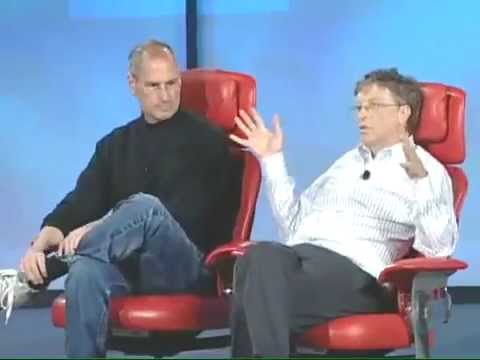
“The most important work I got a chance to be involved in, no matter what I do, is the personal computer. That's what I grew up in my teens, my 20s, my 30s. I even knew not to get married because I was so, until later, because I was so obsessed with it. That's my life's work. And I, it's lucky for me that some of the skills and resources, but I put skills first, that I was able to develop through those experiences can be applied to the benefit of the people who haven't had technology, including, medicine, working for them. So it's an incredible blessing to have two things like that. But the thing that I'll, my, if you look inside my brain, it's filled with software and the magic of software and a bleep in software, and that's not going to…”D5 Conference interview, 2007 · 1:16:57
The big pattern: from personal computers to universal digital tools
Gates’s long-run view starts with a simple conviction: computing would move from a niche activity to something broadly useful in everyday life. He describes the personal computer as the defining project of his life and treats software as the engine that turns raw hardware progress into something people can actually use.12
Even in the mid-1990s, he framed the Internet as a new medium for publishing, communication, and discovery, not just a technical network. That fit his broader belief that computing becomes transformative when ordinary people can access information, connect with others, and find tools that match their needs.3
This helps explain why Gates often talks less about gadgets in isolation and more about platforms that spread capability widely. Access, usability, and scale matter because they turn technology from a product for a few into infrastructure for many.21
“The most important work I got a chance to be involved in, no matter what I do, is the personal computer. That's what I grew up in my teens, my 20s, my 30s. I even knew not to get married because I was so, until later, because I was so obsessed with it. That's my life's work. And I, it's lucky for me that some of the skills and resources, but I put skills first, that I was able to develop through those experiences can be applied to the benefit of the people who haven't had technology, including, medicine, working for them. So it's an incredible blessing to have two things like that. But the thing that I'll, my, if you look inside my brain, it's filled with software and the magic of software and a bleep in software, and that's not going to…”D5 Conference interview, 2007 · full transcript →
The future is connected experiences, not just better hardware
By the mid-2000s, Gates’s view of the future had shifted from faster machines to connected systems. Better devices still mattered, but he argued that hardware alone could not deliver the next leap; the missing piece was linking devices, content, and services so people could move smoothly across home, work, and mobile settings.45
That is why he favored an architecture that combines rich local software with Internet-based services instead of pushing everything into the browser. His reasoning was practical: local computing gives responsiveness and avoids the latency and bandwidth limits of a cloud-only approach, while network services add sync, reach, and continuity.6
He also expected a world of multiple device types rather than one winner. Phones, tablets, larger screens, and room-based systems each serve different contexts, and the goal is to make them work together instead of forcing a single form factor to do everything.76
Software keeps expanding into the physical world
Gates does not treat software as confined to the desktop. He repeatedly points toward speech, robotics, vision, and ambient computing as the next places where software becomes decisive, especially in medicine, education, and everyday assistance.82
That includes devices with cameras and sensors embedded into ordinary environments, such as meeting rooms and living rooms. In his view, once software can see and interpret what is happening cheaply and reliably, computing becomes pervasive rather than something you only use at a keyboard.9
This is one reason Gates often sounds more interested in capability than in a single product category. The deeper trend is that software keeps colonizing new tasks, new settings, and eventually new forms of physical work.8910
“This is video recognition. This is a camera seeing what's going on. And in a meeting, like you're on a video conference, you don't know who's speaking, when they're audio only, things like that. The camera will be ubiquitous. Now of course, we have to design the way that people's expectations about privacy are handled appropriately. But software can do vision, and it can do it very, very inexpensively. And that means this stuff becomes pervasive. You don't just talk about it being in a laptop device. You talk about it being part of the meeting room or the living room…”D5 Conference interview, 2007 · full transcript →
AI is the next great abundance technology
Gates sees AI as a breakthrough on the scale of the PC and Internet, but with faster consequences. He expects major gains in reasoning, reliability, multimodality, and personalization, and he believes these gains will turn AI into a widely usable layer across coding, healthcare, education, and other services.11
His most important practical claim is that AI could remove bottlenecks created by scarce expertise. He argues that shortages of doctors, teachers, and many kinds of labor will ease as intelligence becomes far cheaper and more available, much as computing itself went from scarce to abundant.1210
That abundance changes the meaning of work. Gates suggests the economy may need a deeper rethink if both white-collar and blue-collar capabilities become automatable, because markets are built around scarcity and AI pushes toward a world with much more capability at much lower cost.131012
Why Gates thinks AI is different from past technology waves
Gates’s tone on AI has become much sharper because he thinks the risks are no longer speculative. He says current systems are already crossing important thresholds in cyberattacks and bioterrorism, and he worries that public debate still understates how quickly capabilities are improving.141115
He also sees labor disruption as a near-term issue, not a distant one. In his view, AI will not only boost productivity but also replace substantial categories of work, which is why he raises the possibility that some jobs should remain reserved for humans.1617
The core reason this wave feels different to him is that AI can generalize across many cognitive domains and can be paired with physical systems. That makes it unlike ordinary software upgrades: the upside is enormous, but so is the danger if harmful capabilities spread before institutions are ready.1018
Optimism requires governance and empathy
Gates is not anti-technology; he is anti-complacency. He argues that industry cannot be trusted to regulate itself and that powerful AI systems may require oversight, auditing, licensing, and eventually even global mechanisms for the most advanced models.192021
At the same time, he does not think fear is a sufficient response. His broader philosophy is that progress works best when curiosity and optimism are directed toward urgent human needs, especially the needs of people who are easiest to ignore.22
That combination of ambition and empathy is the thread connecting his views from PCs to AI. Technology should widen access to knowledge, health, and opportunity, but doing that well means designing for human benefit, guarding against misuse, and paying attention to who is being left behind.22
Gates on technology & the future, in his own words
“The key thing missing is the connections.”
“You cannot expect an industry to regulate itself. That doesn't work.”
Where to watch
 Bill Gates on AI Future: Sam Altman on the Next Five Years2024 · 33 min · full transcriptBest concise overview of how Gates thinks AI will improve next and why governance has to keep up.
 Bill Gates on AI Regulation: Why This Time Is Different2024 · 32 min · full transcriptShows why his view on AI became more urgent, especially on cyber, biosecurity, and labor disruption.
 Bill Gates on Apple and Microsoft: Rivalry, Partnership, and the Future2007 · 90 min · full transcriptBest for his broader computing vision: devices, cloud services, software architecture, and post-PC form factors.
 Bill Gates on AI and Human Work: What Happens When Work Changes2023 · 40 min · full transcriptBest for Gates’s argument that AI could create abundant intelligence and force a rethink of work and time.
 Bill Gates on Connected Experiences: Windows Vista, Media, and Devices2007 · 76 min · full transcriptCaptures his connected-devices view: hardware matters, but value comes from linking devices, software, and services.
 Bill Gates on the Internet and the Future: Letterman interview1995 · 20 min · full transcriptUseful for seeing the early version of his worldview on the Internet as a new communication and publishing medium.
Questions people ask
- What did Bill Gates say about regulating powerful AI systems?
- What did Bill Gates say about tablets and phones?
- What did Bill Gates say about the future of cloud computing and local software?
- What did Bill Gates say the Internet was for?
- What does Bill Gates think AI will do to work and the economy?
- What did Bill Gates say about cameras becoming ubiquitous?
Sources
Every quote above, word for word from the transcripts. Numbers match the text.
“The most important work I got a chance to be involved in, no matter what I do, is the personal computer. That's what I grew up in my teens, my 20s, my 30s. I even knew not to get married because I was so, until later, because I was so obsessed with it. That's my life's work. And I, it's lucky for me that some of the skills and resources, but I put skills first, that I was able to develop through those experiences can be applied to the benefit of the people who haven't had technology, including, medicine, working for them. So it's an incredible blessing to have two things like that. But the thing that I'll, my, if you look inside my brain, it's filled with software and the magic of software and a bleep in software, and that's not going to…”
“…the central role of software is providing something that's important.”
“Sure. What, what the hell is that exactly? Well, it's become a place where people are publishing information, so everybody can have their own homepage. Companies are there with the latest information. It's wild what's going on. You can send electronic mail to people. Uh, it is the big new thing. Yeah. But you know, uh, it's easy to criticize something you don't fully understand, which is my position here. Go ahead. But I, I can remember a couple of months ago there was like a big breakthrough announcement.”
“But that alone is not enough.”
“The key thing missing is the connections.”
“Architecturally, the question is, do you run just in the cloud and all you have down locally is the browser? And that is the same question for the phone as it is for the full screen device. There'll always be different screen sizes because these are the eight the five inches screen does not really compete with the 20 inches screen does not compete with the big living room screen. Those are, things that there'll be some type of computing behind all of those things, all connected to the Internet. But the idea that locally, you have the responsiveness of immediate interaction without the latency or bandwidth limitations that you get if you try and do it all behind, That's what leads to the right balance.”
“I don't think you'll have one device. I think you'll have a full screen device that you can carry around, and you'll do dramatically more reading off of yes. I mean I believe in the tablet form factor. I think you'll have voice. I think you'll have ink. You'll have some way of having a hardware keyboard and some settings for that. And then you'll have the device that fits in your pocket, which the whole notion of how much function should you combine in there. There's navigation computers. There's media. There's phone. Technology is letting us put more things in there. But then again, you really want to tune it so people know what they expect. So there's quite a bit of experimentation in that pocket sized device. But I think those are natural form factors, and that we'll have the evolution of the portable machine and the evolution of the phone will both be extremely high volume complementary.”
“…the role of robots in helping to deal with those problems…”
“This is video recognition. This is a camera seeing what's going on. And in a meeting, like you're on a video conference, you don't know who's speaking, when they're audio only, things like that. The camera will be ubiquitous. Now of course, we have to design the way that people's expectations about privacy are handled appropriately. But software can do vision, and it can do it very, very inexpensively. And that means this stuff becomes pervasive. You don't just talk about it being in a laptop device. You talk about it being part of the meeting room or the living room…”
“Let's say twenty years from now, AI will have changed things enough that, you know, the... Just this pure capitalistic framework probably won't explain much because as AI's both as sort of white collar type work and as blue collar work because the robots will get good hands and are able to do the physical things that that humans do, say working in a factory or construction or, you know, going cleaning a hotel room, which, know, the hands have to be awfully good to do those things, we'll we'll achieve that, and we'll have a lot of making the goods and services, which is always...”
“Yeah, I'm very concerned that we're not getting a lot of people in the conversation about how to minimize the negative things, uh, and at the same time how to accelerate the good things. The reason that my tone has changed is that starting late last year, as the models, particularly Claude at first, but now, uh, many of the models were very good at coding, uh, their capabilities just keep advancing. Uh, and so we're crossing the danger thresholds in areas like cyber attacks and bioterrorism.”
“We've always had a shortage, a shortage of doctors, of teachers, of people to work in the factories. Those shortages won't exist. And so it's it's a pretty profound change that will free up a lot of time. You know, you can retire early. You can work shorter work weeks, and it's gonna require almost a philosophical rethink about, okay, how should time be spent because we don't need it to make enough food and make enough widgets and, you know, do enough medical diagnosis. We will have created, you know, free intelligence. You know? In my day, it was about computing was expensive. It became free. Now it's intelligence like a doctor's intelligence is scarce. You know? India has more doctors than Africa, but still not nearly as many as it should.”
“Markets are about scarce resources, and a price is okay.”
“…we're crossing the danger thresholds in areas like cyber attacks and bioterrorism.”
“AI has crossed a threshold that its ability to empower bioterrorists to kill hundreds of millions—that exists today.”
“I am extremely concerned about the labor market effects…”
“We should have some job categories that are human reserved.”
“I almost can't believe you're asking that. This is the most dangerous thing that humans have ever gone near.”
“You cannot expect an industry to regulate itself. That doesn't work.”
“I think we’re starting to figure that out. It would be very easy to put way too much regulation on this space. You can look at lots of examples of where that’s happened before. But also, if we are right, and we may turn out not to be, but if we are right, and this technology goes as far as we think it’s going to go, it will impact society, geopolitical balance of power, so many things, that for these, still hypothetical, but future extraordinarily powerful systems – not like GPT-4, but something with 100,000 or a million times the compute power of that, we have been socialized in the idea of a global regulatory body that looks at those super-powerful systems, because they do have such global impact.”
“There is no supervisory layer today.”
“That's the moment that change is born.”
How this guide was made: drafted with AI from the full transcripts of the recordings cited, then checked: every quotation must match a transcript word for word and be the speaker's own words, and an independent review gates accuracy. Methodology and corrections.