Bill Gates on Curiosity and Optimism: Reading, Health, and the Future

What Gates talks about
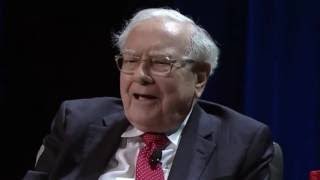
Bill Gates spoke in conversation with Warren Buffett in 2017 about curiosity, reading, vaccines, global health, climate, education, innovation, and long-term thinking.
Also known as: Warren Buffett vesves Bill Gates In Conversation; Warren Buffett & Bill Gates Go Back to School Questions & Answers; Warren Buffett & Bill Gates - University of Washington.
Bill Gates says curiosity is the core habit that drives learning, good judgment, and progress. In conversation with Warren Buffett, he describes how reading, online courses, and constant questioning help him update his view of the world.
He also argues for vaccines, polio eradication, and global health investment, saying the evidence for vaccines is overwhelming and that governments must stay committed to large-scale public health work. He links that same long-term mindset to climate, education, and innovation.
Across the discussion, Gates emphasizes optimism: innovation, capital, and better tools are making it easier to solve hard problems than in the past. He repeatedly returns to the value of patience, durable advantage, and building for the long term.
A moderator frames the conversation, Warren Buffett speaks at length, and audience members ask questions.
In his words
“This is a phenomenal time to be a curious person.”
“The facts about vaccines are very clear and very strong.”
“I think curiosity, which Warren mentioned, is an amazing thing.”
“The information that's out there.”
“We don't need speeches—we need curiosity.”
Key points
- Curiosity is the key trait behind learning, progress, and better decision-making.
- Reading and online courses let him deepen his understanding of science, economics, and health.
- Vaccines are safe, effective, and essential for protecting both children and vulnerable communities.
- Polio eradication shows why sustained public action and global cooperation matter.
- Long-term thinking is vital in investing, politics, and public policy.
- Education should improve teacher quality, culture, and proven practices, especially in disadvantaged schools.
- Technology and productivity gains can free up labor, but governments must help people share in the benefits.
Full transcript: Bill Gates, Conversation with Warren Buffett (2017)
They represent two different generations, but they represent a kind of essential friendship. As Bill has said, it was instantaneous when they first met—that they knew they would be great friends. I should also say to you that they have been here before. This was, I think, in the night 2009. Was it? Sounds right. Yep, 2009. And what was that event called? Making America great, keeping America great, royalty keeping?
America great in 2009. Later, we now be here talking for just a few minutes with them, but this is an opportunity for all of you to participate. There'll be people going around with microphones. I ask you, in the interest of everybody here, we don't need speeches—we need curiosity. We need people to really think about what they're saying, think about what you think, and in the most precise way you can, ask a question so that as many people as possible will have a chance to be involved, will have considerable amount of time, you know, to talk about anything. And since certainly everything from Urich here without curiosity about what they know, which is considerable, but also
the world around you, because they know a lot about that too. But I want to go back to the idea of this friendship. Lauren, what is it that you share? What makes this friendship so satisfying for both of you? Well, I think we both certainly share a curiosity about the world, and we come from two different but related worlds. So, we had probably spent about 10 hours of this one-hour visit that Bill was scheduled on July 5th, 1991. His mother had to talk it into it, and we weren't halfway—I mean, we've got no place in terms of our eventual agenda just in that time. In fact, the governor of Washington came by, and Bill's dad had
to come into the bedroom. It's, but we have fun to start with. I mean, that every relationship should have a lot of fun in it. And we find the world just such an interesting place, so we like to compare notes on it. When we compare notes, we have a lot of fun doing it part of the time. As I remember the conversation, by the way, there's a remarkable documentary about Lauren, which is on HBO. I think it premieres on Monday, 30th. Yeah, Monday. You should take time to take a look at it. Bill's involved in that, and you will see in a sense, it's "Cole," I think, becoming more Buffett. Yeah, that's what it's
called, because 86 years, you're doing well on it so far. Yeah, that's this yet to come. Yeah, one of the things that happened in—I, Bill, was it? I guess your dad at the dinner said, you know, what does it—you should spend the most important quality for you. And you found out that you and Warren had the same word. Yeah, I think curiosity, which Warren mentioned, is an amazing thing where you try and predict what's going to happen, and then when it doesn't, you sort of think, well, you know, that drug didn't get invented, that stock didn't go up, that
approach wasn't popular. What's—is it about my model of the world that's wrong? You know, who could I talk to? What could I read? And the things that have happened since 1991, mostly good things, have been amazing and just, you know, so much fun to talk about. You know, so, you know, if we read the news and we think, God, what did Warren think about that? You both are readers. You both—you read all the time, all day. Warren, Bill, you're a reader. You also do a lot of sort of courses online as well. What does that have done? What is that done for your life? A sense of constantly law? Well, go ahead, Bill. It's an incredible
time to be a learner. I remember when I was young, and I had the world, which is one of Warren's products, and it was very good. But yeah, I always felt like I—I want to get into this more depth, I understand better. Today, the videos that are online and the courses that you can buy with the very best professors, it's phenomenal. You know, take a subject like weather or climate change. Yeah, or what's going on in economics, what's known, what's not known. Now, with the foundation, a lot of what I need to learn is about biology, making vaccines, and what's going on with these various diseases. This is a phenomenal time to be a curious person.
The information that's out there. You know, I have a—my biggest problem is that I stay up too late because I'm reading, and then I'm a little bit tired the next day. The other thing that you share, other than reading, is optimism. You believe in America. Absolutely. You know, you have said to me more than once, I would give up a year of my life just to know what the next fifty is gonna be like. Yeah, even like, for now. I mean, why'd you pick four? Number that came to me, just fascinating what's happened just in my lifetime, you know, 86 years. I should mention one
thing about reading. It was at the library here at Columbia, which I spent probably more time than any other—I lived there practically. But I pulled the book out, there happened to be Who's in America, and it told me something about my professor Benjamin Graham. And then I looked up and I went to the library, and I said I want to look more, learn more about this because I learned this over here that changed my whole life. You know, we owned, I go down because of that library and directing me to some other book and then following through on that. It's the chance. I—I read about one-fifth the pace Bill does, but I still spend five or six hours a day reading. I mean, it just—you can learn so much. I
Particularly love biography, just, you know, to be able to live the lives of these people, have been extorted, see them so extraordinary, the lessons, and those, you know, the discouragements they face, just everything about it. So I did, you can't get enough of reading it. What surprises you most about Bill? That's an interesting question. I guess what really surprised me initially was just we found so many things to connect on. That he did try to sell me a computer; that's probably the only sale he didn't make. All the computer changed my life for the better in a big way subsequently. But, well, he just had the
same curiosity, and the other word you have used is focus. Well, the focus, there's no question of it. I mean, he and both of us got to where we are in a big, big way because of focus. And Bill, what surprised you about Lauren? I was so amazed that he comes to investing with this broad model of the world. So one of the first questions he asked me was, "Hey, Microsoft's a small company, IBM's a big company, why can you do better? Why can't they beat you at the software game, airplane?" And I always, you know, every day I was thinking about, "Okay, what advantage do we have? What do we do?" But nobody ever asked me that question. And we talked about the economics of
software, which is a very different and special thing, and he could relate it to things that he'd seen. And, you know, I didn't understand banking, why some get ahead and some don't. And so he was able to put that in very clear terms. And so I found somebody whose model was rich enough that it helped me understand things that I really wanted to know, and we could laugh about things that were a surprise to us. I'd say his humility and this sense of humor really stood out in this incredible way. I mean, he enjoys what he does, and he shares that with other people. And even, you know, when I ask questions that are pretty naive that he's probably been asked n times, he's very nice about me a long time to figure
this out, Bill, but here's how it works. I tried Bill out with some non-transitive guys, and I'd read about him in Scientific American or some places. There are only two people in the world in the history of these dice that actually figured it out while I was trying to take their money from them, and one was the leading symbolical audition in the world, and the other was a drug who didn't really know any better. That's the one question. But Bill said, "Wait a second, you choose first," and the game was over. You taught him, not you didn't teach him, but you brought him into a great appreciation of bridge. Yeah, he played bridge, but the family is very big on games. His family was very, very big on games, and so we played bridge together, and we played in China going
down the great rivers, what we're supposed to be looking at, the scene. We had a good time. All right, we've got a lot of questions. We want to talk from the audience, somebody. We want to start up ending up in the balcony, so, you know, we haven't forgotten you. It's hard to see, but is there a number there that has a question? Okay, start it wherever it is. Yes, number six. Thank both of you guys for being here today. My question is in regards to public health and vaccinations. Given our current private president's publicly stated stance against the use of vaccinations both in this country and abroad, how would you recommend that we as students and future leaders in health
Sciences best allocate our resources to most effectively resist his alternative fact political philosophy in regards to domestic and global public health? Thank you. But Bill, that's a good place to start. Yeah, well, the facts about vaccines are very clear and very strong, which is both that they're safe and that the vaccine schedule has been designed to reduce disease. And, you know, the more parents that adhere to it, the more not only their children be protected, but you have some kids who are immune deficient. So unless the kids around them are protected, then it puts those kids at risk, and our diseases like measles or
pertussis, that all it takes is a small cluster, and then mostly those diseases would be coming in from overseas. But you can get infection in some European countries. You've had deaths because the kids weren't vaccinated. I don't think the U.S. government is going to come out with any negative statements. There may be a commission, and unfortunately, if you look at the facts, the facts are quite unequivocal. We certainly are speaking out in favor of vaccines. So I, you know, I'm a little surprised that we have to stick up for them, but it's true in every country that you get these rumors, and particularly in today's media, those rumors can get out and ahead of the facts because the rumors are sort of
more salacious or, you know, contrary to what you've been told type things here. I'm sure we'll have a chance if necessary to go through the facts again and get a clear positive message from the government. And the risk is if vaccines somehow—people are scared of having vaccines—the risk is, well, there we're engaged right now in polio eradication, and the only way that succeeds is to get 95% of the kids to have these vaccines. And there, we found, we ran into a form of anti-vaccine sentiment that's even worse than U.S. rumors, and that is that two terrorist groups, one in Nigeria, Boko Haram, and another one in Pakistan
Afghanistan: the Taliban said that vaccination was a U.S. plot and, you know, would sterilize women. It was a very bad thing, and they took the women who were going out to the children's houses and getting these oral drops, oral polio vaccine, and actually killed a number of them. And so those negative rumors, the only reason we still have polio today that we're not done is because of that part of Nigeria that Boko Haram caused unrest in the border areas, including Baluchistan in Pakistan, where there have been these anti-vaccine sentiments. So, you know, our risk is simply those negative things. So it's not just in rich
countries that we run into this. It absolutely causes deaths if parents don't bring your kids in and get them fully vaccinated. And your drive to eradicate polio is to show that you can't do it. Well, it started in 1988 when it already had been eradicated in the Americas. So these were the, for the U.S. in the 60s, the rest of the Americas in the 70s showed that it could be done. And so, in 1988, well before our foundation was involved, Rotary and a number of other organizations said, "Let's get rid of this." And it's been harder than what's expected just because of these sentiments. You know, here we are in 2016
a 17 last year, less than 50 cases. So, we are very, very close. In fact, there are so few cases now, the way that we track where the virus is is we go and look at sewage samples, and we see because a lot of kids get infected and pass along without getting paralyzed. And so, it's only through the sewage samples we know that there's still about four places in Pakistan and Afghanistan and one place in Nigeria that we, we haven't gotten there yet. All right, let's see the next question. I got to see a card. Number one, thank you both so much for being here. My question, again, sorry, is a little bit on the political spectrum. I was wondering what you're both most hopeful about in this new political environments we have and also
what you're both most worried about. You want to take over? Worried more? Well, I'm, I'm confident there America will move. It's been, no, the time I was born until now the real GDP per capita this country was one of six for one. I mean, nobody ever dreamt that would be possible. And when you look at what's happened in this country over two hundred and forty years, you know, it's an absolute miracle. When I went to come be a business school, September 1951, woman in the class, I mean, that this country moves forward and you can't stop it. So I am enormously, I say the luckiest person more in the history
of the world was the baby being born today in this country. And we will go, and you know, everybody, half the country always is going to be somewhat unhappy, ever close to half about the last election. But I grew up in a household in the late 1930s. My dad was very Republican. My sisters and I didn't get dessert unless we said something bad about Roosevelt. I mean, it was just, it was required. And I heard all these apocalyptic views about efforts third, don't be no more elections. I've been hearing that all my life. And, you know, year after year after year, with occasional hiccups and an occasional seizure like we got in 2008 and 9, but this country
it's all profit folks. I mean, you know, when I came in just thinking, what we're gonna like in 1776, nothing here. And now we bend the velocity of change. Oh yes, movie. I mean guys like Bill, you know, they don't quit. You know, I mean, he moves on to something like polio. He mentions 50 cases in the world. There more than 50 in the ward where I went when I was a teenager to see a friend of my sisters, and they're always rocking machines and everything. They were destined to a terrible, terrible life. And it was just one ward in Omaha. And now, that's, you know, that's the yearly total, thanks initially the as well as currently the Rotary and some, but people kept working out this world moves forward. And it's
been doing what my first doctor, when I was 11 in April in 1942, the Dow was 100. You haven't looked, it's 20,000 something. Good must have happened. It's gonna keep happening. Bill, I know you fear the optimism. What about concerns? Well, the optimism is partly that I think American innovation is strong. You know, support for research is, by and large, bipartisan. And so whether it's health breakthroughs or even energy breakthroughs, I think, you know, every year that goes by, we're going to have more of those things. Now this administration is new enough, we don't know how their budget priorities will come out. You know, there are things like
foreign aid, which is a small part of the budget, about 30 billion a year. But that means the U.S. is the biggest. That every time there's new leadership, we have to go in and articulate the benefits. It's well spent. It's not the image that people have in the past. And so right now, I think there's a lot of intensity to make sure we get that message out and get both in terms of the executive branch and the Congress to maintain amazing things like the President's Malaria Initiative or PEPFAR, which is an HIV thing. These things started under President Bush and so our foundations had a great working relationship with Democratic and Republican administrations. Most people wouldn't
realize that U.S. foreign aid, as a percentage of the economy, which is generally how it's measured, reached its low point in 1999 under the Clinton administration. I'm not saying it was the administration. It was a mix of the administration, the Congress. Then, during those Bush years, it went up fairly substantially. Now, the economy helped with that, but these initiatives were really amazing. And, you know, I'm hopeful that maintaining or even growing these initiatives will be a priority when there's a lot of talk about tax cuts and different spending activities. And so it is a bit up in the air during these months ahead, and you've often made the
Point that no matter how big the private contributions are, sometimes in terms of tiers, sheer scale, you need a government. Yeah, somebody asked me today, you know, if PEPFAR, which is this AIDS program, was cancelled, would private philanthropy make up for it? Well, PEPFAR is over five billion a year. That is this one aid program, which is a phenomenal thing that's saved over ten million lives. That's larger than our foundation, which is the largest in the world. So there's no possibility. The government sector—US/UK, other European donors—that's a hundred and thirty billion dollars a year in coal, that's uplifting these poor.
Countries in health and education, and if we lose the consensus around that, if people draw inward too much, we will hurt progress and there will be millions of lives lost because of it. All right, one thing that might be mentioned, Charlie, is that the difference between now and 60 or 70 years ago in the ability of really bright people, really innovative, really energetic people to get financed to do things is just dramatically better than it was at that time. So now, if you've got good ideas—and there's good ideas right in this crowd—and you've got energy, it's far easier to get financed to move forward those ideas than you could 50 or 60 years ago. Is that because of the
internet or crowdsourcing? Or what is it? Just lots more capital around, people more optimistic about—we're very optimistic, but better ways to connect the capital, and it's dramatic, and the willingness to take risk. You know, the first venture capital stuff is in the 1960s and it's tiny. Microsoft, when we were taking outside investment, we took a valuation from 20 million dollars. We took a million dollars for 5% of the company. I'll do it retroactively: you had your chance, you had your—we we—we never spent the money that is our business was
profitable enough. We really didn't need to do that, but we wanted people on our board to give us advice. And there's an episode of Silicon Valley where all these venture capitalists are courting this guy, and that really reminded me of what it was like. By that time, which was 1984, there were dozens of venture capitalists, and that's something that other countries have tried to duplicate. They have in small part, but not nearly as well. This willingness to take risk, I did that. If you have a failure, it's not a mark of shame. That, hey, what's your next startup gonna be? You heard a secret, folks. He gets his ideas from Silicon Valley. Be sure. All right, cards, let's see where the cards are. Both, okay. Number three, take the card right
there. I just talked about how you'd be able to make a model and it won't accurately predict what happens. And on the other side of the coin, I was wondering what happens when you create such well-developed predictive technology, and what are the ramifications and implications of that outcome? Well, I don't think our predictive technology, you know, is gonna be like an Oracle. Warren Buffett's nickname is that Oracle of Omaha, but, you know, the percentage of times you convert things like macroeconomics, because they involve emotional sentiment
you know, we're a long ways away from that. The biggest modeling thing I'm involved in is a group that models diseases. So we look at HIV or tuberculosis and understand, okay, what do we have to do in terms of diagnosis and drugs to get these things down? Once we finish polio, we'll go on in our next big challenge, which will take decades, but I expect we'll be done in my lifetime, is malaria eradication. So these models aren't nearly at the point where they can take human sentiment into consideration. You know, the field of economics, a very basic question about what we should have done differently before the financial crisis—there really is no consensus, whether
it's with the public or inside the profession of economists. They agree that some of the emergency treatment we did was necessary and important, and, you know, I wish that was better understood. But in terms of the root causes, it's actually a little disconcerting how little our models are understanding, explaining how that imbalance got so extreme. All right, well, number two, I'm doing school here at Columbia and I wanted to ask you—you were talking about that you love reading. I wanted to ask you if you have a particular book that changed your life, like the way you
think about things. And I also wanted to ask, what is the thing that you admire the most about each other? Like you, Bill, about Warren and the other way around. Thank you. They sort of touched on the second question, but going to me want to add to it. Books though, first. Changed your life? Well, a book did change my life, and I was a bio fellow who taught here at Columbia, at Benjamin Graham. And I read the book when I was 19 called The Intelligent Investor. And I had been interested in investments since I was maybe seven or eight, but I never—and I'd read every book in the public hall, more public library. Why do you think you were interested in investing when you were seven or eight? Because I was too dumb to get interested
in for my dad. My dad had a very small investment firm, and I was just gonna read all the books that he had there waiting to go to lunch or whatever it might be. And then I went to the public library, met them all, and it just was a fascinating subject to me. And but I didn't have any—I knew, but everybody thought all of that at an early age. But what Graham wrote made sense. I just happened to pick that book up at a bookstore in Lincoln, Nebraska. But, but to investing per se did—is there something about your core competence that made investing the perfect place for you to
Be, yeah, I was actually wired in a way that this would be something I would be good at. What? So, what wired in what way? I can't tell you precisely, but I've got the right temperament for it, which is more important than IQ if you've got more than 120 points of IQ. So sell the rest of it to somebody else. You don't need it in investments, but you do need the right temperament. You do have to be able to think for yourself. And getting back to, you know, the earlier question, the first question I ask myself.
When I look at a business, you know, is it important and easy? When I come to determine about those businesses, a lot of them don't make it. Now Bill is looking for hard questions that plague society, and where intellect and money may make a difference. They may not for a while, but he's taking on the tough things. I take my job is to find easy things. I'm looking for one-foot bars to step over, you know, rather than eight-foot bars to jump over, you know. And but that's not irrational if you're looking at the investment universe. But reading is key on the biography on the book thing. It does, I will tell you, a wonderful book to read. I can tell you a number of intelligent investors who obviously, if you're in the investment field, but...
Katherine Graham's autobiography — there's a marvelous book — and that's absolutely honest, told by an incredible woman who had an incredible life and then wrote honestly. But someone who you knew very well and interacted with, and she was a bit reluctant and had to be assured, you know, that she was afraid of me actually reading the book. What makes that book so much is it is such a broad range of human experience, honestly told. I mean, you couldn't have nobody in Hollywood brought up, you know, a scenario that she lived through. And just to see that world develop, how she...
Reacted to it every night. You can learn so much. My partner Charlie Munger just loves Ben Franklin, you know. I mean, he, I mean, you, you can learn from other people and their mistakes. And I find my biography was my favorite part. The reason you love biographies, Mary, part of the reason you love biographies — where is a card? Right here, just come here. I'm having a hard time seeing the card. So that right here, she, where the hands are raised? A mystery somewhere? I'm a senior here at the college. I'm also a scholar. My family over here. So I'd like to ask, so what, both of you...
Doing. Risk a lot. And sometimes you have to face the fear of failure with that risk. So I'm asking, how did you overcome that fear, and what steps did you take to do that? Well, I think I was very lucky that when I was in high school, the computer was brought in there, and I developed a fascination for it and became kind of fanatical about it. So that, you know, I didn't view it as risky. I viewed it as this kind of fun hobby. Even when I went to college, which I didn't finish, but I spent time up in Cambridge, Massachusetts, I wasn't...
Sure that would be my life's work. Now as the chip came along and made it mainstream, it became very obvious that something dramatic was going to happen. And so my passion, my hobby, and the area I could start this company right at the beginning of the revolution that coincided in a nice way. And I never felt it was risky. You know, if Microsoft had failed, I didn't have kids or anything. I could go back to school and, you know, finish my degree and, you know, go get a job somewhere. I was very risk-averse in running the company. I always made sure we had enough...
Money in the bank to pay everybody for at least a year if nobody paid us at all because this idea I was hiring people who had kids and families, and they were moving to work there. And here I was, you know, 19, 20 years old and sort of telling these people I'd be paying their salaries. So I was actually very conservative on a financial point of view. And one of the few arguments I had with Steve Ballmer, who came in and played a phenomenal role in the success of the company, was how many people could he hire, because I was trying to be so conservative, but I let him go full speed. And, you know, it turns out our financial success meant that we never had a...
Conflict about that. But, you know, I think it's great to be risk-taking, particularly when you're young, trying out different things, fields that, you know, aren't very popular, that you might enjoy. But I never got into a position where I was taking, actually, in any meaningful sense, I was taking a big risk, coming... The risk of you would not to have acted because you felt the train was leaving the station. Yeah, and it was so clear that, you know, this was gonna happen. This was so much fun. I mean, you know, I was a fanatic. I didn't believe in weekends. I didn't believe in vacation. My mom had to negotiate whether I'd come once a week for dinner, no matter who the...
Guest was, right? But Warren, you have often said you still tap dance to work because you can paint with your own colors. Yeah, I get, I'm as excited about tomorrow in terms of what's gonna happen as I was when I started. I was having a lot of fun when I started, but I'm having just as much fun now. And when I was here at Columbia, I had this terrible fear. It was impossible for me to speak in public. I mean, I wasn't able to do it. I actually read an ad in the New York Times. I went down to Midtown, signed up for a course, gave the guy a check, and then stopped payment on the check. I mean, it just, just petrified. But finally, I... And actually, after you get through here hearing me today, maybe you'll wish I'd stayed afraid of public speaking, but the...
Question. Then when I got out to all my, I finally decided I just had to do it. So I gave a guy a hundred dollars in cash, and once I partnered with other dollars in cash, I jumped off the Grand Canyon to get my money's worth. But it changed my life, I would say. This: don't fear failure. Almost everything that's turned out, I got turned down by Harvard. You, the best thing ever happened, among other—there's some good things that happened. It seemed good at the time. Don't worry about—and don't, don't let it eat at you. Look back, just keep going, because you're gonna have some things, and forget them, go forward. I want to go to the back of the room right back there, wherever number three is. Hi, my name is Matthew Mann. I'm a first year at Columbia.
Business School. Both of you had a moment where you went out on your own, and I guess my question would be if you were to do it all over again, you're in our shoes, what industry would that be in? Where would you start your own business today? I did the same thing. Yeah, anything else? Probably no. I mean, I've had—I had fun when I was in my 20s, my 30s, now I'm 86, I'm having fun. And so I, I advise students as much as possible, look for the job that you would take if you didn't need a job. I mean, you know, don't sleepwalk through life, and don't, don't say, "It's all gonna be great, you know, I'll do this and I'll do that," you know.
I'm just marking time to get to be older. That I've told people, that's like saving up sex for your old age. I mean, you really want to be doing what you love doing, and you find it on your first job, right? But don't give up before you find it. Bill, you've had the unique experience, but hey, because if you—curiosity, because
of your involvement in global health, to see the impact of a lot of other areas, whether it's biomedicine, or whether it's, you know, a whole range of other things other than computer science. If you were going to drop out of Harvard today, know which field would you be most likely attracted to? Well, I love the hard sciences, and there's some phenomenal things that people will get a chance to be part of. I'd still probably pick computer science because they work in artificial intelligence today at a really profound level. You know, our ability not just to play games, but that
is a profound milestone. The AlphaGo work that the DeepMind people at Google were able to achieve, and that kind of technology is in all the leading companies, a lot of universities with AI, creation of agents, the ability to read and understand material. It is going to be phenomenal. So anything connected with that I think would be an exciting lifetime career. I also think in energy, we have the imperative to have energy that's reliable, cheap, and clean, and no system available today can provide that, whether it's for rich countries or for poor countries. And so the innovations there will be profound, and there's many paths that could provide that solution. Finally,
I think biology, it's the most thrilling time. You know, we are going to figure out obesity, cancer, even things that are very hard like depression, because the, you know, the mind is, is, is even more complicated than other parts of the body. I see this through the lens of the disease of the poor, the infectious disease, where new vaccines, new drugs, we are moving faster than ever, and some of these are platform technologies like DNA vaccines that are gonna give us just that one thing will give us lots and lots of solutions. And so working in that space is, is phenomenal. Now, I say this
you know, to my children, and, you know, they, they may not want to do hard sciences. The one who's picked wants to counsel patients and be a doctor, and even more than the science of peace, that relationship with patients is what grabs her. So everybody has their own taste. But in terms of big impact, those three hard science problems would be at the top for me. Alright, next, right here. They're like next to number one. Hello. Uh, thank you guys for being here. Also, thank you to Mr. Gates. I am also Gates caller, and without your foundation, I wouldn't be here. Many industrial-based communities have been severely affected with higher levels of unemployment due to the increasing utilization of automation.
Which ends up displacing workers. What do you believe it—what do you believe is a possible solution to unemployment arising from automation? It's a good question because there's a lot of talk about globalization and all of that, and a lot of other people step forward and talk about how technology and the impact technology is having on jobs and the demand for new kinds of skills. Yeah, we were here at 1800, and conducting this, and somebody would point out that eventually tractors would come along, and better fertilizer, and that 80% of the people are now employed on the farm, and in a couple of hundred years it's going to be two or three percent. And what are we gonna do with all these people? Well, the answer is we release them.
We Keynes wrote something about it in something called Essays on Persuasion. He wrote in 1930 about what a more prosperous society would become like, and he actually postulated that in a hundred years, and we're now eighty-seven years away from then, that there would be four to eight times as much output per capita. And, you know, he's remarkable, but he didn't quite get how it might get distributed. But the idea of more output per capita, which is what the progress is made on productivity, that should be harmful. The scientist is crazy. I mean, the distribution may be a problem, but if one person could push a button and turn out everything we turn out now, is that good for the world or bad for the world? You know, you'd have to figure out how to.
Distribute it, but you'd free up all kinds of possibilities for everything else. So, everything should be devoted initially to getting greater productivity. But people who fall by the wayside through no fault of their own, as the goose lays more golden eggs, should still get a chance to participate in that prosperity. And that's where government comes in, right? They'll—didn't they add to that? Yeah, the problem of excess is a different problem than a problem of shortage. You know, if all the tractors and computers stopped working, then we would have problems of shortage there, and you know, we just wouldn't have enough people to make the output.
The problem of excess really forced us to look at the individuals affected and take those extra resources and make sure they're directed to them in terms of reeducation and income policies and the need for labor, in terms of smaller class size, helping handicapped kids, reaching out to the elderly. The demand for labor is not at zero. If you ever get to that point, fine, you can shorten the workweek and you'll be just fine with that. And so, this idea of taking an individual who during their generation is affected—I think there's a lot to be learned about that, a lot of thinking we have to do. But the macro picture that it
enables is an opportunity. Number two, also, I'm urging people at the back, so you have a chance, and we want to go back up to the balcony as well. So, when I see number six, we'll come to six after two. Yes? Hi, my name is Sam. I go to Columbia College, and my question is: What steps do you think need to be taken in order to improve public education, particularly in economically depressed areas of the United States? I think this is a super important issue because the dropout rates, although they've gone down a
little bit, they're still very high and very based on income. And even kids who graduate, a lot of them don't enter college or they do enter college and they end up in these remedial courses for their reading or math capabilities. And those people have an extremely high dropout rate from higher education, and, you know, they can incur debt; they have a negative experience. So, we have a long ways to go in education. There are some very strong points of light, like here in New York City. Some of the charter schools, with even less resources than schools at large, are doing a phenomenal job of educating kids. There are a lot of
countries, particularly in Asia, who spend way less of their GDP on education, doing a great job educating their kids. And it's not just the top 20%, their bottom 20% is pretty phenomenal—in the case of China, South Korea, and Singapore. And so, looking at what we've learned in charter schools in terms of building the culture, giving teachers feedback, what good teaching looked like: Do we give teachers a chance to learn from each other about that? You know, development that makes the subject seem relevant and important. There are great teachers, but spreading those practices has been very, very tough.
And so, I'd say it's a top priority, and the Gates Foundation has that for our work in the United States. Education is the top priority. Whereas outside the U.S., we take on health. It's a tough problem because the institutions of education are fairly resistant to change, and people are not yet convinced by various approaches very easily. But we need to keep at it. We're going to, you know, stay and even actually put even more money into trying to help create models. Okay, up number six. Hey, first, I want to thank Bill and Melinda Gates Foundation for eliminating polio in India, and I'm really thankful for that.
My question is more on how to set the basic level of debate in any public sense. Like, there are many trade-offs. How do I explain climate change policy for people who are losing jobs in the coal sector? How do you balance the current short-term economic goals with a long-term peaceful transition to the renewable sources of energy? Now, that's a good question, and certain topics are so complicated like climate change that to really get a broad understanding is a bit difficult, and particularly when people take any of that complexity and try to create
uncertainty about it. And, you know, for example, India's kind of paradigmatic in that they want to electrify for all sorts of good reasons, having to do with health and reading at night and quality of life. And the question of should they delay electrification for climate issues is going to be very difficult. The ideal is to innovate in such a way that they can go full speed ahead on electrification without emitting the CO2 that the natural path to them today, which is coal, is the way to go in. So, we have a lot of cost reduction to do because rich countries may be able to buy premium
electricity. When you get to middle income or lower, that's just not going to happen. And, you know, democracy has this allocation of resources in terms of investing in the future and things like research and investing in the present. And when you have a problem like the financial crisis, then you do get a little bit more of short-term thinking. And I'm hopeful. I think it's better for the world and for the country if we can get back into a little bit more of a focus on the long term. We have some questions from Facebook. One: A central tenet of your investing is invest for the long term. And this comes from Brian White, who says, how my
Bill and Warren convince investors to think beyond short-term returns to encourage world-changing innovation. Well, I've spent my life trying to convince people on investing for the long term, and listen, if I'd know how to double my money tomorrow, I probably mess with the short-term. It's much, it's much easier to invest for the long term if you're just talking pure, and that's not because you know what's going dead. And I view, you know, the very high probability what's going to happen 10 and 20 years from now in a major way, and I don't have the faintest idea what's going to happen tomorrow or next week, but you get if you're talking.
About societal, it's very tough because politicians face elections either every two years or six years, and the way the way building like congressional districts have been organized, primaries have become more and more important, and so it's very hard to have politicians think of something that's wonderful for the country for 20 years but will cost them the election two years from now. And that, that's a basic problem in a democracy, and it gets to be more of a problem as, as we get arranged, we've arranged congressional district so the he dominates because a very limited number of people turn out and their motive, they tend to be on the extremes of both parties. So it, it's amazing.
Whether you're gonna make an investment in a company or whether you gonna buy the company, now what are the factors that you have to be that you're looking for? What test? I'm looking for durable competitive advantage. I'm looking for something that has a moat around it for a considerable period of time, and I'm looking for an honest and able management tomorrow because I don't know how to run it myself, and I'm looking for a purchase price that's not excessive. But it's better to pay a little too much for something that's a very good business than it is to buy some bargain but really good company but not much in the future. And I don't know, I don't have the ability to predict to the higher high probability success the future of most companies, so I'm.
Looking for the exception. But the nice thing is if there's thousands of companies out there, I really have to be right on a couple. I mean, it's exactly the opposite of a baseball where you have called strikes and the pitchers trying to throw it to it the worst part of the strike zone for you. And if he succeeds in getting into that corner three times and you don't swing, you're out. And investing it's a no, it's a no-called strike things. I can sit there all day and somebody confirming one company after another and finally I got one in my sweet spot. Both of you have chosen both wives and partners well. Charlie Munger added what Charlie Munger changed my views he'd be find him in a huge way in terms of.
Looking for the quality companies and, and, and looking for the ability to make an investment that would work out well for five or ten or twenty years as opposed to something might. There might be one I call it cigar but investing whether it was one puff left in the cigar but the cigar was free, so you picked up these disgusting looking things and got one puff out of and went onto another one and that worked okay, but it was small-scale and it really doesn't build something satisfying. So, so he he kept forcing me in the direction of saying, you know, it's just a really a business we want for forever and, and we want to get a so it's like a marriage. I mean, you want to get associated with this person forever and it's a great way to look at things, Bill.
Your wife Melinda has added what? Well, she's doing for children. He is your partner and she was there in the philanthropy. Say one at Microsoft I had two partners who were amazing. I had Paul Allen my early days and then Steve Ballmer's that company got bigger and we would not have achieved anything what we did without those partnerships because you know when things are tough when you're making big decisions having somebody who's really in there with you committed you know for me I I couldn't have done without that for the foundation Melinda is an amazing partner.
She thinks about the people issues better than I do. She, you know, knows when I get over excited about the science, she can, you know, make sure we're being realistic about it and it makes it fun. You know, last week I went to Europe to the World Economic Forum and she went to Nigeria and then this weekend we just sat and talked about, okay, what did we see? What does that say about the work we should do? And so, and I don't think I did enjoy it without a partner and particularly someone amazing like her. It's more fun with a partner. I mean, Charlie and I've had more fun working together than neither one of us would've had individually, and we have never had an argument after working together for 58. You could talk every day. Not anymore because we know what the other guy's.
Gonna say. We just run we talked it all out 50 years ago. So if you see Charlie and he says, why am you calling? You'd say, well, I knew what you say anyway. Hi, my name is Molly Zander. I'm a student at Barnard College. I guess what I'm basically wondering is what your main considerations are when you're choosing where to donate on what causes to donate to you and what them challenges are that are associated with that. Yeah, my wholesale look because I made a choice that I wanted to have well originally my first wife and I planned.
That I would pile up and she would unpiloted or one, but she — she died in 2004, and then I had the problem of figuring out the best way to distribute books. Turned out to be a lot of money, and I wanted — I wanted some people who had similar values and similar objectives. What I had was a lot of people who would pour in intelligence and energy, and in case of Bill and Melinda, a lot of their own funds, would work out a full-time, but who really saw society as I saw it, which is that every life is of equal value, and that if you start with that and then you figure what you might be good at changing, whether it's a
medicine or education or early learning or whatever it may be, you know, that was my answer was the wholesale and retail philanthropy. Would drive me crazy, but hotel philanthropy, I really like. Yeah, our work at the foundation, that belief in innovation, which both Melinda and I saw at Microsoft, our question was, okay, how do we bring that kind of innovation to help the world's poorest? And we learned that coming up with new vaccines that although you can pay a lot to have them created, the marginal cost comes down to less than $1. So great getting a new
vaccine for the main cause of diarrhea or pneumonia, that can be a phenomenal thing. So you're looking for these super nonlinear dramatic things, because as a, you know, perp or person are compared to government funding, philanthropy is actually quite small, and yet funding vaccine projects, the government isn't as good as that, as a philanthropist who assembles a team and over time is learning how to do that very well. And we had models. The Rockefeller Foundation was a phenomenal foundation, the Green Revolution, one of many things that they did which raised agricultural productivity and saved avoided hundreds of millions
starving. And so, studying the other foundations that have taken these big breakthroughs and created models out of those, that was very informative to the — to what we've gone after. What's the most important lesson you've learned though about making investments from the foundation today that you learned along the way? Well, I think when we started out, I thought that just coming up with a new vaccine or drug alone would be enough, and that the world would then take that and get it out to all the children of the world. You know, partly through fields, as I did, that Melinda did, looking at the statistics that delivery system doesn't
get out to a lot of the kids. And so, you have to figure out how people were hired or how that was funded and measured. This is what's called primary healthcare. We were drawn into that out of necessity. It didn't fit the normal sort of in the lab, you know, come up with this great concoction. And yet in order to achieve our goals, we needed to think about those delivery pieces. In fact, sometimes the state of the product actually had to be simpler in some ways in order to get through that very limited delivery capacity. And now we're getting to 86 percent of the world's children vaccinated. It was about 70 percent when we got started. So that's
a good increase. We still have 14 percent to go. Know about mil — good to have amazing convening and persuasive powers as well. So, I mean, they bring something far more to it than just money. I mean, they work incredibly hard. I do, my three children and their foundations, but they work incredibly hard at getting governments involved in vaccines or whatever it may take. And that just is, you know, it's an extra dimension that I think boards people have in the field. Yeah, it's hands-on. It's travel too. When Melinda is in Africa and she's holding a little baby, I mean, she is actually thinking, you know, this kid
needs to be back, that it has a decent chance in education — all that. I feel the same way about the kid. But what I really think is, is you're gonna pee on me? You know, there's just a difference in that human touch makes a big difference. I'm halfway in between. Hi, I'm Malachi Swamy at the Columbia Business School. If the current government were to ask for your advice on immigration or healthcare reform, what would you recommend to them? Mine? Well, I'm on immigration. Yeah, well, immigration: I mean, this country is built on it. I always say the people that are anti-immigration — let's
put it in retroactively. This country, if you think about it, I know Ferguson before from me, but we are sitting here in part because of two Jewish immigrants who in 1939, in August, signed the most important letter, perhaps in the history of the United States. And you can, you can go to the internet and go to search Bing and (laughter) (applause) and just, I've been fine. Stein, Roosevelt, 1939, Leo Szilard and Albert Einstein, two
immigrants came here. They both — they came directly from Germany. Szilard came from Hungary before that. And they told President Roosevelt that the Germans were likely to develop an atom bomb which was likely to work. It's less than a full page, and we'd better get to work on something fast. And that the Manhattan Project came out of that. And had it had been for those two immigrants, you know, who knows whether we'd be sitting in this room? Immigration, right? This country has been built on the West
exactly by immigrants. And you can take them from any country you want, and they — they've come here, and they found something that unleashed the potential that the place where they left did not, and were the product of it. Let me — the question also was about health care. I mean, what can you tell us about health care that you think is important in terms of the consideration of what might happen? I mean, if you were building a health care plan for America, what would be the elements that you would want to include? Well, there's no doubt that in order to provide decent health care, the percentage of GDP devoted to it is going
To go up over time, it's already very high, and yes, there's some efficiencies to be gained in that, you know, 18% or so number. But as society ages, as we come up with new things like joint replacement, organ transplant, which are going to create lots of human benefits, we're going to have to have more resources overall, including more government resources for healthcare. And so it's a tough problem because you have both access problems today, and you have cost problems today. And, you know, whenever I look at a problem, I have this one simple lens, which is how innovation should help here.
But in this case, innovation, while it will provide breakthrough drugs that will save costs—like if you can cure Alzheimer's, which we certainly haven't done yet—that will save on huge long-term care costs. So we have these chronic diseases that we've made less progress on than some of the others. And, you know, the market mechanism to get Pharma to go after those things, and the basic research funds—I am quite optimistic that we'll have some advances. But they'll also give us some very expensive things that will mean we're spending more money against it. And I do hope, you know, that at some point, that we really are calling on the best minds to look at the incentives for the
breakthroughs, the most efficient system we have here. I think a lot of unhappiness in the country now stems from the fact that the healthcare system isn't delivering, and yet, you know, people are saying less government, more government. You know, I don't think they're being given the depth of education about why it's so tough that over time will help them go—the depth of explanation. I mean, let me go, I'll go to Facebook in just a moment, but where was a promise? Three, four, and six. Three is there, and six is up there, so quote three, six, and we'll go to Facebook. Hi, my name is Josh Schaefer and I'm a dental
resident at Columbia. My question is for future doctors and Genesis of America: what advice do you have in giving about having a proper balance of providing that health care but also mastering the concepts of business and economics? Well, I told Gandhi is, you know, incredible Walter. He, in the current issue of The New Yorker, has the latest in wonderful articles about the healthcare system, and he's talking about the people who do sort of heroic surgery like himself are paid twice as much as the people who are on an ongoing
basis in a great incremental way learning about the patient and seeing what works for them. And he, it's a calling quite to say, hey, though that part of the system needs to be run better, needs more resources. And, you know, so I think it's brilliant that he's saying that, and it also corresponds to what's working in some other countries. Six, so you both have invested a great deal of money abroad, but there is a prevailing belief by some that there are pressing issues in America. There are poor people here, there are sick people here, and we should deal with that first before even tackling anything
abroad. So what are your thoughts on that? My own personal thought is that every life is of equal value, and in many ways, in many ways, if you have a little bit number of dollars, you actually can do more for more people outside the United States. And we do have greater resources here for our 320 million people than exists around the world for 7 billion people. So if, if you can improve the lot of more people by intelligently spending a billion dollars, or any other number, in other areas of the world actually and then here. And I guess you
know, coming from Omaha and having the money I have, people can say, "Well, why not spend it all in Omaha? You know, you grew up here and almost done all kinds of things for you at night." Absolutely, knowledge that. But in the end, if I've got X dollars to spend, I can make life better for more people if I can have it intelligently allocated in other parts of the world, actually, in the United States. And that draws a fair amount of criticism, but, you know, I live with it because it's what I believe—all lives have equal value is really the driving force by a foundation. I'm an accident I won the ovarian Madhuri when I was born in the United States. In 1930, it was 40 to 1 against me. I was male. That now it's 80 to one against being a male in the United States. In 1930, I was just plain lucky. My life had been far
different. Bill always said if I'd been born a long time ago, I'd have been some animal's lunch because I can't run fast and I can't climb trees and everything, and I'd be, think I, allocate, I was lucky, but 79 out of the 80 wonders lucky, as I was at that time. Go ahead, Bill. Yeah, in terms of helping people in other countries, the foreign—a bunch of the U.S. is 0.8 percent of the budget, and there will be in the years ahead a discussion about is that we're doing—it saves lives for typically about a thousand dollars of life saved. And in
terms of stability and countries eventually being self-sufficient to mean part of the world economy, there are some huge benefits to that. So if we were talking about, should we spend 20 or 30 percent overseas, okay, you know, that would be a very interesting discussion. But what we're trying to preserve is something that's gotten smarter and smarter all the time, has proven benefits, all of which are things that our foundation co-invests in—the same things like the polio thing is point eight percent. So I'm hopeful that in a big world, that can remain a priority. Let me go to another Facebook question. This is from Nadia Aqua. She says, "Hi, my Bill and Lauren."
Encourage innovation, particularly among teens and young adults. How do you encourage innovation? Well, I think you have a market system that provides rewards for it. Yes, and we have it. I mean, we have an incubator for innovation in the United States, and Bill can drop out of school, Andy Grove can come from Hungary, and I mean, this, it just welcomes it. And thank God, I mean, that's why we have the kind of prosperity that we have. I mean, the question of how it gets divided is a secondary question, and that does not get solved as well by the market system. But our system is just designed for them. Look at what has happened. All right.
Number one, so also I want to make sure we get to people in the back so we don't only have five minutes left. So, there's a couple of hands up in the back, so please recognize it. Hi, my name is... Ah, here. I'm a senior in the engineering school. As men of such great influence, I'm curious, and we touched a little bit about this in the last question, but how do you deal with reconciling your convictions with maybe what is believed by the public, maybe even a majority? Considering that you have the wealth and power and fame to make such great things happen. Neither. Well, I don't see, you know, the...
The convictions I have, you know, I love hearing them and talking to people, understanding, you know, where people disagree. I, you know, I can be overly science-centric about things. I, you know, there's all sorts of causes that are super important that our foundation, because we have limited resources, we don't get to go and do. There's lots of diseases, there's aspects of education. You know, part of the strength of philanthropy is its diversity, and, and, and so just by sharing the fact that it's fun, it really can have measurable impact. I hope that sets an example for...
All philanthropy. I don't happen to believe that, you know, my voice should be that much louder than other people, you know. And so, you know, some of these big political donations, you know, at least, you know, I am worn as well, you know, we've chosen not to have that be a huge way that, you know, we're spending our money. That's a personal choice. You know, the money is being saved for not for the megaphone but for the work of the foundation. We get a podium of a certain sort, you know, and, but people do not. With a partner like Charlie Munger, you don't have to worry about my use being accepted automatically. Point out the...
Shortcomings. The influence of money in politics, I really think, is bad news for this country. I think Citizens United was a terrible decision, and the idea that somebody can pour millions and millions of dollars into a campaign, and in certain cases, it not even be identified, I, I think really kind of goes counter to the kind of America I believe in. The two of you created, along with [Phil] and others, created The Giving Pledge. How's that going? Going terrific. These kind of a little color, it is exactly. Yeah. Okay, this is, you know, we love philanthropy of all types, and part of the strength of the American clan tree is actually people; it's very little...
Who are incredibly generous here. Though we said for the people who are super lucky, have over a billion dollars, we want a group who are working together who are committed to give the majority of their wealth away, to learn from each other what's worked, what hasn't worked, how do you involve your kids, how do you hire staff, and they'll find areas they're working on together, incorporate. But we're not pooling any money, and we thought we'd get, you know, 20, 25 people together, and in fact now we're at 156, so it is a wonderful yearly event. I've made some great people. I do think that the quantity and quality has gone up because...
We're getting together. We'll never be able to measure that in a direct way, and we're making special efforts in China and India because now we have a lot of wealth that wasn't there before. And in their own way, I think by having a strong philanthropic sector that will help those countries, and therefore help the world. What's interesting now, Bill and I are having dinner actually with a group tonight, for example. But you go back 150 years, people got wealthy by making some money from the first oil refinery or steel mill and building another one. Then Henry Ford would build a plant to build cars, and then it would be from actually from retained earnings which eventually turned into cash. Now you can get rich very young just by having an idea, and you can get...
That idea monetized and capitalized in a way that you cannot believe. So, we are particularly interested in getting younger people interested in philanthropy because there will be huge, there are huge fortunes by people that are now in their 20s and 30s. And just think of what those, the potential for that group. And so it, this thing has worked out way, way better including getting younger people to join us. Number six. Hello, my name is Christina Nunez. I'm a fellow dental student at Josh. Thank you for speaking with us today. I'm curious about your insight related to relationships. I'm personally given a desire to honor myself and respect other individuals...
Have found it difficult throughout life to discern which relationships to really foster and invest in and accept challenges from, and which to kind of forgo and abandon because they're more harmful than helpful. So, are there any major life lessons that you two have learned through your personal experiences? Well, it's a very important question, and the more you will move in the direction of the people that you associate with. So, it's important to associate with people that are better than yourself, and actually the most important decision many of you make, not all of you will be, the spouse you're choosing, and you really, you want to...
Associate with people who are the kind of person you'd like to be, and you'll move in that direction. And the most important person by far in that respect is your spouse. I can't overemphasize how important that is. You're right, the friends you have, they will form you as you go through life. Make some good friends, keep them for the rest of your life, but have them be people that you admire as well as like. Don't do that to that. Yeah, some friends do bring out the best in you, and so those, it's good to invest in those friendships. I, and you know, some friends
challenge you about things you're doing, and that, you know, that level of intimacy is great. I wouldn't say that I'm, you know, I was so obsessed with work I didn't invest, I'd say in my 20s and 30s as much as I should have. It's really through Melinda and seeing, you know, other people I've noticed, okay, that is, you know, it's really worth the investment to have those people as you're always there to help them, and, and vice versa. So, we started with friendship, and we end with a question of friendship. I want to thank, first of all, all of you in this audience for coming here at Columbia University to the Face Facebook audience coming here to Columbia, where we faculty and students from all of the disciplines
at Columbia, and they have participated. Most of all, we want to thank this afternoon, as we said, have a conversation with Warren Buffett and Bill Gates. (music) (applause) They know about what, they know, which is considerable, but also the world around you, because they know a lot about that too. But I want to go back to the idea of this friendship. Lauren, what is it that you want to share? What makes this friendship so satisfying for both of these? Well, I think we both certainly share a
curiosity about the world, and we come from two different but related worlds. So, we hadn't probably spent about 10 hours of this one-hour visit that Bill was scheduled on July 5th, 1991. His mother had to attend to it, and we weren't halfway. I mean, we've got no place in terms of our eventual agenda, just in that time. In fact, the governor of Washington came by, and Bill's, that had to come into the bedroom. Well, we have fun to start with, right? I mean, every relation should, you it should have a lot of fun, and, and, and we, we find the world in just such an interesting place, so we like to compare notes on it when we
compare notes. We have a lot of fun doing them. Part of the time is, I remember the conversation. By the way, there's a remarkable documentary about Lauren, which is on HBO. I think it premieres on June 1, day 30. Yeah, Monday. Yeah, you should take time to take a look at it. Bill's involved in that, and you will see, in a sense, it's called, I think, Becoming Warren Buffett. Yeah, that's what it's called because, yeah, okay. Using shared the library here at Columbia, I wish I spent probably more time than any other soon. I love there practically, but, and I pulled the book out there happened to be who's in America, and it told me something about my professor Benjamin Graham, and then I looked up and I went to the library and I said, I want to learn more about this because I learned
this over here that changed my whole life. You know, we owned, I go now because of a bet librarian directing me does some other book, and then following through on that. It's the chance. I, I read about one-fifth the pace Bill does, but I still spend five or six hours a day reading. I mean, it just, you can learn so much. I particularly love biography just, you know, to be able to live the lives of these people have been extorted, seem so extraordinary. The lessons and those, you know, the discouragements they face, just everything about it. So, I did, you can't get enough of reading. What surprises you most about Bill? That's an interesting question.
I guess what really surprised me initially, we just found so many things to connect on, that he did try to sell me a computer, the only sale he didn't make, although that computer changed my life for the better in a big way subsequently. But, well, he just had the same curiosity, and they represent two different generations, but they represent a kind of essential friendship. As Bill has said, it was instantaneous when they first met, that they knew they would be great friends. I should also say to you
that they have been here before. This was, I think, in night 2009. Was it? Sounds right. Yep, 2009. And what was that event called? Making America Great, Keeping America Great. Royalty Keeping America Great in 2009. Later, what we'll now be here talking for just a few minutes with them. But this is an opportunity for all of you to participate. We'll be people going around with microphones. I asked
you, in the interest of everybody here, we don't need speeches, we need curiosity. We need people to really think about what they're saying, think about what you think, and in the most precise way you can ask a question, so that as many people as possible will have a chance to be involved. We'll have been considered out of time, you know, to talk about anything, and since certainly everything from your curiosity. You're doing well on it so far. Yeah, that's nice. Yet to come. Yeah, one of the things that happened in I, Bill, was it? I guess your dad at the dinner said, you know, what is it you should spend the most important quality for you? And you found out that you and Warren had the
Same word. Yeah, I think curiosity, which Warren mentioned, is an amazing thing where you try and predict what's gonna happen, and then when it doesn't, you sort of think, well, you know, that drug didn't get invented, that stock didn't go up, that approach wasn't popular. What's, what is it about my model of the world that's wrong? You know, who could I talk to? What could I read? And the things that have happened since 1991—mostly good things—have been amazing and just, you know, so much fun to talk about, you know.
So, you know, if we read the news and we think, God, what did Warren think about that? You both are readers, you both—you read all the time, all day. Lauren, Bill, you're a reader. You also do a lot of sort of courses online as well. What does that have done? What is that done for your life, a sense of constantly learning? Well, go ahead, Bill. It's an incredible time to be a learner. I remember when I was young, and I had the world but with just one of Warren's products, and it was very good. But yeah, I always felt like I want to get into this more depth, I understand it better today. The videos that are online and the courses that you can buy with
the very best professors, it's phenomenal. You know, take a subject like weather or climate change, yeah, or what's going on in economics—what's known, what's not known. Now, with the foundation, a lot of what I need to learn is about biology, making vaccines, and what's going on with these various diseases. This is a phenomenal time to be a curious person. The information that's out there, you know, I have a—my biggest problem is that I stay up too late because I'm reading, and then I'm a little bit tired the next day. The other thing that you share, other than reading, is optimism. You believe in America, absolutely. You know, you have said to me more than once,
I would give up a year of my life just to know what the next fifty is gonna be like, yeah, even the next four. Now I mean, why'd you pick four? Number came to me. It's just fascinating what's happened just in my lifetime, you know, 86 years. I should mention one thing about reading—it was
From YouTube captions, lightly punctuated for readability. Timestamps link to the video above. Errors are possible.
Cite this recording
Bill Gates, “Conversation with Warren Buffett (2017)”, 2017. Transcript and video: Thinkers Archive, https://thinkersarchive.com/bill-gates/curiosity-optimism-columbia-conversation-2017/
Quoting a passage? Link to its exact moment: every timestamp above has its own anchor (for example https://thinkersarchive.com/bill-gates/curiosity-optimism-columbia-conversation-2017/#t-132).