Bill Gates on Vaccines
Bill Gates sees vaccines as one of humanity’s strongest tools for saving lives, preventing epidemics, and making health progress reach the world’s poorest people.
- Vaccines are a proven, evidence-based way to save lives at massive scale.
- For Gates, vaccines matter both in routine child health and in stopping future epidemics.
- A vaccine only changes the world if it is affordable, manufactured at scale, and delivered globally, not just to rich countries.
- Progress against diseases like polio requires persistence; if the world eases up too soon, disease can come roaring back.
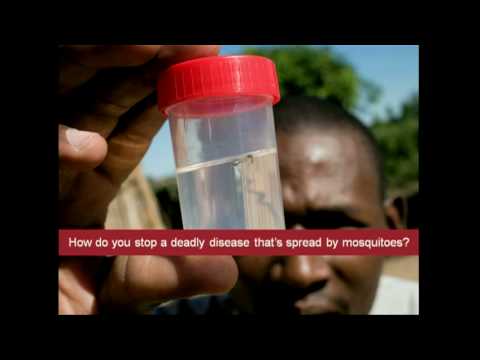
“A goal I had there was to draw more people in to work on those problems because I think there are some very important problems that don't get worked on naturally. That is the market does not drive the scientists, the communicators, the thinkers, the governments to do the right things. And only by paying attention to these things and having brilliant people who care and draw other people in can we make as much progress as we need to.”TED2009, Long Beach · 0:15
Vaccines are one of the clearest high-impact tools in global health
Gates’s basic view is unusually direct: the case for vaccines is not ambiguous. He treats them as a settled, evidence-based intervention that belongs near the center of any serious effort to reduce suffering and death, especially for children and vulnerable communities.1
He also sees vaccines as part of the broader story of human progress. His optimism about global health is grounded in the idea that better tools, including vaccines, have already helped drive down child mortality and can keep doing so if countries stay focused on delivery and funding.
He thinks vaccines matter most where markets underserve the poor
A recurring theme in Gates’s thinking is that some of the world’s biggest health problems do not attract enough market attention on their own. He points to diseases concentrated in poor countries as examples where science, funding, and talent have to be pulled in deliberately rather than left to commercial incentives.56
That is one reason vaccines loom so large in his philanthropy. He describes a model that funds research, works to make products inexpensive, and then partners with governments and others to get them to the places where need is greatest. In his view, inventing the tool is only the first step; reducing cost and ensuring access are equally important.789
“A goal I had there was to draw more people in to work on those problems because I think there are some very important problems that don't get worked on naturally. That is the market does not drive the scientists, the communicators, the thinkers, the governments to do the right things. And only by paying attention to these things and having brilliant people who care and draw other people in can we make as much progress as we need to.”TED2009, Long Beach · full transcript →
For pandemics, vaccines are essential but not enough by themselves
Gates treats vaccines as indispensable in pandemic response, but he does not present them as a magic early fix. In the acute phase of a fast-moving outbreak, he emphasizes testing and isolation as the immediate levers for getting transmission down while vaccines and therapeutics are developed and scaled.1112
That view fits his larger warning that epidemics are among the gravest global risks. Because an outbreak can cause enormous loss of life, he argues for preparation in advance: surveillance, coordinated response, and vaccine platforms that can move quickly when a new pathogen emerges.131415
Global access matters as much as scientific success
Gates does not think vaccine success should be judged only by whether a laboratory produces an effective candidate. He argues that vaccine projects should be assessed on what best helps humanity, and that manufacturing capacity must be built for the whole world rather than reserved for wealthy countries.16
This is why he repeatedly stresses partnerships. His approach depends on governments, multilaterals, and delivery organizations working together, because no foundation or country can do the job alone. In his view, vaccine equity is not a side issue; it is part of what makes a vaccine strategy actually work.9716
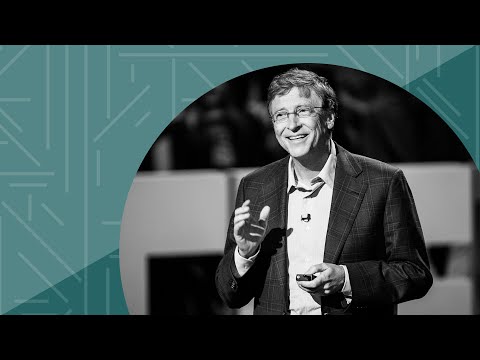
“There are vaccine projects all over the world, and those should be evaluated on a very neutral basis, to which one is the best to help humanity. And make sure the manufacturing capacity isn't just for rich countries, that it's scaled up, very low cost stuff for the entire world, and that's the spirit of GAVI, is getting vaccines out to every person. So in the science side, and data-sharing side, you see this great cooperation going on. Unfortunately, whenever you have disease, this sense of other and foreign and "Oh, stay away from me," you know, that sort of pulling inward is reinforced. And we have to avoid that.”TED Connects interview, April 2020 · full transcript →
Sticking with the job is what turns vaccines into eradication
Gates’s thinking on vaccines is tightly connected to eradication campaigns, especially polio. He sees eradication as a special threshold where finishing the job matters enormously, because once transmission truly reaches zero, the payoff is permanent and historic.18
But he is equally clear that half-measures are dangerous. If the world pushes weakly or inconsistently, disease burden may fall for a while and then rebound, especially as tools lose effectiveness or programs lose momentum. His broader warning is simple: standing still lets disease regain the advantage.1920

“Oh, what we're doing to eradicate polio, which if we're lucky by 2018, it will become the second disease after smallpox be completely eradicated. That is really exciting. And, you know, it's down to three countries, Nigeria, Pakistan, Afghanistan, and, you know, it's complicated. I'll meet on Monday with the president of Nigeria, the president of Pakistan. You know, we're still very hopeful. That is pretty exciting because we've had to bring, you know, satellite mapping, using cell phones, better vaccines, and reaching out to religious leaders. A lot of of different things come together. I'd say in terms of what's measurably been done, the work on childhood death, and childhood sickness, that's what we're most proud of, and that's largely been done through vaccines.”Harvard Campaign Launch Q&A, 2007 · full transcript →
Gates on vaccines, in his own words
“There are vaccine projects all over the world, and those should be evaluated on a very neutral basis, to which one is the best to help humanity. And make sure the manufacturing capacity isn't just for rich countries, that it's scaled up, very low cost stuff for the entire world, and that's the spirit of GAVI, is getting vaccines out to every person. So in the science side, and data-sharing side, you see this great cooperation going on. Unfortunately, whenever you have disease, this sense of other and foreign and "Oh, stay away from me," you know, that sort of pulling inward is reinforced. And we have to avoid that.”
Where to watch
 Bill Gates on Pandemic Response: Testing, Isolation, and Vaccines2020 · 52 min · full transcriptBest for seeing how Gates places vaccines inside a full pandemic strategy alongside testing and isolation.
 Bill Gates on Epidemic Preparedness: Why the World Is Underprepared2017 · 15 min · full transcriptBest for his argument that epidemic preparedness should include surveillance and faster vaccine development.
 Bill Gates on Global Health Philanthropy: Spending Down the Foundation2024 · 61 min · full transcriptBest for understanding his practical model: fund R&D, cut vaccine costs, and partner for delivery.
 Bill Gates on Malaria and Education: Two Solvable Problems2009 · 20 min · full transcriptBest for his view that neglected diseases need sustained attention because markets alone will not solve them.
 Bill Gates on Curiosity and Optimism: Reading, Health, and the Future2017 · 80 min · full transcriptBest for his concise, direct defense of vaccines as strongly supported by the facts.
 Bill Gates on Global Health Funding: Why Aid Still Matters2019 · 15 min · full transcriptBest for his case that continued global health funding is necessary to keep vaccine and disease-control gains from reversing.
Questions people ask
- What did Bill Gates say about polio eradication and vaccines?
- What did Bill Gates say about preparing for the next pandemic?
- What did Bill Gates say about testing and isolation during COVID-19?
- What did Bill Gates say about the risk COVID-19 posed to poorer countries?
- What did Bill Gates say was the main way to keep COVID-19 infections under control?
- What did Bill Gates say about global cooperation on vaccines during the pandemic?
Sources
Every quote above, word for word from the transcripts. Numbers match the text.
“The facts about vaccines are very clear and very strong.”
“There's more money put into baldness drugs than are put into malaria.”
“A goal I had there was to draw more people in to work on those problems because I think there are some very important problems that don't get worked on naturally. That is the market does not drive the scientists, the communicators, the thinkers, the governments to do the right things. And only by paying attention to these things and having brilliant people who care and draw other people in can we make as much progress as we need to.”
“Well, the Gates Foundation is fairly operational. That is, you know, we built teams that are experts on malnutrition, malaria, contraception, and we fund both the research to create new products and get them to be very inexpensive. And then we partner with governments and other philanthropies to actually deliver those, uh, to where they're most needed. Uh, likewise, in our education work, we fund a lot of R&D and then go work partner with the schools to actually try those things out. And, you know, by spending the money sooner than later,…”
“When I shift, the beauty of philanthropy is that it's not constrained by this profit motive. And I have to say, I was shocked at how little resources were going into helping the poorest countries. And philanthropic money spent there, if it's spent decently at all, you're always going to have at least 20 times more impact than you can have in rich countries. I mean, there's lots of rich-country philanthropy, you know, we do a lot in education, but the resources are so limited and the key public goods are so underfunded that, you know, in terms of helping all humans, that money is going to go the…”
“…we can't do it ourselves…”
“So the testing thing to me, it's got to be organized, it's got to be prioritized, that is super, super urgent. The second thing is the isolation that, you know, various parts, just focusing on the US, some parts are doing that in a fairly strong way and other parts not yet, and it's very hard to do, it's tough on people, it's disastrous for the economy. But the sooner you do it in a tough way, the sooner you can undo it and go back to normal.”
“Thank God we have testing, if we use it properly. We are doing therapeutics, which will help with the death rate, but in terms of keeping the infections below one percent of the population, it really all depends just on the two things: isolation and testing. CA: So to quote a question from my Twitter feed this morning for you Bill: If you were president for a month in the US, what would be the top two or three things you would do? BG: Well, the clear message that we have no choice to maintain this isolation and that's going to keep going for a period of time, you know, probably in the Chinese case, it was like six weeks, so we have to prepare ourselves for that, and do it very well.”
“I think an epidemic, either naturally caused or intentionally caused, is the most likely thing to cause, say, 10 million excess deaths…”
“You're absolutely right, and I should have mentioned surveillance as another area where the needs are quite dramatic.”
“Science is on our side. The fact we can be ready for the next epidemic, it's very clear how to do that. And yes, it will take tens of billions, but not hundreds or trillions of dollars. So it will be tiny compared to the economic cost. I remember when I did that presentation 2015, I put up, "Hey, a big flu epidemic could cost four trillion," and I thought, wow, that's a big number, do I really think it's that big? And I went and looked up numbers and thought, yeah, well, that's big. This epidemic will cost that much to the economy. So in the short run, we are going to have more pain and more difficulty and people are going to have to step up to help each other.”
“There are vaccine projects all over the world, and those should be evaluated on a very neutral basis, to which one is the best to help humanity. And make sure the manufacturing capacity isn't just for rich countries, that it's scaled up, very low cost stuff for the entire world, and that's the spirit of GAVI, is getting vaccines out to every person. So in the science side, and data-sharing side, you see this great cooperation going on. Unfortunately, whenever you have disease, this sense of other and foreign and "Oh, stay away from me," you know, that sort of pulling inward is reinforced. And we have to avoid that.”
“Oh, what we're doing to eradicate polio, which if we're lucky by 2018, it will become the second disease after smallpox be completely eradicated. That is really exciting. And, you know, it's down to three countries, Nigeria, Pakistan, Afghanistan, and, you know, it's complicated. I'll meet on Monday with the president of Nigeria, the president of Pakistan. You know, we're still very hopeful. That is pretty exciting because we've had to bring, you know, satellite mapping, using cell phones, better vaccines, and reaching out to religious leaders. A lot of of different things come together. I'd say in terms of what's measurably been done, the work on childhood death, and childhood sickness, that's what we're most proud of, and that's largely been done through vaccines.”
“If you go in kind of half heartedly for a period of time, you'll reduce the disease burden, but eventually, those tools will become ineffective.”
“So if you stand still, the disease will get out ahead of you.”
How this guide was made: drafted with AI from the full transcripts of the recordings cited, then checked: every quotation must match a transcript word for word and be the speaker's own words, and an independent review gates accuracy. Methodology and corrections.

