Bill Gates on Learning & Education
Bill Gates sees education as a leverage point for opportunity: improve teaching with real feedback, use technology thoughtfully, and keep measurement tied to student learning and equity.
- Education matters because it shapes opportunity and a country's future.
- Great teaching is the key variable, so teachers need specific feedback, observation, and support to improve.
- Measurement matters, but only if it helps people see what works and improve practice.
- Technology can make learning more adaptable and powerful, but motivation is often the bottleneck.
- Curiosity, reading, and staying a student are lifelong learning habits.
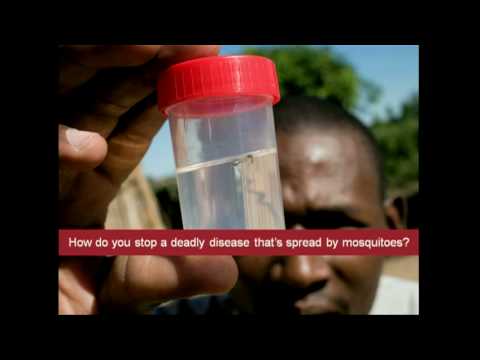
“Now we put a lot of money into education, and I really think that education is the most important thing to get right, for the country to have as strong a future as it should have. In fact, we have in the stimulus bill, it's interesting, the house version actually had money in it for these data systems and, was taken out in the senate because their their people are threatened by these things. But I... I'm optimistic. I think, people are beginning to recognize, how important this is, and it really can make a difference for millions of lives if we get it right.”TED2009, Long Beach · 18:11
Education is a core driver of opportunity
Gates treats education as one of the most important systems to get right because it shapes both individual lives and national strength. He ties it directly to equal opportunity and argues that better outcomes in education can improve millions of lives.12
His broader moral frame is inequity. He argues that unfair gaps in health, wealth, and opportunity should be reduced, and education belongs in that project because it affects who gets a real chance to succeed.34
“Now we put a lot of money into education, and I really think that education is the most important thing to get right, for the country to have as strong a future as it should have. In fact, we have in the stimulus bill, it's interesting, the house version actually had money in it for these data systems and, was taken out in the senate because their their people are threatened by these things. But I... I'm optimistic. I think, people are beginning to recognize, how important this is, and it really can make a difference for millions of lives if we get it right.”TED2009, Long Beach · full transcript →
The teacher matters more than the building
At the center of Gates's education view is a simple claim: the quality of teaching drives student trajectories. He is explicit that changing facilities alone will not change outcomes if students do not have effective teachers in front of them.5
That is why he focuses less on abstract reform and more on helping average teaching quality rise. He wants systems where strong teachers share what works, where professional development is practical, and where incentives and support help more teachers move toward top performance.67
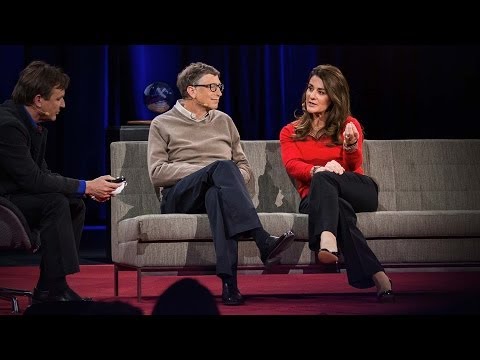
“If you don't have an effective teacher in the front of the classroom, I don't care how big or small the building is, you're not going to change the trajectory…”TED2013, Long Beach · full transcript →
Teachers need useful feedback, not vague ratings
Gates argues that teaching has long lacked the kind of actionable feedback common in other professions. He says people improve when someone shows them what they are doing well, what is not working, and what to try next.89
For him, evaluation is only valuable if it becomes diagnosis and coaching. Identifying weak spots is not enough; the point is to help teachers improve their practice in specific ways.10
He points to systems where teachers regularly observe great teaching, meet in study groups, and give one another feedback. He also highlights classroom video and student surveys as practical tools for spotting patterns linked to better learning.711
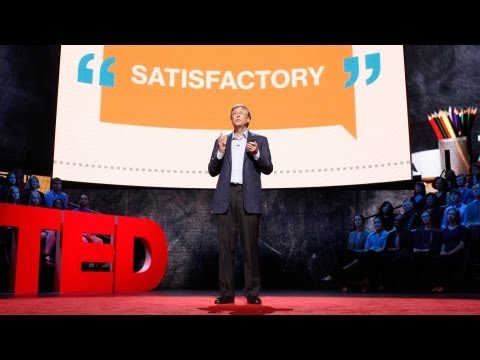
“We all need people who will give us feedback.”TED2013, Long Beach · full transcript →
Measure what works so learning can improve
A recurring Gates theme is that caring is not enough; progress depends on making complex problems understandable and measurable. In education, that means building ways to see what is happening in classrooms and whether changes actually help students learn.1213
He argues that impact should be visible and shared so others can learn from success and failure. That logic explains his interest in data systems and in research that links classroom practices to stronger outcomes.13111
He is also realistic about how hard this is. Improving the personnel system in K-12 involves politics, institutions, and resistance to change, which makes progress slower and less certain than simply buying equipment.6
“So we need a system that helps all our teachers be as good as the best. What would that system look like? Well, to find out, our foundation has been working with 3,000 teachers in districts across the country on a project called Measures of Effective Teaching. We had observers watch videos of teachers in the classroom and rate how they did on a range of practices. For example, did they ask their students challenging questions? Did they find multiple ways to explain an idea? We also had students fill out surveys with questions like, "Does your teacher know when the class understands a lesson?" "Do you learn to correct your mistakes?”TED2013, Long Beach · full transcript →
Technology helps, but motivation is the bottleneck
Gates is strongly pro-technology in education. He sees software, online learning, and interactive tools as ways to make learning more effective, adaptable, and widely available. He also treats access to computers and connectivity as increasingly basic for modern learning.14
But he does not think technology solves the hardest part by itself. He points out that digital tools work especially well when the learner is already highly motivated, which means the deeper challenge is often engagement rather than access alone.15
His long-run view is still optimistic. He believes technology creates new tools for tackling hard problems, and he sees current advances, including AI, as opening another major wave of possibility.1618

“If you have a kid who's super motivated, then yes, going to the Khan website and doing, you know, hours of math problems, that's great.”Jay Shetty Podcast interview, February 2025 · full transcript →
Learning is a lifelong habit of curiosity
Gates presents learning not just as a school issue but as a way of living. He describes himself as someone who keeps reading, keeps studying, and keeps trying to update his understanding.
That posture matters because the world changes quickly. His own example is to stay a student across decades, using reading and ongoing inquiry to deepen judgment rather than assuming earlier success is enough.1918
He also connects this habit to optimism. People can make progress on hard problems when they keep thinking, keep working, and refuse to give up because a challenge looks complicated.2013
Gates on learning & education, in his own words
“If you don't have an effective teacher in the front of the classroom, I don't care how big or small the building is, you're not going to change the trajectory…”
“We all need people who will give us feedback.”
“Diagnosing areas where a teacher needs to improve is only half the battle.”
“If you have a kid who's super motivated, then yes, going to the Khan website and doing, you know, hours of math problems, that's great.”
Where to watch
 Bill Gates on Teacher Feedback: How to Help Teachers Improve2013 · 10 min · full transcriptBest single talk on his education philosophy: why teachers need specific feedback, observation, and coaching.
 Bill Gates on Malaria and Education: Two Solvable Problems2009 · 20 min · full transcriptShows why he treats education as a major unsolved public problem tied to equal opportunity and national progress.
 Bill Gates on Education and Health: Technology Can Lift Lives2007 · 33 min · full transcriptBest overview of how he thinks software and digital tools can improve learning and widen access.
 Bill Gates on Success and Parenting: Lessons from His Parents2025 · 81 min · full transcriptAdds an important caveat: technology helps, but motivation is often the limiting factor in learning.
 Bill Gates on Curiosity and Optimism: Reading, Health, and the Future2017 · 80 min · full transcriptUseful for his broader learning philosophy: curiosity, reading, and staying a student for life.
Questions people ask
- How does Bill Gates think teachers can improve?
- What advice did Bill Gates give Harvard graduates about making a difference?
- What did Bill Gates say about giving up on malaria and tuberculosis?
- What did Bill Gates say about measuring better teaching?
- What did Bill Gates say about teacher feedback?
- What is the Measures of Effective Teaching project Bill Gates talked about?
Sources
Every quote above, word for word from the transcripts. Numbers match the text.
“Now we put a lot of money into education, and I really think that education is the most important thing to get right, for the country to have as strong a future as it should have. In fact, we have in the stimulus bill, it's interesting, the house version actually had money in it for these data systems and, was taken out in the senate because their their people are threatened by these things. But I... I'm optimistic. I think, people are beginning to recognize, how important this is, and it really can make a difference for millions of lives if we get it right.”
“We have to change it so that people have equal opportunity.”
“Reducing inequity is the highest human achievement.”
“I left Harvard with no real awareness of the awful inequities in the world…”
“If you don't have an effective teacher in the front of the classroom, I don't care how big or small the building is, you're not going to change the trajectory…”
“If you're putting computers in the libraries, that's straightforward. If you're trying to help improve the k through 12 personnel system so that the average quality of teaching is much better. That is the really good teachers share their secrets and certain incentives and professional development are put in so that the average, moves up to the the top quartile, from the... Today's average to the top quartile today. That because it's subject to so many uncertainties, including school boards, political processes, union negotiations, desire to maintain the status quo. If you said to me, are we making progress on that one or not, I could talk for a long time, but I wouldn't be able to give you a number.”
“They made sure that younger teachers get a chance to watch master teachers at work. They have weekly study groups, where teachers get together and talk about what's working. They even require each teacher to observe and give feedback to their colleagues. You might ask, why is a system like this so important? It's because there's so much variation in the teaching profession. Some teachers are far more effective than others. In fact, there are teachers throughout the country who are helping their students make extraordinary gains. If today's average teacher could become as good as those teachers, our students would be blowing away the rest of the world.”
“We all need people who will give us feedback.”
“I'm talking about teachers. When Melinda and I learned how little useful feedback most teachers get, we were blown away. Until recently, over 98 percent of teachers just got one word of feedback: Satisfactory. If all my bridge coach ever told me was that I was "satisfactory," I would have no hope of ever getting better. How would I know who was the best? How would I know what I was doing differently? Today, districts are revamping the way they evaluate teachers, but we still give them almost no feedback that actually helps them improve their practice. Our teachers deserve better.”
“Diagnosing areas where a teacher needs to improve is only half the battle.”
“So we need a system that helps all our teachers be as good as the best. What would that system look like? Well, to find out, our foundation has been working with 3,000 teachers in districts across the country on a project called Measures of Effective Teaching. We had observers watch videos of teachers in the classroom and rate how they did on a range of practices. For example, did they ask their students challenging questions? Did they find multiple ways to explain an idea? We also had students fill out surveys with questions like, "Does your teacher know when the class understands a lesson?" "Do you learn to correct your mistakes?”
“The barrier to change is not too little caring. It is too much complexity.”
“The crucial thing is to never stop thinking and working and never do what we did with malaria and tuberculosis in the twentieth century, which is to surrender to complexity and quit. The final step after seeing the problem and finding an approach is to measure the impact of the work and to share that success or failure so that others can learn from the efforts. You have to have the statistics, of course. You have to be able to show, for example, that a program is vaccinating million more... Millions more children. You have to be able to show, for example, a decline in the number of children dying from the diseases.”
“…the central role of software is providing something that's important.”
“If you have a kid who's super motivated, then yes, going to the Khan website and doing, you know, hours of math problems, that's great.”
“Still, I'm optimistic. Yes, inequity has been with us forever. But the new tools we have to cut through complexity have not been with us forever. They are new. They can help us make the most of our caring, and that's why the future can be different from the past. The defining and ongoing innovations of this age, biotechnology, the personal computer, and the Internet give us a chance we've never had before to end extreme poverty and end death from preventable disease.”
“We overestimate what we can do in 1 year, and we underestimate what we can do in 10 years.”
“I have a fear that, you know, I eventually I'll lose, you know, I won't want to pick up a 500-page book.”
“Don't let complexity stop you.”
How this guide was made: drafted with AI from the full transcripts of the recordings cited, then checked: every quotation must match a transcript word for word and be the speaker's own words, and an independent review gates accuracy. Methodology and corrections.


