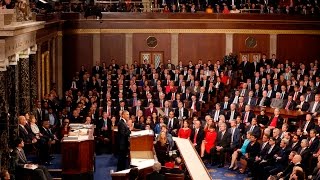
Barack Obama on Financial Crisis
Obama treats the financial crisis as both an emergency and a warning: act fast to protect families, but pair any rescue with oversight, taxpayer protection, and longer-term reform.
- The crisis demanded urgent action, but not a blank check for Wall Street.
- Any rescue had to protect taxpayers through transparency, oversight, and a chance to recover public money.
- Obama saw the crash as a Main Street crisis affecting jobs, homes, retirement, and college plans.
- He argued the meltdown exposed deeper failures in deregulation and required a modern regulatory framework.
- Recovery was not just about stopping panic; it required rebuilding middle-class opportunity and long-term competitiveness.

“So, the question I think that we've got to ask ourselves is, yes, we've got to solve this problem short term, and we are going to have to intervene—uh, there's no doubt about that—but we're also going to have to look at how is it that we shredded so many regulations? We did not set up a 21st century regulatory framework to deal with these problems, and that in part has to do with an economic philosophy that says that regulation is always bad. Are you going to vote for the plan?”First presidential debate, 2008 · 7:43
The financial crisis was a national emergency, not just a Wall Street story
Obama describes the 2008 crash as a defining historical moment, on the scale of the country's biggest tests. He presents it as more than a market event, because families were already asking what it would mean for their jobs, homes, retirement savings, and ability to send children to college.12
That framing matters because it explains why he resists treating the crisis as something confined to banks or investors. For him, the real measure of policy is whether it protects ordinary people facing economic insecurity on Main Street.23
Move fast, but do it carefully
Obama's core instinct in a crisis is speed with discipline. He argues that the government had to intervene, but that panic or ideology could make a bad situation worse, so action had to be both immediate and smart.45
He also warns that early rescue steps would not finish the job. His point is that stabilizing the system is only the first phase, not the end of the crisis or of the work required afterward.6
No bailout without accountability
Obama does not present rescue policy as a gift to financial institutions. He insists that if taxpayers are forced to put money at risk, they should have a real chance to get that money back and even share in the upside if markets recover.7
That view goes with a broader demand for oversight, transparency, and accountability. His basic standard is that public support should serve the public, not simply absorb private losses while leaving the rules and incentives unchanged.73
The crash exposed a deeper failure of deregulation
Obama argues that the financial crisis was not just bad luck or a temporary panic. He traces it to a broader governing philosophy that treated regulation as inherently suspect and failed to build a modern framework for increasingly complex markets.5
This is one of his most important ideas on the crisis: short-term stabilization is necessary, but real recovery also requires changing the rules that allowed the system to become so fragile. In his view, the lesson of 2008 is that markets need up-to-date public guardrails.5
“So, the question I think that we've got to ask ourselves is, yes, we've got to solve this problem short term, and we are going to have to intervene—uh, there's no doubt about that—but we're also going to have to look at how is it that we shredded so many regulations? We did not set up a 21st century regulatory framework to deal with these problems, and that in part has to do with an economic philosophy that says that regulation is always bad. Are you going to vote for the plan?”First presidential debate, 2008 · full transcript →
Recovery should rebuild the middle class, not just restore finance
Obama connects crisis response to a broader economic philosophy centered on middle-class strength. In later speeches and debates, he argues that lasting growth comes from jobs, education, training, infrastructure, and policies that expand opportunity rather than relying mainly on top-down tax cuts.89
He treats the passing of the immediate crisis as a beginning, not a final victory. Once the shadow of recession lifts, he says the next task is to widen opportunity for working families so the recovery is felt beyond headline indicators.1011
His practical lesson: bold action now, shared responsibility after
Obama's approach to financial crisis combines urgency with civic responsibility. He argues that the cost of waiting is too high, but he also says recovery depends on a broader willingness to work together, make government accountable, and choose public purpose over denial or division.121314
Applied more broadly, his view is that economic crises should be met with confidence rather than fatalism. Governments should act forcefully to prevent collapse, then use the moment to build a fairer and more resilient economy.1516

“The cost of inaction will be far greater.”Address to Congress, 2009 · full transcript →
Obama on financial crisis, in his own words
“You know, we are at a defining moment in our history.”
“…this isn't the beginning of the end of this crisis; this is the end of the beginning.”
“It's not about helping banks, it's about helping people.”
Where to watch
 Barack Obama on Financial Crisis: The 2008 Debate on Recovery2008 · 96 min · full transcriptBest single statement of Obama's crisis view: urgent intervention, taxpayer protections, and the need for accountability.
 Barack Obama on Health Care Reform: A Call to Act Now2009 · 54 min · full transcriptShows how he linked financial rescue to helping ordinary people and to broader economic renewal.
 Barack Obama on Inaugural Address: Hope, Unity, and Renewal2009 · 99 min · full transcriptCaptures the mood of crisis and his argument for responsibility, action, and national resolve.
 Barack Obama on State of the Union: A stronger future together2015 · 62 min · full transcriptUseful for seeing how he described the period after the recession and what recovery should deliver next.
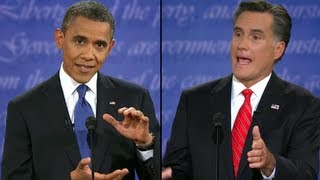 Barack Obama on Jobs and Taxes: The 2012 Debate Case2012 · 93 min · full transcriptExplains how his post-crisis economics centered on the middle class, investment, and skepticism of top-down tax claims.
Questions people ask
- What did Barack Obama say about America's future and getting through the crisis?
- What did Barack Obama say about education and getting skills for the future?
- What did Barack Obama say about the future and working together?
- What did Barack Obama say about the 2008 financial crisis in the first presidential debate?
- What did Barack Obama say about regulation after the financial crisis?
Sources
Every quote above, word for word from the transcripts. Numbers match the text.
“You know, we are at a defining moment in our history.”
“You know, we are at a defining moment in our history. Our nation is involved in two wars, and we are going through the worst financial crisis since the Great Depression. And although we've heard a lot about Wall Street, those of you on Main Street, I think, have been struggling for a while. And you recognize that this could have an impact on all sectors of the economy, and you're wondering, how's it going to affect me? How's it going to affect my job? How's it going to affect my house? How's it going to affect my retirement savings or my ability to send my children to college? So, we have to move swiftly, and we have to move wisely. And I've put forward a series of proposals that make sure that we protect taxpayers as we engage in this important…”
“It's not about helping banks, it's about helping people.”
“So, we have to move swiftly, and we have to move wisely.”
“So, the question I think that we've got to ask ourselves is, yes, we've got to solve this problem short term, and we are going to have to intervene—uh, there's no doubt about that—but we're also going to have to look at how is it that we shredded so many regulations? We did not set up a 21st century regulatory framework to deal with these problems, and that in part has to do with an economic philosophy that says that regulation is always bad. Are you going to vote for the plan?”
“…this isn't the beginning of the end of this crisis; this is the end of the beginning.”
“…we've got to make sure that taxpayers, when they are putting their money at risk, have the possibility of getting that money back and gains…”
“It's not a nice-to-have -- it's a must-have.”
“America thrived in the 20th century because we made high school free, sent a generation of GIs to college, trained the best workforce in the world. We were ahead of the curve. But other countries caught on. And in a 21st century economy that rewards knowledge like never before, we need to up our game. We need to do more. By the end of this decade, two in three job openings will require some higher education -- two in three. And yet, we still live in a country where too many bright, striving Americans are priced out of the education they need. It's not fair to them, and it's sure not smart for our future.”
“The shadow of crisis has passed, and the State of the Union is strong.”
“It's the right thing to do.”
“The cost of inaction will be far greater.”
“The time has come to set aside childish things.”
“This is the price and the promise of citizenship.”
“All this we can do. All this we will do.”
“The future we want - opportunity and security for our families; a rising standard of living and a sustainable, peaceful planet for our kids - all that is within our reach. But it will only happen if we work together. It will only happen if we can have rational, constructive debates. It will only happen if we fix our politics. A better politics doesn't mean we have to agree on everything.”
How this guide was made: drafted with AI from the full transcripts of the recordings cited, then checked: every quotation must match a transcript word for word and be the speaker's own words, and an independent review gates accuracy. Methodology and corrections.