Paul Graham on Startups
Paul Graham sees startups as counterintuitive experiments in making something users truly want, where exceptional founders win by focusing, learning fast, and enduring long enough to adapt.
- Startups are counterintuitive, so founders should focus on users rather than trying to game the system.
- The founders matter more than the original idea because ideas change but founders are what carry a startup through.
- Early-stage progress comes from talking to users, doing manual work, and releasing to learn.
- Great founders need ambition and determination because startup work is too hard for shallow motivation.
- Start small, get intense demand from a few users, and let the company evolve from what you learn.

“Starting a startup is where gaming the system stops working.”Stanford CS183B lecture 3, 2014 · 11:14
Startups punish fake progress
Graham’s starting point is that startups are unlike school or big-company careers. In those worlds, people can sometimes get ahead by looking impressive, following formulas, or pleasing the right gatekeepers. In startups, that breaks down because reality arrives quickly: users either want what you made or they do not.12
That is why he keeps pushing founders away from tricks and toward substance. He argues that growth does not come from clever slogans or hacks, but from making something users really love and then getting it in front of them. This is one reason startup advice often feels backward at first: the obvious-seeming moves are often distractions.34
The practical implication is simple but hard: measure yourself by user behavior, not by appearances. If you are spending energy trying to seem like a startup instead of learning from users, you are probably doing the wrong work.56
“Starting a startup is where gaming the system stops working.”Stanford CS183B lecture 3, 2014 · full transcript →
Founders matter more than the original idea
Graham is unusually explicit that the quality of the founders matters more than the initial concept. His reason is that early ideas often change a lot, while the one thing you cannot swap out or redesign is the founders themselves. A startup’s eventual outcome depends heavily on whether the people running it can keep going, keep learning, and keep executing.789
He connects this to large outcomes too. The next giant company does not mainly come from a perfect idea spotted in advance; it comes from the right founders. In his view, startups usually fail more from poor execution than from picking an idea that looked promising on paper.101112
What should founders look for in themselves and one another? Graham emphasizes determination, ambition, and sound judgment about people. He thinks cofounder choice should rely less on resume prestige and more on the kind of instinct people already use in friendships and close working relationships.13141516

“The main thing we care about is the founders.”Bloomberg West interview, 2010 · full transcript →
The job is to learn from users as fast as possible
For Graham, the early phase of a startup is not about polishing a grand plan. It is about getting in contact with reality quickly. Releasing a product matters because it starts the learning loop, and the first users are valuable not just because they pay or sign up, but because they teach you what actually matters.517
That is why he famously advocates manual, inefficient tactics early on. Doing things that do not scale is not a romantic stunt; it is a way to discover what users need, where they get confused, and what part of the product creates real value. Founders should expect to hand-hold, explain, recruit, and customize in the beginning.1819
This also means resisting premature certainty. Graham advises founders to pick the path that can get usage quickest, watch what users do, and let the product grow into the shape the market reveals. Early startups need evidence, not elaborate predictions.192021

“Do things that don't scale.”Startup School conversation moderated by Geoff Ralston, 2018 · full transcript →
Start small and chase intense demand
A recurring Graham idea is that startups should begin with a narrow group of users who want the product a lot. He argues that you cannot start by pleasing everyone deeply; the first version has to light a small, intense fire. That usually means finding a small set of people with a strong problem rather than claiming a huge market from day one.2223
This is one reason he likes ideas that initially look odd or implausible. Real startup ideas often do not arrive as clean, obvious lightbulb moments. They can look awkward, niche, or even slightly improper before anyone sees how big they could become.24
The test, then, is not whether an idea sounds impressive in the abstract. The test is whether some specific users urgently want it now. If they do, the startup can expand outward from that foothold as it learns.42220

“You gotta start with you gotta start with a small intense fire. So you have... If you're... Suppose you're the Apple one. Right? You have to find... I mean, I think they made something like 500 of those things. Right? So all they had to do is, like, find 500 people to buy these computers, and they launched Apple. Apple. Yeah. Right? So you gotta find a small number of people. It's necessarily gonna be a small number of people. You can't find... You could... There's... It's impossible to make something that a large number of people want a lot. So you've gotta find people who want what you're making a lot. And that's necessarily gonna be a small number. And that's okay. That's how these giant things get started.”LAUNCH Festival interview with Jason Calacanis, 2014 · full transcript →
Being good to users is not softness but strategy
Graham treats benevolence as a startup advantage, especially early on. When a company is small, it cannot force its way into the world, so it has to win people over by being genuinely useful and acting in users’ interest. This becomes a practical operating rule: do what is best for users.2526
He also thinks founders should not obsess too early about extracting revenue. The first job is to make something people want; money matters, but it is often easier to add later than real product love is to create from scratch. Startups that behave this way can look a little like nonprofits at first, but he sees that as a feature, not a bug.2728
This approach helps in three ways. It keeps morale up, attracts allies, and simplifies decisions in fast-changing situations because the rule stays the same even when circumstances change. Benevolence, for Graham, is not just ethics. It is a robust way to move quickly without losing the plot.2930
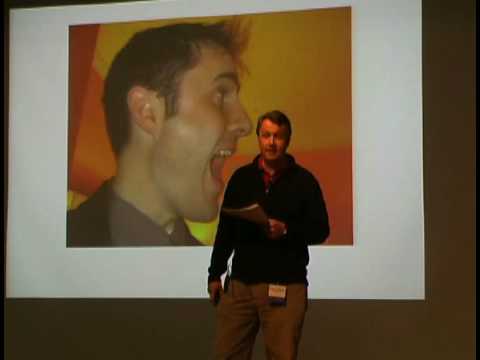
“Just do whatever is best for your users.”LAUNCH Festival 2014 fireside chat · full transcript →
Survival depends on ambition, focus, and flexibility
Graham does not romanticize startup life. He says the obstacles are severe enough that dutifulness alone will not carry a founder through them. Founders need ambition, and in everyday life they are often driven less by fantasies of wealth than by the desire not to fail.323334
That pressure makes focus crucial. Since there are always many plausible tasks, founders have to identify the single most important thing and do that instead of scattering attention across lower-value work. Much of startup success is simply refusing distraction.6
At the same time, flexibility matters, but in a specific way. Founders should be stubborn about continuing and about serving users, while being ready to change product details, tactics, and even the company’s exact shape. As long as they have not given up, they can still turn the startup into something better.3520

“The obstacles are too fearsome for mere dutifulness to do it.”YC discussion, 2026 · full transcript →
Graham on startups, in his own words
“Starting a startup is where gaming the system stops working.”
“The main thing we care about is the founders.”
“Do things that don't scale.”
“Just do whatever is best for your users.”
“The obstacles are too fearsome for mere dutifulness to do it.”
“As long as the founders haven't given up, they can morph the company into anything…”
Where to watch
 Paul Graham on Startup Ideas: How Ideas, Teams, and Growth Work2018 · 63 min · full transcriptBest single walkthrough of how startup ideas really emerge, why early work should be manual, and how founders learn from users.
 Paul Graham on Before the Startup: Just Learn2014 · 48 min · full transcriptExplains why startups are counterintuitive and why user expertise matters more than startup expertise.
 Paul Graham on Benevolence in Startups: being good works2014 · 31 min · full transcriptShows why serving users well is a strategic advantage, not just a moral preference.
 Paul Graham on Startup Validation: Build, Test, and Focus2013 · 29 min · full transcriptConcrete office-hours examples of validation, focus, and deciding what to build next from user evidence.
 Paul Graham on Startups and Ambition: Great Founders Win2026 · 21 min · full transcriptSharpest statement of why ambition and formidable founders matter more than dutiful effort.
 Paul Graham on Startup Investing: It’s About the Founders2010 · 10 min · full transcriptShort, direct explanation of why founders matter more than the original startup idea.
Questions people ask
- What did Paul Graham say about business school for entrepreneurship?
- What did Paul Graham say about growth hacks?
- What did Paul Graham say about starting small in a startup?
- What does Paul Graham say startups should focus on?
- How does Paul Graham decide between multiple startup solutions?
- Why did Paul Graham say customers teach you in the beginning of a startup?
Sources
Every quote above, word for word from the transcripts. Numbers match the text.
“Starting a startup is where gaming the system stops working.”
“Starting a startup is where gaming the system stops working. Gaming the system may continue to work if you go to work for a big company. Depending on how broken the company is, you may be able to succeed by sucking up to the right person, giving the impression of productivity by sending emails late at night. Or if you're smart enough, changing the clock on your computer.”
“And this is exacerbated by the existence of this term growth hacks. Right? Whenever you hear anybody talk about growth hacks, just mentally translate it in your mind into bullshit. Because what we tell them is the way to make your startup grow is to make something that users really love. Right? And then tell them about it. So that's what you have to do. That's growth hacks right there.”
“What you need is expertise in your own users.”
“The point of releasing is to start learning from your users…”
“You know, there's a meta answer to that. Let me... Most important thing for startups to do is to focus. Ah. Right? Because there's so many things you could be doing. One of them is the most important. You should be doing that and not any of the others. Right? So you should not be grabbing coffee with investors. Right? When you wanna raise money, you shift into fundraising mode and you go and raise money. You do not, like, promiscuously meet with investors in the middle of the day when you should be working simply because they, like, send you an email saying, hey. Let's grab coffee. Right? Right. And there's there's, like, a thousand things you could be doing, and only one of them is the most important. You do the most important thing. It's like optimizing software. There is something that is currently the bottleneck to making the software faster. You work on that.”
“The main thing we care about is the founders.”
“What you can't change is the founders.”
“The main thing we care about is the founders. A lot of people think the most important thing about a startup is the idea. We don't care that much about the idea because historically, successful startups, the idea has changed a lot. What you can't change is the founders. So that's what we care about.”
“The answer to your question, where the next giant company comes from is it comes from the right founders.”
“What makes companies fail most of the time is poor execution by the founders.”
“It's all about the people.”
“Determination is the one that can fool you.”
“Unfortunately, the most important quality is the hardest, is the hardest one to judge in a short time.”
“You can, however, trust your instincts about people.”
“You can, however, trust your instincts about people. You... Your life so far hasn't been much like starting a start up, but all the interactions you've had with people are just like the interactions you have with people in the business world. So in fact, one of the big mistakes that founders make is not to trust their intuitions about people enough. They meet someone who seems impressive, but about whom they feel some misgivings. And then later, when things blow up, they tell them, they say, you know, I knew there was something wrong about that guy, but I ignored it because he seemed so impressive. And there's a specific sub case in business, especially if you have come from an engineering background, as I believe you all do.”
“Because in the beginning, you just want growth. Because the customers teach you. The first customers don't just give you money. They teach you. Alright. Two more questions. You two. Two. You pick two.”
“Do things that don't scale.”
“Is it normal as a founder to be... To see multiple different solutions? Yeah. Sure. Absolutely. You just have to pick one. Pick the one that you think could get could get usage quickest.”
“…let it grow into whatever it's going to grow into…”
“…five-year plans aren't worth the ink cartridge that they are that they're written with…”
“You gotta start with you gotta start with a small intense fire. So you have... If you're... Suppose you're the Apple one. Right? You have to find... I mean, I think they made something like 500 of those things. Right? So all they had to do is, like, find 500 people to buy these computers, and they launched Apple. Apple. Yeah. Right? So you gotta find a small number of people. It's necessarily gonna be a small number of people. You can't find... You could... There's... It's impossible to make something that a large number of people want a lot. So you've gotta find people who want what you're making a lot. And that's necessarily gonna be a small number. And that's okay. That's how these giant things get started.”
“You know, really big markets are bad for startups, not good. Yeah. If you say a too big number, the investors just—they just don't believe it, right? You know, it's really hard to say. I mean, I—I—I’ve kind of modeled out and say like, okay, we can make about $30 million a year in profit just being a customs brokerage if you get say 1%. I don't like to do that kind of compound analysis, but, you know, each customer is probably worth maybe $200 or $3,000 a year and I think we can get as many customers, but the whole business is three billion a year. Yeah. 30 million is 1%. Yeah, exactly.”
“It's very common for ideas. In retrospect, they seem obvious and you you sort of... Historians who weren't there sort of straighten out all the kinks in the development. And it just seems like, oh, they had this... You know, it's like this idea. I always hate it when people represent startup ideas as light bulbs. You know? Because as well as being the most cliched metaphor imaginable, it's also false. You don't just, like, have this idea and then realize it. Right? No. It's more like you have this sort of inkling that something... You could do something that somebody else hasn't done before. And it's probably a bad idea, but you're too lazy to learn Windows, and so you wanna do it that way. Right? And so... Or, like, who would... Or, like, Zach starting Facebook. You know? Just like, let's see what happens. Right? It's Way implausible that this would ever be a startup,…”
“When you're small, you can't bully users, so you have to charm them.”
“Just do whatever is best for your users.”
“Don't worry too much about making money.”
“Another thing we tell startups, probably the second most common thing we tell startups, is not to worry too much about the business model at the beginning. Don't worry too much about money. Not because it's not important, but because it's so much easier than making something great. Well, a couple weeks ago, I realized that when you put these two ideas together, you get something strange. Make something people want. Don't worry too much about making money. What you've got is a description of a nonprofit. Alright. So when something... When you get a weird result like this, there's two possibilities. Either it's a bug or a new discovery.”
“So I figured out that there's three ways that benevolence will help your startup. It improves your morale, it makes other people want to help you, and above all, it helps you be decisive. Morale is tremendously important to a startup. So important that that alone is almost enough to determine success. You will hear people describe start ups as an emotional roller coaster.”
“Being good is a particularly useful strategy for making decisions in situations where things change fast because it's stateless. It's like telling the truth. The trouble with lying, as I discovered when I was a kid, is that you have to remember everything you've said in the past in order not to say anything that will contradict yourself. If you tell the truth, you don't have to remember anything. And that is a really useful property in domains where things change fast.”
“The obstacles are too fearsome for mere dutifulness to do it.”
“What actually motivates founders day to day? The fear of failure.”
“When did I figure out that founders had to be really ambitious? I think, um, I already knew that before we started YC because when we started YC we already had all this experience of doing a startup ourselves, right? And so we knew that it was grueling. And you need, you need something to drive you through all those obstacles and honestly being dutiful is not enough. The obstacles are too fearsome for mere dutifulness to do it. So there's got to be something driving you and you call it ambition.”
“As long as the founders haven't given up, they can morph the company into anything…”
How this guide was made: drafted with AI from the full transcripts of the recordings cited, then checked: every quotation must match a transcript word for word and be the speaker's own words, and an independent review gates accuracy. Methodology and corrections.