Paul Graham on Ambition & Determination
Paul Graham sees ambition and determination as the forces that carry founders through startup pain, but they only matter when aimed at real users, honest execution, and persistent adaptation.
- Startups are too hard for duty alone; founders need real ambition to keep going.
- Day to day, founders are often driven less by fantasies of wealth than by not wanting to fail.
- Determination matters more than talk; you see it in what people did when things went wrong.
- Ambition works best when attached to making something users want, not gaming systems or polishing plans.
- Strong founders stay stubborn about the mission but flexible about tactics, including changing the company if needed.

Ambition is necessary because startup work is brutally hard
Graham’s basic view is that startups demand more than conscientiousness. The work is too punishing, uncertain, and emotionally difficult for someone who is merely being responsible or following a respectable career script12.
That is why he puts unusual weight on founder ambition rather than just the idea. When he talks about giant outcomes, he traces them back to unusually strong founders, because the company’s future depends on the people who keep pushing through obstacles345.
This also explains why he often points people away from performative entrepreneurship. The best world-changing startups often begin with curiosity about a problem, not with a plan to look like a founder67.
Determination is what keeps founders moving on bad days
For Graham, determination is the most important founder trait and also the hardest one to evaluate quickly. People can sound tough in interviews, but that performance tells you little about how they will behave after repeated setbacks8910.
So he looks for evidence in actions and stories. What matters is what someone actually built, what they pursued outside school or work, and how they responded when things went wrong or got uncomfortable1011.
He also thinks founders often do not know their own limits in advance. Some become more formidable once the company starts, while others discover they are less persistent than they imagined9.
Fear of failure often drives founders more than dreams of riches
Graham makes a sharp distinction between the image of ambition and the feeling of it. Founders may look externally motivated by huge success, but day to day the stronger force is often not wanting to fail12.
That matters because it gives ambition a practical shape. The founder who keeps going is usually not floating on grand visions all day; they are responding to immediate problems, pressure from reality, and the need to make the company survive and grow1213.
His comments on extreme success point the same way. Building something enormous does not produce a relaxed life; it creates a stream of hard decisions and responsibility, which means the people who take this path need unusually deep motivation14.
“What actually motivates founders day to day? The fear of failure.”YC discussion, 2026 · full transcript →
Real ambition shows up as execution, not posturing
Graham is hostile to anything that lets founders pretend they are making progress. In startups, status games and system-gaming stop working, because reality shows up quickly in whether users want what you made1516.
That is why he keeps returning to users, growth, and direct contact with the problem. Founders need expertise in their users, they need to make something people choose to use, and they should do unscalable manual work early because it teaches them what matters17181920.
In the same spirit, he dismisses polished long-range planning as mostly fake certainty. At the beginning, what counts is building, learning, and getting moving rather than presenting a five-year story21.
The right kind of determination is stubborn about ends and flexible about means
Graham does not mean blind persistence. He thinks good founders combine tenacity with the ability to revise tactics fast when reality disagrees with them922.
This is why he is comfortable with startups changing shape dramatically. If the founders have not given up, the company can still become something very different and succeed, because the core asset is the founders’ continued drive, not the original plan234.
His own startup stories reflect this pattern. Good ideas often begin as awkward or implausible-seeming moves, and progress comes from trying something unusual, learning from users, and following the truth rather than protecting the first version of the idea2425.
Ambition gets stronger when founders are around other strong founders
Graham thinks determination is not only an individual trait. Environment matters, and being around more formidable peers can raise a founder’s standards for what is normal effort and what level of persistence is possible9.
That is a big reason he values funding startups in batches. Founders get colleagues, a reduction in loneliness, and constant examples of other people pushing through similar problems, which makes it easier to stay determined yourself2627.
He applies the same people-first logic to cofounders and early teammates. Since startup work is so demanding, founders should trust their instincts about people and work with peers who are intrinsically motivated, not people who need to be managed into action282930.
Graham on ambition & determination, in his own words
“What actually motivates founders day to day? The fear of failure.”
“Determination is the one that can fool you.”
“What makes companies fail most of the time is poor execution by the founders.”
Where to watch
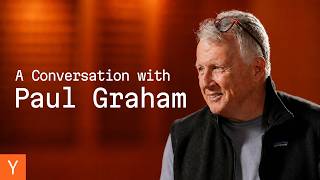 Paul Graham on Startups and Ambition: Great Founders Win2026 · 21 min · full transcriptBest single overview of why ambition matters, what really motivates founders, and why great outcomes come from the right people.
 Paul Graham on Founder Determination: What Matters Most2011 · 7 min · full transcriptBest short explanation of why determination is the key founder trait and why judging it is so difficult.
 Paul Graham on Talent Selection: Ambition, Art, and YC2023 · 55 min · full transcriptShows how Graham actually looks for determination in stories, behavior under pressure, and founder understanding.
 Paul Graham on Startup Ideas: How Ideas, Teams, and Growth Work2018 · 63 min · full transcriptBest for seeing how determination becomes concrete in execution: doing things that do not scale, learning from users, and pushing through awkward beginnings.
 Paul Graham on Early-Stage Investing: Build, Survive, Be Honest65 min · full transcriptUseful for how ambition should translate into building, honesty, and surviving long enough to adapt.
Questions people ask
- How does Paul Graham judge determination in founders?
- What did Paul Graham say about finding a cofounder?
- What does Paul Graham say is the best preparation for starting a startup?
- What does Paul Graham say matters most when choosing startup founders?
- Why does Paul Graham like young founders who have done side projects?
- Why does Paul Graham say founders need to be ambitious?
Sources
Every quote above, word for word from the transcripts. Numbers match the text.
“The obstacles are too fearsome for mere dutifulness to do it.”
“When did I figure out that founders had to be really ambitious? I think, um, I already knew that before we started YC because when we started YC we already had all this experience of doing a startup ourselves, right? And so we knew that it was grueling. And you need, you need something to drive you through all those obstacles and honestly being dutiful is not enough. The obstacles are too fearsome for mere dutifulness to do it. So there's got to be something driving you and you call it ambition.”
“The answer to your question, where the next giant company comes from is it comes from the right founders.”
“The main thing we care about is the founders. A lot of people think the most important thing about a startup is the idea. We don't care that much about the idea because historically, successful startups, the idea has changed a lot. What you can't change is the founders. So that's what we care about.”
“Oh, it's all the people.”
“The best way to start a startup that's really gonna take over the world is don't even try to start a startup.”
“And if you have genuine intellectual curiosity, that's what you'll naturally tend to do if you just follow your own inclinations. The component of entrepreneurship, I can never quite say that word with a straight face, that really matters is domain expertise. Larry Page is Larry Page because he was an expert on search. And the way he became an expert on search was because he was genuinely interested in it, not because of some ulterior motive. At its best, starting a startup is merely an ulterior motive for curiosity, and you'll do it best if you introduce the ulterior motive at the end of the process. So here is the ultimate advice for young, would be startup founders, reduced to two words, just learn.”
“Determination is the one that can fool you.”
“Unfortunately, the most important quality is the hardest, is the hardest one to judge in a short time.”
“Determination, it's hard to judge by looking at the person. The way you would judge determination because people act determined. People think they're supposed to act determined. No one walks into their Y Combinator interview thinking, I need to seem diffident. Nobody thinks that. They all think they're supposed to seem tough, which is actually really painful and stressful. It would be better if they just were themselves because someone trying to act tough is just so painful to watch. But the way you tell determination is not so much from talking to them as from asking them stories about things that have happened to them. That's where you can see determination.”
“What have you made outside of school or work because you liked it?”
“What actually motivates founders day to day? The fear of failure.”
“What makes companies fail most of the time is poor execution by the founders.”
“It may seem to you that Larry Page has an enviable life, but there are parts of it that are definitely unenviable. The way the world looks to him is that he started running as fast as he could at age 25, and he has not stopped to catch his breath since. Every day, shit happens within the Google empire that only the emperor can deal with, and he, as the emperor, has to deal with it. If he goes on vacation for even a week, a whole backlog of shit accumulates, and he has to bear this uncomplainingly because number one, as the company's daddy, he can never show fear or weakness. And number two, if you're a billionaire, you get zero, actually less than zero sympathy, if you complain about having a difficult life. Which has this strange side effect that the difficulty of being a successful startup founder is concealed from almost everyone who's done it.”
“Starting a startup is where gaming the system stops working.”
“Starting a startup is where gaming the system stops working. Gaming the system may continue to work if you go to work for a big company. Depending on how broken the company is, you may be able to succeed by sucking up to the right person, giving the impression of productivity by sending emails late at night. Or if you're smart enough, changing the clock on your computer.”
“What you need is expertise in your own users.”
“Do things that don't scale.”
“Because in the beginning, you just want growth. Because the customers teach you. The first customers don't just give you money. They teach you. Alright. Two more questions. You two. Two. You pick two.”
“And this is exacerbated by the existence of this term growth hacks. Right? Whenever you hear anybody talk about growth hacks, just mentally translate it in your mind into bullshit. Because what we tell them is the way to make your startup grow is to make something that users really love. Right? And then tell them about it. So that's what you have to do. That's growth hacks right there.”
“…five-year plans aren't worth the ink cartridge that they are that they're written with…”
“Is it normal as a founder to be... To see multiple different solutions? Yeah. Sure. Absolutely. You just have to pick one. Pick the one that you think could get could get usage quickest.”
“As long as the founders haven't given up, they can morph the company into anything…”
“If you can use SMTP, why not HTTP to update your website?”
“It's very common for ideas. In retrospect, they seem obvious and you you sort of... Historians who weren't there sort of straighten out all the kinks in the development. And it just seems like, oh, they had this... You know, it's like this idea. I always hate it when people represent startup ideas as light bulbs. You know? Because as well as being the most cliched metaphor imaginable, it's also false. You don't just, like, have this idea and then realize it. Right? No. It's more like you have this sort of inkling that something... You could do something that somebody else hasn't done before. And it's probably a bad idea, but you're too lazy to learn Windows, and so you wanna do it that way. Right? And so... Or, like, who would... Or, like, Zach starting Facebook. You know? Just like, let's see what happens. Right? It's Way implausible that this would ever be a startup,…”
“The most critical innovation with the YC model is to fund a bunch of startups at once.”
“The most critical innovation with the YC model is to fund a bunch of startups at once. So it's better for the investor, but also better for the startups because they have colleagues. That is the big thing you're missing in a startup. It's so lonely, and now it's like it has some of the advantages of being part of a company without the disadvantages.”
“You can, however, trust your instincts about people.”
“You can, however, trust your instincts about people. You... Your life so far hasn't been much like starting a start up, but all the interactions you've had with people are just like the interactions you have with people in the business world. So in fact, one of the big mistakes that founders make is not to trust their intuitions about people enough. They meet someone who seems impressive, but about whom they feel some misgivings. And then later, when things blow up, they tell them, they say, you know, I knew there was something wrong about that guy, but I ignored it because he seemed so impressive. And there's a specific sub case in business, especially if you have come from an engineering background, as I believe you all do.”
“Well, ideally, you're successful before you even hire two or three people. Right? Didn't didn't you say, Sam, that Airbnb took five months to hire their first employee? So ideally, you don't have even two or three people for quite a while. When you do, you can you can sort of... The the first hires in a start up are almost like founders. They should be motivated by the same things. They can't be people they can't be people you have to, like, manage. Right? This is like that. This is not like the office or something like that. These are your... These have to be your peers, really. You shouldn't have to manage them much.”
How this guide was made: drafted with AI from the full transcripts of the recordings cited, then checked: every quotation must match a transcript word for word and be the speaker's own words, and an independent review gates accuracy. Methodology and corrections.