Paul Graham on Startup Ideas
Paul Graham thinks the best startup ideas usually come from founders who understand a real problem deeply, even when the idea first looks small, weird, or scary.
- Good startup ideas usually do not start as polished lightbulb moments.
- The best source of ideas is deep knowledge of users and their problems.
- Early on, founders should do manual, unscalable work because users teach them what to build.
- Big ideas often feel implausible or frightening at first, so that discomfort can be a signal, not a warning.
- The initial idea matters less than the founders’ ability to execute, learn, and persist.

“If you can use SMTP, why not HTTP to update your website?”Startup School conversation moderated by Geoff Ralston, 2018 · 3:35
Startup ideas usually begin as hunches, not epiphanies
Graham rejects the romantic picture of startup ideas as clean flashes of insight. In his view, founders usually start with an inkling: a way to do something better, a workaround, or an odd possibility that does not yet look prestigious or fully formed.12
That matters because many founders discard promising ideas too early. If you expect a great idea to look obvious from the start, you will miss the kinds of ideas that later seem inevitable only in hindsight.1
His own example of building a web app came from following a practical constraint and noticing a new way to use the web, not from waiting for a perfect concept. That is one reason he treats awkward or unconventional beginnings as normal.2
“If you can use SMTP, why not HTTP to update your website?”Startup School conversation moderated by Geoff Ralston, 2018 · full transcript →
The best ideas come from knowing users better than anyone else
Graham puts domain knowledge ahead of startup theory. He says what founders need most is expertise in their users, because real insight comes from understanding specific people and their problems at close range.3
This is why he advises people, especially younger founders, not to sit around brainstorming startup concepts in the abstract. Work on projects, follow genuine curiosity, and become expert in something; the idea often emerges from that process, along with a cofounder and a clearer sense of what matters.45
He also warns that startups are a place where superficial game-playing stops working. You cannot fake product-market fit with status moves or process tricks; you have to solve something users actually care about.67
A good early idea often looks too small, too weird, or too scary
Graham argues that especially big startup ideas are often frightening. They can feel threatening because they seem too ambitious, too unconventional, or too far outside what respectable people are supposed to attempt.8
His advice is not to predict the entire future in detail. Instead, start with a narrow form of the larger idea: make the thing you yourself want, or find a tiny but intense group of users who need it badly.9101112
This is one of his central heuristics for judging ideas. If an idea initially seems a little implausible, niche, or even embarrassing, that may be a sign you are near something new rather than something already socially validated.18

“The biggest startup ideas are frightening…”Y Combinator keynote, 2009 · full transcript →
Validate ideas by doing manual work and watching users
For Graham, early validation is not mainly market analysis. It is building the simplest version, putting it in front of users, and learning from what they actually do.131415
That is why he repeats that founders should do things that do not scale. Manual work is not a temporary embarrassment to avoid; it is how you discover the real shape of the product and the real needs of the users.1316
He consistently steers founders away from overcommitting to a theory too early. Pick the path that can get usage fastest, then let the product evolve based on evidence from engaged users rather than your initial story about the market.1714
The original idea matters less than the founders behind it
Graham does not treat startup ideas as the main determinant of success. He says the core thing investors and accelerators care about is the founders, because ideas often change while the people do not.18192021
That fits his broader view that most startups fail from poor execution, not from having the wrong idea on day one. The founders must be able to learn quickly, revise what should change, and stay determined through setbacks.222324
So the practical question is not just whether an idea sounds smart. It is whether this team understands the problem deeply enough, can talk to users honestly enough, and can keep going long enough to find what actually works.32522
Graham on startup ideas, in his own words
“It's very common for ideas. In retrospect, they seem obvious and you you sort of... Historians who weren't there sort of straighten out all the kinks in the development. And it just seems like, oh, they had this... You know, it's like this idea. I always hate it when people represent startup ideas as light bulbs. You know? Because as well as being the most cliched metaphor imaginable, it's also false. You don't just, like, have this idea and then realize it. Right? No. It's more like you have this sort of inkling that something... You could do something that somebody else hasn't done before. And it's probably a bad idea, but you're too lazy to learn Windows, and so you wanna do it that way. Right? And so... Or, like, who would... Or, like, Zach starting Facebook. You know? Just like, let's see what happens. Right? It's Way implausible that this would ever be a startup,…”
“The biggest startup ideas are frightening…”
“Because in the beginning, you just want growth. Because the customers teach you. The first customers don't just give you money. They teach you. Alright. Two more questions. You two. Two. You pick two.”
Where to watch
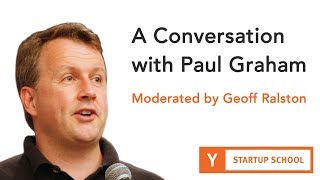 Paul Graham on Startup Ideas: How Ideas, Teams, and Growth Work2018 · 63 min · full transcriptBest single overview of how Graham thinks startup ideas really appear, how to choose among them, and how to work in the earliest stage.
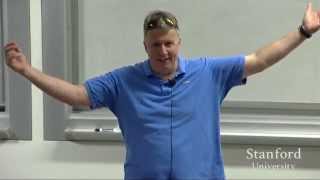 Paul Graham on Before the Startup: Just Learn2014 · 48 min · full transcriptShows why user expertise matters more than startup expertise and why good ideas often emerge indirectly from learning.
 Paul Graham on Big Startup Ideas: Seven Huge Bets2009 · 47 min · full transcriptBest for understanding why large opportunities can feel frightening and why you should start with a narrow wedge.
 Paul Graham on Startup Validation: Build, Test, and Focus2013 · 29 min · full transcriptMost concrete on how to validate an early idea through user behavior, simplicity, and iteration.
 Paul Graham on Startup Investing: It’s About the Founders2010 · 10 min · full transcriptClarifies why Graham rates founders above initial ideas and expects ideas to change.
Questions people ask
- How does Paul Graham think startups should tackle huge ideas?
- What did Paul Graham say about finding a cofounder?
- What does Paul Graham say is the best preparation for starting a startup?
- What does Paul Graham say matters most when choosing startup founders?
- Why does Paul Graham like young founders who have done side projects?
- How does Paul Graham decide between multiple startup solutions?
Sources
Every quote above, word for word from the transcripts. Numbers match the text.
“It's very common for ideas. In retrospect, they seem obvious and you you sort of... Historians who weren't there sort of straighten out all the kinks in the development. And it just seems like, oh, they had this... You know, it's like this idea. I always hate it when people represent startup ideas as light bulbs. You know? Because as well as being the most cliched metaphor imaginable, it's also false. You don't just, like, have this idea and then realize it. Right? No. It's more like you have this sort of inkling that something... You could do something that somebody else hasn't done before. And it's probably a bad idea, but you're too lazy to learn Windows, and so you wanna do it that way. Right? And so... Or, like, who would... Or, like, Zach starting Facebook. You know? Just like, let's see what happens. Right? It's Way implausible that this would ever be a startup,…”
“If you can use SMTP, why not HTTP to update your website?”
“What you need is expertise in your own users.”
“And if you have genuine intellectual curiosity, that's what you'll naturally tend to do if you just follow your own inclinations. The component of entrepreneurship, I can never quite say that word with a straight face, that really matters is domain expertise. Larry Page is Larry Page because he was an expert on search. And the way he became an expert on search was because he was genuinely interested in it, not because of some ulterior motive. At its best, starting a startup is merely an ulterior motive for curiosity, and you'll do it best if you introduce the ulterior motive at the end of the process. So here is the ultimate advice for young, would be startup founders, reduced to two words, just learn.”
“When I talk to people who are in their teens or early twenties about starting a startup, I tell them instead of sitting around thinking of startup ideas, you should be working with other people on projects and then you'll get a startup idea out of it that you probably never would have thought of and you'll get a co founder too. Right? So I wish people would do more of that. You can get co founders. Just work with people on projects. You just can't get co founders instantly. You've got to have some patience.”
“Starting a startup is where gaming the system stops working.”
“And this is exacerbated by the existence of this term growth hacks. Right? Whenever you hear anybody talk about growth hacks, just mentally translate it in your mind into bullshit. Because what we tell them is the way to make your startup grow is to make something that users really love. Right? And then tell them about it. So that's what you have to do. That's growth hacks right there.”
“The biggest startup ideas are frightening…”
“Make the search engine you yourself want.”
“…the best way to do these big ideas is not to try and identify a precise point in the future…”
“The way to win here, the way to attack all these really gigantic ideas, is to find the tiny thing that turns into the gigantic idea, right? Find the dinosaur egg. The dinosaur egg—I just like invented a meme on the spot; that was not in the talk. The dinosaur egg is to make a search engine that all the hackers use. If you just made a search engine that the top 10,000 hackers used, and you got like the first 20% of them in this room, right? If you just made a search engine that the top 10,000 hackers used and nobody else, you'd have only 10,000 users, right?”
“You gotta start with you gotta start with a small intense fire. So you have... If you're... Suppose you're the Apple one. Right? You have to find... I mean, I think they made something like 500 of those things. Right? So all they had to do is, like, find 500 people to buy these computers, and they launched Apple. Apple. Yeah. Right? So you gotta find a small number of people. It's necessarily gonna be a small number of people. You can't find... You could... There's... It's impossible to make something that a large number of people want a lot. So you've gotta find people who want what you're making a lot. And that's necessarily gonna be a small number. And that's okay. That's how these giant things get started.”
“Do things that don't scale.”
“…let it grow into whatever it's going to grow into…”
“Maybe it'll end up being kids or the big thing or maybe not. Who knows? But be empirical about it and don't, don't like wire in some outcome too early. All right. Is it time? Thank you. All right, you guys. Thanks. (applause) Sounds pretty good, too. Hey, Ryan. Hey, Paul. Hey, Ryan. Hi, Sam. You don't know how odd this is for us. This is the brother of someone we funded in the past. And except for having a beard, he seems identical. It's very disconcerting. Um, hopefully that's a good thing. Yeah. Um, he meant—Yeah. All right. What are you working on? It…”
“Because in the beginning, you just want growth. Because the customers teach you. The first customers don't just give you money. They teach you. Alright. Two more questions. You two. Two. You pick two.”
“Is it normal as a founder to be... To see multiple different solutions? Yeah. Sure. Absolutely. You just have to pick one. Pick the one that you think could get could get usage quickest.”
“The main thing we care about is the founders.”
“What you can't change is the founders.”
“It's all about the people.”
“Oh, it's all the people.”
“What makes companies fail most of the time is poor execution by the founders.”
“Determination is the one that can fool you.”
“Unfortunately, the most important quality is the hardest, is the hardest one to judge in a short time.”
“Determination, it's hard to judge by looking at the person. The way you would judge determination because people act determined. People think they're supposed to act determined. No one walks into their Y Combinator interview thinking, I need to seem diffident. Nobody thinks that. They all think they're supposed to seem tough, which is actually really painful and stressful. It would be better if they just were themselves because someone trying to act tough is just so painful to watch. But the way you tell determination is not so much from talking to them as from asking them stories about things that have happened to them. That's where you can see determination.”
How this guide was made: drafted with AI from the full transcripts of the recordings cited, then checked: every quotation must match a transcript word for word and be the speaker's own words, and an independent review gates accuracy. Methodology and corrections.