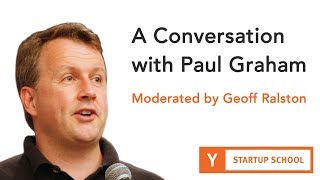
Paul Graham on Founders
Paul Graham thinks early-stage startups are mainly bets on founders—their ambition, determination, judgment, and ability to build and adapt.
- The founder matters more than the initial idea.
- Determination is the most important trait, but also the hardest to judge.
- Ambition is necessary because startup obstacles are too severe for mere dutifulness.
- Good founders learn from users, build things, and adapt without giving up.
- Founder judgment starts with people sense: trust your instincts about cofounders and authenticity.

“Unfortunately, the most important quality is the hardest, is the hardest one to judge in a short time.”TechCrunch Disrupt backstage interview, 2011 · 0:01
At the earliest stage, the startup is mostly a bet on the founders
Graham’s core view is simple: in early-stage startups, the founders matter more than the original idea. His reason is that ideas often change a lot, while the people running the company are the one thing you cannot swap out without changing the company itself. That makes startup selection, advising, and investing mostly a matter of judging people well.12345
He ties this to startup outcomes. When companies fail, he puts a large share of the blame on founder execution rather than on the starting concept alone. And when he thinks about where giant companies come from, he points first to unusually strong founders rather than to a category, trend, or clever pitch.67
Determination is the most important founder trait
If Graham had to elevate one founder quality above the rest, it would be determination. He treats it as the trait that keeps a company alive through setbacks, ambiguity, and long periods when nothing is working yet. As long as founders keep going, they can still change the product, market, or business into something that works.8910
But determination is also the quality most likely to fool observers. People can perform toughness in an interview, so Graham prefers to look at what they actually did when things went wrong. He thinks the revealing signals are concrete stories of persistence under pressure, not posture.8911
This is why founder evaluation is hard even when done by experienced investors. Short interviews can reveal a lot, but the deepest question is still whether these people will keep moving when the obvious path fails.9
“Unfortunately, the most important quality is the hardest, is the hardest one to judge in a short time.”TechCrunch Disrupt backstage interview, 2011 · full transcript →
Ambition is the engine that gets founders through the grind
Graham does not think startups can be carried by conscientiousness alone. The work is too punishing, uncertain, and exhausting for someone who is merely being responsible. Founders need real ambition—something strong enough to pull them through repeated obstacles.1314
At the same time, he gives a more grounded account of motivation than the usual dream of getting rich. Day to day, he says founders are often driven more by the fear of failure than by fantasies of wealth. That view makes founder ambition feel less like glamour and more like intensity.15
He also uses ambition as part of his picture of formidable founders: the ones who tend to get what they want. In his view, outsized companies come disproportionately from people with unusually strong will and unusually large aims.7
Good founders are builders who learn from users and adapt fast
Graham consistently prefers founders who make things over founders who merely describe plans. He looks for evidence that someone built projects outside school or work because they were intrinsically driven to do so. That is a stronger signal than polished forecasts, credentials, or business-school style narratives.17
He also thinks the right founder behavior early on is direct contact with reality: know your users, learn their problems, and do manual work that teaches you what matters. Early growth and early customers are valuable not just for revenue, but because they teach founders what to build next.202122
This is part of why he is skeptical of trying to game startup building as if it were school or corporate politics. Startups punish fake progress. The way forward is to make something people really want, listen closely, and keep adjusting.2325
Founder judgment starts with people sense and authenticity
Because startup mechanics are counterintuitive, Graham warns founders not to trust many of their instincts about how startups are supposed to work. But he makes an exception for one area: people. He thinks founders should trust their instincts about other people much more, especially when choosing cofounders or evaluating someone who seems impressive but feels wrong.2627
That emphasis on social judgment helps explain why authenticity matters so much in his founder filter. He wants people who are real rather than overly rehearsed, because performative toughness can hide weakness instead of proving strength. Authenticity makes it easier to see what kind of person will actually behave well under strain.2811
This also explains his advice about finding cofounders. Rather than trying to acquire one instantly, he favors working with people on projects and letting trust emerge from shared effort. In his framework, founder quality is inseparable from the quality of the relationships among founders.29

“You can, however, trust your instincts about people.”Stanford CS183B lecture 3, 2014 · full transcript →
Great founder support reduces loneliness without taking control away
Graham’s picture of founders also shapes how he thinks support systems should work. One of YC’s key advantages, in his telling, is that founders should not have to build alone. Funding many startups at once gives them peers, shared learning, and some of the benefits of being around a company without losing the independence of being a startup.3031
But support should still remain founder-centered. When uncertain, his default is to lean toward what the founder wants, and he describes good early-stage investing as helping companies get into first gear rather than directing them from above. That fits his deeper belief that founders are the irreplaceable part of the company.322
Graham on founders, in his own words
“What you can't change is the founders.”
“Unfortunately, the most important quality is the hardest, is the hardest one to judge in a short time.”
Where to watch
 Paul Graham on Startup Investing: It’s About the Founders2010 · 10 min · full transcriptBest short statement of his core view that early-stage investing is mainly about founders, not ideas.
 Paul Graham on Founder Determination: What Matters Most2011 · 7 min · full transcriptBest for understanding why determination matters most and why it is so hard to judge.
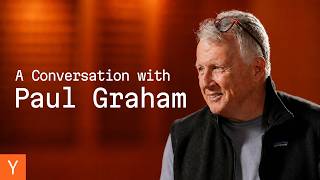 Paul Graham on Startups and Ambition: Great Founders Win2026 · 21 min · full transcriptBest on ambition, fear of failure, and why formidable founders produce giant outcomes.
 Paul Graham on Early-Stage Investing: Build, Survive, Be Honest65 min · full transcriptBest on what founder signals he looks for in practice: builders, honesty, and proof from side projects.
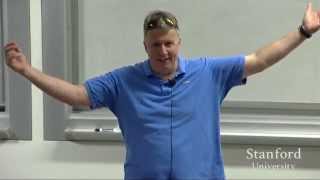 Paul Graham on Before the Startup: Just Learn2014 · 48 min · full transcriptBest on trusting your instincts about people and focusing on users instead of gaming startup life.
 Paul Graham on Talent Selection: Ambition, Art, and YC2023 · 55 min · full transcriptBest on how he evaluates founders through stories, pressure, and real understanding.
Questions people ask
- How does Paul Graham judge determination in founders?
- What did Paul Graham say about finding a cofounder?
- What does Paul Graham say founders should trust their instincts about?
- What does Paul Graham say matters most when choosing startup founders?
- Why does Paul Graham like young founders who have done side projects?
- Why does Paul Graham say founders need to be ambitious?
Sources
Every quote above, word for word from the transcripts. Numbers match the text.
“The main thing we care about is the founders.”
“What you can't change is the founders.”
“It's all about the people.”
“…when you fund an early stage startup it's more about the founders than the idea…”
“Oh, it's all the people.”
“What makes companies fail most of the time is poor execution by the founders.”
“The answer to your question, where the next giant company comes from is it comes from the right founders.”
“Determination is the one that can fool you.”
“Unfortunately, the most important quality is the hardest, is the hardest one to judge in a short time.”
“As long as the founders haven't given up, they can morph the company into anything…”
“Determination, it's hard to judge by looking at the person. The way you would judge determination because people act determined. People think they're supposed to act determined. No one walks into their Y Combinator interview thinking, I need to seem diffident. Nobody thinks that. They all think they're supposed to seem tough, which is actually really painful and stressful. It would be better if they just were themselves because someone trying to act tough is just so painful to watch. But the way you tell determination is not so much from talking to them as from asking them stories about things that have happened to them. That's where you can see determination.”
“The obstacles are too fearsome for mere dutifulness to do it.”
“When did I figure out that founders had to be really ambitious? I think, um, I already knew that before we started YC because when we started YC we already had all this experience of doing a startup ourselves, right? And so we knew that it was grueling. And you need, you need something to drive you through all those obstacles and honestly being dutiful is not enough. The obstacles are too fearsome for mere dutifulness to do it. So there's got to be something driving you and you call it ambition.”
“What actually motivates founders day to day? The fear of failure.”
“What have you made outside of school or work because you liked it?”
“What you need is expertise in your own users.”
“Do things that don't scale.”
“Because in the beginning, you just want growth. Because the customers teach you. The first customers don't just give you money. They teach you. Alright. Two more questions. You two. Two. You pick two.”
“Starting a startup is where gaming the system stops working.”
“Is it normal as a founder to be... To see multiple different solutions? Yeah. Sure. Absolutely. You just have to pick one. Pick the one that you think could get could get usage quickest.”
“You can, however, trust your instincts about people.”
“You can, however, trust your instincts about people. You... Your life so far hasn't been much like starting a start up, but all the interactions you've had with people are just like the interactions you have with people in the business world. So in fact, one of the big mistakes that founders make is not to trust their intuitions about people enough. They meet someone who seems impressive, but about whom they feel some misgivings. And then later, when things blow up, they tell them, they say, you know, I knew there was something wrong about that guy, but I ignored it because he seemed so impressive. And there's a specific sub case in business, especially if you have come from an engineering background, as I believe you all do.”
“If you had to boil it down into one word, what you're looking for, it's authentic.”
“When I talk to people who are in their teens or early twenties about starting a startup, I tell them instead of sitting around thinking of startup ideas, you should be working with other people on projects and then you'll get a startup idea out of it that you probably never would have thought of and you'll get a co founder too. Right? So I wish people would do more of that. You can get co founders. Just work with people on projects. You just can't get co founders instantly. You've got to have some patience.”
“The most critical innovation with the YC model is to fund a bunch of startups at once.”
“The most critical innovation with the YC model is to fund a bunch of startups at once. So it's better for the investor, but also better for the startups because they have colleagues. That is the big thing you're missing in a startup. It's so lonely, and now it's like it has some of the advantages of being part of a company without the disadvantages.”
“If we're not sure what to do, just like whatever the founder wants, that's cool.”
How this guide was made: drafted with AI from the full transcripts of the recordings cited, then checked: every quotation must match a transcript word for word and be the speaker's own words, and an independent review gates accuracy. Methodology and corrections.