Paul Graham on Big Startup Ideas
Paul Graham’s view is that truly big startup ideas usually feel scary or wrong at first, and the way to pursue them is through founders who know users deeply, start with a narrow wedge, and execute relentlessly.
- Big startup ideas often repel founders because they seem frightening or implausible at first.
- The right way in is usually a small, intense wedge, not a grand plan for the whole market.
- Founders matter more than the initial idea because ideas change and execution decides most outcomes.
- Good ideas come from knowing users and problems deeply, not from trying to game startup formulas.
- Early growth and close contact with users teach founders what the big idea really needs to become.

“The way to win here, the way to attack all these really gigantic ideas, is to find the tiny thing that turns into the gigantic idea, right? Find the dinosaur egg. The dinosaur egg—I just like invented a meme on the spot; that was not in the talk. The dinosaur egg is to make a search engine that all the hackers use. If you just made a search engine that the top 10,000 hackers used, and you got like the first 20% of them in this room, right? If you just made a search engine that the top 10,000 hackers used and nobody else, you'd have only 10,000 users, right?”Y Combinator keynote, 2009 · 5:52
Big ideas usually feel frightening before they look brilliant
Graham’s starting point is that the biggest startup ideas do not usually arrive with a neat, confident feeling. They tend to feel scary, implausible, or socially awkward at first, which is one reason other people have not already built them. In his account, that discomfort is not a warning sign by itself; it is often part of what makes the opportunity big.12
He pushes against the popular picture of startup ideas as clean lightbulb moments. Instead, the first version is often a crooked hunch: a strange way to do something, a workaround, or an idea that sounds slightly bad until someone proves it works. That is why founders who only look for obviously respectable ideas can miss the largest opportunities.23
Attack huge markets through a tiny, intense wedge
Graham’s practical advice for giant ideas is not to start by conquering a giant market. Start with a narrow group of users who want something intensely, because that is the easiest place to make a product people truly love. He describes the winning move as finding the small thing that can grow into the giant company.45
This is why he recommends making the product you yourself want when you are part of that initial user group. A strong first wedge gives you demanding users, fast feedback, and credibility in a domain that can later expand outward. He also warns against trying to predict some exact future state of the world too precisely; the better path is to enter early through a concrete opening.67
His examples reflect this pattern. A better search engine could begin with hackers rather than everyone, and replacing universities would likely happen piece by piece rather than in one sweeping move. Big ideas become tractable when they begin as something specific and useful to a small group.48
“The way to win here, the way to attack all these really gigantic ideas, is to find the tiny thing that turns into the gigantic idea, right? Find the dinosaur egg. The dinosaur egg—I just like invented a meme on the spot; that was not in the talk. The dinosaur egg is to make a search engine that all the hackers use. If you just made a search engine that the top 10,000 hackers used, and you got like the first 20% of them in this room, right? If you just made a search engine that the top 10,000 hackers used and nobody else, you'd have only 10,000 users, right?”Y Combinator keynote, 2009 · full transcript →
The founders matter more than the original idea
Graham is unusually clear that giant outcomes come more from the right founders than from the first version of the idea. Startups often change direction, but the founders are the constant, which is why he keeps coming back to their ambition, judgment, and ability to keep going. If you want to understand whether a big idea has a chance, look hard at the people pursuing it.9101112
He also thinks startup work is too hard for shallow motivation. The obstacles are severe, daily motivation often comes from not wanting to fail, and formidable founders are the ones who keep advancing anyway. A huge idea is not enough on its own; it needs people who can endure uncertainty and keep pushing through it.131415
Execution is the decisive filter. Graham says companies usually fail because founders execute poorly, not because the initial concept was too small or imperfect. That makes founder quality central even when the topic is giant ideas.16
The best big ideas come from user expertise, not startup theater
Graham does not think founders should begin by trying to think up impressive startup ideas in the abstract. He says what matters is deep knowledge of users and the problems they have, because that is where non-obvious opportunities come from. Domain expertise is what turns curiosity into a startup idea that is actually grounded.1718
This view also explains his hostility to process-gaming. Tricks that help people win in school or large organizations do not create startups, because a startup only works when users genuinely want what you built. Big ideas are discovered by learning, building, and seeing reality up close, not by performing entrepreneurship.192021
That same realism shapes how to choose collaborators. Since startup paths are counterintuitive, he says founders should be especially careful to trust their instincts about people. For a large and difficult idea, bad judgment about cofounders or early teammates can be fatal.
You discover the real shape of the big idea by doing manual, unscalable work
Graham’s advice for the early phase is famously hands-on: do things that do not scale. That matters for big startup ideas because the first version is usually wrong or incomplete, and direct manual work is how founders learn what users actually need. The giant company is built by first learning from a few users at close range.26
He consistently ties this to growth. Early customers are valuable not just for revenue but because they teach founders, and high growth is the sign that the product is resonating. Rather than polishing a grand theory, pick the version most likely to get usage quickly and learn from reality.262728
This approach makes giant ideas less mystical. You do not need to foresee the whole future; you need to find the first users, serve them intensely, and let that interaction reveal what the opportunity really is.7526
Graham on big startup ideas, in his own words
“Make the search engine you yourself want.”
“…email is not a messaging protocol, it's a to-do list…”
“…the best way to do these big ideas is not to try and identify a precise point in the future…”
Where to watch
 Paul Graham on Big Startup Ideas: Seven Huge Bets2009 · 47 min · full transcriptBest single talk on why huge startup ideas feel scary and how to approach them through concrete wedges.
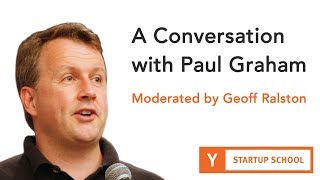 Paul Graham on Startup Ideas: How Ideas, Teams, and Growth Work2018 · 63 min · full transcriptShows how strange-looking startup ideas evolve through execution, manual work, and user contact.
 Paul Graham on Startup Investing: It’s About the Founders2010 · 10 min · full transcriptBest short explanation of why founders matter more than the initial idea for giant outcomes.
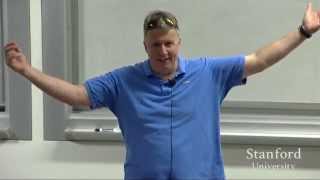 Paul Graham on Before the Startup: Just Learn2014 · 48 min · full transcriptBest for understanding why user expertise matters more than startup cleverness.
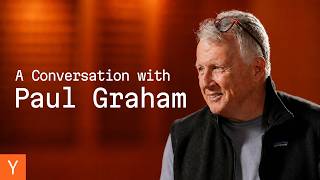 Paul Graham on Startups and Ambition: Great Founders Win2026 · 21 min · full transcriptBest on ambition and why formidable founders are the source of the next giant companies.
Questions people ask
- How does Paul Graham think startups should tackle huge ideas?
- What did Paul Graham say about finding a cofounder?
- What did Paul Graham say about starting small in a startup?
- What does Paul Graham say is the best preparation for starting a startup?
- Why does Paul Graham like young founders who have done side projects?
- How does Paul Graham decide between multiple startup solutions?
Sources
Every quote above, word for word from the transcripts. Numbers match the text.
“The biggest startup ideas are frightening…”
“It's very common for ideas. In retrospect, they seem obvious and you you sort of... Historians who weren't there sort of straighten out all the kinks in the development. And it just seems like, oh, they had this... You know, it's like this idea. I always hate it when people represent startup ideas as light bulbs. You know? Because as well as being the most cliched metaphor imaginable, it's also false. You don't just, like, have this idea and then realize it. Right? No. It's more like you have this sort of inkling that something... You could do something that somebody else hasn't done before. And it's probably a bad idea, but you're too lazy to learn Windows, and so you wanna do it that way. Right? And so... Or, like, who would... Or, like, Zach starting Facebook. You know? Just like, let's see what happens. Right? It's Way implausible that this would ever be a startup,…”
“If you can use SMTP, why not HTTP to update your website?”
“The way to win here, the way to attack all these really gigantic ideas, is to find the tiny thing that turns into the gigantic idea, right? Find the dinosaur egg. The dinosaur egg—I just like invented a meme on the spot; that was not in the talk. The dinosaur egg is to make a search engine that all the hackers use. If you just made a search engine that the top 10,000 hackers used, and you got like the first 20% of them in this room, right? If you just made a search engine that the top 10,000 hackers used and nobody else, you'd have only 10,000 users, right?”
“You gotta start with you gotta start with a small intense fire. So you have... If you're... Suppose you're the Apple one. Right? You have to find... I mean, I think they made something like 500 of those things. Right? So all they had to do is, like, find 500 people to buy these computers, and they launched Apple. Apple. Yeah. Right? So you gotta find a small number of people. It's necessarily gonna be a small number of people. You can't find... You could... There's... It's impossible to make something that a large number of people want a lot. So you've gotta find people who want what you're making a lot. And that's necessarily gonna be a small number. And that's okay. That's how these giant things get started.”
“Make the search engine you yourself want.”
“…the best way to do these big ideas is not to try and identify a precise point in the future…”
“Yeah, that's an interesting idea. Um, that's an interesting idea. The idea is instead of getting a degree from an institution, you would get it from a person, um, which is actually, if you know about the history of universities, that's how it originally used to work. I mean, universities had a guild system, and you would be certified as a teacher by an existing teacher, just like you could be certified as a woodworker by an existing woodworker. Um, so since it was the way they used to work, maybe universities or their replacements will be returning to their roots. I'm not saying like get rid of universities, just like eat away at that big lump of cheese. Any more questions? Yes? Shout and I'll repeat it.”
“The answer to your question, where the next giant company comes from is it comes from the right founders.”
“The main thing we care about is the founders.”
“What you can't change is the founders.”
“It's all about the people.”
“The obstacles are too fearsome for mere dutifulness to do it.”
“What actually motivates founders day to day? The fear of failure.”
“When did I figure out that founders had to be really ambitious? I think, um, I already knew that before we started YC because when we started YC we already had all this experience of doing a startup ourselves, right? And so we knew that it was grueling. And you need, you need something to drive you through all those obstacles and honestly being dutiful is not enough. The obstacles are too fearsome for mere dutifulness to do it. So there's got to be something driving you and you call it ambition.”
“What makes companies fail most of the time is poor execution by the founders.”
“What you need is expertise in your own users.”
“And if you have genuine intellectual curiosity, that's what you'll naturally tend to do if you just follow your own inclinations. The component of entrepreneurship, I can never quite say that word with a straight face, that really matters is domain expertise. Larry Page is Larry Page because he was an expert on search. And the way he became an expert on search was because he was genuinely interested in it, not because of some ulterior motive. At its best, starting a startup is merely an ulterior motive for curiosity, and you'll do it best if you introduce the ulterior motive at the end of the process. So here is the ultimate advice for young, would be startup founders, reduced to two words, just learn.”
“Starting a startup is where gaming the system stops working.”
“And this is exacerbated by the existence of this term growth hacks. Right? Whenever you hear anybody talk about growth hacks, just mentally translate it in your mind into bullshit. Because what we tell them is the way to make your startup grow is to make something that users really love. Right? And then tell them about it. So that's what you have to do. That's growth hacks right there.”
“Starting a startup is where gaming the system stops working. Gaming the system may continue to work if you go to work for a big company. Depending on how broken the company is, you may be able to succeed by sucking up to the right person, giving the impression of productivity by sending emails late at night. Or if you're smart enough, changing the clock on your computer.”
“Because in the beginning, you just want growth. Because the customers teach you. The first customers don't just give you money. They teach you. Alright. Two more questions. You two. Two. You pick two.”
“Growth. You've got to have high growth rates…”
“Is it normal as a founder to be... To see multiple different solutions? Yeah. Sure. Absolutely. You just have to pick one. Pick the one that you think could get could get usage quickest.”
How this guide was made: drafted with AI from the full transcripts of the recordings cited, then checked: every quotation must match a transcript word for word and be the speaker's own words, and an independent review gates accuracy. Methodology and corrections.
