Paul Graham on Y Combinator Origins: Why Jessica Mattered
What Graham talks about
Paul Graham appeared on the Leap Forward podcast in 2026 to discuss how Y Combinator started and why Jessica Livingston was central to its culture, judgment, and success.
Also known as: The Untold Story Behind Y Combinator; Jessica Livingston & Paul Graham on Leap Forward; Y Combinator origins interview.
Paul Graham describes how Y Combinator emerged from practical frustration with early startup funding: founders needed small amounts of money, fast decisions, and real advice, not long VC processes. He says YC was built to be the thing he and Jessica wished had existed when they were starting Viaweb.
He emphasizes that Jessica Livingston was not just helpful but central: she had unusually strong judgment about people, created the warm event-like culture of YC, and made the program feel like a family. Graham says YC’s magic came from the combination of his technical strengths and Jessica’s organizational and social strengths.
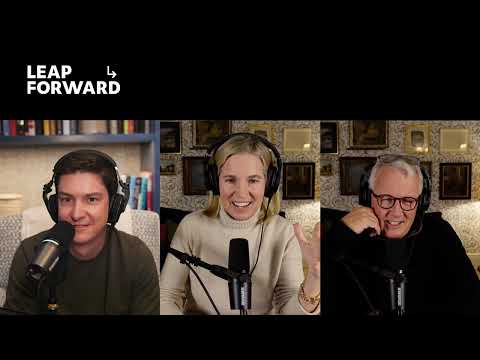
David Rusenko hosts the conversation; Jessica Livingston is the main speaker, with Paul Graham joining in later sections.
In his words
“When you fund an early stage startup it's more about the founders than the idea”
“We made the thing that we wished had existed when we were doing our startup”
“You do not need 45 minutes at this stage”
“They don't have Jessica or they have someone they hired to be a Jessica”
“It wouldn't have existed”
Key points
- YC was designed around early-stage founders, not big fundraising rounds.
- Short interviews worked because you can tell quickly whether a founder is promising.
- Jessica Livingston’s judgment of people was crucial in choosing founders.
- Her background in events helped shape YC’s dinners, demo days, and culture.
- YC succeeded through complementary strengths: Graham on ideas and tech, Jessica on people and operations.
- Graham says he never would have started YC without Jessica.
- The program grew through founder word of mouth and a family-like environment.
Full transcript: Paul Graham, Leap Forward podcast interview (2026)
We rejected them because at that point we did not realize that when you fund an early stage startup it's more about the founders than the idea. But I distinctly remember how much I just enjoyed talking to them. And then the next Monday Paul reached out to them and was like, "We really liked you guys. Do you think we could maybe brainstorm a new idea?" and they literally got off the train in Connecticut and got back on a train to Boston and they came up with the idea for Reddit then and they were in our batch. Welcome to Leap Forward, a show about founders and the people who believed in them before anyone else. I'm David Rusenko and for this first episode, a person who's given so many founders their start. I'm Jessica Livingston. I'm a co-founder at Y Combinator. I wanted to start this series with Jessica because she's not only been pivotal in my life, but in the lives of so many other founders. So far, YC's launched over 5,000 companies worth almost a trillion dollars. And this time, I wanted to hear her origin story. I first met Jessica in 2006 in a 15-minute interview when my startup, Weebi, got accepted into YC. But there was someone else in the interview that day who I also wanted to talk to to help us fill in the story. someone who could speak to Jessica's role better than anyone else. I'm Paul Graham and I'm Jessica Livingston's husband. Oh, what do you think people sometimes miss about what Jessica's contributed to YC? Oh my god, they miss everything. Like, so there's so many copies of YC now, but why can't they reproduce the magic? Cuz they don't have Jessica or they have someone they hired to be a Jessica,
right? But it's not the same today. The story behind the magic of Y Combinator. How are you doing? I'm good. Look, um I'm super excited to talk to you today. Um you've had such a huge impact on startups. You've had a huge impact on me and you famously have this uncanny ability to just read people really quickly and accurately. And so I really want to dive into a little bit more of your background and kind of where that came from. I'd love to just understand just from the very beginning. Where were you born and what was your childhood like growing up? Oh, well, I was born in Minneapolis, but I only lived there for a few months because when I was 6 months old, my parents got divorced. Um, and I moved with my dad to Boston where he was from. And my childhood, you know, was pretty normal considering I didn't have a mother cuz I I really I was raised by my dad and his mother, my grandmother, who I lived with. I'd lived with my grandmother during the week and my dad lived about a mile and a half away. And I'd go to my dad's house on weekends and he'd come to dinner at my grandmother's every night. But my childhood was, you know, pretty pretty standard, pretty happy. Yeah. Tell me more about your dad and your grandmother. What what were they like as people? Well, my dad was amazing cuz you have to imagine a single dad in the 1970s being a parent to a daughter. Like no dad did that. Um really and so he raised me and so I'm like forever grateful. He worked for the Gillette company his entire life. And so I had
never known about startups as a result. I thought, you know, what you do is you go work for a big company and you stay there for as long as you can and have a a good, you know, retirement plan there and all of that. But my grandmother, his mother, she took me in when she was like 62 years old, if you can believe it. Imagine like raising four kids on your own and then at 62, I mean, you have kids, bringing in a baby in diapers. So I owe so much to her. I mean because what I found very comforting growing up was that she was always there. I could always count on her and as a result she was just such a sort of constant comforting presence for me. So I was really lucky to have that team of my grandmother and my dad. Do you think there was anything growing up that kind of you know you famously have this um sense for people like where do you think that came from? Was it something growing up or was it something that developed later? I think it was growing up. I just I think I think it's inborn. A lot of people ask me this question and I feel a little bit awkward because I don't know if I'm that great at reading people's characters, but from a very young age cuz I was an only child and so I think I had a lot of adults around me and so I was always trying to, you know, read them and what's going on and like you could never get anything past me. Like if an adult tried to sort of brush me off somehow, I' i'd know that they were trying to do that and I'd ask a lot of questions. I was very inquisitive. I'm just very interested in human psychology. I don't know. It's in me. Do you remember at that point
in time like did you have something you imagine being when you grew up? No, David. I'm going to be the most boring person you interview because I had no idea what I wanted to do. Everything was uh very near-term. It was sort of like what's next on the schedule here, you know? Okay, I'm going to high school now. Okay, next I'm going to college. And I graduated and some of a lot of my friends had jobs and I was like, I have no clue what I even am good at or want to do. Like, this was in 1993, okay? So, this is before the internet. So, you're looking for jobs in the newspaper. I mean, listeners are just going to die when they hear that. So I came home and very sadly like the day after I came home from college my grandmother passed away of cancer. Um so that set me off on not a great course. I was sort of very sad as you can imagine. But I was living at home with my dad kind of like oh gosh what do I even do? And a friend of mine from the town she had gotten a job in like a training program at Fidelity Investments. So this was on the phones at Fidelity Investments like customer service and so I thought well I could try it out. I mean I really that's how clueless I was just like I don't even know if I am interested in finance but I was like on the phones on the night shift in this training program like taking calls. I mean what I really didn't like at Fidelity was that they monitored your every action. Like on those phones,
they knew how long every call was, how long you were off a call before you took the next call, how long you took going to the bathroom, like everything. And it was very intense, you know. Yeah. And I said, "Yeah, this isn't for me." Yeah. Talk to me a little bit about what kind of that transition from I'm curious to hear those kind of next few job experiences and then how you first got interested or kind of came upon this idea of startups. Yeah, there really is like no rhyme or reason in my professional background honestly to why cominator like everyone always wants to see some clear indication that someone who does something interesting later in life like always wanted to be that way or like that I sold lemonade or hustled and made money as a child somehow or was it entrepreneurial. I was not. I was a hard worker. I will say that. I was like a reliable hard worker. I rarely called in sick. And so my jobs back then, the other thing is like you couldn't have like a gap in your resume or it looked bad. So I never left one job until I had a new one going. Like I almost never had time to think about what I want to do. So I was at this investor relations firm and that was very interesting. But it was a sweat shop. You know, if you left at 6:00 p.m., that was an early night. And I remember this one woman I worked with, uh, she was such a phony. And she would stay late, get the free dinner. She'd, you know, charge it to a client. She'd call her family, you know, make all her long-distance calls. This is
at like 8:30 p.m. And then at, you know, 900 p.m. she'd write an email to all of our bosses saying, "Just a quick update that I've done this." So, you know, time stamp, she was there at 9:00 p.m., you know, that kind of thing. And so, I was there for a while, but then I was like, "This is pretty grim." So, after that, I did a total about face and I said, "What I really love doing is sort of planning events." So, I got a job at Food and Wine Magazine working on their big event out in Aspen every year. I mean, it's just such a hodgepodge of experience, David. You know, for someone who started his startup right out of college like you, probably can't imagine the like weirdness of going from different job to different job. Then I moved back to Boston, back to my dad's house, and got a job at an investment bank where I worked in their marketing department. And then the bubble burst and then things started to sort of go downhill, you know, 2003. You could feel it in Boston for sure. And I remember at this point I'd started dating Paul. And I remember saying to Paul, this is just now so not fun working here. I remember as I was dating her thinking, she is so wasted on this lame investment bank. She worked so hard. I don't think she had ever taken a sick day off like in her life. I think there was one point where she had the flu and she went home at lunch, right? But like she worked so ridiculously hard for them and you know what good does it do, right? So she definitely seems like the kind of person you would want to work with for sure. And I said, I
need to create like a project for myself that I'm interested in, that I can be passionate about, you know, and that's when I started writing Founders at Work. And I did that on the side. And that was fully a result of dating Paul and sort of learning about startups for the first time in my life, talking to him. I didn't know any programmers or people who started a startup. I didn't even know the word startup back then. Do you remember from your perspective how she first got interested in startups? I think it was from talking to me and all my friends because you know Robert and Trevor and other people we knew had all been involved with startups and so talking to us it seemed like everything was much more random and chaotic and irresponsible. there was clearly something there that you could go and start a company to do something where back in the days when starting a company meant having a factory that was not so easy, right? And now just a couple of people in a room with laptops could do it. And so meeting Paul and his friends, it was very interesting to me and I became really fascinated by it and I read Jerry Kaplan's book Startup. I was hooked.
We'll be right back. And now back to the interview. It sounds like startups, I mean, the way that you described your early work experience, you almost you learned a lot that you eventually brought to Y Cominator, but you also learned some of the stuff that you didn't like, like people being phony in that corporate work environment. And it sounds like when you found startups that was kind of like almost the big reveal. Well, here's one of the things that really struck me about startups. What I loved about startups as opposed to when I worked at the investment bank at the investment bank on the pecking order like the marketing group was so far down and as a result you know a lot of people you got treated not super great by some people um who you know I was told there you don't even deserve to work here in a bad market they shouldn't even have a marketing department you know in bad times and it's sort of demoralizing when people are not that nice to you for sure And what I noticed though was like a lot of these people who weren't that nice were also just mediocre sort of players, you know, not that good at what they did. And I thought, why am I working so hard and trying my hardest working with these people who aren't that good and are unpleasant to work with, too. And I thought that doesn't seem right that the mediocre people are running the show. And what I've observed with startups is like if there's a mediocre person, they get fired, you know, and the people who of course are starting the startup like it it's very rare that a like pure mediocre person starts a
startup. Do you So, so before we kind of get into starting a Y Com, I also just want to take a pause and like do you remember the first time that you met Paul and do you remember like what your first impressions were? Yes. I mean, unlike my childhood, I have very clear memories of meeting Paul. Let's see. I'm trying to think of where to start. So, I at age 30, I was sort of having like a sort of midlife crisis a little bit. You know, my sort of long-term boyfriend and I had broken up, and I was really very sad about that. And oh, by the way, added on to this layer of misery, I was living at home with my dad and stepmother, which was wonderful. I mean, they were could not have been nicer, but as a 30-year-old, like living in the Boston suburbs with, you know, your family is not that cool. And so, I just worked all the time. Didn't go out much. Then I said, "Okay, I got to get out there." And one thing I did was I took this class at Harvard's Extension School.
It was an acting class, David. Oh wow. I've never taken acting in my life. I mean, the last thing that I had done was like Mary in the school play in sixth grade. And I took the acting class cuz I thought maybe it will help me with public speaking cuz I would get very nervous. And so I thought, what the heck? It'll be something to do. So I took this acting class and there was a guy in it who was co-hosting a party with two other people in Cambridge that I was going to go to. So this guy Morat was my friend from the acting class. He said, "Okay, the party's this Saturday. Hope to see you all there." So I show up. I almost didn't go actually cuz I was sort of like my wingman, my friend wasn't available who usually would come with me. And so I was going by myself and I was like, I don't even want to go. And I think my dad was like, really, you need to get out of the house. You should go to this party. So I show up on the doorstep and I'm like, oh hi. you know, I'm Jessica Livingston. I'm here to see Morat. And the guy who greeted me was like, Morat, he's not here. He joined the Wesley Clark campaign and he moved to Arkansas last week. Didn't he tell you? And I thought like my heart just sank to my stomach. And I thought, "No, he didn't." And I thought, "Okay, I'm going to go in and if I don't know anyone, I'm just going to like go out the back door and no one will notice." As it turns out, not one person from my acting class was there. I literally went to a party where I did not know one person. And it was at Paul's house.
He was the co-host. And I actually didn't chat with him. I thought he was married actually. He he where he I a woman a friend of his was standing next to him and I assumed they were married cuz I didn't know anyone who lived in a in a nice house, you know, who wasn't married. You know, they all lived in apartments. if you're single. Anyway, but I did wind up chatting to Paul. Do you remember when you and Jessica first met? Oh, yes. Very vividly. I was standing in the kitchen and she came back into the kitchen and I asked her if I should take her coat or if it was part of her outfit. Um, and she remembers thinking that I was sophisticated for for as a man for asking such a question, for being able to know the distinction. It was a long white leather coat. Do you remember like like uh your first impression when you met her? Well, I remember she told me an idea of mine was stupid. Um I have this domain facto.com that I was I've been sort of vaguely planning to use for uh a sort of encyclopedia of plausible but fake lies so that people would like search for it and then repeat the lies. You know, like Ulysiz Srant had a wooden leg or something like that and like just about plausible, right? and she said she thought it was a stupid idea. So, I was impressed that she stood up to me about that. I still haven't done it, but I thought she seemed happy.
She smiled a lot. And then he asked me out. He got my email from the third co-host and he asked me out on Monday and we went out on a date that weekend. That was it. And so, it sounds like you kind of got immersed in this in this group of, you know, startup optimism. I mean, that was post.com days. There was a huge amount of skepticism back then. And I mean I remember this dot hangover was real but somehow you guys decided like no we really you know love this idea of startups and where did the idea come from to say you know hey maybe we should start something to help startups. Yeah. Well, that that's another part of the story of our relationship because I think I I mentioned that I was kind of getting bored at the investment bank and I was working on this book, Founders at Work on the Side and then I became aware of a position that they were looking for at a venture capitalist firm, a VC firm in Boston was looking for a director of marketing and I thought, well, that sounds kind of interesting. I'm going to go interview for that. But they took a long time. And in hindsight, it was probably only two months, but it still felt like a long time. And like VCs do, they were taking forever to make up their mind. And meanwhile, every night, I was telling her, "You know what you should do when you go and work for this firm? You should change it in this way and this way and this way." So over the course of those two months, Paul and I would go out to dinner every night. And he would, "You know what? You should do me." You know, that's when he waggles his finger at you and says, "You know what you should do?" And he gives you an idea. And we he would just tell me all about, you know, the VC industry is broken. They want to give,
you know, 5 $10 million to a company when really all you need to do is pay the rent. You know, it was getting much cheaper to start a startup because this is in 2004. You really, if you were a programmer, you kind of just needed a laptop to start, you know, a software company, right? So it was getting cheaper in Boston especially. There was no way to get funding except to go to VCs which again really wanted to invest large sums of money and you had to have a business plan. Um, but Paul really felt like there was this huge untapped source of programmers who could startups if someone helped them along at the earliest stages because he had been helped that way when he was getting started with VE. There was a guy in Boston who was a friend of his and he was a lawyer by trade. So he not only provided their first $10,000 of funding, but he also filled out all the legal paperwork and incorporated them. And you know, Paul was like, "Wow, that's amazing." And that's all that they needed to get started to test their idea. That's the thing. You don't need $10 million. You need, you know, back then you only needed a small amount to live, you know, and then you can get funding. We made the thing that we wished had existed when we were doing our startup via web. We wished there had been somewhere where we could get a small amount of money without too much trouble and advice about how to start a startup cuz we knew nothing. We knew that there would be a need for something like this cuz we had needed it. So we would talk for hours and hours
about how this ecosystem could be improved and how you could do a lot of events to bring people together to educate them. Um because remember back in 2004 there wasn't that much information on startups. It was not a thing. So um this was going on in the background. the VC was, you know, taking some time to decide and Paul one night we were out at dinner and I think we were walking home and he was like, "Oh, [ __ ] it. Let's just start our own thing." I remember the exact point on the sidewalk in Cambridge where we decided to do this because it was a large amount of money at the time. But I said like, you know, I forget exactly what it was, but maybe $100,000 or something like that.
Seemed like a lot at the time. And I said, "You know what? I'll put up the money for this and you can work for it and we'll just start our own. And so he thought, you know, if Jessica and I start our own investment gig, you know, I'll work with the startup on their ideas and Jessica will, you know, run everything else. Um, and that's kind of how the seed started. More after the break and we're back. There's so much that was really distinctive about YC kind of as you guys getting started and and listening to your story. There's so much about almost what you learned from your past about what you didn't want things to be like and how you wanted to do it differently. One of the things that was so distinctive that I remember really blew people's minds was just this 10-minute interview. And if you have a 10-minute interview, like you don't have months to look at spreadsheets and decks. I mean, so much of your quick assessment that you have to make is the read on the people. How did you guys decide on just that super short interview? Well, a lot of what we did was we tried something out and we improved upon it. So, Paul also had a bunch of other like very important ideas in addition to only giving small amounts of funding. He also said you can't drag the fundraising process on for, you know, weeks and months. And I agreed. You know, you got to meet with someone and decide then if you want to invest because the longer an investor can drag out the process, the more information that they have on that startup. So, they're always motivated to drag out that process. So, we said we're not going to do that. And what we decided was because
all four of us had never been angel investors, we said, well, we got to do something to like bring us up to speed and learn how to angel invest. let's this summer we'll start off by we'll fund a couple at the same time and then we called a bunch of people to come interview and that was the thing I think interviews were at least 30 minutes back then David possibly 45 minutes I can't remember but after the first day we said you do not need 45 minutes at this stage like we knew five minutes into the interview you know whether they or a yes or a no. And so the rest was just sort of painfully long. And you know, Paul's a pretty impatient person. So it just didn't make sense to sit there for 45 minutes. Do you have any kind of memories from those really early interviews? Well, I do. I mean, I remember with Steve and Alexis, they had come up from UVA. Paul had met them at the how to start a startup talk at Harvard. They had like taken the train up to see him give that talk. and then applied to Y cominator. And they were doing this idea. It was ordering food on your cell phone. Go figure. But it was like, you know, 10 years too early or maybe not 10 years, but you know, it was a few years too early for that idea. Um because this is before smartphones were even around. And they of course had no connections to any food companies. They're like, you can walk into McDonald's having ordered your food and just pick it up. And we thought, great idea, but we just don't see this happening. So, we rejected them. But I remember I loved them. I just
thought that they were just so earnest. I mean, Alexis is obviously so charismatic and it was just we loved talking to them, you know, and and we were impressed with them because their idea, even though it was a few years too early, it was a good idea ultimately, but we rejected them cuz at that point, we did not realize that when you fund an early stage startup, it's more about the founders than the idea. We thought it was about the idea. So, I distinctly remember how much I just enjoyed talking to them. And she was bummed that we turned them down. She really liked those guys. And so I thought, "Oh, Jessica's sad. I need to figure out how to make Jessica not sad. Maybe there's some way we can accept them after all. I know. I'll call them and say we'll find them if they'll do this other thing." And then the next Monday, Paul reached out to them and was like, "We really liked you guys. Do you think we could maybe brainstorm a new idea?" And they literally got off the train in Connecticut and got back on a train to Boston. And they came up with the idea for Reddit then.
and they were in our batch. When did that social radar talent first become apparent? Like was there one interview or was it just kind of a process? We were like, "Oh, wow. Her judgment is really good." During the first round of interviews, we went into it thinking that Jessica would just be almost like um clerical worker or something like that in the interviews cuz me and Robert and Trevor were the experts and we were going to interview these guys and decide if we were going to fund them or not, right? and Jessica was sitting there like almost like keeping track of who they were and going get to get the next one, right? And in the course of the interviews we found we were like starting to like listen to our opinion a lot. So the first set of interviews and that was I suppose when I started when I realized that she was the social radar too cuz she would look at these people and say these guys are good. I don't like these ones. You know you know so much of what makes YC YC was these like short 10-minute interviews where you had your read on people. It was the events, you know, I really remember just how warm and nurturing of an environment it was for a, you know, a smart young founder that was kind of stepping away and doing something interesting.
And then also just, you know, I think a lot of what you really brought is also that nurturing element. I mean, how how much of that was planned from the get-go or how much of that was just kind of follow what felt right and what you learned from your past in terms of what you didn't want things to be like? Yeah, that was all just play it by ear and do what feels right. I was very nurturing and this was you know before I had my own children. I had so much energy to focus on others and I really like I really did treat these people we funded like my kids sometimes. I mean we would take them out to dinner. You know I would talk to them about oh you just broken up with your boyfriend or girlfriend. You know I'm so sorry what happened? I'd check on them. Like I really genuinely cared. I really did. I mean, it got hard to do as we funded more and more people, but in the first few batches, there were eight startups. You know, there weren't that many people. Every Tuesday night when we'd have dinner, that felt to me like inviting them into our home, even though it wasn't actually our home, but it felt like a home. Inviting them in. I would have gone to Whole Foods and bought all the food and the special, you know, the cookies and lemonade.
Do you remember the lemonade we'd always have and everything? And Paul would physically cook the dinner. He was the chef for many years before that became too much. And we realized like you can't chop the onions and advise startups at the same time. So we got to cook in. But like it really was like a dinner party and we did care. And we weren't we were not ever doing it specifically for the money. It was more doing it to see if it worked. Do you know what I mean? Obviously, we wanted to make money because we couldn't keep going if we didn't make money. But that's not what drove us. It sounds so cheesy to say that, but it is true. It was just a natural sort of thing we would have done. Did it seem unnatural? Of course not. That was just like if we funded people, we didn't know how investors worked. We'd never like been around any investors. We were in Boston and so we just did what seemed natural to us and it was in fact very different from the way things had been done previously. But we didn't even know how different. It just seemed natural to us to act the way we did. Like we weren't like acting nice to you guys to, you know, in order to manipulate you, right? We were just being nice. It's such a critical component. And it's just so interesting how, you know, her experience with planning events is a critical part of what made YCY YC. Yeah. And if you think of what YC is like, it's just all a bunch of events, isn't it? Right. What do you do in YC? You have to decide who to fund. And then during the batch, the batch is just a bunch of events. There's the dinners. There's demo day, which is just an event. Startup school is an event. YC like consists of events. And so it just turned out, I didn't really realize it at
the time, but as essentially a professional event organizer, she had the perfect expertise. Plus being the social radar, she was the perfect person to do the first part, too, which is deciding who to pick. So it was luck. It was luck. She just turned out to be the perfect person for this. What do you think people sometimes miss about what Jessica's contributed to YC? Oh my god, they miss everything. YC feels like a family when you go there, which is very different from anything that could be produced by VCs, right? Without being super creepy. And it's like a family, the dinners in the batch. And she's the mom. So, what could be more important than that? She's the one who makes it feel like a family. And even now, even now, people copy YC and they don't get that, right? Like, there's so many copies of YC now. But why can't they reproduce the magic? Because they don't have Jessica or they have someone they hired to be a Jessica, right? But it's not the same. I mean, paint a picture, but what do you think YC would have been without Jessica? It wouldn't have existed. It wouldn't have existed. I would never have thought of starting it without her. I mean, someone said almost insultingly like Paul Graham started Y Cominator to give his girlfriend a job.
In a sense, it was true because she was applying for a job at this place that was going to waste her and ignore her just like her current employer did. And I thought, she's so good, we should start our own and she can work for that one instead. But I never would I wouldn't have started it otherwise because, you know, we used to call her Jessica the Incorporator. Um like she she got Dropbox Incorporated, all these companies back in the day. She was this de facto parallegal. She's very organized about [ __ ] like that, which is good because neither me nor Robert nor Trevor are. Someone had to be. She was the organized one. She was the one who like got our bank accounts and was in charge of everything. I mean, so it obviously worked. You know, YC's funded some of the biggest companies, you know, of the time. I mean, just to name a few, you have Airbnb, you have Door Dash, you have Stripe, you have Coinbase, Instacart, Dropbox, we talked about Reddit. I mean, these are just the list goes on and on, literally. You know, I don't know how often you just take a moment, but I think it's 5,000 companies and the companies are worth almost a trillion dollars total between all the companies. I mean, did you I mean, just reflect on that. Like, did you ever think that that's where things would end up when you started this way back in Cambridge? I definitely didn't. I mean, we we were just we had like low standards. We would have been excited if like when Google bought one of our startups, you know, we were delighted. We were so psyched. You know, we had very low expectations. And like I remember thinking when we started, you know, one of the things Paul wrote in an essay was, you know, don't just join Microsoft, start a startup, and get Microsoft to buy you. Like that could be a
new way to do things for young people, you know? like starting a startup shouldn't be so weird. And I remember thinking like, oh gosh, that would be really exciting if you know Microsoft actually bought one of our startups. But could you imagine if one of our companies went public? That's the holy grail. Like so it seemed it just seemed crazy at the time to think that that could ever happen. You would have had to be some sort of insane insanely arrogant person to imagine then that it would become what it has been. We were we we had a lot of luck. We were doing what we were doing at exactly the right moment to be doing it, right? Betting on young founders instead of MBAs. You know, this was exactly the turning point when it was happening. It was amazing luck that Jessica was the perfect person to do this. I didn't know how perfect she was. All I knew was she seemed to be really hardworking, you know, but it turned out she had all these other skills that were perfect, too. But I can tell you the secret. Here's the secret to doing a startup with your girlfriend or spouse or partner. It's really good if you have complimentary expertise. So, Jessica and I, like Jessica is a really good judge of character. I'm a terrible judge of character. Everybody tricks me. I'm fairly good at like programming and math and stuff like that. And Jessica's not so not so good at programming and math, right? And Jessica's really good at organizing events. And I don't don't know anything about organizing events. And so the things we would do didn't overlap. We would completely defer to the other one. Do you know in the entire history of our relationship, we never once had an argument about Y Cominator. Never once. We had arguments about the things
other couples have arguments about like in-laws and stuff like that, but never once about Y Cominator. Wow. That's actually incredible. Like I I would I would have imagined being a couple and then working together in a business that somehow there'd be more friction there. There would be if your if your abilities overlapped, but ours don't. We're completely complimentary and that was another totally lucky thing. The two of us fit together like this sort of jigsaw puzzle or something and the resulting shape was the perfect thing to run something like that. How have you seen Jessica grow, you know, from those early days grow as a person and as a founder throughout the years? Um, like I thought she was great and like worth starting a whole thing just to employ, but um she, you know, she like felt like she had to go and work for whoever would have her, you know, like I was indignant that this investment bank she worked for didn't seem to appreciate her, but more indignant than she was, I think. But gradually she's gotten more confident after 20 years. Still, still I would say her big secret is she like, you know, she's a big deal in the startup world and like secretly she still worries that she's a nobody and that everybody overlooks her, which at least makes her nice and modest unlike most big deals in the venture business, but it's not really accurate, is it? Was there ever a moment where it like all kind of hit you like looking at all the impact of everything that you've done? Well, I mean it it did happen sort of gradually. So I mean it hits me now I think of that I practically want to cry. And of course, what impacts me is how many lives we've affected. And not just people's professional lives,
but their personal lives and their best friends and people who were in their weddings and people who didn't know each other and helped people with like health crises in the Y cominator community and all the good things that happened as a result of these people that we funded, not all of whom are successful. you know, a lot of these startups died, but those individuals, the alumni are still part of the community, and that's what I sometimes am just staggered by. It makes me really proud and happy. Well, thank you so much for doing the show today. You've had such an impact on so many people's lives. And I did want to end just by saying thank you for taking a chance on three college kids from Penn State all the way back in 2007. uh because Weebly would not have been what it turned out to be without you, without Paul, and without YC. And it certainly had a big impact on my life. So, thank you for starting YC and all the work that you put into it. Um and and look what it turned out to be today. Oh, thank you, David. I'm so glad we funded you all those years ago.
And I'm just so glad to see how you've grown up and where you are now. I'm I'm like a proud mom. This podcast is brought to you by Leap Forward Ventures, an investor in earlystage startups. If you like the show, the number one thing you'll want to do is sign up to get notified when we release new episodes that includes transcripts and key takeaways from each story. Head to leapforward.fm to sign up. I'd also love to hear your feedback on the episode and who you want to hear from next. Just shoot us a text at 4159153050 to get in touch. This episode was produced by Theo Balcom and Kim Naterane Peterson. Craig Ellie is our engineer. Ree Ladano made our cover art. Music is by Jim Brunberg and Ben Lansk of Wonderly. I'm David Rusenko and this is the Leap Forward Podcast. See you next episode.
She has a bunch of nicknames. Um, Detective Livingston, for example, it's disconcerting to live with her because anything that's off or strange or different than you'd expect, she notices and digs in like the strangest things. You leave some random piece of junk in the bathroom and she's like, "What's this? Why is this here?" And so, you could imagine how useful that would be in judging startups, right? Cuz they're coming to do interviews. A lot of them basically try to lie their way through the interview. while they're not lying their way past Detective Livingston.
From the video's published captions. Timestamps link to the video above. Errors are possible.
Cite this recording
Paul Graham, “Leap Forward podcast interview (2026)”, 2026. Transcript and video: Thinkers Archive, https://thinkersarchive.com/paul-graham/y-combinator-origins-leap-forward-2026/
Quoting a passage? Link to its exact moment: every timestamp above has its own anchor (for example https://thinkersarchive.com/paul-graham/y-combinator-origins-leap-forward-2026/#t-310).