YC as Invention
Y Combinator was a new machine for helping founders.

“The most critical innovation with the YC model is to fund a bunch of startups at once.”Bloomberg Studio 1.0 interview, 2014 · 8:45
The lesson
Y Combinator began as a practical invention for founders, not as a plan to build a large institution or maximize profit. Graham describes it as the thing he and Jessica Livingston wished had existed when they were starting their own company: small amounts of money, quick decisions, and real advice at the earliest stage12. That origin matters because it explains why YC was designed around founder needs rather than around the habits of traditional venture firms.
Its central structural idea was the batch model: fund many startups at once instead of treating each company as an isolated case. Graham says this was the key innovation because startups are lonely, and a batch gives founders peers, shared learning, and some of the advantages of a company without losing independence34. He also frames YC as bringing batch-style efficiency to seed investing, which let it support many risky early bets with a repeatable process56.
That structure shaped how YC operated day to day. The program borrowed a summer-program rhythm: a fixed period, weekly dinners, and a demo day, combining funding with mentoring and investor preparation. Interviews were intentionally short because Graham believed you could tell quickly whether founders were promising, and the interview itself let both sides experience what it was like to work together under pressure7.
What YC looked for in those interviews was less polished ideas than strong founders. Across these recordings, Graham repeatedly says early-stage investing is more about founders than ideas, and that authenticity is a core signal8910. This fits his broader view that startup work is too hard for passive or merely dutiful people; founders need real ambition to push through the obstacles1112.
YC's growth then came mostly from the product working: founders felt helped and told other founders. Graham says YC did not deliberately engineer applicant growth; word of mouth among founders and alumni was the main engine, with essays, Startup School, and later publicity playing supporting roles131415. In his account, YC succeeded because it created a useful machine for founders: peers, advice, early users, and a network that trusted firsthand reports from other builders.
5 principles from Paul Graham
Design for what founders need earliest
YC worked because it was built around the actual constraints of very early startups: little money, urgency, and the need for advice. When you build any support system, start from the users' immediate bottlenecks rather than copying established institutions.
“It's not about the money.”
Use batches to create peer support
The batch model was not just an administrative trick; it changed founder experience by giving startups colleagues. If people are doing hard, lonely work, put them in cohorts so they can compare notes, learn faster, and keep going.
“The most critical innovation with the YC model is to fund a bunch of startups at once.”
Judge founders more than ideas
At the earliest stage, ideas are fluid, but founder quality is more predictive. In practice, look for authenticity, intensity, and the ability to make things happen rather than overvaluing polished pitches.
“…when you fund an early stage startup it's more about the founders than the idea…”
Learn quickly through direct interaction
YC's short interviews worked because they exposed how founders think and collaborate in real time. Instead of long abstract evaluation processes, create small working sessions where you can see the actual quality of someone's judgment and energy.
“The weird thing about YC interviews is in a sense, they're a negotiation, right? And in a negotiation, you're always saying Oh, I'm not going to pay a lot for that. It's terrible. It's worthless, right? And yet in YC interviews, the founders often walk out thinking Wow! Our idea is a lot better than we thought! Just because what we do. You know what we do in YC interviews? We basically start YC. The first ten minutes of YC is the interview. So you see what it's like to work with people by working with them for ten minutes. And that's enough, it turns out.”
Let usefulness drive growth
YC grew mainly because founders got real value and told their friends. The durable way to spread something is to make it genuinely helpful enough that the target users recommend it without prompting.
“…we never did anything all that consciously to get more people to apply…”
In his own words
The quotes behind the lesson, word for word from the transcripts. Numbers match the lesson above.
“It's not about the money.”
“People just do not realize how, like, not interested we were in making money. I'm thinking of all these people saying on forums, oh, it's so self serving. But, honestly, in the beginning, we were not trying to make money.”
“The most critical innovation with the YC model is to fund a bunch of startups at once.”
“The most critical innovation with the YC model is to fund a bunch of startups at once. So it's better for the investor, but also better for the startups because they have colleagues. That is the big thing you're missing in a startup. It's so lonely, and now it's like it has some of the advantages of being part of a company without the disadvantages.”
“We are applying mass production techniques to venture funding.”
“There are patterns, but not not in ideas. We screen them... We we do everything in batch, what what computer people call batch mode. What we're doing, if you wanna if you wanna understand what we're doing in one sentence, it is we are applying mass production techniques to venture funding. Right? Now, we didn't set out to be doing this. We realized about six months in, you know, what we've been doing is we've been applying mass production to venture funding. Right? There's this pattern you see over and over again in economic history where there's something that's made one at a time very expensively and unreliably. Right? And someone comes along and figures out how to, like, rationalize the process and produce a whole bunch of them all at once using standardized procedures and stuff like that. Right?”
“The weird thing about YC interviews is in a sense, they're a negotiation, right? And in a negotiation, you're always saying Oh, I'm not going to pay a lot for that. It's terrible. It's worthless, right? And yet in YC interviews, the founders often walk out thinking Wow! Our idea is a lot better than we thought! Just because what we do. You know what we do in YC interviews? We basically start YC. The first ten minutes of YC is the interview. So you see what it's like to work with people by working with them for ten minutes. And that's enough, it turns out.”
“…when you fund an early stage startup it's more about the founders than the idea…”
“If you had to boil it down into one word, what you're looking for, it's authentic.”
“The answer to your question, where the next giant company comes from is it comes from the right founders.”
“The obstacles are too fearsome for mere dutifulness to do it.”
“When did I figure out that founders had to be really ambitious? I think, um, I already knew that before we started YC because when we started YC we already had all this experience of doing a startup ourselves, right? And so we knew that it was grueling. And you need, you need something to drive you through all those obstacles and honestly being dutiful is not enough. The obstacles are too fearsome for mere dutifulness to do it. So there's got to be something driving you and you call it ambition.”
“…we never did anything all that consciously to get more people to apply…”
“I think people who did YC would tell their friends, "Yeah, we did this thing, it was really good.”
“I think we actually helped the startups a lot. And so they would tell one another. Like, if we had sucked, it would be like, you know, your friends go to a restaurant, right? And if the food's really good, they tell you, "Hey, you should go to this restaurant, the food's really good." I think people who did YC would tell their friends, "Yeah, we did this thing, it was really good. They helped us a lot. They helped us get investment. Look how they incorporated our startup. They did all this, like, stuff for us." I think it was simply that it helped them a lot and they would tell their friends, and then their friends would do it, too. And then, you know, well, that's a recipe for exponential growth because then their friends do it and then there's more people out there.”
Reflect
- Where in your work are you copying an established institution instead of designing around what users or participants need at the earliest stage?
- What would a 'batch model' look like for your project, team, class, or community, and how might peers improve outcomes?
- When you evaluate people, do you rely too much on polished presentations instead of short situations where you can see how they actually think and work?
Check your understanding
Go deeper
 Paul Graham on Y Combinator Growth: Why Sam Altman Took Over2014 · 55 min · full transcript
 Paul Graham on Y Combinator Origins: Step-Down and Handoff2014 · 21 min · full transcript
 Paul Graham on YC Growth and Early Days: From Word of Mouth to Scale2023 · 63 min · full transcript
 Paul Graham on Startups and Innovation: How Y Combinator Works2009 · 63 min · full transcript
 Paul Graham on Y Combinator Origins: Why Jessica Mattered2026 · 39 min · full transcript
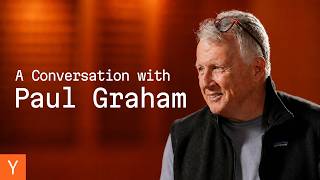 Paul Graham on Startups and Ambition: Great Founders Win2026 · 21 min · full transcript
- What did Paul Graham say about Y Combinator and mass production?
- What did Paul Graham say was the biggest innovation of Y Combinator?
- What did Paul Graham say was the secret to Y Combinator's success?
- What does Paul Graham like most about working with startups at Y Combinator?
- Why does Paul Graham say YC interviews work?
- Was Y Combinator started to make money?