Ambition and Risk
Huge outcomes require frightening ideas and real upside.

The lesson
Graham’s starting point is that startups are too hard to be sustained by dutifulness alone. The work is grueling, the obstacles are severe, and founders need a stronger internal drive to keep going through repeated difficulty12. In his view, that drive is ambition: not a vague wish to do well, but the force that keeps someone moving when the ordinary rewards are far away.
That ambition does not usually feel glamorous from the inside. Graham says founders are often pushed day to day more by the fear of failure than by fantasies of getting rich3. This helps explain why he focuses so much on the people rather than the original pitch: startup ideas often change, but the founders are the part you cannot swap out later456.
He also argues that the biggest opportunities are often uncomfortable at first. Large startup ideas tend to feel frightening, and one reason is that they threaten your identity by making you consider building something more ambitious than seems reasonable7. The practical way into such ideas is usually not to attack the whole giant market at once, but to find a small, intense wedge that can grow outward from a narrow group of users who urgently want the product8910.
Ambition and courage are still not enough unless the rewards match the risk. Graham’s argument about inequality and startups is that risky work only happens at scale when the upside is large enough to justify the chance of failure1112. If you cap the gains too much, fewer founders, investors, and early employees will choose startup risk in the first place, which means fewer startups and less innovation1314.
So the chapter’s logic is: startups require unusually ambitious people, those people must be willing to pursue ideas that initially feel scary, and the ecosystem only works if success can be very large. Graham’s emphasis on founders, early user learning, and high-upside bets all fit together around that view151611. If you want a huge outcome, you should expect the path to feel hard, exposed, and uncertain rather than comfortable.
5 principles from Paul Graham
Treat ambition as fuel, not decoration
If the work is hard enough, you cannot rely on discipline alone to carry you through it. Choose projects you care about enough that you will keep pushing when progress is slow and the obstacles are intimidating.
“The obstacles are too fearsome for mere dutifulness to do it.”
Bet on founders more than initial ideas
A startup’s first idea may change a lot, so the more durable asset is the quality of the people driving it. When judging your own project or joining someone else’s, ask whether the founders are the kind of people who can adapt and still get what they want.
“The main thing we care about is the founders.”
Notice which ideas scare you for the right reasons
Some ideas are promising precisely because they feel too bold or identity-threatening at first. Instead of dismissing them, look for a small wedge: a narrow group of users with a strong need that could expand into something much larger.
“The biggest startup ideas are frightening…”
Match risk with real upside
People take startup risk because the potential reward can be outsized. If you are choosing between paths, remember that very uncertain work only makes sense when the upside is correspondingly large.
“The problem is risk and reward have to be proportionate.”
Expect the real motivation to be immediate and emotional
Founders often imagine success in abstract terms, but daily effort is usually driven by not wanting to fail. Use that knowledge to build routines and accountability that convert pressure into forward motion instead of denial.
In his own words
The quotes behind the lesson, word for word from the transcripts. Numbers match the lesson above.
“The obstacles are too fearsome for mere dutifulness to do it.”
“When did I figure out that founders had to be really ambitious? I think, um, I already knew that before we started YC because when we started YC we already had all this experience of doing a startup ourselves, right? And so we knew that it was grueling. And you need, you need something to drive you through all those obstacles and honestly being dutiful is not enough. The obstacles are too fearsome for mere dutifulness to do it. So there's got to be something driving you and you call it ambition.”
“What actually motivates founders day to day? The fear of failure.”
“The main thing we care about is the founders.”
“What you can't change is the founders.”
“The main thing we care about is the founders. A lot of people think the most important thing about a startup is the idea. We don't care that much about the idea because historically, successful startups, the idea has changed a lot. What you can't change is the founders. So that's what we care about.”
“The biggest startup ideas are frightening…”
“Make the search engine you yourself want.”
“The way to win here, the way to attack all these really gigantic ideas, is to find the tiny thing that turns into the gigantic idea, right? Find the dinosaur egg. The dinosaur egg—I just like invented a meme on the spot; that was not in the talk. The dinosaur egg is to make a search engine that all the hackers use. If you just made a search engine that the top 10,000 hackers used, and you got like the first 20% of them in this room, right? If you just made a search engine that the top 10,000 hackers used and nobody else, you'd have only 10,000 users, right?”
“You wanna build a product for clever impoverished outsiders.”
“The problem is risk and reward have to be proportionate.”
“The problem is risk and reward have to be proportionate. A bet with only a 10% chance of winning has to pay a lot more, in fact, somewhat more than five times more than a bet with a 50% chance of winning. So if you lop off the top of the possible rewards, you decrease people's willingness to take risks. Transposing into our original expression, we get decreasing economic inequality means decreasing the risk people are willing to take. There are whole classes of risks that are no longer worth taking if the maximum return is decreased.”
“If that kind of risk doesn't pay, venture investing, as we know it, doesn't happen.”
“Eliminating economic inequality means eliminating startups.”
“The answer to your question, where the next giant company comes from is it comes from the right founders.”
“The point of releasing is to start learning from your users…”
Reflect
- What project or idea have you avoided partly because it feels identity-threatening or too ambitious? What would be the smallest serious wedge into it?
- When you imagine doing hard work for years, what actually motivates you more: status, money, curiosity, fear of failure, or something else? How should that change the kind of work you choose?
- Are you currently taking a risk with too little upside, or aiming at a large upside without accepting the corresponding difficulty? Where is the mismatch?
Check your understanding
Go deeper
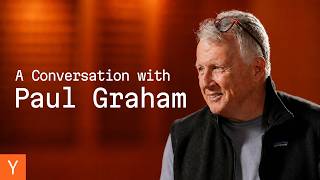 Paul Graham on Startups and Ambition: Great Founders Win2026 · 21 min · full transcript
 Paul Graham on Big Startup Ideas: Seven Huge Bets2009 · 47 min · full transcript
 Paul Graham on Inequality and Risk: Why Startups Need Upside2005 · 26 min · full transcript
 Paul Graham on Startup Investing: It’s About the Founders2010 · 10 min · full transcript
 Paul Graham on Startups and Innovation: How Y Combinator Works2009 · 63 min · full transcript
- How does Paul Graham think startups should tackle huge ideas?
- What did Paul Graham say about economic inequality and risk?
- Why does Paul Graham say founders need to be ambitious?
- What did Paul Graham say about really big markets for startups?
- What does Paul Graham say startup founders' lives are really like?