Founders Over Ideas
The people matter more than the first plan.

“The main thing we care about is the founders. A lot of people think the most important thing about a startup is the idea. We don't care that much about the idea because historically, successful startups, the idea has changed a lot. What you can't change is the founders. So that's what we care about.”Bloomberg West interview, 2010 · 0:44
The lesson
Graham’s starting point is simple: at the earliest stage, the founders matter more than the first idea. His reason is that ideas often change a lot as startups learn, but the people are the part you cannot swap out, so the key bet is on who the founders are rather than on their initial plan12. That is why he describes early-stage selection as mainly a judgment about people34.
Among founder traits, he puts unusual weight on ambition and determination. Startups are grueling, so ordinary dutifulness is not enough to push through the obstacles; founders need a deeper drive56. And in practice, the day-to-day fuel is often not fantasies of success but the desire not to fail, which helps explain why formidable founders keep going when the work gets hard7.
Determination is also the hardest thing to evaluate quickly. Graham warns that founders can perform toughness in an interview, so you learn more by asking for concrete stories about what they did when things went wrong than by judging how intense they seem in the room89. His broader point is that founder evaluation should focus on evidence from behavior under pressure, not on polished self-presentation.
He also looks for signs that founders are natural builders. One of his favorite tests is whether someone has made things outside school or work simply because they wanted to; that is better evidence than credentials or detailed plans because it shows intrinsic motivation and real making ability10. This fits his skepticism about forecasts at the earliest stage: if founders are strong and persistent, they can adapt the company into something else, so what matters most is the capacity to build and keep going12.
Finally, founder quality is not just individual. Graham cares a lot about whether cofounders can work well together, because startup work puts relationships under strain and bad founder dynamics are hard to repair later13. He suggests that good cofounder matching usually comes from actually working together on projects over time, not from trying to assemble a team instantly, and that founder conversations should be candid rather than performative so investors can really help1415.
5 principles from Paul Graham
Bet on founders more than the first idea
At the earliest stage, treat the initial idea as provisional and the founders as the core asset. Ask whether these people are the kind who can learn, adapt, and keep going when the original plan changes.
“The main thing we care about is the founders. A lot of people think the most important thing about a startup is the idea. We don't care that much about the idea because historically, successful startups, the idea has changed a lot. What you can't change is the founders. So that's what we care about.”
Look for ambition strong enough to survive the grind
Startup work is too hard for people who are merely conscientious. Look for founders with a strong internal drive, including the unwillingness to accept failure, because that is what sustains effort through obstacles.
“The obstacles are too fearsome for mere dutifulness to do it.”
Judge determination from stories, not posture
Do not infer grit from how tough someone sounds in an interview. Ask for specific episodes of setbacks, conflict, or near-failure and listen for what the founder actually did next.
“Determination, it's hard to judge by looking at the person. The way you would judge determination because people act determined. People think they're supposed to act determined. No one walks into their Y Combinator interview thinking, I need to seem diffident. Nobody thinks that. They all think they're supposed to seem tough, which is actually really painful and stressful. It would be better if they just were themselves because someone trying to act tough is just so painful to watch. But the way you tell determination is not so much from talking to them as from asking them stories about things that have happened to them. That's where you can see determination.”
Prefer evidence of making things
Side projects and self-directed building are strong signals because they show both ability and genuine interest. Use that evidence more than polished plans, forecasts, or credentials when judging very early founders.
“What have you made outside of school or work because you liked it?”
Choose cofounders you have truly worked with
Cofounder quality includes the relationship, not just the resumes. The best way to test fit is to build something together and see whether you can operate as partners under real conditions.
“The founders have to get along.”
In his own words
The quotes behind the lesson, word for word from the transcripts. Numbers match the lesson above.
“The main thing we care about is the founders. A lot of people think the most important thing about a startup is the idea. We don't care that much about the idea because historically, successful startups, the idea has changed a lot. What you can't change is the founders. So that's what we care about.”
“What you can't change is the founders.”
“Oh, it's all the people.”
“It's all about the people.”
“The obstacles are too fearsome for mere dutifulness to do it.”
“When did I figure out that founders had to be really ambitious? I think, um, I already knew that before we started YC because when we started YC we already had all this experience of doing a startup ourselves, right? And so we knew that it was grueling. And you need, you need something to drive you through all those obstacles and honestly being dutiful is not enough. The obstacles are too fearsome for mere dutifulness to do it. So there's got to be something driving you and you call it ambition.”
“What actually motivates founders day to day? The fear of failure.”
“Unfortunately, the most important quality is the hardest, is the hardest one to judge in a short time.”
“Determination, it's hard to judge by looking at the person. The way you would judge determination because people act determined. People think they're supposed to act determined. No one walks into their Y Combinator interview thinking, I need to seem diffident. Nobody thinks that. They all think they're supposed to seem tough, which is actually really painful and stressful. It would be better if they just were themselves because someone trying to act tough is just so painful to watch. But the way you tell determination is not so much from talking to them as from asking them stories about things that have happened to them. That's where you can see determination.”
“What have you made outside of school or work because you liked it?”
“As long as the founders haven't given up, they can morph the company into anything…”
“The founders have to get along.”
“When I talk to people who are in their teens or early twenties about starting a startup, I tell them instead of sitting around thinking of startup ideas, you should be working with other people on projects and then you'll get a startup idea out of it that you probably never would have thought of and you'll get a co founder too. Right? So I wish people would do more of that. You can get co founders. Just work with people on projects. You just can't get co founders instantly. You've got to have some patience.”
“The better the investor, the more it should be like going to the doctor…”
Reflect
- If your current idea changed completely next month, what founder qualities in you or your team would still make the company worth betting on?
- What story from your past best demonstrates determination under pressure, and does it show action or just intention?
- What have you made outside school or work because you genuinely wanted to, and what does that reveal about the kind of startup you are suited to build?
Check your understanding
Go deeper
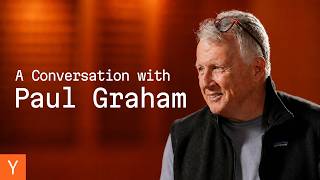 Paul Graham on Startups and Ambition: Great Founders Win2026 · 21 min · full transcript
 Paul Graham on Talent Selection: Ambition, Art, and YC2023 · 55 min · full transcript
 Paul Graham on Startup Investing: It’s About the Founders2010 · 10 min · full transcript
 Paul Graham on Founder Determination: What Matters Most2011 · 7 min · full transcript
 Paul Graham on Early-Stage Investing: Build, Survive, Be Honest65 min · full transcript
 Paul Graham on Y Combinator Growth: Why Sam Altman Took Over2014 · 55 min · full transcript