Paul Graham on Benevolence
Paul Graham treats benevolence as a practical startup advantage: focus on what is best for users and founders, and decisions get clearer, morale gets stronger, and more people want to help.
- Benevolence starts with making something users really want, not optimizing revenue first.
- Being good helps startups in three ways: better morale, more outside help, and faster, clearer decisions.
- For young startups, charm beats force; you win by helping users, not by gaming systems.
- This applies beyond customers: Graham also prefers defaulting to what is best for founders.
- Benevolence works partly because startups move fast, and simple honest rules scale better than schemes.
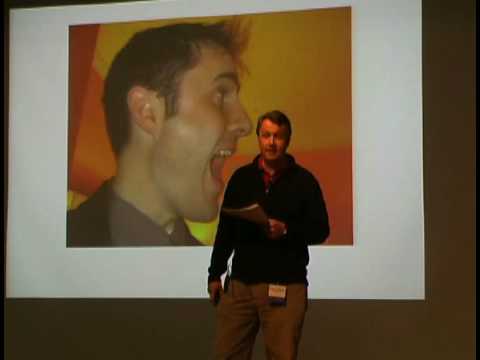
“When you're small, you can't bully users, so you have to charm them.”LAUNCH Festival 2014 fireside chat · 8:00
Benevolence is a startup strategy, not just a virtue
Graham’s core claim is that early startups should prioritize making something people want and delay obsessing over revenue. He explicitly pairs those two ideas and notes that together they make startups look surprisingly similar to nonprofits at first, which is not a flaw but an important insight about how the best young companies behave.12
His practical rule is simple: do what is best for users. That gives founders a direct way to choose among options without getting lost in tactics, image management, or premature monetization.3
This is why his advice on benevolence is not sentimental. He argues that startups often succeed by being genuinely good to the people they serve, not by extracting value as early as possible.2
Why being good works when you're small
Graham argues that startups have structural reasons to be benevolent. Early on, they lack the power to force users into bad experiences, so their best move is to win people over by being helpful and appealing.4
This fits his broader view that startups are one place where manipulation and system-gaming stop working. In school or large organizations, people can sometimes advance by managing appearances, but startups only work if they create real value for real users.56
That is why he keeps returning to users rather than tricks. Expertise in users matters more than expertise in startup theater, and founders should build from a real understanding of the people they are serving.7
“When you're small, you can't bully users, so you have to charm them.”LAUNCH Festival 2014 fireside chat · full transcript →
Benevolence raises morale and attracts help
Graham says benevolence helps startups in three concrete ways, and the first is morale. Startup life is emotionally volatile, so anything that strengthens founders’ sense that they are doing something straightforwardly good gives them more energy to persist.8
The second benefit is that other people become more willing to help. If a company is visibly trying to do right by users and founders, it becomes easier to attract allies rather than merely negotiate transactions.8
You can see this logic in how Graham describes Y Combinator itself. He says YC did not begin as a machine for extracting profit, and he emphasizes that they were initially not focused on making money. That orientation helped create a model centered on helping founders, including giving them peers so startup life was less lonely.9101112
“So I figured out that there's three ways that benevolence will help your startup. It improves your morale, it makes other people want to help you, and above all, it helps you be decisive. Morale is tremendously important to a startup. So important that that alone is almost enough to determine success. You will hear people describe start ups as an emotional roller coaster.”LAUNCH Festival 2014 fireside chat · full transcript →
The deepest advantage is decisiveness
For Graham, the biggest payoff from benevolence is that it makes decisions easier. If your rule is to do what is best for users, you do not need a complicated internal calculus full of hidden tradeoffs and shifting motives.38
He describes this as a stateless way to operate, similar to telling the truth. In fast-changing environments, simple principles outperform schemes because schemes require too much memory and too much maintenance.13
That same logic appears in his description of advising startups at scale. When many cases are moving quickly at once, the workable rule is to try to do what is best for the startups, even if that is not perfectly optimized for yourself.14
“Being good is a particularly useful strategy for making decisions in situations where things change fast because it's stateless. It's like telling the truth. The trouble with lying, as I discovered when I was a kid, is that you have to remember everything you've said in the past in order not to say anything that will contradict yourself. If you tell the truth, you don't have to remember anything. And that is a really useful property in domains where things change fast.”LAUNCH Festival 2014 fireside chat · full transcript →
Benevolence also means siding with founders
Graham does not limit benevolence to customers. He also applies it to investors and institutions that work with startups, where his default is to act in founders’ interests when the answer is unclear.15
This matches his broader emphasis on people over process. He thinks founders should trust their instincts about people, and YC’s own selection process puts heavy weight on authenticity and founder quality rather than polished plans.161718
That is also why he is skeptical of elaborate forecasts and performative fundraising behavior. In uncertain environments, honest alignment with users and founders beats strategy built around appearances.1920

“If we're not sure what to do, just like whatever the founder wants, that's cool.”TechCrunch Disrupt backstage interview, 2011 · full transcript →
Graham on benevolence, in his own words
“When you're small, you can't bully users, so you have to charm them.”
“So I figured out that there's three ways that benevolence will help your startup. It improves your morale, it makes other people want to help you, and above all, it helps you be decisive. Morale is tremendously important to a startup. So important that that alone is almost enough to determine success. You will hear people describe start ups as an emotional roller coaster.”
“Being good is a particularly useful strategy for making decisions in situations where things change fast because it's stateless. It's like telling the truth. The trouble with lying, as I discovered when I was a kid, is that you have to remember everything you've said in the past in order not to say anything that will contradict yourself. If you tell the truth, you don't have to remember anything. And that is a really useful property in domains where things change fast.”
“When you're trying to advise 57 startups at once, it turns out that you have to have a stateless algorithm. You can't have ulterior motives because you can't remember them. So our rule is just try and do whatever is best for the startups, right? May not be optimal for us, but it'll be reasonably close. And frankly, it's not because we're particularly benevolent, but it's just the only algorithm that works on that scale.”
Where to watch
 Paul Graham on Benevolence in Startups: being good works2014 · 31 min · full transcriptHis clearest statement that benevolence helps startups through morale, outside help, and decisiveness.
 Paul Graham on Before the Startup: Just Learn2014 · 48 min · full transcriptShows how benevolence connects to serving users, trusting human judgment, and rejecting system-gaming.
 Paul Graham on Founder Determination: What Matters Most2011 · 7 min · full transcriptExtends the idea from users to founders: when uncertain, default to what helps founders.
 Paul Graham on Y Combinator Origins: Step-Down and Handoff2014 · 21 min · full transcriptExplains how YC’s original spirit was oriented around helping founders rather than maximizing profit.
 Paul Graham on Early-Stage Investing: Build, Survive, Be Honest65 min · full transcriptAdds his investor-side view that honesty and building matter more than polished plans.
Questions people ask
- What did Paul Graham say about why benevolence helps startups?
- Why does Paul Graham say being good is like telling the truth?
- Why does Paul Graham say startups can sound like nonprofits?
- Why does Paul Graham say the rule is to do what is best for the startups?
- What did Paul Graham say about growth hacks?
- What does Paul Graham say founders should trust their instincts about?
Sources
Every quote above, word for word from the transcripts. Numbers match the text.
“Don't worry too much about making money.”
“Another thing we tell startups, probably the second most common thing we tell startups, is not to worry too much about the business model at the beginning. Don't worry too much about money. Not because it's not important, but because it's so much easier than making something great. Well, a couple weeks ago, I realized that when you put these two ideas together, you get something strange. Make something people want. Don't worry too much about making money. What you've got is a description of a nonprofit. Alright. So when something... When you get a weird result like this, there's two possibilities. Either it's a bug or a new discovery.”
“Just do whatever is best for your users.”
“When you're small, you can't bully users, so you have to charm them.”
“Starting a startup is where gaming the system stops working.”
“Starting a startup is where gaming the system stops working. Gaming the system may continue to work if you go to work for a big company. Depending on how broken the company is, you may be able to succeed by sucking up to the right person, giving the impression of productivity by sending emails late at night. Or if you're smart enough, changing the clock on your computer.”
“What you need is expertise in your own users.”
“So I figured out that there's three ways that benevolence will help your startup. It improves your morale, it makes other people want to help you, and above all, it helps you be decisive. Morale is tremendously important to a startup. So important that that alone is almost enough to determine success. You will hear people describe start ups as an emotional roller coaster.”
“It was not supposed to grow into this big thing.”
“People just do not realize how, like, not interested we were in making money. I'm thinking of all these people saying on forums, oh, it's so self serving. But, honestly, in the beginning, we were not trying to make money.”
“The most critical innovation with the YC model is to fund a bunch of startups at once.”
“The most critical innovation with the YC model is to fund a bunch of startups at once. So it's better for the investor, but also better for the startups because they have colleagues. That is the big thing you're missing in a startup. It's so lonely, and now it's like it has some of the advantages of being part of a company without the disadvantages.”
“Being good is a particularly useful strategy for making decisions in situations where things change fast because it's stateless. It's like telling the truth. The trouble with lying, as I discovered when I was a kid, is that you have to remember everything you've said in the past in order not to say anything that will contradict yourself. If you tell the truth, you don't have to remember anything. And that is a really useful property in domains where things change fast.”
“When you're trying to advise 57 startups at once, it turns out that you have to have a stateless algorithm. You can't have ulterior motives because you can't remember them. So our rule is just try and do whatever is best for the startups, right? May not be optimal for us, but it'll be reasonably close. And frankly, it's not because we're particularly benevolent, but it's just the only algorithm that works on that scale.”
“If we're not sure what to do, just like whatever the founder wants, that's cool.”
“You can, however, trust your instincts about people.”
“If you had to boil it down into one word, what you're looking for, it's authentic.”
“…when you fund an early stage startup it's more about the founders than the idea…”
“…five-year plans aren't worth the ink cartridge that they are that they're written with…”
“The better the investor, the more it should be like going to the doctor…”
How this guide was made: drafted with AI from the full transcripts of the recordings cited, then checked: every quotation must match a transcript word for word and be the speaker's own words, and an independent review gates accuracy. Methodology and corrections.