The Creative Mind
Begin where Chomsky began: language as a window into human nature.
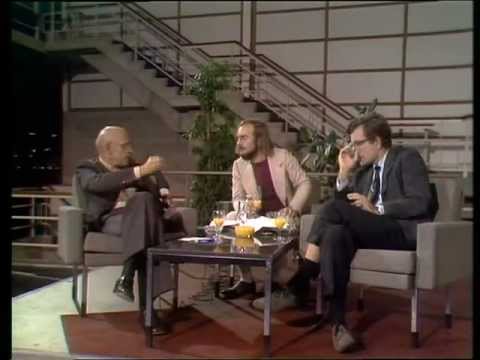
“…a fundamental element of human nature is the need for creative work…”International Philosophers' Project debate, Eindhoven, 1971 · 36:01
The lesson
Chomsky begins from an ordinary fact: people routinely use language in ways they have never heard before. For him, that creativity is not a special gift of a few exceptional people but a normal feature of human life, tied to our broader capacity to inquire and make sense of the world. That is why language matters so much in his work: it offers a direct window into human nature and into the kinds of built-in capacities people must bring to experience12.
His argument against a purely empiricist view starts with acquisition. Children do not receive enough evidence from the environment to explain the rich and structured knowledge they develop, so learning cannot be just passive collection of data. Chomsky's conclusion is that the mind must contribute organizing structure from the start; otherwise the leap from limited input to mature knowledge is unexplained34.
This is also why he treats linguistics as a search for explanation, not just a way to sort sentences or imitate performance. A good theory should tell us what internal system makes language possible, and it should do so in a way that is simple enough to explain both how children acquire language and how such a capacity could belong to our species. On this view, merely reproducing patterns is not enough; the aim is to identify the underlying principles that make the patterns possible in the first place456.
The same picture of human beings carries beyond linguistics. If people are naturally disposed to inquire and create, then institutions should be judged partly by whether they nourish or suppress those capacities. Chomsky argues that systems that reduce people to narrow, fragmented roles damage human development, while freer forms of association would better fit the creative side of human nature789.
So the chapter's central idea is unified: language shows that the human mind is structured, creative, and not exhausted by stimulus and response. From that starting point, Chomsky draws both a scientific lesson and a political one. Scientifically, explanation must look beneath behavior to internal principles; politically, a decent society should create room for free inquiry, participation, and creative work rather than domination by state or private power51011.
5 principles from Noam Chomsky
Treat ordinary language use as evidence of human creativity
Do not think of creativity as limited to art or genius. In Chomsky's view, everyday speaking already shows a normal human power to generate and understand new expressions, and that should shape how you think about mind and learning.
“…a fundamental element of human nature is the need for creative work…”
Do not explain learning by input alone
When the evidence available to a learner is limited but the resulting knowledge is rich, you should ask what prior structure the learner brings. Chomsky's point is that acquisition requires built-in organizing principles, not just exposure and repetition.
“…this instinctive knowledge, if you like, this schematism…”
Aim for explanation, not mere simulation
A theory is stronger when it identifies the internal principles that make a capacity possible, rather than just matching observed outputs. Apply this by asking of any model: does it explain the system, or only imitate its results?
“…the holy grail was genuine explanations of fundamental properties of human language…”
Prefer simpler theories with deeper explanatory reach
For Chomsky, simplicity is not cosmetic; it is tied to explanatory power. When comparing accounts, look for the one that explains more with fewer assumptions and helps connect learnability, structure, and human nature.
“Of course, always when you look in any field, you would be looking for the simplest theory that's simply a general fact about explanation. It's clear that as the foundations of a theory become simpler, its explanatory depth increases. So, if science is interested in explanation, not just simulation, it'll be, of course, looking for the simplest theory. There’s a second reason for looking for the simplest theory, which is a kind of a percept—it goes back to Galileo again, who simply urged that we accept the idea.”
Judge institutions by whether they support creative human development
If inquiry and creation are basic human capacities, then social arrangements should expand opportunities for meaningful participation rather than enforce fragmentation and passivity. Use that test when thinking about work, education, and political organization.
“The worker will remain a fragment of a human being…”
In his own words
The quotes behind the lesson, word for word from the transcripts. Numbers match the lesson above.
“…a fundamental element of human nature is the need for creative work…”
“…man is born to inquire and create…”
“…this instinctive knowledge, if you like, this schematism…”
“…the holy grail was genuine explanations of fundamental properties of human language…”
“Anything short of that is not a genuine explanation.”
“Of course, always when you look in any field, you would be looking for the simplest theory that's simply a general fact about explanation. It's clear that as the foundations of a theory become simpler, its explanatory depth increases. So, if science is interested in explanation, not just simulation, it'll be, of course, looking for the simplest theory. There’s a second reason for looking for the simplest theory, which is a kind of a percept—it goes back to Galileo again, who simply urged that we accept the idea.”
“…man is in his essence a free, searching, self-perfecting being…”
“The worker will remain a fragment of a human being…”
“Now a federated, decentralized system of free associations, incorporating economic as well as social institutions, would be what I refer to as anarcho-syndicalism; and it seems to me that this is the appropriate form of social organization for an advanced technological society, in which human beings do not have to be forced into the position of tools, of cogs in the machine. In which the creative urge that I think is intrinsic to human nature, will in fact be able to realize itself in whatever way it will. I don't know all the ways in which it will.”
“…a federated, decentralized system of free associations…”
“Thing: in short, the democratic system at best functions within a very narrow range in a capitalist democracy, and even within this narrow range its functioning is enormously biased by the concentrations of private power and by the authoritarian and passive modes of thinking that are induced by autocratic institutions such as industries, for example. It's a truism, but one that must be constantly stressed that capitalism and democracy are ultimately quite incompatible, and a careful look at the matter, I think, merely strengthens this conclusion. There are perfectly obvious processes of centralization of control taking place in both the political and the industrial system.”
Reflect
- Think of a skill you learned well. How much of your success came from raw exposure, and how much seemed to depend on prior expectations, built-in biases, or mental structure?
- Where in your work or education are you being trained to simulate performance rather than understand underlying principles?
- Pick one institution you belong to. Does it expand your ability to inquire and create with others, or does it push you into a fragmented, passive role?


