Freedom and Human Nature
How a theory of creativity becomes a politics of freedom.
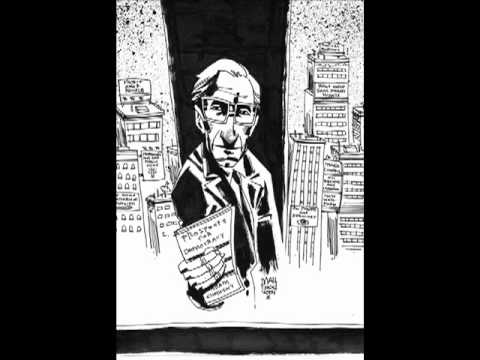
“…man is born to inquire and create…”Sound Seminar, Poetry Center of the New York YM-YWHA, 1970 · 5:52
The lesson
Chomsky begins from a view of human beings as naturally creative. In the debate on human nature, he argues that people do not build knowledge from experience alone; the mind must contribute its own structure from the start, which is why language learning and inquiry are possible at all1. In the political lectures, the same idea appears in broader form: human beings are understood as oriented toward inquiry, creation, and self-development rather than passive obedience23.
That picture of human nature has political consequences. If creative work is a basic human need, then a decent society should not merely keep order; it should organize institutions so people can participate, create, and develop their capacities4. Chomsky therefore treats freedom as more than protection from interference: it also requires social arrangements that let people do meaningful work and share in decisions that shape their lives56.
From there, he criticizes both state power and private power. In the 1970 lecture, he argues that concentrated state authority is deeply hostile to human development, but he also insists that capitalist industry produces domination through hierarchy, fragmentation of labor, and passive habits of thought78. So the target is not only government coercion; it is any institution, public or private, that reduces people to instruments for elite control.
This is why Chomsky presents libertarian socialism as the most serious extension of the better side of classical liberalism. If classical liberal ideals value freedom and human growth, then modern industrial society must be judged by whether it places power in the hands of workers and communities rather than bosses, managers, or state elites10. His positive alternative is a decentralized order of free associations, including economic life, where participation replaces subordination and creative capacities can be exercised more fully56.
That view also defines the task of intellectuals. People with education or privilege should not help power justify itself; they should clarify reality, strip away official illusion, and join popular efforts against domination1112. For Chomsky, the theory of human creativity leads directly to a practical ethic: because people are capable of understanding and shaping their world, there is always work to do in resisting concentrated power and expanding the space for freedom1314.
5 principles from Noam Chomsky
Start politics from a view of human creativity
Chomsky links his account of language and learning to a broader claim about human beings: people are not blank receivers of experience but active makers of meaning. Apply this by asking whether an institution develops people's capacities for inquiry and creation or suppresses them.
“…man is born to inquire and create…”
Treat creative work as a human need
Freedom is not only formal rights; it includes the chance to do meaningful, self-directed work. When judging a workplace, school, or civic structure, ask whether it invites participation and growth or enforces routine obedience.
“…man is in his essence a free, searching, self-perfecting being…”
Oppose domination in both state and corporate form
Chomsky rejects the idea that only the state threatens liberty. Private concentrations of power can be just as damaging when they organize people hierarchically and narrow democratic life.
“…the state is a profoundly anti-human institution…”
Prefer decentralized association over elite rule
His alternative is not chaos but coordinated self-government through federated, free associations. In practice, this means pushing decision-making downward and widening control by workers and communities.
“…a federated, decentralized system of free associations…”
Use privilege to clarify reality and join public struggle
For Chomsky, intellectual responsibility begins with honesty about power. If you have access to education or public voice, use it to expose distortion and support people trying to act for themselves.
“…privilege plainly confers opportunity and opportunity confers responsibility…”
In his own words
The quotes behind the lesson, word for word from the transcripts. Numbers match the lesson above.
“…this instinctive knowledge, if you like, this schematism…”
“…man is in his essence a free, searching, self-perfecting being…”
“…man is born to inquire and create…”
“…a fundamental element of human nature is the need for creative work…”
“…a federated, decentralized system of free associations…”
“Now a federated, decentralized system of free associations, incorporating economic as well as social institutions, would be what I refer to as anarcho-syndicalism; and it seems to me that this is the appropriate form of social organization for an advanced technological society, in which human beings do not have to be forced into the position of tools, of cogs in the machine. In which the creative urge that I think is intrinsic to human nature, will in fact be able to realize itself in whatever way it will. I don't know all the ways in which it will.”
“…the state is a profoundly anti-human institution…”
“The worker will remain a fragment of a human being…”
“I'd like to make clear my own point of view in advance so you can evaluate and judge what I'm saying. I think that the libertarian socialist concepts, and by that I mean a range of thinking that extends from left-wing Marxism through anarchism, I think that these are fundamentally correct and that they are the proper and natural extension of classical liberalism into the era of advanced industrial society. In contrast, it seems to me that the ideology of state socialism—that is what has become of Bolshevism—and of state capitalism, the modern welfare state, these of course are dominant in the industrial countries and the industrial societies, but I believe that they are regressive and highly inadequate social.”
“…privilege plainly confers opportunity and opportunity confers responsibility…”
“No, they can't sweep away—and try to sweep away—the mists of carefully contrived illusion and reveal the stark reality, which is often quite simple. When you clear away the mists, they can become engaged directly in popular struggles. They can help organize the countless Joe Stacks who are destroying themselves and maybe the world, and they could join them in leading the way to a better future. Thanks.”
“…there's no shortage of tasks…”
“Well, the world's too complex for history to repeat, but there are some unpleasant memories reverberating, and there are lessons to keep in mind. We'll have to expand on them. There's for those who want to choose the vocation of critical intellectuals, there's no shortage of tasks. That's true whatever their station and life, whether they're called intellectuals or…”
Reflect
- Where in your work or education do you feel treated as a participant with creative capacities, and where do you feel treated as a tool?
- Pick one institution you deal with regularly—workplace, school, government office, platform, or company. Does its power rest mainly on consent, hierarchy, expertise, ownership, or bureaucracy?
- If privilege creates responsibility, what is one concrete way you could help clarify reality for others rather than just adapt to existing power?


