Self-Defense and Action
How to keep thinking clearly when institutions reward obedience.
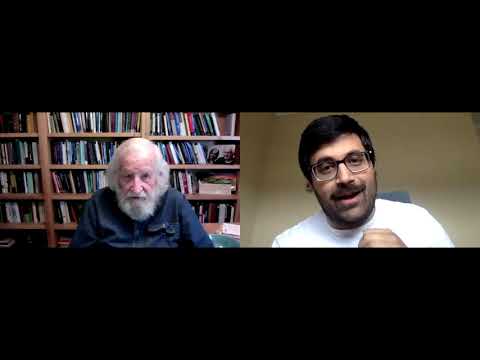
“If you want intellectual self-defense, that means teaching people how to think, how to think for themselves, not pass a test. I don't care if you pass a test or not. I mean, in a serious scientific university like MIT, nobody cares about test scores.”Online interview, 2021 · 50:56
The lesson
This chapter presents a practical ethic for keeping your judgment intact when institutions reward conformity. Chomsky’s starting point is that people are not passive receivers of doctrine: human beings bring structure, initiative, and a drive toward creative work to their experience, and a decent society should widen those capacities rather than suppress them12. That is why self-defense is not only about spotting propaganda; it is also about protecting your ability to inquire and act.
From there, he treats inquiry as a responsibility, especially for people with access, education, or public voice. Intellectual work matters when it helps uncover reality instead of decorating power, and status is no substitute for evidence or consequences345. So the basic discipline is: learn how to think for yourself, compare claims against facts, and resist systems that train people to perform well while understanding little6.
A central part of that discipline is to distrust official innocence without becoming lazy or conspiratorial. Chomsky repeatedly argues that states and elites present domination in moral language, and that policy is typically shaped by concentrated power rather than public need78. But his answer is not to ignore mainstream information. He says you should begin with major media, read carefully, and then ask what is emphasized, what is omitted, and whose interests the framing serves910.
Clear thinking also has to lead to practical judgment about action. In conflict, Chomsky’s emphasis is not on moral purity or total victory, but on reducing destruction through negotiation when the alternative is catastrophe12. The same orientation appears in domestic politics: if power has been shifted upward through attacks on labor, public institutions, and democracy, then response requires coalition, organizing, and constructive movements rather than private outrage alone13.
Finally, self-defense ends in responsibility, not withdrawal. Chomsky’s view is that once illusions are cleared away, people can join popular struggles, help others understand their situation, and build freer forms of association and participation142. The point is not to feel righteous or guilty, but to recognize that choice remains open and that action is still possible15.
5 principles from Noam Chomsky
Train your capacity for independent inquiry
Self-defense begins with protecting your ability to think rather than merely perform. In practice, that means asking what evidence supports a claim, what assumptions organize it, and whether your education or workplace is helping you inquire or only comply.
“If you want intellectual self-defense, that means teaching people how to think, how to think for themselves, not pass a test. I don't care if you pass a test or not. I mean, in a serious scientific university like MIT, nobody cares about test scores.”
Treat privilege as responsibility
If you have education, time, access to information, or a platform, you have more obligation to clarify reality for others. Use those advantages to expose deception and make complicated issues understandable, not to borrow authority from institutions.
“…privilege plainly confers opportunity and opportunity confers responsibility…”
Distrust moral rhetoric from power
Official language often presents coercion as defense, order, or benevolence. When institutions describe themselves as innocent, ask whose interests are being served and whether the real effects match the declared ideals.
“American aggressiveness, however it may be masked in pious rhetoric, is a dominant force in world affairs…”
Start with major sources, then read against the grain
Critical media literacy does not mean rejecting mainstream reporting outright. It means using major outlets as a starting point, then noticing selection, framing, omissions, and the assumptions that narrow what can be discussed.
“The first thing I do in the morning is read the national press.”
Move from understanding to organized action
Insight matters only if it helps reduce harm and expand democratic power. Apply what you learn by joining coalitions, supporting negotiation over destruction, and building institutions that allow wider participation and creative freedom.
In his own words
The quotes behind the lesson, word for word from the transcripts. Numbers match the lesson above.
“…a fundamental element of human nature is the need for creative work…”
“…a federated, decentralized system of free associations…”
“…privilege plainly confers opportunity and opportunity confers responsibility…”
“…the responsibility of intellectuals to speak the truth and to expose lies…”
“…the cult of the experts is both self-serving for those who propound it and fraudulent…”
“If you want intellectual self-defense, that means teaching people how to think, how to think for themselves, not pass a test. I don't care if you pass a test or not. I mean, in a serious scientific university like MIT, nobody cares about test scores.”
“American aggressiveness, however it may be masked in pious rhetoric, is a dominant force in world affairs…”
“There was an encourager of radicals who talked about it a couple of centuries ago. This name was Adam Smith. He observed in 1776, the principles talking about England, of course. He said the principal architects of power of policy in England are the owners of the society. In his day, they were merchants and manufacturers; today, multinationals and financial institutions. And the principal architects of policy make sure that policy will attend scrupulously to their interests, however grievous the impact on the people of England and even more so on the victims.”
“The first thing I do in the morning is read the national press.”
“You can, if you want to understand what's going on in the world, you have to start with the major media.”
“There are two huge problems: one is the growing threat of nuclear war…”
“…there's no shortage of tasks…”
“No, they can't sweep away—and try to sweep away—the mists of carefully contrived illusion and reveal the stark reality, which is often quite simple. When you clear away the mists, they can become engaged directly in popular struggles. They can help organize the countless Joe Stacks who are destroying themselves and maybe the world, and they could join them in leading the way to a better future. Thanks.”
“I think that the beginning of wisdom in this case is to recognize something about what we stand for in the world, what we're doing in the world. And I think when we do recognize that, we will feel an enormous sense of guilt. And I say somewhere in there that one should be very careful not to let confessions of guilt overcome the possibility of action. I said that conf…”
Reflect
- Where in your work, school, or media habits are you being trained to repeat accepted views rather than investigate them?
- Pick one public issue you follow. What do major outlets emphasize about it, and what questions or interests seem missing from that coverage?
- What privilege or access do you have that could be turned into responsibility for others: time, skills, education, professional status, or community ties?
Check your understanding
Go deeper
 Noam Chomsky on Radical Intellectuals: Responsibility and Power2010 · 58 min · full transcript
 Noam Chomsky on Responsibility of Intellectuals: Truth vs Power1988 · 64 min · full transcript
 Noam Chomsky on Neoliberalism and Democracy: Power, Reform, and Decline2021 · 65 min · full transcript
 Noam Chomsky on War, Democracy, and Climate: Can We Choose?2020 · 110 min · full transcript
 Noam Chomsky on Russia-Ukraine War: Diplomacy or Disaster2022 · 163 min · full transcript
 Noam Chomsky on Human Nature: Creativity, Justice, and Power1971 · 70 min · full transcript
- What did Noam Chomsky say about intellectual self-defense in education?
- What did Noam Chomsky say about real education?
- What did Noam Chomsky say critical intellectuals should do in society?
- What did Noam Chomsky say about guilt and action?
- What did Noam Chomsky say about the job of critical intellectuals?