Neil deGrasse Tyson on Curiosity
For Neil deGrasse Tyson, curiosity is the core of science literacy: a way of staying open, asking better questions, and letting reality reshape how you see yourself and the world.
- Curiosity is not extra to learning; it is what real learning is.
- Good education should leave you wanting to keep learning after school.
- Curiosity means questioning, testing, and not clinging to your own beliefs.
- Wonder grows when you see your place in a larger cosmic story.
- The point is not to have every answer, but to follow mysteries honestly.
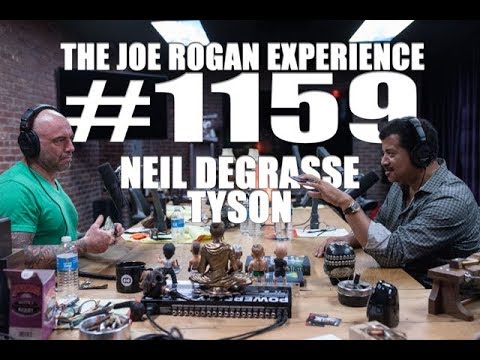
“You should say to yourself, "Damn, I want to learn more.”The Joe Rogan Experience #1159, 2017 · 2:57
Curiosity is Tyson’s definition of science literacy
Tyson does not treat science literacy as a pile of facts to memorize. He frames it as an active mental habit: how much you still wonder, how willing you are to explore, and whether you keep learning when nobody is forcing you to12.
That is why he thinks boredom is the real enemy. In his view, people are not naturally opposed to learning; they resist being taught in deadening ways, and schools fail when students leave without the desire to continue learning on their own345.
He even links curiosity to youthfulness, not as age but as attitude. To stay curious is to stay mentally alive, flexible, and eager for what you do not yet know6.
Great teaching protects curiosity instead of crushing it
Tyson’s educational standard is simple: after being taught, you should want to learn more. The mark of success is not merely that a lesson was completed, but that it sparked momentum in the learner4.
He puts unusual weight on the teacher’s role. A passionate teacher can transmit excitement, model intellectual energy, and turn learning into something students pursue voluntarily rather than endure passively7.
This is also why he values the kind of person who meets a new task with eagerness rather than fear. Curiosity makes people resourceful: they ask, experiment, seek help, and teach themselves because discovery itself becomes rewarding2.
“You should say to yourself, "Damn, I want to learn more.”The Joe Rogan Experience #1159, 2017 · full transcript →
Curiosity requires questioning, skepticism, and humility
For Tyson, curiosity is not mere fascination. It has discipline. He prefers questioning over passive belief and treats skepticism as protection against error, wishful thinking, and pseudoscience9.
That stance depends on intellectual humility. He warns against overvaluing your own thoughts, because curiosity dies when certainty hardens before ideas are tested against reality1011.
This is also why he is comfortable with unanswered questions. He argues that many people rush to answers because they dislike uncertainty, but a curious mind can live with mystery long enough to investigate it honestly instead of filling the gap with comfort1213.
Wonder deepens when curiosity becomes cosmic perspective
Tyson often pushes curiosity outward, from everyday questions to the scale of the universe. Seeing that humans are made from the same ingredients as the cosmos reshapes self-understanding and turns astronomy into a source of connection rather than abstraction1415.
That perspective also reduces ego and tribal thinking. He argues that people too easily divide themselves, while a wider view reveals a deeper commonality and reorders what deserves our attention and concern17.
In that sense, curiosity is not just about accumulating information. It can change values by showing you that your life participates in something larger, older, and more shared than everyday identity categories suggest17.
Curiosity means following mysteries where they lead
Tyson returns again and again to the idea that discovery matters precisely because the outcome is unknown. Exploration is valuable not because it confirms what you already think, but because it exposes you to realities you could not predict in advance1319.
This is clear in how he talks about life beyond Earth. The possibility matters because a genuine discovery would alter humanity’s worldview, and the only honest route there is investigation rather than assumption20.
He extends the same logic to science more broadly. Many of the most powerful advances come from people pursuing questions for the sake of interest itself, not because every practical payoff was obvious at the start22.
Tyson on curiosity, in his own words
“To remain curious is to remain young.”
“You should say to yourself, "Damn, I want to learn more.”
Where to watch
 Neil deGrasse Tyson on Cosmic Perspective: Curiosity, Science, and Space2014 · 69 min · full transcriptBest single overview of Tyson’s view that curiosity, questioning, and firsthand exploration matter more than rote memorization.
 Neil deGrasse Tyson on Science Literacy: Learning Without Boredom2017 · 201 min · full transcriptShows how Tyson connects curiosity to good teaching, anti-boredom education, and lifelong learning.
 Neil deGrasse Tyson on Cosmic Perspective: Stardust, Mortality, and Meaning2023 · 126 min · full transcriptExplains how curiosity grows into humility, truth-seeking, and a wider cosmic perspective.
 Neil deGrasse Tyson on Aliens and Cosmic Perspective: Are We Alone?2023 · 109 min · full transcriptCaptures Tyson on how the night sky awakens wonder and why cosmic scale expands human curiosity.
 Neil deGrasse Tyson on Life Beyond Earth: Why It Could Change the World2021 · 47 min · full transcriptShows curiosity in action through exploration and the willingness to search without knowing what will be found.
Questions people ask
- How does Neil deGrasse Tyson think people should handle new tasks at work?
- What did Neil deGrasse Tyson say about how science discovers new things?
- What did Neil deGrasse Tyson say about religion and unanswered questions?
- What does Neil deGrasse Tyson think schools should do?
- Why does Neil deGrasse Tyson think space exploration is worth funding?
- What did Neil deGrasse Tyson say about paying kindness forward?
Sources
Every quote above, word for word from the transcripts. Numbers match the text.
“…my personal definition of science literacy is: how much do you still wonder about the world around you?”
“That's one kind of person in a workplace. Another kind of person is, "But here's a new task. I need you to do it." "Wow, I've never seen that before. Great! Let me figure it out." They’re two completely different species of human being. And what the world needs more of is the second case, where you take a new task and you say, "Wow, I get to learn. I'm going to learn on my own. I'll ask people who know more." You just—you just embrace the act of learning to satisfy your curiosity.”
“They just don't want to be bored.”
“You should say to yourself, "Damn, I want to learn more.”
“I don't blame the students. Yeah. I'm blaming the system where you can't wait to get out of school, which means they're not teaching curiosity. Because if they did, staying in school would be fulfilling that. And if they did, leaving school would birth you the rest of your life as a curious person where you continue to learn. That's what school should be about, and it's not. And that's what you're…”
“To remain curious is to remain young.”
“Be that teacher to your students.”
“Would it be cool if one year, instead of the word "Believe," they put the word "Question?”
“At no time should you overvalue your own thoughts…”
“…people value what they think is true more than what is true…”
“However, the world still has mysteries. They're just different mysteries from whatever there used to be. And so follow the mysteries where they take you. And there's another branch of all of us who must have answers to every question. Because they're not learning to love the questions, they only want to love the answer. So they say, what was around before the Big Bang? I said, don't know. We got top people... Something had to be around. I said, I don't know. Must have been God. So there's their answer. Then they're happy. What happens after death? Well, it looks like you rot in the ground, but otherwise, and that's what... It's gotta be something. Your soul... I said, there's gotta be... They got heaven. Okay. That's their answer.”
“We don't know what we're going to find. That's why we're sending the spacecraft.”
“…we are literally composed of stardust…”
“Okay? So that's the sequence of elements. And now you say, what are the sequence of elements in the universe? The number one is hydrogen. The number two is helium, but that's chemically inert. You might remember from high school chemistry. You can't do anything with it anyway. Helium. Next in the universe, oxygen. Next, carbon. Next, nitrogen. Next, other. Okay. So we are one for one, matched to the ingredients of the universe. And one of the gifts of twentieth century astrophysics is gifts to civilization, is where those ingredients came from. We trace those ingredients, the hydrogen, to the Big Bang itself. And all these heavier elements to stars that manufactured those elements in their core, in the crucible that is their core.”
“…the cosmic perspective reorders what is important in this world…”
“Every time we point a telescope to the universe, we find something that we never predicted or understood, and it adds to the knowledge base we already have. Whenever they do discover things, and then that becomes what we know and understand, like the supermassive black holes at the center of every galaxy—that was a fairly recent discovery in terms. It was sized because we saw the centers of galaxies behaving really weirdly.”
“…if we found such a signal, it would, dare I say it, change the world.”
“The people who still think about the universe and study the universe are hugely creative. And the creative energies cannot be prescribed. You can't go to a creative— you might, but I don't know that you'll get their maximum creativity. Say, "I need you to invent a cure for cancer right now. Use that brilliance." I'll try, but the greatest discoveries, the greatest cures, the greatest of these comes from a cross-pollination of interest that people have, that where they were engaged because they were interested just for the sake of being interested. So watch out.”
How this guide was made: drafted with AI from the full transcripts of the recordings cited, then checked: every quotation must match a transcript word for word and be the speaker's own words, and an independent review gates accuracy. Methodology and corrections.