The Neil deGrasse Tyson Course
Graduate able to think with Tyson's blend of curiosity, skepticism, cosmic perspective, and public-minded science literacy.
- 12 chapters
- 98 verbatim quotes
- 28 recordings

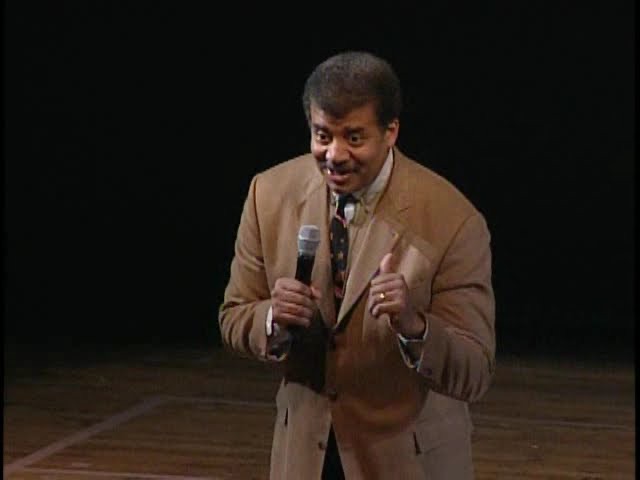
“…my personal definition of science literacy is: how much do you still wonder about the world around you?”SXSW Interactive conversation, 2014 · 4:29
About this course
Neil deGrasse Tyson is an astrophysicist, author, science communicator, and director of the Hayden Planetarium at the American Museum of Natural History. He is widely known for Cosmos, StarTalk, public lectures, and his work making astronomy and scientific thinking accessible.
Tyson's best teaching is not just about facts; it is about how to look at the world. He uses the night sky, black holes, Pluto, alien life, and everyday objects to train curiosity, humility, evidence, and wonder.
This course is built from real recordings. Each chapter combines Tyson's own explanations with related answered questions so you can learn his most important ideas in the order they build on one another.
Curriculum
- Keep Curiosity AliveScience begins before facts: with the urge to wonder.
- Think ScientificallySkepticism is curiosity disciplined by evidence.
- Adopt Cosmic PerspectiveZoom out far enough and human divisions begin to shrink.
- Classify the CosmosGood science organizes nature by what things are, not by what we memorized first.
- Learn Cosmic MechanicsGravity, motion, light, and the Big Bang make the universe intelligible.
- Teach Cosmic ExtremesUse black holes, cosmic scale, and the expanding universe to make difficult physics intuitive.
- Face the UnknownDark matter, dark energy, and quantum gravity show how much remains open.
- Explain Life NaturallyDesign-like complexity can emerge without a designer.
- Search for Other WorldsWater, chemistry, and time turn the search for life into a cosmic question.
- Weigh Space FuturesExploration is inspiring, but engineering and politics set the limits.
- Fund Civic ExplorationTreat science literacy and space exploration as public infrastructure, not luxury goods.
- Apply Science to LifeThe same habits that study galaxies can clarify brains, health, belief, and society.
- GraduateFinish every chapter to earn your certificate.










has graduated from The Neil deGrasse Tyson Course, completing all 12 chapters on Neil deGrasse Tyson's ideas, in his own words.
- Curiosity is the engine of science, and education should protect it rather than smother it with boredom.
- Science literacy means understanding how knowledge is tested, not merely memorizing scientific facts.
- Extraordinary claims deserve curiosity, but they also require strong evidence, calibrated instruments, and resistance to wishful thinking.
- The cosmic perspective humbles human ego while enlarging our sense of connection to the universe and to one another.
- Scientific classifications are tools that improve with evidence, so changing labels like Pluto's is a sign of progress, not betrayal.
- The universe is not obligated to match human intuition; science extends our senses beyond what evolution built them to notice.