Think Scientifically
Skepticism is curiosity disciplined by evidence.

“All of what has been put forth as evidence for aliens to me is insufficient evidence to excite my interest…”The Joe Rogan Experience #1658, 2017 · 21:21
The lesson
Tyson’s starting point is that skepticism is not cynicism. It is curiosity disciplined by a demand for evidence. When someone makes a claim, his test is to ask for the strongest evidence and to ask what would count against the claim, because a belief that cannot be checked against reality is not being treated scientifically1.
This matters because human intuition is not a reliable guide to truth. Tyson argues that people often feel confident before they have enough knowledge to see their own mistakes, and he also says our brains are not naturally built for strict logic23. That is why science needs methods, measurement, and criticism: the universe does not have to fit our instincts or be easy for us to understand4.
From that view, Tyson treats unusual reports the same way scientists treat any surprising result: investigate them seriously, but do not jump to dramatic conclusions. If there are unknown objects in the sky, they should be examined, especially for safety reasons, yet fuzzy footage and anecdotes are still not enough to conclude alien visitation56. He points to the way scientists question instruments, calibration, and reporting before accepting a claim, because scrutiny is part of how knowledge becomes trustworthy7.
Tyson also explains why bad reasoning becomes dangerous in public life. People are free to hold unsupported views, but when science denial shapes policy on climate, vaccines, or other issues, the consequences spread beyond the individual and can harm a society’s economic health and decision-making89. For that reason, he does not say every leader must be a scientist; the more basic requirement is scientific literacy and respect for expertise when evidence matters10.
The defense against misinformation, then, is not memorizing facts one by one. It is building habits of thought: asking what the evidence is, checking whether a claim could be wrong, and noticing when a vivid story is doing the work that data should do. Tyson’s broader point is that science helps us correct the limits of our senses and intuitions, so literacy in its methods is a practical protection against confident nonsense.
4 principles from Neil deGrasse Tyson
Ask for the best evidence and the failure condition
When you hear a strong claim, do not start by asking whether it sounds persuasive. Ask what the strongest evidence is and what observation would show the claim is wrong. This keeps curiosity tied to reality rather than to personality or storytelling.
“What is your best single bit of evidence for what you're claiming, and what would it take to show that you're wrong?”
Distrust intuition when the stakes are truth
Confidence is not the same as understanding, and human reasoning has built-in weaknesses. Use logic, measurement, and outside checks precisely because your first impression may be misleading.
“…our brain is not wired for logic…”
Investigate anomalies without overclaiming
A strange event deserves attention, especially if it could affect safety or security. But unexplained does not automatically mean extraordinary; first examine the sensors, methods, and corroboration before naming a cause.
“If they're glowing lights in the sky and we don't know what it is, I, they damn sure better look into it…”
Treat science denial as a public-risk problem, not just a private opinion
People can believe unsupported things, but the impact changes when those beliefs influence collective decisions. Apply extra care to claims that shape policy, health, or economic choices, because errors there affect everyone.
“But what I'm saying is not everyone embraces everything that science does, and some will cherry-pick it. You have the science deniers for global warming, you have science deniers with vaccines, you have science deniers with GMOs. You know, there's all manner of science denying going on in modern society. And, you know, we in a free society, what are you gonna do, right? That people can think what they want, but if thinking what they want influences policy, which then affects everybody, then your science denial has consequences to the economic health of the nation.”
Moments to watch
In his own words
The quotes behind the lesson, word for word from the transcripts. Numbers match the lesson above.
“What is your best single bit of evidence for what you're claiming, and what would it take to show that you're wrong?”
“One of the great challenges in life is knowing enough to think you're right but not enough to know you're wrong.”
“…our brain is not wired for logic…”
“The universe is under no obligation to make sense to you.”
“If they're glowing lights in the sky and we don't know what it is, I, they damn sure better look into it…”
“All of what has been put forth as evidence for aliens to me is insufficient evidence to excite my interest…”
“Go visit a — go go to a scientific conference and watch the level of scrutiny we put on other people's work. If they have a sensor that has a new result, we'll say, did you calibrate the sensor? Did you? How long has the sensor been in use? What — a given example.”
“But what I'm saying is not everyone embraces everything that science does, and some will cherry-pick it. You have the science deniers for global warming, you have science deniers with vaccines, you have science deniers with GMOs. You know, there's all manner of science denying going on in modern society. And, you know, we in a free society, what are you gonna do, right? That people can think what they want, but if thinking what they want influences policy, which then affects everybody, then your science denial has consequences to the economic health of the nation.”
“So in fact, there's hardly any growth economy in the world that isn't growing because it has been, fret not, having been touched by science or technology—everything, just think about it. So if you're around, running, you don't have them on your show, but if you run around saying, "I don't like science. Science is bad. Science is evil," okay, well then you will die in poverty if you elect officials who believe that as well.”
“I just don't put them in charge of anything, that's all.”
Reflect
- Think of a claim you currently accept strongly. What is the best evidence for it, and what would genuinely make you revise your view?
- Where in your work or daily life do you rely too much on anecdote, vibes, or confidence instead of measurement?
- Pick one public issue you care about. How would scientific literacy change the way you judge leaders’ claims about it?
Check your understanding
Go deeper
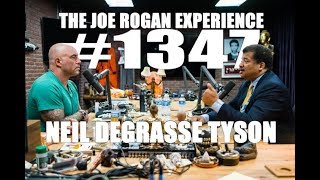 Neil deGrasse Tyson on Science And Skepticism: Art, Water, and Black Holes2017 · 141 min · full transcript
 Neil deGrasse Tyson on Science Skepticism: Why Truth Needs Literacy2017 · 134 min · full transcript
 Neil deGrasse Tyson on UFOs and Scientific Skepticism2017 · 183 min · full transcript
 Neil deGrasse Tyson on Cosmic Queries: Deep Questions and Big Ideas2021 · 48 min · full transcript
 Neil deGrasse Tyson on Logic And Religion: Science, Belief, and Labels2014 · 82 min · full transcript
- What did Neil deGrasse Tyson say about science denial?
- How does Neil deGrasse Tyson think scientists should handle extraordinary UFO claims?
- What did Neil deGrasse Tyson say about scientists inventing actuarial tables and risk analysis?
- What did Neil deGrasse Tyson say about the 13th floor and superstition?