Neil deGrasse Tyson on Science And Skepticism: Art, Water, and Black Holes

What Tyson talks about
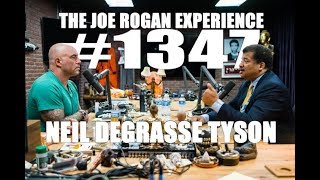
Neil deGrasse Tyson joined this Joe Rogan Experience podcast in 2017 for a wide-ranging conversation about art, skepticism, water, climate science, vaccines, GMOs, and black holes.
Also known as: JRE #1347; Joe Rogan podcast #1347.
Tyson starts with art and why Van Gogh’s Starry Night matters to him: it turns feeling into a new way of seeing reality. From there, he argues that artists elevate the ordinary, and that science and art both help people notice what they might otherwise miss.
The conversation expands into skepticism and public science literacy. Tyson criticizes science denial around climate change, vaccines, and GMOs, and makes the case that elected leaders should at least be scientifically literate so policy reflects reality.
He then gives a wide-ranging science lesson on water: why ice floats, how pressure affects melting and boiling, why lakes stay habitable in winter, and how these properties connect to skating, desalination, energy, and even the habitability of Earth. He closes with black holes, including the recent mystery of an unusual black hole mass regime and the broader history of how astronomers infer unseen objects.
Joe Rogan interviews Tyson throughout the episode.
In his words
“I like about Starry Night, it's not what van Gogh saw that night; it's what he felt.”
“If this was an exact depiction of reality, it would— Be a photograph, and I don't need the artist.”
“So, if you're around, running, you don't have them on your show, but if you run around saying, "I don't like science. Science is bad. Science is evil," okay, well then you will die in poverty”
“We're living in that world now.”
“So, the point is, the stronger the pipe is, the lower the temperature has to be outside for the freezing water to break.”
Key points
- Art matters because it filters reality through feeling and elevates the ordinary.
- Starry Night is one of Tyson’s favorite paintings because the sky is the subject, not just the background.
- Science denial has consequences when it shapes public policy on climate, vaccines, and other issues.
- Leaders do not need to be scientists, but they should be scientifically literate and willing to listen to experts.
- Water’s unusual properties—ice floating, pressure affecting phase changes—make life on Earth possible.
- Energy and infrastructure should be judged by full-cost accounting, including hidden social and environmental costs.
- Black holes are often inferred from the motion of nearby stars, even when they cannot be seen directly.
Full transcript: Neil deGrasse Tyson, Joe Rogan Experience #1347 (2017)
Hello Joe, what's going on, man? Yeah, good to see ya. Thanks, thanks. I feel a little overdressed. Sorry about that. Looks good, you know. Ah, look at that, a little bit of Starry Night there. Yeah, you're really into them, huh? Oh yeah, I got— is that— yes! Oh, you remembered! Yeah, yes, yeah, yeah, it's on the phone. Starry Night. I like about Starry Night, it's not what van Gogh saw that night; it's what he felt. How do you know what he felt? Because this is not a representation of reality, and anything that deviates from reality is reality that has filtered through your senses. And I think art, at its highest, is exactly that. If this was an exact depiction of reality, it would—
Be a photograph, and I don't need the artist. Hmm. Okay, so even photographs that take you to a slightly other kind of dimension as you gaze upon them— it's more than what was actually going on at the time, and that's— that's art taken to the craft of photography, and that's why you like it. That's one of the reasons why. Plus, I think it was the very first painting where its title is the background. Think about that. This could have been called, you know, in the full painting obviously, this is a snippet. Yeah, yeah. So there's a town there, there's a cypress tree, there's a church steeple. It could have been called The Cypress Tree. It could have been called Sleepy Village. It could have been called—
Rolling Hills. But no, it's called Starry Night, and everything in front of it, everything in front of it is just in the way. And how often do you paint something where the title is the background? That's my point. And in this particular case, the background is the universe. And so, for me, this was a pivot point in art, and it's 1889, which is recent given the history of paintings, and you know, there go all the way back. So yeah, there it is. That your favorite painting ever? I have to say, yeah. Yeah. A vest and a fire. If it's not, what are you doing for—
Five ties that have this painting on them in different ways? Yeah, so I'm all-in. I'm all-in. What's interesting is that the town is— what, have you seen Starry Night in Bacon? Somebody did. Look, dig it up on the screen today. Somebody did it in Bacon. It's just crazy weird. Yes. Yeah. How weird. Go back to the original one, please. What's interesting about the original one is that the town is realistically depicted. The trees are recognizable as trees. If you ever saw a sky that looked like that, the end would be here. Yeah, exactly. Plus, that swirling is not wind, and it's not clouds, because if it was— if it was—
Clouds, you wouldn't see the stars, right? What started, it's how he felt. That's all I can tell you. By the way, that is a real evening. So that's— sorry, it's not even— it's early morning. The crescent moon, when it's that orientation, means this is before sunrise. And that white object lower on the horizon, that sort of glowy—that's very likely Venus. And that enables us to trace what's over— what set of weeks this painting was actually painted. So it's kind of like forensic astronomy. Has anyone done an analysis of like where he must have been? Yeah, yeah, that's well-known. Yeah, he was in a real place, and so he didn't pull this out of his ass, right? I mean, he painted what he saw folded into what he—
Felt. Yeah, that's how art should be, I think. Yeah, otherwise, what do you need artists for? Make cool [ __ ]! The cool stuff is something that they felt, and it came out of them. Yeah, and they feel stuff. They artists feel the natural world in ways different from the rest of us, and that's why they're artists. Do they? Or do they just express it with— oh, sorry. Yes, they— not only, yes, we all can feel it, but to be able to express it, that's a whole other talent, right? Just, you know, what I think about often: Why do you— why do we all know who Paul Revere is? All right, we all— it's a household name. Yet, is there any other—
War ever fought in the history of the world where the whole name is the name of the person who told other people the enemy was coming? We can mention his name, but we can't list the generals that all fought in that war. Why? It's because a poem was written about him, and he had this mundane job: let me tell people the enemy is coming. And so the artist in this case, the poet, elevated the mundane to something that forces you to reckon it with your understanding of this world. What? Joyce Kilmer's most famous poem is about a tree. Dogs piss on trees. You drive by trees. You don't even—
Know they're there. Yet a poem about a tree: "I’ll never see something as lovely as a tree." Oh my gosh, this— so the art forces you to pause and just reflect on things that you took for granted, things that became ordinary in your life, and they were elevated to— they get beatified by the talents of artists. That's a word: "to beatify." You never know. We— a defy? Yeah, I'm using it loosely. It's the intermediate step between being an ordinary person and being a saint. The beatification of someone in the Catholic Church. I want— thought it's making something more beautiful. Oh, babe. Okay, I don't— it could have similar roots. Being sad would—
Be— yeah, good. It could come from that. But to be—it— beatified is the first step en route to sainthood. Yeah, that's if I remember the word correctly. Goes— oh, you gotta hold up the definition. To make supremely happy. Christianity: declare to have attained blessedness of heaven and authorized the title "Blessed" and limited public religious honor. She was beatified six years after her— yes. So I think you can't become a saint unless you previously been beatified. I think that's the rule. But I'm looking at the number one definition there: to make supremely happy. So that's— that's interesting. Yeah, that— that moved ahead of a definition of beatify. Yeah, so it's a to— be— out of fight, where the— the verb was up there. You had on the—
Screen Roman Catholic Church. He beatified one Diego, an Indian believed to have a vision of the Virgin Mary. Synonyms: canonized, sanctify, consecrate. So I think if you take something ordinary and you subject it to the interpretation of an artist, it can be beatified and elevated on a level where it becomes a household recognition of its importance in this world. Hmm. So my brother's an artist. My brother's an artist, so I'm kind of into fine art, but also paints, and he teaches history of art. So I've had this sort of baptism my whole life being exposed to him. I'm the, you know, the sibling scientist, but they have an artist in the family. I—this everyone should have an
artist in family. I've got an uncle, and of course the whole STEAM movement—science, technology, engineering, and math—the artist got in. They say, "Wait, I'm sort of STEM." The STEAM movement, they want to throw in the A to get Art as part of that movement: Science, Technology, Engineering, Art, and Math, changing from STEM to STEAM. It's esteem, so you get full steam ahead. STEAM is a better word. Well, they're both good words for what they need, but that just sounds like a bunch of awesome stuff, like it does. And yeah, I'm not throwing comedy in. It's like the LGBTQ: really squirrely when you start adding more letters. Yeah, you can add letters, but if it doesn't spell anything, then the memorization has to
kick in. But STEAM, you don't have to memorize that. It's already there for you, so it's cleverly conceived. I think the abbreviation was its tacit recognition that these are elements in society that advance civilization and grow the economy, actually. So in fact, there's hardly any growth economy in the world that isn't growing because it has been, fret not, having been touched by science or technology—everything, just think about it. So if you're around, running, you don't have them on your show, but if you run around saying, "I don't like science. Science is bad. Science is evil," okay, well then you will die in poverty if you elect officials who believe that as well.
Who the [ __ ] thinks that science is bad in 2019? And how do they express this? They express it through sign. Okay, so, you know, I'm saying, like, are they saying it online? I have a book coming out in a month called Letters from an Astrophysicist. Okay. Yeah, it's—not out yet. I've got it. It's not—how did you get a copy? But I don't even have my copy yet. Okay, what I'm saying in there: there's a whole chapter on just angry people who don't like anything, including science. And one of them, it's a riff. He just said, "I hate it," and it signs it, and that science does bring some of the worst things that's ever happened to humanity: pollution and this. He goes on and on and on and on and on. And so I reply in Letters from a National
Physicist, and I reply as calmly and as rationally as possible when you get attacked that way. But what I'm saying is not everyone embraces everything that science does, and some will cherry-pick it. You have the science deniers for global warming, you have science deniers with vaccines, you have science deniers with GMOs. You know, there's all manner of science denying going on in modern society. And, you know, we in a free society, what are you gonna do, right? That people can think what they want, but if thinking what they want influences policy, which then affects everybody, then your science denial has consequences to the economic health of the nation. And by
the way, it's not only economics; it's your physical health because medicine flows through advances in science, as well as our security. Well, there's people that deny some aspects of science while conveniently using others. That's where it gets weird, right? You're driving a car that's relying on GPS, you're using a phone to complain about the global warming hoax. You know, you're correct. One of my more popular tweets was: you remember when we had the photo of the black hole from a distant galaxy, and it was banner headlines maybe a year ago, less than a year ago, banner headlines: first photo ever of a black hole? And it was an
astounding engineering achievement to accomplish that. It was multiple telescopes all around the world pooling the data to get it right. And it was one of the greatest collaborative efforts we've ever undertaken in my field of astrophysics, okay? And everybody was loving the results. So all I tweeted was: Scientists report first photo of a black hole. Public: Scientists report humans are warming the Earth. Oh no, you brought it up. OK. Scientists: We produce the first ever image of a supermassive black hole 55 million light years away. Response: Scientists, we've concluded that humans are catastrophically warming the Earth. Response that
conflicts with what I want to be true, so it must be false. Well, that is the cherry-picking of science. It is the cherry-picking assignments, but the global warming thing is very much connected to a certain type of ideology, a certain type of person who thinks to the matter, a no-nonsense person. What I'm saying: yes, it does matter—what I'm trying to say is that there is a demographic that has cherry-picked science to deny human-caused global warming. There are other demographics who have cherry-picked other science to deny other things, and it's not all located in one political spectrum, I mean one political branch, right? So you tend to find liberal folk complaining that the conservatives who
Have embraced know the gluten, no global warming platform are denying science, and they need science on their side. And many of those same people are rubbing crystals together to be healed by the crystal energy, or they're denying vaccines thinking that there's somehow bad for you. And so, all of this requires some or total rejection of mainstream science, and we're living in that world now. And I don't know, I don't think it'll stop the progress of civilization, but it can certainly slow it down and occasionally stall it. Well, that is certainly a problem, but how big of a problem is it? Like, how many people are really in denial of science in 2019?
And it's got to be, for me, in a free country, that's not what matters. What matters is, in a free country, that you elect officials who are not officials. Yes, you elect people who are scientifically literate. Yeah, they don't have to be scientists, or, and if they're not scientifically literate, they should be self-aware of that and then listen to people who are right. So don't you think what they're doing, though, is they're doing what their constituents would like them to do? That's why I don't beat politicians over the head ever. I don't do that. We're republic, we're democracy, whatever. They believe, if they think Earth is 6,000 years old and they got elected, it's because the people elected them believe there's, Earth is 6,000.
Years old or because they're willing to let that one go because they believe in—oh, possibly that's a good point—because you have a portfolio of thoughts and beliefs, or because he's such a profound Christian. I mean, he's so profoundly Christian that he's plenty of legends who are connected to science that don't, including the Pope, by the way. You know, can you get more Christian than the Pope? All right, he believes in science. Now, this new pope is pretty interesting. If you read, if you read his encyclical from a couple of years ago, it's—it's a scientifically literate document. Yeah, and know this, okay? So, it's not—he's still religious, right? So Jesus still rose from the dead, and there was still miracles and all the rest of that in the New Testament. So he's not in denial of.
That, but given that he is saying, "Oh my gosh, here's something we, the religious community and scientists, can partner behind, and that if we want to save life on Earth," and so we have to be better shepherds of what is going on on this Earth. And one of them is, we don't want to flood low-lying countries in the South Pacific, where the average sea level is 10 feet above sea level or whatever it is. You're going to lose these countries if you keep melting our, our, our, the nothing ice caps, because that would include the north, and there's no land in the north. So the glacier ice—that's land-based ice, right? Because any ice that's in the water floating, that can melt and it's not going to change the water level. So it's why you can do this.
Experiment—it's really cool. Fill up your glass, put a few cubes of ice in a glass of water, fill the glass up as much as you possibly can without spilling it, and the ice is bobbing above that level. Okay? Because ice is about 10% buoyant on that, about 10 percent of an ice cube will be lifted above. This is the—this is the iceberg equation, right? All right, that's the tip of the iceberg. Well, you see the 10% above and 90% is not visible to you. This is, by the way, I don't want to get to too many off-ramps here, but that's one of the, one of the things that they did, right, in Titanic. Okay, if you look at the earliest Titanic movie that was in black and white, they see this huge iceberg on the horizon, and then it can—they can't square away from it because it—oh my gosh, it doesn't have to. No, no.
The iceberg that cuts the bottom of your boat is a little bit sticking out above the water, because 90% of it is underwater, and that's where the damage occurs. And in the James Cameron Titanic, the iceberg that they hit above water was looks like a little chunk of ice. No, that couldn't hurt anything. All the damage was under work anyhow. So back to this: so do this experiment and then let the glass sit there and let the ice melt, and the water level will stay the same because when ice melts, it takes up lower volume than it was when it became ice. Mmm, and that's why pipes break. I thought pipes break just because the water expands. Yeah, I just described that.
In the opposite direction. Oh, I didn't know it gets larger. That's what expansion means. What kind of with your vocabulary here, right now? But I'm saying, like, so your ice cube is sitting at 10%. Your ice cube is sitting 10% above the water level, and it melts and becomes water. The water takes up 90% of the volume of the ice, right? So that just melts back into the water, and it doesn't overflow, even though we're sticking above the water line when you had the glass. So now, let's do the opposite. Okay, there's water in the pipes. Well, can I tell you something that might blow your mind? No. How many times does your mind—you, at least once a day? Yeah, at least. We need your mind blown. Okay, here's how it.
Works. Okay, so let's put water in the pipes. Okay, and then the temperature drops. The pipes have a certain strength, right? Copper pipes, you know, they're rigid, and I grew up around Bray and pipes. Okay, so no Massachusetts. So the water's in there, and now the temperature begins to drop. Okay, the water wants to turn to ice, but it can't because the pipe is containing it, so it just sits there. Okay, at 32 degrees as water, even though the temperature outside is dropping below 32 degrees. Okay, and it still sits there. Guess the.
30 degrees, 29. The pipe is squeezing the attempt of this water to become ice, and the act of squeezing it prevents the temperature from dropping. Okay, and you as the temperature drops, depending on how strong the pipe is and the temperature gradient across it, as the outside temperature continued, it gets to now 25 degrees. The pipe is still holding on to the liquid water, and it's still 32 degrees inside there, and it holds on to it. And this keeps happening; it keeps having you get a point where the pipe can no longer contain the water, and the water freezes spontaneously. It just goes right down to that temperature, and the
pipe is helpless in the face of this. So the point is, the stronger the pipe is, the lower the temperature has to be outside for the freezing water to break. So, theoretically, if you had a pipe that was made of a stronger material than copper, you can get even lower than— you get even lower temperatures. How low can you get? Because when things freeze, they have to expand. So not only when water freezes, water expands. It's a remarkable fact about water that is shared by very few other ingredients. Most things, when they cool, they shrink, as all men know. So, so, so most, most materials, because things
cooler, the vibrating molecules slow down and they take up less space. Water is the opposite of that, as it passes down through. So, I'm gonna describe to you an extraordinary fact about water and why we're alive today. Okay, so watch this. Let's take a lake that has fish in it. Okay, temperature drops outside, and the lake slowly begins to get cooler because there's a time lag between the air temperature and the water's. That's why the first freeze, the lake is still there; it's got to be cold longer. Alright, so what happens? The water gets cold on the surface, okay, and it begins to— okay, the water gets cold on a surface, and it
begins to shrink. So that water falls. This shrink that makes it denser, it falls to the bottom. Fine. It does that down to about four degrees Celsius. As it goes from 4°C to zero degrees Celsius, the freezing point, it begins to expand and become less dense than the water. So now, as the water wants to actually freeze, it stays on top. When it does freeze, you freeze the top surface of the lake. Well, how about the water below it? It's insulated from the dropping air temperature, and the fish don't die. Imagine if ice were denser than water. What would happen? You'd freeze the top layer; it would sink to the bottom; it's frozen; freeze the next layer, it sinks. And fish
would be systematically forced to swim in shallower and shallower waters until they were all freeze-dried on the top surface of the lake, and all fishes would be dead every winter. I think it's every lake things fish— what, I think you supposed to say fishes? Fishes is a double plural; you could do that. Yeah, you know, fish would be dead. You know, I'm all deer. Would you say all deers? Well, because generally it's one. If you had multiple kinds of deer— yeah, so if you had like— yeah, but it's rare that they're all in the same place. You generally have one kind of doe normally, but if the ocean has many kinds of fish in the same place. Oh, yeah, that's interesting, so you'd say fishes. Fishes— it's like— it's a double floor. It's different kinds of plural fish. Yeah.
Double blow my mind. The many fishes in the— oh, yeah, yeah, yeah. So sorry, she's in the sea. Yeah, so multiple plurals of different— have to get— we're ocean water freezes salty salt water. Do you have the word fishes up there? Some weird anomaly that happened where there was too little oxygen in the water, and somehow the frozen fish got pushed out in a wall of ice South Dakota. So there's too little oxygen. I don't know; I can't explain that over there. If you look at the— if you look at the green in the water, most likely it's algae. So that happens with certain lakes that get polluted with certain types of— you can kill the lake by doing that. Well, you get it in the ocean to get these zones.
But I don't see how you get frozen fish, though. That's incredible. But stop. Go back up. Yeah, scroll down so we could read it. Fish frozen a wall of ice and South Dakota's Lake Andes National Wildlife Refuge. That's incredible, man. Is that a video, Jaime? Yeah, I don't know how they froze because they can just swim to where it's not frozen. So I'd have to— I'd have to do more homework on that one to see what, what caused that. Wow. So my point is, because of this property of water that ice floats, it insulates the bottom layers of the lake, and fish can survive over the winter. That's work, too, right? Insulate? So you can inside you get a— yeah, sure, yeah, yeah. I mean, if you put a
barrier between you and the changing elements outside, that's basically an insulating layer. Ice fishing. No, I never know that. A university life person. Wait, do women go ice fishing to get away from their husbands? They do. Yeah. Why do people golf? You know, the ice fishing is particularly weird because you have to continually scoop out the ice and maybe even drill again, right? So that works because frozen water is less dense than non-frozen water, and it's one of the rare ingredients for which that's— oh, and it's likely there would be no life on land or anywhere on Earth if that were the case, if the opposite of that were the case. So water is a very special.
Ingredient to life on Earth, it's cited by many religious folks as saying, "See, Earth is sacred," for these it's in the list of special ingredients for what makes Earth habitable for life. That is a really strange thing though, that if you can contain it somehow, an incredibly strong pipe, yes, it won't freeze. Yes, it won't freeze. What is a temperature, is there a number? Well, that's why pipes don't freeze when it just hits 30 degrees outside. That's not when you hear it, it freezes when it gets really low. When you crack it, yeah, and then it'll break the copper like it's paper and tear it like it's nothing. Now, on the flip side of that, try this at home: take an ice cube that's like at 30
degrees, okay? How would you measure that? Pull out an ice cube, and just because it'll be near zero Fahrenheit if you have a good freezer, just pull it out and leave it on the counter. Put it on a wooden cutting board, okay, and just let it sit there for like 10 minutes, and its temperature will come up. There'll be a point where it hasn't melted yet, but you can take it and squeeze the ice cube, and you can force it to melt by squeezing it because you're forcing it into a smaller volume than it currently contains. And the only way you can accomplish that is if the ice turns to water; then it will occupy a smaller volume. So the act of squeezing ice can actually melt it. So if you had some sort of a pipe that could
physically constrict, like something that had threads in it, could wind down to a smaller size, you could stick a cylinder of ice in it and you could slowly crank it. Oh, yeah. Yes, yes, it would melt. Yes, you can melt if you have some machine that squeezed ice. Yeah, and the colder the ice is, the harder this—the more you—the harder it would be for you to squeeze it to accomplish that. So it's sort of fun with ice. In fact, you know what else you can do? This is a harder experiment to do: if you take a mesh, like a screen mesh, that's sort of wider openings than a screen door would, what would this be like? A fence, like a chain-link fence, and hold it horizontally, and get a big block of ice and just place it on top. A block of ice
is heavy. What will happen is the ice, the weight of the ice, will melt the ice in the contact points of the chain itself because it's feeling that pressure to squeeze it into a smaller volume. But by the time it melts, the ice has now passed through the grate and it will refreeze on the other side. So you can actually pass a block of ice through a chain-link fence vertically just by pushing it. Yeah, it's pretty—it's pretty cool. It's a slow experiment, but it's wrong—I mean, depends on the temperature of the ice and how much it weighs because the pressure is what—this is why—this is why you can ice skate. Why
can you skate on ice? Because the edge of the blade is very high pressure on the ice, and it's melting a bead of water. You're actually gliding on water when you're skating; you're not skating on slippery ice, really. Yes, I thought you were just cutting the ice with the blade. Well, so the blade—have you ever seen a sharpened blade? It's not just flat; there's actually a concave cross-section to it. So each edge, the left edge and the right edge, is basically at a knife edge. Mm-hmm. Okay, not quite as sharp as a knife, but you can feel how it's sharp. So that when you lean on that edge either your inner edge or outer edge, your entire bodyweight is being held up on this, on a very narrow surface
area of the blade. So the pressure is extreme. It's like, you know, thousand pounds per square inch. You don't weigh a thousand pounds, but you're not skating on a square inch, right? So you do the math on that, and what you can have is you will skate and you're actually—what makes it so slippery on ice skates is because you're moving on a bead of water that freezes right behind you as you go past it, dude. Yeah. So it's possible for ice to be so cold you can't really skate on it because even that pressure is not enough to melt it. How cold would it have to be? The last I did a calculation, it was really cold, like tens of degrees below zero. How does dry ice work? Oh, it's just
frozen carbon dioxide, that's all. So here's the difference, here's the difference: you have a block of frozen H2O and a block of frozen CO2. So there they are. It turns out the air pressure on Earth is high enough at sea level, is high enough to allow the ice to melt and sustain a liquid state. Okay? The CO2 under air pressure, normal air pressure, it wants to melt but it can't sustain a liquid and it goes straight to gas. If we had much higher air pressure, you could have CO2 melt and
have liquid CO2. So now watch what happens. So, okay, kind of blow your mind again. This is just—this is really good stuff. Okay, it's good physical chemistry. So here you go, so watch what happens. So what happens if I reduce the air pressure? Okay, well, the transition from ice to water is still the same; it's not affected. But the boiling point is affected, as you know; cooking times have to be adjusted on mountaintops because when you boil water, it's not 212 degrees, depending on the height of the mountain. There's less air pressing down that's preventing it from boiling. Okay, the boiling point is not some absolute fact about the water; it has to do with what the air pressure is sitting above it. If you have extremely high air
Pressure water has to go to a much higher temperature before it boils. So, the boiling point of water that's reported in all textbooks is at sea level, at one atmospheric pressure. That's how you get 212 degrees. If you start reducing the atmospheric pressure, it's 210 degrees, 205 degrees, 200 degrees, 190 degrees, 180 degrees, 180. Oh yes, and so that's not as hot as 212 degrees, so you got to cook the food longer. All cooking times are increased for this reason. So now, watch, I'm not done with you. Oh, let's keep reducing the air pressure. Okay. Theoretical, like possible on Earth? No. No Himalayas. Yeah, but, or take it up.
You can ascend in some kind of copter or some kind of device, or air balloon or whatever. But I'm saying you can do this experiment in a laboratory. Okay? Okay. You keep reducing the air pressure; boiling point keeps dropping. It's hard at 170 degrees, 150, 120, 100 degrees Fahrenheit, 80 degrees Fahrenheit, 50 degrees Fahrenheit, 40 degrees Fahrenheit, 32 degrees Fahrenheit. Holy shed! What happens? The ice melts and becomes water, the water evaporates and becomes steam, and all of that's happening at 32 degrees. There is an atmospheric pressure for which water, ice,
and steam coexist, and it's called the triple point of water. And all ingredients have a triple point. Wow. Mars. Mars is very close to the triple point of water, so you can have, you can have a simultaneous bath in certain regions of Mars, a simultaneous bath because the air pressure is so low, it's like one one-hundredth Earth's air pressure. It's very, very low. So, you know, a place where a pot of water, ice cubes, and steam are coming out all at once, it's at the triple point. So, so, so here's the lesson.
Here is we live life in our world at one atmospheric pressure, at one, the room temperature atmospheric pressure, and we define what is normal based on that life experience, based on how our senses interact with that environment. But the actual universe is far freakier than what we—that what our senses are exposed, our five senses are exposed to on Earth. What did you think about Elon Musk's idea about nuking the poles of Mars in order to make it warmer? Yes, so some of these are kind of pie in the sky ideas, right? But let's, let's get
to what he's trying to get at. What you want to do is you want to introduce warmth; you want to block the ozone, you want to block the ultraviolet so that you can protect organic life. All right, so we have an ozone layer. It's three oxygen atoms: O3. And ozone likes ultraviolet light. So ultraviolet light comes from the Sun and gets eaten by ozone; it gets eaten. And when you do that, the ultraviolet light doesn't make it to Earth's surface. So even though they sell where you wear sunscreen and you have sunblock 45, yes, that's for the 1% of the ultraviolet that gets through the atmosphere. If
you're above the atmosphere, you are fried. Because ultraviolet is highly hostile to organic molecules and what we're made of as life. So you want to protect, you want to give life a chance. So you want to not only heat Mars, you want to find a way to block the ultraviolet light coming from the Sun. So you need some mechanism, if not ozone, or it just live underground, for example. Okay? And so, so I don't think we should think of the idea as a literal thing, but just it's a general principle of what you want to accomplish on Mars. In doing so, you want to warm it; you want to protect what could be the future of biochemistry.
And then you see it and you, and then you wait. You don't know, wait too long; you want to sort of speed it up if you could. And then you terraform Mars. SpaceX has—I’ve visited him a couple of times, he's got a mug you can buy there; then it has Mars on it. Okay? And then you put hot liquid in it, and Mars turns to an arable blue-green marble. So, yeah, it's very good. And it doesn't tell you that when you—so I got a Mars mug, you know, and you show it off and, oh my gosh, what did that happen? It's an Earth mug, but it doesn't look like Earth. There's a lot of people that go on. Also, we think there's a lot of water that was once on Mars, which is a certainty, and we think it's
just sitting below in a permafrost. So you wouldn't have to bring water to Mars, by the way, in the really distant future. You can just redirect a comet and get all the water you need. But how far distant is that? The comets everywhere, dude. We're in a shooting gallery. Yeah. That's not what I asked. Oh, do you think it is before we could read the ref, our weight in time? Yes. Okay, sorry. We know how to do it, but there's no real incentive. So there's no engineering-funded engineering plan to do it, but we know how to do it on paper. We know how to do it in a conceivable way. Oh, yeah. You. So there. So first of all, it happens with or without us because we are in the shooting path
of countless thousands of asteroids and comets. So what you would do is you'd find one that's headed close to us anyway in the seventh orbit down the line or the hundredth orbit down the line, and then you'd slightly deflect it in such a way that it would then collide with Mars or even Earth, if you wanted. The Earth needed some more fresh water. Yeah, I heard that there's a possible, but it ain't—the problem is if something really big that would fill lakes-worth if that collided with Earth, that would just be bad for life on Earth because it's a spontaneous deposit of energy that can change the climate and do it. So you want to do that on a planet that you're trying to terraform. Isn't that the speculation of how water got here in the first place? So if the jury's still out on that.
There's these tags in the oceans, in the water molecule, that tell you that the water must have come from more than one source. So that's what's confusing things. We want it to be a simple thing: it all came by comets, or it all came from inside the Earth through volcanoes. Volcanoes emit lakes, and historically lakes and oceans' worth of water just out of their calderas. So, the problem is what, as we say in science, overdetermined. There's plenty of comets to have delivered all the water. There's plenty of water that could have come out of volcanoes to give us all the way. So, but in the oceans, it's clearly a mixture, and so the final word is still
out on that. What do you think about what's going on? Why now with the protesting of the building of this largest and latest telescope? Yes, the TMT, 30-meter telescope, which would be, you know, the largest ever by far of any kind of telescope. The history of astronomy is one where bigger telescopes become bigger buckets to collect light. That's the only—telescopes today are the same as telescopes when they were invented; they're just bigger. All right? The principle behind them is bigger because what they're doing is simple. All you're trying to do is get as much light as possible, and the more light you get, dimmer is the object you can detect, and the farther away is the object you can
see. And so, for every generation of new large telescopes that have been built, it has increased and deepened our understanding of our place in the universe. So that's just the background. The proposal is for a thirty-meter telescope, largest ever, on the Big Island of Hawaii in Mauna Kea, where there are other telescopes. Well, that's where the Keck is, right? Yeah, I think if I—it's where the Keck is. I think they sighted it in a place that sort of tucked behind most sight lines to it, but that's not so much what's important here. It's that the Native Hawaiians, from what I've read, view the mountain as a sacred
place. And so to put a telescope, yet another telescope, there becomes sort of an invasion of sacred land. And so, yeah, it's a—it's a standoff. Last I looked, I mean, people protesting in the streets, and there are some Native Hawaiians who embrace this because it means jobs: high-quality jobs, engineering jobs. You've got to build it, got to maintain it. There's an entire supportive infrastructure for that that means jobs. And it's done in collaboration with the University of Hawaii, and all the other telescopes are partnered with the University of Hawaii where people are educated there.
And so, at the end of the day, you have to ask, well, how are you going to make decisions going forward? Are you going to make them democratically, then you take a vote? Or do you want the natives to be the deciders of their own fate, and is that democratic? Okay, so the natives vote, okay. Or is it the few people who are protesting, do they win the day? I mean, it's complicated, and it's very—there are a lot of nuanced issues going on there. There's a branch of thinking that the United States government and normal municipal leaders have no authority over it. There's some who claim that this is Native Hawaiian property that does not
belong to any municipal entity of the US government, so therefore even state representatives have no say, right? So there's a lot going on there. Okay, but if I were to weigh in, this is how I would do so, okay? I would say first, I think what should happen is—I don't know if they even have the infrastructure system set up, but if they could set it up this way: if the mountain is viewed as sacred by the natives, the natives should have entire say of what happens to the mountain. Okay? That's how I think that should be. So now what you want to make sure is that whatever
decision gets made and voted upon by the natives, that it's fully informed. You don't want a vote being misinformed or under-informed in any election, let alone whether you're voting for a telescope on your sacred mountain. Okay? Otherwise, you're voting out of nowhere, right? Yeah, you know, you're influencing your future based on partial information, and decisions based on partial information are bad decisions, no matter what. Okay, so I would say hold the vote with the natives and make sure everybody's fully informed. And here's a bit of information I just want to add to the information, okay? You know what we do as
astrophysicists? We study the universe rather passively at that. We sit there at the end of a telescope and wait for light to reach us. It's not a petri dish where we stir it, or heat it, or freeze it, or crack it. We're just kind of there communing with the cosmos. My PhD thesis was significantly fed by data that I obtained from mountaintops at telescopes. I got my data from mountains in Chile, Cerro Tololo, and it employed all the natives, the local people. That's another telescope that—so there's all these telescopes that all
have specific access points to the universe. They're not all asking the same questions, right? And so it's the collection of all the data that gives us the complete understanding, what we think is a complete understanding, of the universe. So what we do is try to understand our place in the universe. And all I'm going to say is that if you have power over what happens on that mountain, and it's sacred to you because whatever that is, it is something important to you and your sense of your understanding of your place in this world, that would be
Spiritual significance: I can tell you that what we learn as astrophysicists from those mountaintops gives us a deeper understanding of who and what we are in this universe. So, I would say that whatever is your concept of God—be it the creator of the universe, the spirit energy that pervades all of space and time, whatever is your concept—the discoveries of astrophysicists bring you
closer to it. I get your perspective. Let me be the opposing view. They feel, "Well, I'm not trying to—no, I know this is information. I'm putting this as information, and I walk out of the room, and then you all vote," right? I'm not—you know, we believe in democracy here, and majority rules. That's it. That's kind of a good thing; it's kind of worked. All right, but if it's not majority rules, I don't know how they're going to make decisions. But let's say—invent a future where the natives vote. If they vote, I wanted to make sure they heard what I just said, and now take control of your own fate. I just don't think they care. I think they've decided that that's
a sacred space and they don't want anybody doing anything to it. Then that's their decision, them. You think that's okay? I know, I don't—I don't judge peoples, but if you wanted to make a convincing appeal to them, know what I just told you. That's it. That is all I would tell them. And when they vote, I want them to understand that fact. I could take it one step further and say mountaintops, because of the access they give astrophysicists—and, by proxy, us all—to the universe, are sacred places to scientists. Okay? Now, it's not sacred in
a religious sense, but it's sacred in terms of a pathway to knowing and understanding who and what we are in this universe. We place great value on that. But it's not our land; that's with—you know, specifically these things, have Europeans—they didn't come to Hawaii and find fine legions of scientists; they're conducting experiments, okay? They found a TV peoples governing themselves. So, so, so that's that. The consequence, if it gets voted down and that's permanent and there's no way around that, that telescope is still gonna be built. It just won't be built in Hawaii. Well, where will it be built? There. You have to build it on mountaintops. Yeah, so are the mountaintops an issue? Right? Yeah.
You want to be above, you know, somewhat see clouds and haze, and you want a dry environment so there's less rain. I went to see what clouds you visited. Yeah, very good. The Keck, more than ten years ago, the first time, and it was—I got very fortunate; it was a night where the moon was not out. Yes, the moon is not the astronomers’ favorite thing. Yeah, you want the darkest sky you can. We were worried as we were driving up there that it was really cloudy, but we drove through the clouds and got to the top, and we got to the observatory, and it was the most amazing—without telescopes, just—we, there was telescopes there, but without telescopes, it was the most amazing view of the sky I'd ever seen in
my life, and it changed my perspective of our place in the universe. It looked like you were on a spaceship, like we were flying through the universe because of the diffuse lighting on the Big Island, because it's all set up so that it doesn't ruin what they're trying to accomplish. At the CAC, reflections in the wrong place. Not only that, if there was a moon out and you did ascend up through the clouds, the moonlight illuminates the clouds and you are an island in the middle of white cotton. Yeah, and you're not even connected to the earth. It's what you imagined Mount Olympus would have been. I've been there for them when that happens with the gods up there, and it's kind of—that's their place, it's there, so
so, so yes. And so any—my brethren, my fellow astrophysicists who have also observed from mountaintops—by the way, it's becoming a lost art because it's not lost, but it's becoming something we don't do anymore. Something called service observing: will you put in your observing program and it's handed to a technician at the telescope who points the telescope, gets the data, and sends it back to you. So, the next generation doesn't have the experience that my generation did because there was a pilgrimage to the top of the mountain, and you converted your life's path—you, we converted your life schedule to become nocturnal, and in so doing, you—you know, this journey was long enough because you're
in the middle of nowhere. Now you got to go nocturnal, and by the time you're ready for this, you are communing with the cosmos. It is you, the detector, the telescope, and the universe, and there's an eerie silence up there too because you don't hear any—the hum of maybe the drop of the motor or of the telescope, but that's it. And so, so all I'm saying is if they choose to not have it, tell us, we'll go somewhere else. One of them is the Canary Islands. These are also volcanic hilltops, not as high as Mount Kaʻala. That's at 14,000 feet, by the way. I should have checked it. What temperature water boils at the top at Mount Kaʻala? We could have
rounded that story out, but I think it's around a hundred eighty degrees. Actually, I think I did actually calculate it one time. But anyhow, so, so you'd find a mountaintop and we'll put it somewhere else, and the data won't be as good, but that'll be a consequence of it, and none of that'll go to Hawaii. How do you think that's gonna get resolved, though, if you had to guess? I don't know. Um, I—I just don't know. A lot of people are against it, including Jason Momoa. Aquaman's against it. Oh, uh-huh. Who's out there protesting? Yeah. And so when you get celebrity types to put the weight of their name behind it, it magnifies the cause of others even if they're in the minority. Yeah, and so I
Like I said, I think natives should—has everyone know who all the natives are? Is there some listing so that they can all vote for this one thing? You wouldn't want people voting who are not native. If you're voting on whether it's so sacred you don't want to put a telescope there, you'd want people who have an indigenous, an indigenous concern for what goes on there. And indigenous in reference to Hawaii is relative. Every message of the word indigenous is relative. Yeah, especially with Hawaii, because the only indigenous people are black people in Africa, because life, human life, began in Africa. You, everyone else traveled to where they
were. So, so native, it's you set a timeframe to declare what is native and what's not. Yeah, and a native, and it's in its simplest form, is are you born there? So, I'm a native New Yorker. I'm born there, but I wasn't the original settler there. My species did not form on Manhattan Island. So, everybody traveled to where they are. They just got there before the Europeans. And so that has become the definition of indigenous. All right, were you there when the Europeans landed? Then you're indigenous. But to other life-forms on that rock, and that Hawaii's a volcanic—it's a volcanic archipelago, you
know how that happens, by the way? You have all these multiple volcanoes in there, sir, and a string. You ever wonder why, how that happens? So, you did wonder. What, you did—You know why? Oh, because there's a hot spot beneath Earth's crust. It's just sitting there. Okay. And when you're beneath Earth's crust, stuff doesn't move around the way it does on Earth's crust. Earth's crust shifts. Okay, so that hot spot gurgles up, makes a volcano. Then the hot spot goes dormant, but the crust still drifts. You still have continental drift. So it drifts. Then the hot spot says, "Time for me to gurgle again." It gurgles up. Now you get another volcano. And then it goes dormant. That volcano goes dormant. It shifts. You get another one. Any time you
see an array of islands, I guarantee they're made by volcanoes over enough time for continental drift to have shifted the plates over the hot spot of Earth's mantle. So, do you think what they're concerned with is the eventual spoiling of this beautiful natural resource that slowly but surely people are putting up houses there and developments and all these different things? And then the scientists are saying, "We need this sacred land because we're gonna put a volcano," and they like look, "This is already—this is already a—I mean, we're gonna put a telescope? There's already a telescope up here. Enough." You think that's what it is? They're trying to halt the progress of civilization? Or I mean maybe progress is a bad word, the
expansion of civilization? Yeah. I mean, let's go back. What did Teddy Roosevelt do? He said, "We got to preserve these lands," because they're beautiful. And by the way, he said that after he shot all those elephants and tigers, lions and tigers and bears. Yeah, I mean, I hail from a museum, the American Museum of Natural History, where he's the patron saint of that museum. What happened was he realized how important this land is and how beautiful it is, and he is the—he's the patron saint of the National Park System. So, so that's the secular version of sacred, right? We don't say it's sacred, but we've all decided as a community that we care about these lands, and you don't want to drill on it. You
don't want to put housing. Was it Lyndon Johnson's wife, Lady Bird Johnson, who said our freeways that were so carefully building after the Second World War, the Eisenhower freeway project? Okay. You know, the interstate system is, this is our country. We want to keep it beautiful, so certain stretches over there are no billboards. Billboards would, you know, would change your relationship to nature. So certain stretches of interstate are secularly sacred, if I can say that. So I remember visiting Australia, and there's the famous rock in the out in the
outback. The police, help me, I get my correct pronunciation of this: Uluru. And it said, it's—I'm told it's one coherent geologic rock. It's not just an assembly of rocks. And so I don't know enough about the geology of it, but I do know that the Australian Aborigines, Uluru, and, okay, iconic red rock. Look at that cool thing. Okay, so that is one sort of geologic thing. And climbers want to climb it, but that's huge; it's miles in circumference. Okay, so we visited it. I rented a bicycle with my wife and kids
and we rode around it. Okay, so now that is sacred to the local indigenous peoples. So they don't want you to climb on it. Well, I'm a rock climber, right? You know what, do you care? I'm not gonna ruin it. I'm not gonna—they don't want you to climb on it. And I try to think to myself, is there a counterpart to this that would sort of wake up a Westerner to say, "I get it." Alright, now suppose some people from, so natives from Alaska or from some tribes from Africa, or some Aborigines came up from these remote places of the
world, walked up to the Vatican and said, "We want to climb the walls of this Vatican just for sport." What would we say? "We want to climb the walls of St. Paul's Cathedral in downtown London." What would you say? No. Yeah, but are those comparable? Maybe we want to climb the tower of Big Ben. You're gonna say, "No, get the [ __ ] out." You would say, no, these are important structures to us. No. Are you gonna say, are the equivalent? "All we built those." You know, the natives didn't build the rock, right? Exactly. Okay, it depends on how important that detail is to you. All I'm saying is on
The level of weeks say this is sacred. You say that is sacred, and now you're gonna have different rules for who's climbing what. I think it'll force you to take pause. So here's an argument in full, supporting what you're saying: look at what's going on with the Himalayas. I mean, it's the human [ __ ] that they had, they leave behind their welcome. I'm so disturbing. Yeah, the climbers. Yeah, it's horrible. It's really horrible. I mean, there's tons of it, tons of human waste. Okay, so what you do there is, if it's still not a problem that people are climbing, it's that they're leaving waste. You don't stop the climbers, you tax them at some level. So then now you have cleanup crews that
come up after them. Good, so they're your own tax. You make it worth it. All right, understand? Like, they leave the bodies up there, right? You know that? They can't. That's what I heard. That's what I heard. Well, why do you think they can bring tons of [ __ ] when they can't even bring bodies? Here's what I'm saying: when they invented cars, and cars were killing people in the street because people have no idea how to cross the street, they don't know where to cross the street, people don't know how to stop the cars, they say, "Well, cars are actually a pretty useful thing. Do we ban cars?" No. We make stoplights. "Oh, people cross our will." We make crosswalks. "Oh, let's put lanes so the cars don't hit each other." And, and let's make airbags so that you don't fly through the windshield. All right, so there
are ways around problems if you value the thing that it is that you want to do. So if people even crap up there, you make them bring it back, or you develop a system that enables the stuff to come back no matter what. And if you can't do that, you don't want it messed up, then cancel the whole operation. We didn't cancel cars; we got really innovative about having kids. Difference between cars and human [ __ ] that's left in the side of the mountain. I think the real problem, too, is I think if you value mountain climbing and you want to keep doing it, then you've solved the problem. This is what engineers do. That's all they do, right? Because what's your problem? Solve it. Being able to bring those bodies back because the physical limitations of the human body
it's barely—you barely have enough juice to climb. It's so thin, the air so thin, it's so dangerous and the energy draw on you is so long. Leave those bodies there. Was that the human s*** that you're talking about or Zell? There's no, you're talking about the fact that humans were there and that we got, we were not very clean about our presence. That's what you're talking about. Well, we're just being human. We have to go, and you got to go. You got to go. When we got to go up there, you just open up the hatch and let it rip down the side of a mountain. And the resulting, you know, in the space station, they recycle your urine and your then your crap. Congratulations to them. Yeah, because that put engineers on the problem. I mean, my cycle it, they extract all the water from it, and then what's left is highly dried, and he joined in a
role. Yeah, yeah. Water is water. It's water molecule. That's the thing about, by the way, every graph you see, this people's pee is in it. That's correct. Yeah, so you got about a bottle of water here. Hey, vampy. Okay, this has Napoleon's penis. Yes. Yes, there are more molecules of water in this bottle than there are bottles of water this volume of order in all the world's oceans. So in other words, if you drank this and peed it out, okay, you have enough molecules in European your sweat and then in the moisture that you exhale. All that goes back into the environment scattering into all sources water of the world, and there's enough of those molecules to occupy
every half liter of water that covers the surface of this Earth. So that, given enough time, you scoop a cup of water out of there, I don't even care if you filter it—the H2O is still there. That is water that has passed through the kidneys of Abraham Lincoln, Genghis Khan, mm-hmm, Joan of Arc, hey Socrates, Plato, no Jesus. Can I get a bottle of geez? I'm trying to get my Bill & Ted's Excellent Adventure list going here. Okay, you just ruined it, but yes, Jesus would be included in that. So would Socrates. Yes. So that is the scent, by the way. The same is true with breath
of air. There are more molecules of air in every breath you take than there are breaths of air in all the atmosphere of the Earth. So when you exhale, there's enough of those molecules to scatter, and the air currents will do this to scatter into every breath of air that is inhaled. So when you take a breath of air, you have molecules of air that went through the lungs of Jesus. We're all connected, and there's no way around it. And the water that we have is the water that we have, right? We drink it, we pee it. Yeah. Because the atmosphere comes down as rain. Yeah, and the rain is the—an important difference is a lot
most of the water on Earth is salt water that you can't drink. There's a limited amount that's fresh water. How much of a, by the way, all the glaciers are freshwater because that's—it's frozen rain, right? Frozen rain. Here's something that no one talks about: when the glaciers melt, where does the water go? Where's it go? Just tell me you know the answer. Just back in the ocean. Okay, so, but this is now non-salty water going into the ocean. So you're mixing fresh water with brackish water, and they occupy different places in the vertical profile of the ocean, and because salt water is heavier than fresh water, so the freshwater occupies the top, right? That's not as salty as the water at the blow
And there are circulations in the ocean not only up and down, you know, northern latitude, southern latitude like the Gulf Stream. There's also circulation top to bottom, and the combinations of all these circulations create the stability of the ocean. If you disrupt that, oh my gosh, there are animals, fishes that can't live anymore where they used to be because the salt level is different. And so some animals might go extinct. Some weather patterns will change because the ocean affects climate. So these are, this is why climate modeling is so critical, yet so complicated, is because of a lot of variables that show up. Why can't we take
the salt out of the water? You can. It just takes energy. You can do it. But why isn't that been done? You can't. You have to ask you, who's paying for the energy? Where you getting the energy from? It's an energy thing. But I would think that would be very valuable. I mean, think about how many people. It's not valuable enough yet. That's the point. Well, is it that it's, it's just money, dude. It's just money. You can ask, what does it cost to ship a half pint of water from Fiji? Okay, whatever. Hell is the square bottle that you buy in a Fiji water? Is it Fiji, right? Yeah, Fiji water. What does it cost to bottle that in Fiji, ship it here relative to desalinating the ocean? It's cheaper to
ship to Fiji. There'll be a day when that's not the case, and future wars are going to be fought over who has access to fresh water, and the value of water will go up. And by the way, the value of water in space is ten thousand dollars a pound. So if you, if you last sue a comet and you say, this is a lot of fresh water. Yeah, you could, I guess you can bring it back down to Earth, but that's expensive. You're better off selling it to NASA for nine thousand dollars a pound because it costs them ten thousand dollars a pound to put water into orbit. So you're better off keeping it up there and somehow or another. Yeah, and so if you—if you harness water in space, you're better off trading in space with it than bringing it back down to a planetary surface. At the moment, the
economics favor that. What is the desalination process? So it's, it's simply you just evaporate the water. It's basically a still. It's, it's, it's, it's a, it's a distillery, right? So here's a pocket of water that's highly salty, and you just heat it. The H2O evaporates, leaving sodium chloride behind, and at the end, you get this salt deposit at the bottom of your dish, at the bottom of your vessel. Oh, wait a minute. What happens to lakes that used to be there? Those salty lakes that used to be there that aren't? There's a salt deposit. That's the source of our modern-day salt. This is why I tweeted the other day, all table salt is, is all table salt is sea
salt. It just came from long buried prehistoric evaporated seas. So salt mines, and I was told by some geologists, I had a narrow, and narrow usage of the word "mine." I think if a mine, I think of a hole in the ground, but mining operations include surface operations as well. So there are surface lakes that have evaporated, and you get salt from that as well as the mines that you would dig down deep below. So that hole, all of that is a mining operation. My tweet only referenced the buried ones, but it's all, but it's all from evaporated waters. It's all from evaporated—it's all sea salt is the point. Now, nuclear power plants rely on steam, right? Isn't that part just just to
finish the point? So you evaporate the water, and the salt left, maybe you might want to use that, make some sea salt out of it, table salt, and that evaporated water condenses out over here, and that is distilled water. Now, you might want to mineralize it so it tastes good because distilled water doesn't taste good, plus it's not really healthy to drink it, as you probably know. If you drink distilled water, it goes into equilibrium with your minerals, sucking minerals out of you, so it has the same minerality that your body does, and then you pee it out, and you'll systematically drain yourself of important electrolytes. Yeah, so generally, the water that you would say tastes good and you enjoy has some mineral bits, some, some, some kind of
mineral, minerals in it. Now nuclear power plants, don't they—the process is using that nuclear energy to create steam to operate turbines, and yeah, basically all of our electricity that comes from, essentially, the mostly electricity is coming from turbines that convert steam to electricity. So it's, oh, sorry—so you heat water, the water makes steam, the steam turns the turbine, and the turning turbine generates the electricity. So, so you—it's, it's a matter of where do you get the energy to boil the water. That's what it comes down—is it coal? Is it oil? Is it nukes? Is it wind? Is it hydro? All of this. If you get a hydro plant, oh by the way then a
hydro plant, they don't have to make steam because they have the water. The water pressure at the base of the dam moves through the turbines that turns the turbines, and they make electricity. So you don't have to heat anything because they have the water pressure to do that. Anyway, that is also solar power, by the way, because the sun evaporated ocean water. The water lifts up, becomes a cloud, the cloud moves over ground, over the land, the cloud rains into the lake that is above the dam. So the energy that got the water up there in the first place is all solar. So you should think of hydroelectric as solar as well as wind energy because wind is the uneven, unequal heating of air on Earth's surface.
And that creates air currents. That's also solar power. There's also this—also work. Isn't it conceivable that you could come up with a combination of desalination and power plant where you're using the heat to combine, you know, to make the turbines move, and then you steam it off, and that's where you get the water from? That would be good. That's an interesting idea, and I don't know how much that's been thought about. What you're saying is, I'm making steam anyway. Yeah. So why don't I do it? Suck with salt water out? Yeah. Yeah, and make—that's a nice two-for-one kind of thing. Three-for-one: you get salt and salt out the other side. Yes, salt gets out. You get fresh water. Get fresh water, and you generate electricity. Yeah. So do patent it? No, it's free for anybody.
Wants it? No, take that, run with it. I have high hopes for tidal energy because there's certain places on Earth where tides are very powerful, and they're very—you just put some paddles in there, and you sort of—and it works both ways when the water comes in and out. No, this is battery technology. That's the reason why L.A. isn't completely dependent upon solar, because it seems like this is the spot to do it. Like, it never rains. I mean, if it rains here, 50 days. Yeah, it's crazy. Or any desert, right? And we're—you would next door to the Mojave Desert, right? So, so one of the problems is, by the way, the deserts are generally localized to certain latitudes on Earth. It's because of general circulation on Earth. So, the air pockets on Earth—there's a lot going on. Earth air moves
in a lot of ways, but there's an overriding circulation of air that has air sort of rising up at the equator. Imagine a cylindrical movement of air that—that that girds the Earth. Okay, so just above the equator, you have a cylinder rotating where you have air rising, and just below the equator, you have a cylinder rotating the opposite way, so that air is still rising at the equator. Okay, so it rises at the equator. It's unstable; it makes clouds. The equator's one is the cloudiest place on Earth, practically one of the cloudiest places. Well, how about the other side of those cylinders, where
the air descends? Okay, okay. When you have descending air, you don't make clouds. Well, how big is the cylinder? It's about thirty degrees of latitude wide, so your rainiest places on Earth are at the equator. That's where you get the Amazon rainforest and the lake, and your driest places on Earth are at 30 degrees north and 30 degrees south because these cylindrical movements of air have descending air there. So, the Mojave Desert, the Sahara Desert, the Gobi Desert—they're all around 30 degrees north
latitude. So, this—so we live on the surface of the Earth where there are forces operating that are so much bigger than us that we would not even think about it. Why is India a desert? Because it's right in that zone. Were it not for the seasonal monsoons, it doesn't rain much in India except when it's monsoon season. So, the monsoon is sort of the exception—what would otherwise happen there—and that's why everyone loves the monsoon and they hate it, but they love it. It cools the weather. They get sources of water there. It is. So, they ask you the question again. Okay.
Not answered, sorry. Oh. So, so, so battery technology, like, why isn't L.A. completely solar? It should be. It's not that some of it is cost. L.A. is so car heavy. All right. And plus, you know, there's a Lamborghini passing me at 20 miles an hour on the 405—that's the land of wasted horsepower. Right? So, any place that has a lot of sunlight should be thriving on solar panels, and you guys aren't. I looked around; very few—very few homes have solar panels, and I don't fully understand that. You could; if you did that, then you'd run your own—run off your own power. You can do this. Yeah, you can do the equation difficult, by the way.
And so, so yeah, I mean, the price might have to come down a little further. You don't really see the full price of oil. It's subsidized in ways that are not obvious to us. You know, we built the roads with our taxes so that car companies could sell you a car that you drove on the road that they—that was built for them. If they had to build all their own roads, the price of gas to go in the car would have been much higher. The price of your car would have been—that all that would have been much higher if the car companies did it. What I'm saying is I make a product, and I want you to use it, but there's no roads. Oh, I convinced you to build the road so you can buy my car and drive on that road. That's a weird way of looking at it, but in some ways it's full cost
accounting. It's full cost accounting. What is the cost of coal? It's how many people died of lung disease, of pneumoconiosis—okay, that's the longest word in the Random House dictionary. Yeah, that's basically black—yes, basically black lung. You can break it up: pneumoultramicroscopicsilicovolcanoconiosis. So there's all medical bits, except stapled together to make that word. So, so what is the cost to their health, their death, the air quality, asthma? The total cost of oil is not what you pay at the gas tank.
It's other things that we shell out that are not realized in the actual cost of that source of energy. If you fully cost account what all this really costs, then the solar option would look way better than it does relative to it. That's all I'm telling. But when you're talking about cars and car manufacturers having to pay for roads, isn't that—didn't they say once—isn't that like restaurants having to pay for toilet paper? No. Restaurants have to pay for land that you would park your car on to go into the restaurant—not in New York City, but in places where everybody has cars, you don't have valet parking. My restaurant will not occupy the entire...
Plot of land I just bought. It's gonna be—something's gonna be one-quarter of that land, and all the rest are gonna be parking spots. I have absorbed the cost of your parking your car in me, in my acquisition of that real estate, for example, to make it convenient so people could use your facility, correct? So, right, but I bore that cost as a restaurateur, right? Or maybe I'm renting, of course, but that's—it does not relate to someone—the car manufacturer is being forced to pay for the roads, or that they should be. That would have been interesting had they, because then it would have changed the pricing of everything. But why would they be? Are you gonna make a car? No one.
Has a road to drive it on? It's what—it's your responsibility. Then you don't have a business. But don't you want a car? Yes. So we all agree cars are good. They move fast. They get you where you want to go, right? So how do we as society make it easier for people to get where they want to go? Well, we all chip in and we make roads. It's not entirely—before there were cars, a car, nobody is sneaking, you know, "I want to go to Chicago tomorrow and I'll be back on Thursday." No one is even having that thought before there were email. No one's thinking it. Right? These are not thoughts. So I'm just talking about all the forces that had to align to make it actually work. Okay. So now, what's holding back electric cars? Well, I might not be able to charge it. It takes a little too long to charge compared to my other vehicle. Are there enough?
Chargers along the way. Well, these were questions that were asked when people got cars. Five cars, and it takes guess—is there a gas station? Oh, Standard Oil says we'll put a gas station there because you're buying cars. And so it's a whole family of businesses coming together, and you're paying for a big part of that. It's not just the car you paid for; the roads. That's all I'm saying. I'm not complaining about it; I'm just describing it as a reality. I get it. I just didn't understand the comparison to car manufacturers paying for the roads. If I make a car and I want you to buy my car, I need a road. So I'm gonna build the road. Oh, wait a minute—I convinced you to build a road. That's even better.
Oh my gosh, I made it a national priority. Oh, it's a security problem. We need a—we need a military-designed interstate system. That's what the interstates—it's military. That's why it goes through mountains instead of over them. That's why there are long stretches of straightaway, so you can land an airplane on it. That's why they're built above the road. That's where the surface roads are—not the same thing as highways, because the highways are not on the surface. Why? 'Cause they built up. Why? Because tanks can drive on them without decomposing the road. What specs did we put this to? To the Autobahn. The Germans invented the modern highway system. They invented the cloverleaf. They invented the off-ramps. They invented all of that, and their armies could move on their roads like it was nobody's business. And Eisenhower said, "Hey, we—
Might get me some of that. He comes back, that's probably not how he said it, I'm guessing, but he comes out, convinces us all that we need to build an interstate. I got nothing against the interstate system; I'm just giving you the foundational facts for it. And by the way, the interstate system costs as much as going to the moon — about a hundred billion dollars in total cost. Seems like a bargain compared to how many people use it versus the moon, and it grows the economy, that has a lot of— a lot of, but basically it was sold as a security need because if you're at war you need to move material and personnel, and you might have to land an airplane in an emergency way. And so, all freeways do this: you're gonna crash the plane, do
It on a freeway, happens, yeah, but do it because you might land safely. And if you don't land safely, the road comes to you to get to the hospital. Don't crash in a forest; we can't get to you, right? I can't get emergency vehicles. Good call. Yeah, you know, have you seen this new Porsche? It has a new electric vehicle they're about to release, and I haven't seen a solution airy groundbreaking technologies charge much faster. You could charge up to 80% in 20 minutes because it's double the—well, pull up the information. Was it wattage or amperage? Well, just a couple of things that's different battery. You can't cheat physics, so, yes, some batteries charge faster than
Others, but what's what really drives the charging speed of a battery is the voltage over which you charge the battery, and it goes as the square of the voltage. So, supercharge. So, if you charge an electric car in your 120-volt home electricity, it could take 30 hours. If you go to 240 volts, okay, it'll take, you know, 10 hours. If you go to 384 volts, so you keep going up, that drops precipitously, and you can get a voltage where the thing will charge in a few, a couple hours. Yeah, we have a supercharger here. Oh, he's only. Yeah, yes, I'm set up here for my Tesla. So, there you go, which specially asks quickly, yes.
Yes, yeah, cool, yeah. So, your charge in, in at most 90 minutes—I don't think they call it that anymore. I think they own them, the Superchargers. No, there's the Tesla—I think they call it an S Raven? They have difficulty S anymore? No, it's not the P100D; that's the... that's the hard—they don't battery capacity. Okay, now they... I think they have it based on whether it's a single engine or a double engine. They've simplified things. The guys have removed all the labels to make it a little slicker. So, in the Porsche, is it just—they're selling a higher voltage charger to you, or is that the battery so completely different? Google ten interesting things about the new Porsche Taycan. How do you say it? I can.
That's the article's reading today. Mhm, that's cool. So, my concern is batteries are still kind of 19th-century technology. Yeah, you know, invented the battery Volta. Alexandre Volta? Wow, that makes—it's cool. Yeah, voltage, Volta is volts come from him. Well, yeah, yeah, all these guys got, you know, they got famous. So Tesla—we got a car named after him, the guy. Had a nose? A car? There's actually a unit of electromagnetism named after Nikola Tesla. Yeah, it's webers per square meter, I think, so it's a—it's like the density of magnetic field strength within a certain area, through, through a
surface. So, Betty, she charged by an inductive plate. The eventual trusted Porsche claims that the Porsche turbo charging system charges at 300—15,000 watt kilowatts, 15 minutes, 80% in just 15 minutes. Oh, that's cool. It's not clear how they will prevent battery overheating. Maybe they want—good luck. So it could be vaporware, but we'll see. But what, but it's game on. That's what that means. Yeah, it's game on whether it works or not. It's like people, Tesla is on notice, everybody's on notice. Yeah. Oh my gosh, I'm gonna lose market share because people want to buy an electric car, and so you didn't want something that's gonna charge fast. And that's the number one complaint that most people have over electric cars. Where you find a way to
Okay, so that's one way, but another way is you find a way to swap batteries as quickly as it, in less time than it takes to fill a tank. Yeah, you know, how much time do you stand there with your hand on the nozzle, waiting for the gas to go in? Alright, so they would have to have a mountain of battery sitting there waiting for people to just come in. Is that any worse than a mountain that then at dinner, then a sunken reservoir tank of gas? There's no different. Why is that any different? Probably larger volume, right? Possibly. But so what if it's economic, you just do it, right? And if the battery is all at the bottom of the car and it's going NASCAR, you run in, pop it up, take out the battery—that's when you're off. Do you think that's the future? Why not? That's better than charging the battery. You don't have a car, do you?
No, I do as a—yeah, I do have cars now. I didn't used to. I didn't used to, expensive, his help to garage it in New York. They just went up, the price just went up—the big, the big price point of that was when did the average cost to garage a car for a month in New York in Manhattan equal the average cost of a two-bedroom home in the United States? And we've passed that cost of rent. Yes. Yeah, of course. Lord sir, it was like some 600 a month or something to rent a parking spot. You rent a parking spot, right? One spot, one spot. I'm a sonnet number month, and you can rent a home in many places in the suburbs somewhere for 600. So, I now have a Tesla. Yeah, so I own it up.
They're expensive, by the way. Sorry. Yes, I have the X, so that's my utility vehicle. The X is the SUV, a very high acceleration, as you know. And, but yeah, there's, there's no maintenance on it, right? There's no oil change, there's no, you know, the only moving part is the—what you turn in the wheels with, right? There are no pistons, nothing. So, you know, cars really should have been this 100 years ago, and then we would have had a hundred years of clever engineering to perfect that. You ever see the documentary Who Killed the Electric Car? You know, I haven't, but I know about it, and I know some of the background story behind it. And the electric car was one of the first concerns because electricity was all the rage a hundred years ago. Let's electrify the cities. This days Edison, there's tests. Everybody wants to
Do everything electric, and the car had just come out. Let's do it electric. So, this was not a new concept, and it's unfortunate that more sort of innovative thinkers hadn't been brought to task on how to perfect the electric car. Speaking of Tesla electricity, what did you think about Tesla's initial idea that Westinghouse shot down to sort of broadcast electricity so that people could just pull it out of the air? Yes, so the people in the Nikola Tesla fan club somehow feel that he got wronged in his life. Okay, and surely some of that is true with regard to his business acumen and patents and who owns the patent and who does does he have good business
Sense? Is he as savvy or as sneaky—whatever other words you might apply to Edison? Alright, so I get that, but his contributions to electromagnetism are real and recognized in the world of physics. Like I said, there's a unit of electromagnetism named after him, so don't come crying to me saying he was not recognized by my people. Okay, he's recognized. He had some ideas that were a little out there, and out there on a level where it almost certainly would have not worked, and here's why. Okay, electromagnetic energy is communicating between us. I see you—that's because visible light is
Reflecting off of your scalp. Okay, to me, it's reflecting off of my nose back to you. You can ask how much energy is in that. Well, not much. It's not much energy in a visible light photon. If you stayed there long enough, you might feel a little warmth from it, but no, you're not gonna drive a car with that energy. You're not gonna run a motor with it. Okay, well, of what good is it? Oh, you know what we found? We can use electromagnetic radio waves, which are the lowest form of electromagnetic energy, lowest energy level of all of your life. We can straight away—it's not to transmit energy, that's not the point of it. The point is to transmit information, and information became what characterized
the modern era. And that's why in the 1950s and ’60s, when everyone is imagining flying cars and motorized sidewalks, everything is running on energy because they're thinking energy is going to be free in the future. But what they didn't figure was that information would be free or easy to transmit and to generate and to store and to delete. Whereas the energy that would take to move things and to drive things, that would be a problem. No one saw that coming. Nobody saw that coming. So, as your photons get higher and higher energy, yes, you can start doing things with them. You get X-rays and gamma rays.
But that's not what Tesla was referring to. He was talking about moving radio waves through the space that would charge things up. You can't pack sufficient energy in your radio wave to do anything we need to do mechanically. Currently, current—well, back then—would it be sufficient? It might have been something you could have done with your radio waves ‘cause the needs were no. But no, no. I take that back. That was the height of the Industrial Revolution. That was the Age of the Machine, the age of the giant turbines. Radio energy is not touching that well. But wasn't it possible that he was considering it for things like radios or light bulbs or household items? Would it be possible to
use that power for that? So now what? So the radio waves, if you had enough power in radio waves to generate a light bulb, to power a light bulb well through the air—are you standing in the way of this? This energy has pathways. We now send energy through wires because you're not standing in the way of the wire. The wire is buried, the wire has insulation, suspension. You want to move it through the air and you want to walk around? Like no, that's not how that works. But what I've heard is if you're moving inner energy through the air to power something, that itself could kill you. The energy powering through that, moving through the air, could kill you.
Unless you bring a little bit amount and then you store it and then use it later. You could do it that way, sure. So we're sort of batteries? Yes, you need a storage system, but you would still probably have some sort of residual effect of having this stuff broadcast through the air. And who knows what it would do to human health if you needed that much energy. Right now, the energy to transmit information is so low that it has no effect on your health. That's why I can pull out my cell phone. I'm in a brick—whether this is fake brick, that's fake brick; I made up bricks real brick—no, it's nice. It is. Go touch it. I don't believe you. Good. Was it rough bricks? Go touch the bricks, man. Jesus Christ. He thinks we got fake bricks. Who do you think we are? Okay, you guys thought I was a liar. Cut
weird. Now, let me be on there. So it's a veneer, a brick veneer. Okay, the whole thing real building. So it's not structural bricks sliced at the end of bricks, and then they mortar and everything. Okay, so we're both right. Well, brick, but it's not structural. This is real fabric. So here I am, a real fake. So we're inside. I can pull out my cell phone and have a phone call. Yes, these are microwaves of a frequency that can penetrate walls, send information to my cell phone, and I can communicate using information and not have that energy kill me. But it's not enough to power the actual—it is not enough to power the device, correct? So
until us, everyone is thinking he's got the solution to the future transmission of energy. No, he doesn't. Well, I don't think anyone is saying that, but what he did and his fans do. But back then, there were no computers. Back then, there were no television. But we did have machines. It was the era of the big machine, right? But I don't think he was insinuating that you could use—I don't know what he wanted to power with it. I don't know what he would have powered with it if not light bulbs and other things. You know, one thing you brought up that's really interesting: you talked about light reflecting off of things. Are you aware that BMW painted— they painted one of their cars Vantablack? I saw this. It's jet black. Yeah, yes, I saw my soul and recently black. Yes. So light can bounce off of it. So not only can't drive it because people won't be able to see
it at night. Oh, literally saying like this is just the theoretical. You want to line it with the triage of it because I'm sure I saw one in a parking lot. It's [ __ ] it's very bad. I saw one in real life. It's—that's not what I saw. I saw a sports car, Porsche Vantablack car. They have—I saw a sports car that was—it was not this, the car you have up there. I don't know what that is. What I saw was a BMW that they painted Vantablack. Okay, well, then that mess. Black is available. I'm on their badass, low-to-the-ground sports car. And so what? No, it's not available commercially. What do you want me saying? So I'm saying that for BMW, it's not something they're off. I'm in LA, you have all your cars here. Anything that is everything showcased here. What? I didn't see it in New York. I saw it here in LA. Well, I'm sure.
Or so, maybe it wasn't BMW. Maybe somebody else did, and I'm just saying BMW. If someone did it, BMW didn't make it themselves. Okay? Someone must have done—I mean, you can do it; it's a real thing, Vantablack. Okay, so one of the principles of stealth is that if you send a signal to it, it never comes back to you, so you have no sort of radar measures its existence. Correct? But there are two ways you can do that. One of them is you cannot reflect back, okay, but so by absorbing it, right? Okay, so jet matte black will absorb it and not reflect it back. But if there's enough energy coming at it, it will heat up because you can't get something for nothing here. It'll
heat up the skin of that, and it could be bad for the occupants. That's what they said about the art—the art won't manta—but if you put that in the desert, forget it. Well, they were saying even in Los Angeles, where are so hot. Exactly. So, another way to do it is this: signal comes to me, and I reflect it in a direction that is not back to you. So the B-2 bomber is not only non-reflective back to you; it takes the signal and reflects it and double bounces it so that all of your energy gets sent in other directions and not back to you, so it doesn't then keep the energy that was sent to it. So that's another way to do it. There's another stealth, which was featured in one of the recent—not recent,
four years ago—James Bond movies, where light that comes at it, the light that's behind it goes around it coherently and continues to come towards you, so you think you're seeing what's behind it and it's not there. You are seeing what's behind it, but the path of that light went around the vessel and continued on its way to you, so you think you're just seeing the grass and the tree, but there's a car sitting right there. You don't know about this technology. No? Yeah. Right now, it exists only for very—look up stealth light ray stealth. So the material has to be able to know
what is behind it. You saying small objects only? So no, no, only with—it only works in one sight line, whereas if you needed functional stealth, everybody looking at it should, every path, every sight line to it should be able to see what's behind it on the other side of that, so the way it reflects things. Yeah, yeah. It carries the light beam around it and sends it out the other side. You able to find? Yeah. Yeah. What you have is this looks like a solid block, and a person is looking at it, and you see their eye out the other side. It's really freaky. It's the future of stealth. What are your thoughts on digital privacy? What? What do you mean? Well, like phones. Yeah, like phones. Like, did you ever talk to
someone about something, and then you see it in your Google feed? Do you see ads? Oh, yeah. So we don't—I mean, I haven't researched this, but my wife tells me we were once gifted one of these—you know, what do you call those things? Did you talk to—oh, yeah, whatever the Google one is. Is that Alexa? No, Alexis is Amazon, right? So it's Google at home, and she said, "Don't turn that on." I said, "Why not?" Because it'll be listening, and I didn't believe her at first, and then I started hearing stories. So, I don't have one, but it's not because I know that it's listening or not well substantiated. There's—mean actual—we've said they've
apologized for actual human contractors listening in to conversations that people have had—having sex, mm-hmm, having arguments—like, it's real. Yeah, that seems like it should be a problem. So what's your question to me? What am I—? All for it or—? Oh, what? What's your question? No, but the question is, one of the things that you're getting out of their ability to scan things is they're tailoring things to your liking, like, you know, a phone tells you it's 22 minutes until you get home. I get it. You're like, "[expletive], how do you know where I live?" Exactly, I didn't tell you where I live; I got here. It is, and I'm just old-fashioned about this. Okay? I'm get off my lawn about this. Yeah, I'm the old man in the rocking
chair on the porch saying, "Go, sonny, get off my lawn." But you're also scientist. Okay, but I don't want to. Okay, I wear multiple hats. I'm also a dad. I'm also a husband. I got all these hats for all those things. In this particular case, I'm old man, and my old-man sensibility is if you track what I shop at a store, what would I buy at a store, and then send me coupons based on what you think I'm going to buy next based on what I've bought before, which is kind of the same thing you're describing, you have denied me the chance of stumbling upon something that I never thought of buying,
and that takes away my freedoms, and I don't want that. However, they denied you the chance of stumbling upon something different. It's not diabolical; it's just in the casual flow of life. I'll give an example: I walk into a wine shop. "Hey, can I help you?" And I say, "If you help me find what I'm looking for, it's a guarantee that I will never find what I'm not looking for, and I'll end up spending less money in your wine shop." That's a weird way—look, it's the art of browsing, dude. You're old enough to remember when I got to look up this word in a dictionary, and you get through six other words. Whoa, I never knew that weird. Let me read that. You learn other words.
On route to the word you're targeting. I understand. Okay, listen, that is how I feel and that's how I think about my interaction with this world. I'd like the randomness. The randomness of it enriches my life, and if you're gonna advertise to me because you think you know who I am — maybe you do — but I'll ultimately end up spending less money because it's the diversity of how I think and what I buy and what I think of buying and how I buy it and how much money I spend. That is the richness of the life I lead. You're trying to channel me into some product, so something that fulfills a — what I call it when they have the—
The study: whether you're gonna buy something or not. There — no, no, the table of people do you like this product or not? Focus group, yeah, yeah. Am I just a focus group to you? If I am, you don't know me. And I want to experience this world by stepping where I've never stepped before and buying something I've never thought of buying. And if you know my previous habits, you're assuming I'm gonna stay that way for the rest of my life. And maybe most people do, and maybe I might do that. But if I do, it's because I chose to, not because you have decided that that's how I should be. Well, don't you think the stream is— Jump, sorry, sorry. Don't you think they're just doing that?
Because they think it would be effective to advertise in that way. So if you go googling new Nikes, and then as you're looking at something, a Google ad pops up and it's for new Nikes. They said, "Hey, Neil, I know you were looking at the resource we saw. Maybe you just need a little nudge." I mean, it's not — I don't think that's that diabolical. I— I'm the old man on the porch. I'm saying the next generation might feel completely different. They might say, "I love it. They know exactly what I want." You heard about the case where they were— that I read this, I haven't verified it, but it's completely plausible. There was a teenage girl who was googling pregnancy tests 'cause maybe she got pregnant, okay, and the—
Fact that she had searched pregnancy test, she got coupons in the mail for baby products. And a parent said, "What is the blood? What is this?" She got outed. That's a little weird. Yeah, but it's the kind of thing that can happen. That seems— that seems intrusive, certainly, because pregnancy is enjoyable in every way. No, don't tell me it's not intrusive because you want to be seen. You physical things. There's not just something that appears on your Google feed that you can cook a glance over. What's the difference? We can send you mail to your mailbox and filling your advertising space in front of your face with product. What's—
The one other people can see it. I've walked by your computer, I can see it. Don't look. I guess I'm arguing in principle rather than in detail. Okay, well, let me take the counterpoint. On the positive side, what they're doing, in terms of particularly Google, in terms of your driving, right? And in terms of using Google Maps and documenting the history of all these people driving, and especially with things like Waze, which they acquired, as they've developed a much more efficient product than Apple, which what Apple does — the Apple Maps. They shred everything you do. Yes, they do. They do. They all know where you've been and—
Where you're going, that's correct. But Apple Maps sucks, so you have to — because they don't have enough data. They don't have nearly the amount of data Google has. Billy, what is Google giving you that Apple Maps isn't? They're telling you you're 22 minutes from home, your time to drive home. What's valuing that? Well, yes. And also, okay, map — wait, hold on. Their program's far better. I can ask it how long it'll take me to go somewhere, rather than it knowing what my drop, what my daytime schedule looks like and then coming in, like you said, "How do you know [ __ ]?" You know, I had that same reaction as you did and I said, "I wonder why? What's causing this?" It's a little creepy. And again, I'm the old man syndrome. Some 10-year-old kid that's only ever known this and becomes 15 and—
20, that is life to them, right? Why would they even— maybe they're not going to complain about it. But I'm the old man on the porch. But yet I'm saying, off my loss, sort of intrusiveness or at the very least this connection that you have to these devices and that they have to your patterns and your information, it seems inevitable. That doesn't mean I have to welcome it with open arms, but I agree, it's inevitable. I agree. Plus, we have security cameras everywhere. Everybody knows where you are. If the KGB had access to people the way we did in that during the Cold War, the way modern the United States has access to us, we would say, "Oh my gosh, you have taken away your country's freedoms, where the free leaders of the free world, and you—
Guys have imprisoned your entire population." Oh my gosh. The KGB would give their right arm to have the monitoring devices that are actively in place here in the United States today. Mmm. We know where you are, we know how long you stayed there, we have records of it, we know what street you were walking on. We don't necessarily monitor it, but we can dig it up if we have to. And with facial recognition, I can track you wherever you are. You use the facial recognition. I use it now. It doesn't care if I'm wearing — if I'm wearing a hat or sunglasses, it still knows who the hell I am. Yeah. It relies on so many points. Yeah. So many points of cheekbones and nose, I separate and everything. I think ratios of numbers.
Are highly powerful probes of the structure in the form of things. Just so you know, the Fibonacci sequence, right? That could be in there if you have a Fibonacci head. I think it's a little overplayed. Fibonacci's a little overplayed, especially once you get a nose job. You can find it in nature and say, "Oh, isn't this beautiful," but you've overlooked all the places where it doesn't show up in nature. So many times, it doesn't appear in more places than it does appear, right? But in a lot of living things — you're living since before he cones? Yeah, pineapples, there's a lot of sunflower seeds, it's very — or sunflower flowers. Yeah, yeah, really weird, isn't it? Yeah, I mean, it's just this.
Random, not random, but this — well, if the next thing you do depends on the previous two things you did, you get the Fibonacci series. I mean, that's often the case with, say, you know, think of things in your life you do where the third thing you do depends on you having done the previous two things in this exactly the same way. That's not everything in your life, but you can surely find some things that do that. Mmm. I think it was Camden, New Jersey, where they had such a crime — that was so random. No, it's not. Yeah, Camden, New Jersey had such a crisis of funding that I think there was a brief period of time, at least, I don't know if it's changed, where they literally didn't have funds, and one of their solutions was to.
Put surveillance cameras everywhere, and the idea was to sort of try to capture all the [ __ ] that was going down here. Here it is. This is Surveillance City of Camden, New Jersey. Okay, here's a guy, crime, and the intrusive tools they're using in hopes of stopping it, right? Yeah, this was — I mean, I don't remember — this is after this happening. It's, "Let me take away your freedoms for your own safety." Hmm. Yeah, this is — this is a well-known, you know, Benjamin Franklin wrote about it; it was his famous Benjamin Franklin quote about security and freedom. Yeah, "Who abandons freedom for security is getting neither" or something. Yeah, yeah, so.
This is not it. Yeah, they — "that can give up essential liberty to obtain a little temporary safety deserve neither liberty nor safety." Those who sacrifice liberty for safety, for security, deserve neither. He who would trade liberty for some temporary security deserves neither liberty. That's got all combination, all permutations on that one. This is so — I mean, I don't want to leave any room for misquoting. He understood that. So your security, you give up some security for privacy, I think. Yes. And I don't know, it's a well-known place where that should be drawn. And you can actually get an entire generation born into a state.
Where they think that's normal. We all now think it's normal: you have to show ID to walk into an office building. Oh my gosh, what would that look like during the Cold War? You have to show — you, in the United States, you have to show your papers just to walk into a building. Well, they're also changing — oh my gosh — system where if you don't want to travel with a passport, you're going to have to have a new 40-been-through, then a federal driver's license, federally endorsed driver's license. I just went through that last week. Yeah, right. So when did you go into play? When is that going? Ah, um, it's for everybody, like next year or something. It's very soon if you want to travel in a particular way. If you don't drive, and then it doesn't matter. Fly, right? We want to fly. Correct, correct. And I carry my passport wherever I go, so it's not really a problem for me. But so, carry your passport everywhere you go.
If you want to just jet out of the country, how is your brain wired? Would you escape? No. If I had four passports, then you'd say, "Do I want to leave the country?" Yeah. Whoever, that anybody in, you know, espionage movie, there's somebody who has five passports in a safe and with wads of cash of every currency. So, so I think I worry that we're sliding towards a state of total monitoring on the premise that we're all better off for it, right? And it's like the frog in the heated water, we don't feel it day by day.
But it's happening. We all agree that we can be hand-patted down just to get on an airplane. We've all accepted that because of a handful of people. A handful, look at, historically, handful. Historically, handful, not even a handful in this moment, just historically, and feel the people. We all say, "Yes, take my luggage, x-ray my luggage, take away my liquids, pat me down," and I'm okay with that. Well, that's a transition, and I'm okay with security cameras in the street. It was okay in banks. We understood that. But now, when I exit the bank and I'm in the street, when I'm walking and walking in.
The park. So, I don't know. I don't know the future of that. I really don't know. I saw the movie 1984 recently, not a very good movie; the book is better than the movie. And I hate to be one of the people who say that. But I was reminded how you can create an entire state where everyone is kept in line because somebody is telling you, "We are fighting this battle out on the front lines." I'd forgotten this from the book: they're fighting a war on the front lines. You never see the war. You never hear about the war. You know anything about the war other than it exists, and you have to do things a certain way in country so that your country can protect itself from these evil people that want to take over.
And destroy your way of life so everybody's under control from Big Brother. Well, what they didn't anticipate though was these social media companies would be the guards or the gatekeepers of your privacy. Because that's what's interesting is it: you voluntarily give them all your information. That's not government's rights, it's Twitter and Facebook, Google, and you know, all the stuff that we use on a daily basis. That is access to everything that you do. It's almost inconceivable to someone outside of this generation that there would be a company that would provide a service and through that service you would give up all notions of privacy. All privacy? Yeah, because literally you have a microphone that's listening.
Everywhere you go, you have a bug right there you can carry around with you. I mean, I don't remember. Yeah, you've been, you've been pin-bugged, right? Yeah. Really is, you've been weakened with a lapel. You will get ads for things you talked about. I mean, that has been proven. Hmm. So what is that? What is these passive listening devices? They're only picking up key words. It's no big deal. It's just key word. It's the frog in the water, that's I'm telling you. Yeah. So I don't know what's gonna go. Like I said, I'm a little old folk, old fogey about that, but I think we'll resolve it. Do you think they should be regulated generally? If you have something good and it gets abused, you regulate. That's the whole point of rape, that's why we're here alive today because of regulation, because there are nefarious people who in control of powerful forces operating on society.
Would gain at the expense of everyone else and would not be good for the progress of civilization. So you regulate. Okay, airlines are regulated so that you don't die. All right? What we have the safest record now ever for commercial airlines, American carriers, the safest ever. Look at, look at not only how many people have not died relative to when we grew up. We grew up through at least one or two planes crashed each year. You'd lose between one and 300 people every year. That was like the baseline number. That number is near zero now, and way more planes are taking off and landing than in anytime when we were kids.
So it's a double, it's a double progress point for not only the Transportation Safety Administration, but engineering technology and everything we care about. We want to fly. So you regulate, you make sure these are inspected this often, you don't, the pilots don't fly more than this many hours, this gets oiled, this gets replaced. It's one of the triumphs of modern engineering. Aerodynamics, aerospace engineering as a branch of what we do as civilization is one of the greatest achievements there ever was. Agreed? Jamie, did you find that stealth stuff? I found there are cars that have—
This wouldn't be a car. This would be a laboratory, the laboratory. Find anything? Okay, oh look at laboratory stealth light. Oh. Something. Try that, like cloaks that people wear. That sort of seems like video. Yeah, but in Harry Potter, the—the was the cloak that they wear, the invisibility cloak. That would be this principle. Yeah, if it existed, it with that. There's a bunch of videos of that but it seems like they're just using After Effects, like Adobe or something like that, to death [ __ ] with—
The video rather than create an actual product. That's because there was a woman in an office that had a blanket and she held up the blanket and you could only see the whole office. You wouldn't see the blanket at all. You'd see what's behind her. She lowered the blanket, you could see her and then from the blanket down. So why isn't that just a green screen of the—yeah, that's what it was. I think she was holding up a green blanket. No, no, no, no, sorry, sorry. No, no, no, there's nothing to do with that. Okay, that's—that's the map of dark matter in the universe, a three-dimensional map. I've tried to give that a shot. No, we don't know what it is so don't worry about if you don't understand. Yeah, but it's too goddamn confusing for math. No, it's not confusing at all. It's not. It's something—
Out there that has 85% of the gravity of the universe and we don't know what the hell it is using. It's not confusing. It's—it's if you don't know what a fuse it is, it's confusing by nature. Okay, I have a more nuanced definition of confusing. Confusing is I am confused. I don't know how to think. Dark matter is—I don't even know what to think. I need something in my head to be confused, right? Dark matter has—there's no—we don't know what the hell. Do you anticipate a solution to that or some server? Sure. I want my eyes—it in Hawaii, I hope. Damn, it might have been. Yeah. Now let's go. Might have been. Yeah. Listen folks, it's not the GDT, there'll be the goddamn, it's the TMT 30-meter telescope. So yeah, solutions to we—you don't know.
Part of the, what it is to explore is not knowing what it is that you will find. And all these telescopes, the launched ones as well as the ground-based ones, we have enough foresight, we're mature enough as a field to know that even though it's designed to look for certain things that were part of the program that you set up for it, you want to have a serendipity mode for it. You want to be able to say, let's point it in some random direction and see what shows up. Without that, you could miss something in plain sight if you're only looking for one thing that you think is there extrapolated from what you knew before. And the way I think of it, you know, there's the old saying as the area of
Our knowledge grows, so too does the perimeter of our ignorance. Mmm, so as that area grows, there are more places to look over the fence and stare into the abyss of ignorance that awaits you. So, dark matter is sitting on the other side of the fence. That's the way I've heard it described. The bonfire of our knowledge grows brighter; the area of our ignorance is illuminated. Okay, I have to think about that. Yeah, that's similar to what I said. I'm more theater, yeah. If the bonfire is your knowledge that's lighting the way, as it grows bigger, you
go see more stuff you've never—you've never noticed before. It's the same principle. That's a giant one, though, man. 85 percent—it's 85 percent of gravity. So yeah, it's Andy... add that to the dark energy we don't know that is either. Dark matter, dark energy comprise 95% of everything that's driving the universe. So everything we know and love—the chemistry, the physics, the biology, life, planets, stars—is 5% of the universe. Now, so many people, theologians and folks, say, "Well, maybe God is in the other 95%." Maybe. Okay, yeah. Made God's dark matter? Would that be crazy? Well, people say that, surprised. Yeah, but I don't know why dark
red would care about whether, yeah, which religion you're right. Yeah, all the religions got their thing wearing, "Yo, don't you know I'm God? I'm dark matter." Yeah, we, by the way, just in letters from an astrophysics physicist, which isn't out yet, but again I don't know how the hell you got the book, but it's there. There's an entire chapter where I am conversing with people who were strongly religious. There's a conversation I have in there with an Orthodox Jewish person, a Muslim, multiple fundamentalist Christians, and we're talking about the
age of the earth and why and why do we think one way or another. And so, there's a lot of intimate stuff in there that I generally don't go public with, but I would do it one-on-one with those who had written to me about these challenges they were facing in life, and they wanted to know what a national physicist had to say about it. What's the youngest version of how old a religious person thinks the earth is? What's the—how was the 6,000 years see? That's a question, yes, yet Christian. Well, oh, of all—and not all Christians, by the way—no, no, of all religions I don't know, the age college is like a month-old idea. I don't know enough about how old all the religions think the universe is.
The youngest you're gonna get, the youngest universe owner to get, from a devout Christian, is 6,000 years. The oldest is around 10,000, and but it's far and away from billions. Mormons are a unique one because they think you get your own planet when you die. Yeah. And what's funny, horn on that? What? I want my own planet. Nobody told me that. It's odd how one religious group would comment on how preposterous another religious group's comments are. I love that. You know, I was once—I don't if you know this—I was once quoted after, I think the Scientology documentary came out on HBO and everybody was talking about it. At least I
think that was it, and there was a lot of chat about it for a couple of weeks. And one of the news outlets, I forgot who, called me up and said, "Do I think Scientology should be classified as a religion, as an authentic religion?" And you can ask, "Well, why they calling me? Wow." Well, because in Scientology they're aliens, and if there's space beings that have us to give up this information... Oh, sorry, I died. So that's how I got brought into this conversation, ah, because of the sectors of Scientology that involves
space beings. Okay. All right. So my answer was, we live in a country that protects the free expression of faith-based systems provided they don't subtract from the rights of others. So I will not sit here and judge whether they tans from space exhumed souls from volcanoes. At least a third of what I just said is accurate. It's from—from the Scientology, or whether a man born of a woman is the son of God who died and rose from the
dead. I'm not going to compare those and judge whether one of them is more authentic than another when they're both founded on belief systems. And so in this country, belief systems are protected, and we've all bought into that. And so, you know what the headline was? Tyson defense. That was the clickbait of my comments. Get clicks, you got a distort. There are some rational people who, in the comment thread, said, "That's not what he said." Of course. Yeah, but isn't it more interesting when they do do that and then inside the actual article itself they give your full quote so people can see the deception. The real confusing
thing is when they take a chunk of your quote so you don't—I just go to jail for that, by the—what? So that's interesting. So for me, I'm an observer of that, not a complainer about it. So is that how they're doing it? Okay, so maybe I can shape this phrase differently to minimize the chance of that happening in the future, minimize the chance of you being lied about. Correct. So for me, that is a landscape. There's some landmines here. There are some trap doors here. There is something. And so, for me, one who communicates on that landscape, that's just information for me to navigate it slightly more nimbly in the front. Yeah, got it.
Interesting. Gravity. This is one thing that we'll still hook to hook up on—gravity. Yes, I'm always hooked up on gravity because, as you should be. Well, since we've talked last, I've been reading a lot about it, and one of the things that confuses me the most is that we don't really understand what gravity is. We know its effects; we can measure them. We know how to measure them. We know what that mass is involved. Well, we don't really know what gravity is. There's a similar question in the book, but they got a little more philosophical than you just did, but they both leaned philosophical. It's science. Can describe how gravity works, but can they describe why?
Can we? So this is the how-why duality here. And allow me to just answer it from a how-why point of view, and then we can apply it to gravity. Okay? After I say that, in science, if we can describe how something works and predict its future behavior, we claim to understand it and we move on. You can ask deeper questions about why is there gravity, what is the meaning, what is the purpose, and go ahead, but I'm good with what I've done. And I can land a spacecraft on Mars inside of a crater, in a hole-in-one, using my understanding of gravity. So I'm pretty good with it. Okay? So I'm not distracted by the more philosophical
side of that. Why does it work? Okay. Einstein. So Newton was deeply puzzled by how you can have something called—in which he coined the phrase—action at a distance. Okay? He wrote down the equation that worked. He walked any question goes around the Earth, Earth goes on the Sun, the moons of Jupiter go around Jupiter. He accurately described that with his equations of gravity. Okay? He said, one day I think we're gonna find some way that they're connecting to each other, but I don't know what that is right now, but I know my equations work. He called it spooky. It was spooky to him. That's his word: spooky action at a distance.
All right, fast forward three hundred years—three hundred. No, fast forward two hundred and fifty, two hundred thirty years—get to Albert Einstein. Gravity is the curvature of space and time, and you're moving on the curvature of that fabric. That's gravity. Oh my gosh, is it even a force then? Is it even—so there's no need to think of it as an action at a distance, and a phrase first uttered by, I think, was John Archibald Wheeler or a student of Einstein, and he—I learned relativity from John Archibald Wheeler, in fact. That's where I met my wife in
relativity class at school. It's space. So matter tells space how to curve, space tells matter how to move. It moves on the curvature of space. You don't need an action at a distance. There is no action. It can't do anything else but do that. It's like you have a funnel, and you take a ball and you roll it on the funnel. The ball can only do what that funnel tells it to do, and it'll circle. If you give it a sideways motion, it'll start spinning around. There's no magic hand coming in there. It
is following the curvature of its space-time continuum, this construct that you provided for it. So now I can describe what gravity is doing. I even have a mechanism for it. Are you gonna still ask me why is there gravity? Is that answered not fulfilling enough to you, even in the Y department? Because, well, why would a particle curve space? You can just keep doing that, that's fine. But is there a point where you'll be satisfied with the answer? Oh, that answers my why. I can say, well, why did
this half-liter of water drop off the edge here? Well, it's no longer—the forces are imbalanced—and it's a no. But why did it fall? Well, there's nothing holding. You know, why did—there's a point where it's not especially productive to continue to think about the world that way, because what I'm claiming is answers to the how. When you understand the how enough, are tantamount to having answered the why question. That's all. That's what I'm telling them out, in terms of your ability to measure it and accurately use it correct. So we can say, okay, but isn't it—you've got a ball. Yes. We can say, well,
why did you go bald? Well, okay, the hair follicles, when you start—in your late 20s and early—go bald, when you start losing your hair, probably late twenties, early thirties. Yeah, yeah, that's common. If you have your hair when you're thirty, you'll probably have it for the rest of your life. That's the how that goes. You start losing it, up—right, going up to your thirty. So you can say, well, the hair follicle begins not producing the keratin or whatever. We get the explanation. Then you say, well, why does the hair follicle stop doing that? Then you say, oh, well, because the DNA has a precoded about the hair kind of thing. Well, why does the DNA have the hair? Well, because. So whereas we know far more about how and why people go bald than we
do about what gravity really is. Correct? I'm telling you gravity really is the curvature of space and time. That gets us the Big Bang and everything we've ever known. And based in time, but it's also based on mass, right? It's based on the amount or any concentration of matter and energy. And energy will curve the fabric of space and time. And the more the movement of matter on that fabric of space and time, we call gravity, and I'm good with that. Okay? But you seem a little oddly defensive about something that's scientific. No, I have to say I'm good with this. But you—you are 'cause you kind of defending it. No, you can say, well, if why
does matter, you need to know why. Uh-huh. Why? They say, no, I'm saying, why does matter and energy curve the fabric of space and time? You can ask that. Okay, why? And I don't have an answer if I can say, well, that's all I'm asking. Well, no, what about to—what I'm telling you is, okay, you don't need to watch, you to the point. All right, we had to walk to that point where your why got unanswered. I understand that. But before we got to that point, I answered otherwise. That I'm not disputing that. Good, good. So what I'm telling you is that I can answer your why question most of the time. But then you'll come back to a point where there's a point where there's the why doesn't have the answer. So you say, why?
Did, if falling, say there's a force of gravity operating on it, why did it fall that way? Because of the curvature of space and time. I'm answering your wise. Then why does matter and energy curve space and time? Okay, that's a frontier we're still working on. But that's all I'm asking. That's good. That's one. You are a man of science, so you are a person that should probably embrace wise, accept the many people who ask why questions. They really want to know purpose. I'm not asking purpose. Good. Well then that distinguishes you from many other people who ask why questions. Oh, okay. Why did you bang the table? I was angry. There's a purpose behind it. Okay, so, yeah, if your why is just a curiosity of
what's going on, that's one thing. If you are inquiring about purpose, then it's theological, okay? Because when it's theological, then religions give purpose to a lot merely. I'm not doing that, right? But, uh, I just think it's amazing that something that's such a massive part of life on this planet, that we stay glued to the ground because of gravity. Can you pull up my Instagram account? I only post... You have an Instagram account now? I had a fake one for a while. Yeah, I took it over mine. Actually, I know that guy. I took it over. He gave it to you? Oh, dude. The guy who had it? Yeah. No, no, no. Actually, I—sorry, yes, Instagram said I... But people think this is a real account and it's not. Can I have it back? And if it's an account
that's an impostor and followers don't know it, it's illegal, right? So, so there's one that says "Fan of Neil Tyson," yeah, and that's a different one. Okay, so I only post arthouse photos, okay, that I've taken, most of which I've taken. So just scroll down and look for Muscle Beach. There it is. Click on that. Okay, so here's my cat. Go to my caption. Go fullscreen on that. Remember my caption? Okay. For most of our life on Earth, we either resist or succumb to the force of gravity. At Muscle Beach, gravity loses every time. Room, I was proud of the caption. You know you call me out on that
caption? That's nonsense. Gravity never loses. Gravity doesn't even have, like, little tiny losses. There's a war for those just listening to this. So, I was at—I was in Venice, California, and the sun was setting behind some guy who was doing, who was doing hand presses suspended up on this chin-up bar, right? And it was really... so it was cool. He was silhouetted, there's a palm tree, there's the beach, he's there. Gravity's gonna beat that [ __ ] let me tell you eventually. But while he is it, while he's there, he's conquering gravity. Are you getting too old? You haven't come to gravity lately? No, I work out all the time. I'm not buying it. Yeah,
concrete [ __ ]. He's pulling rank now. So I work out and you don't 'cause I see your middle-aged man belly. Well, what? I've talked to other astrophysicists and science. What way? Let me... yet, are these conversations supposed to have a like a theme or a purpose, or is it just you sit in just whatever comes your head you send my way? And me? Yeah. Well, clearly, this episode is about... You can't say that. I don't ever do. You don't do that? Okay, fine. That's just episode number two, my success. No hablo commitment. Ever have a thread. Think about all the different people. Of course, of course. It's like impossible. Of calling fighters and scientists and the
scholars and crackpots. Bunch of different people coming through here, man. I can't have any agenda. All right. I mean, that's probably the only reason why this thing is successful as it is. Yeah, but that's a weird one for people, that this one thing that is so powerful. What? What is... Oh, gravity. That's a weird one for people. Yeah, I mean, it seems like you're frustrated by all the various questions. No, like, no. You seem a little, little defensive there because I follow that I thought you were taking your why to ultimately mean purpose. If it's just why, I'm claiming that many responses to how are also responses to a why. Mm-hmm. That—that's the point I'm making. And I
don't like splitting definitions. We'll ultimately understand gravity, I think we do. That's why we can land things Mars. I think we do, which is why your cell phone gets time from GPS satellites that is pre-corrected for Einstein's general theory of relativity because they're in a different gravitational field than you, in orbit than you are on Earth's surface. We got this. We got Stein. He's triumphing. We're running short on time here, so I set you something that I wanted to ask you. What's that? You—I did, I did. It's about a black hole that landed in a mysterious place in our understandings. Yes. Yeah, yeah. So let me
let me just give that... I'll give the sort of Reader's Digest version of this, okay? Okay. There are black holes that are—there are black holes that are formed as a consequence of the death of stars. Okay? Okay. And we think we understand the formation of stars well enough to say, "Well, a star is born with this much mass, and it'll lose a certain amount of mass over its life." All stars lose mass because there's so much pressure and so much energy coming out. It carries particles with it, so they lose mass. The sun is losing mass as we speak; it's called the solar wind. So everybody loses mass out there. The question is, at what rate are you losing?
Mass is it a lot compared to your total mass? Is it small? So, very high mass stars are not especially stable objects. They remain stars for a hundred thousand, at most a million years, and they'll explode and become a supernova. If you're more massive than that, they will not explode because the gravity is so strong that it cannot explode against the strength of the gravity, and it collapses into a black hole. So, we expect black holes to have slightly less mass, somewhat less mass than the most massive stars that we know how to make. So, if you have a hundred times the mass of the Sun star, it'll lose half of its mass over its
life, and you have a black hole that is 30 times the mass of the Sun or 50 times the mass, isn't fine. Put a pin in that. In the centers of galaxies, there are supermassive black holes, hundreds of thousands, millions times the mass of the Sun, and we call them supermassive black holes because that's how we roll as astrophysicists. All right, well, could you have black holes somewhere in the middle of these two extremes? We do not know a phenomenon that will give you a black hole that's in between these two, that will birth a black hole that's in between these two,
categories. You can make a black hole that eats its way there, fine, but we don't know how to make one, and we think, we colleagues who have done this think they've discovered a black hole that is sitting in this sort of netherworld where there's no evidence that it ate to become that massive, and we don't know how to explain it by the formation and death of stars, and is nowhere near the supermassive black hole in the center of the galaxy. So, it is the frontier of research at this moment, so it's just a newly discovered type of black hole. It's in a mass regime that is physically impossible. You know, headlines, we're
eating the headline now. Black hole shock: they show me the—where disappears—express is this a British—I think they're British anyhow. It's a news digest for science, so black hole shock theories swirl around the discovery of a physically impossible black hole. So, scientists don't use the word impossible unless it's violating a known law of physics, so I bet that was a title, and I don't mind a little bit of sensationalism there. You can say it is a black hole that comes from, and if it comes from an object, it is an object we know nothing about and have yet to discover. Well, we're not going to say it's impossible, on Jeff.
Mm-hmm. Every time we point a telescope to the universe, we find something that we never predicted or understood, and it adds to the knowledge base we already have. Whenever they do discover things, and then that becomes what we know and understand, like the supermassive black holes at the center of every galaxy—that was a fairly recent discovery in terms. It was sized because we saw the centers of galaxies behaving really weirdly. Things, stars were moving faster than they should have, given how much gravity was tugging on them, and we said, "Dude, something's got to be there and it's got to be really small," because we're tracking stars really close to the middle. Well, if it was made of ordinary matter, how big would it have to be? Really, really big. So, this has to be really, really small in order for
this to happen. The only thing we know that could fill that small volume and have that much gravity is a black hole. So, it's suspected for a long time. It was confirmed as a common thing by the Hubble telescope and first photographed by this recent result in the galaxy M87—Messier 87 is what it's—that's the name of the galaxy. And you can determine how big the black hole is based on the size of the galaxy. We can determine the mass of the black hole by how fast stars are moving at the distance they are from it. So, in other words, so, so, where Earth is orbiting the Sun and we have a certain speed, we're going about… forgot how, but 18 miles per second, I think that's the number—30 kilometers a second—that's our speed around—that's a speed
around the Sun. That's pretty fast. Okay, if the Sun had more mass, instantly that speed is not enough to maintain our orbit and we'll start spiraling in towards it. If the Sun had less mass, that speed is too high to be in this orbit—it'll take it up, sorry, it's too fast to maintain this orbit. It'll climb us out to a higher orbit, slow us down, and we'll be in a higher orbit with a slower speed. So, in other words, for any object at any distance, there's only one speed you can maintain and have a stable orbit around it. So, when we see stars orbiting
something in the center of the galaxy, it is a straightforward astro 1:02 equation to calculate how much mass the thing is orbiting, and you get the mass, and you can't see it. It's a black hole. And that, ladies and gentlemen, is the end of the podcast. Ha ha ha. This book will be available when it comes out in October, first week of October. I'm very proud of this book. It's my most heartfelt thing that I've ever done. Well, when it comes out, I will take a photograph and put it up on the Instagram and the Twitter. Yeah, and it's a—it also has letters from people in prison, a person who had just learned that they were, had terminal cancer. I mean, there's a lot of people reaching
Out responding to letters: yes, it's me responding, and they're letters. I can't fit all of their letters; some are very long tones, but most of their letters and then all of my correspondence is in there. So, it's my most heartfelt contribution to this universe, and Startalk is still upon. We're still going, still going. Startalk would pump it up in 50 episodes and a television show, yes. So we can see if we're gonna have a new season; we don't know yet. That's to be announced, but we're going to. It's always a podcast, and we got a YouTube channel—Startalk YouTube channel—and we're thinking of branching out into other kinds of educational product that's still fun and comedic and the like. And I love your support for this because you're also a comedian, so you
know the value, and I love comedians that have their fundamental part of how we deliver science to the public on Startalk. So thanks for that plug. My applies are my friend, dude. Thank you always. Goodbye, everybody. (applause) (music) (music)
From YouTube captions, lightly punctuated for readability. Timestamps link to the video above. Errors are possible.
Cite this recording
Neil deGrasse Tyson, “Joe Rogan Experience #1347 (2017)”, The Joe Rogan Experience, 2017. Transcript and video: Thinkers Archive, https://thinkersarchive.com/neil-degrasse-tyson/science-and-skepticism-joe-rogan-2017/
Quoting a passage? Link to its exact moment: every timestamp above has its own anchor (for example https://thinkersarchive.com/neil-degrasse-tyson/science-and-skepticism-joe-rogan-2017/#t-134).