Neil deGrasse Tyson on Energy & Climate
Neil deGrasse Tyson treats climate and energy as tests of whether society will follow science, learn from other worlds, and build policies that keep Earth habitable.
- Climate denial becomes dangerous when it drives public policy.
- Scientific literacy matters because economies and living standards depend on science and technology.
- Studying other planets helps us understand Earth’s climate risks, especially runaway greenhouse conditions.
- If humans could terraform Mars, Tyson argues we would already have the power to fix Earth first.
- Energy choices should create competition and flexibility rather than dependence on a single fuel.
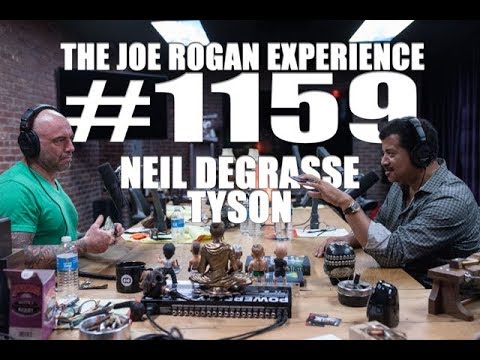
“So right now, when you buy salt, do you know where it came from? No. Unless you get Hawaiian salt, they should get gourmet salt from Earth foods. You just buying Morton Salt. You know where it came from? No. Do you remember how much it cost? No. It's too cheap. Grieve if you'd even remember that. Okay. If you're gonna turn oil into salt, what you're doing is you're turning energy into salt. That's the value of a plug in the wall. Design a car that can run on five different kinds of energy, then oil has to compete with the other kinds of energy. Oh, I see what you're saying. So have an engine that works on hydrogen. Correct. Yeah, yeah, yeah. It sells batteries. So…”The Joe Rogan Experience #1159, 2017 · 3:18:48
For Tyson, climate change is not just a science topic but a policy problem
Tyson’s core concern is not merely that some people doubt scientific findings. His bigger concern is what happens when that doubt shapes decisions for everyone else. He puts climate denial in the same category as other forms of science denial and argues that the consequences become serious once policy is affected, because then public choices can damage a nation’s economic health as well as its physical well-being.1
That is why he stresses scientific literacy in leaders and citizens alike. In his view, a society does not need every politician to be a scientist, but it does need decision-makers who respect evidence and understand when expert knowledge should guide action. He sees climate as one of the clearest cases where ignoring science carries costs beyond private opinion.21
Ignoring science makes societies poorer and more vulnerable
Tyson links respect for science directly to prosperity. He argues that modern growth economies are deeply shaped by science and technology, and that societies that turn against science put themselves at a material disadvantage. In that frame, climate and energy are not side issues; they sit inside the larger question of whether a country can make competent, reality-based decisions.3
His point is practical rather than abstract. Energy systems, infrastructure, industry, and public health all depend on scientific understanding, so contempt for science eventually shows up in everyday life. For Tyson, dismissing science is not a brave act of independence; it is a way to make a nation weaker and less capable of solving hard problems.3
Other planets are climate laboratories for Earth
Tyson repeatedly argues that looking outward helps us deal with problems here at home. One of his sharpest climate examples is Venus, which he treats as a warning about what a planet can become when greenhouse heating runs away. His point is that planetary science is not a luxury project disconnected from human needs; it can teach us what conditions threaten habitability on Earth.4
This fits his broader belief that knowledge gained from studying the universe often feeds back into life on Earth. He defends spending on space and cosmology partly because discovery can sharpen our understanding of risk, environment, and long-term survival. Climate knowledge, in this view, is one more reason that learning about other worlds has practical value.64
Terraforming Mars highlights how much easier it should be to protect Earth
Tyson uses Mars to make a simple but powerful climate point: if humanity ever acquires the power to remake another planet into an Earth-like world, then fixing Earth should already be within reach. That idea flips a common fantasy. Instead of treating another planet as an escape hatch from environmental trouble, he treats it as proof that preserving Earth is the more direct and sensible task.7
He also describes terraforming as an immense engineering challenge that would require warming Mars and building up its atmosphere, with no guarantee that its existing carbon dioxide and water would be enough. That makes Mars a lesson in planetary climate mechanics, but also a reminder of how precious Earth already is. We live on the planet that has the atmosphere, water, and biology we would be struggling to manufacture elsewhere.78
On energy, Tyson favors optionality and competition
Tyson’s energy comments point toward diversification rather than dependence. He suggests that if cars and systems could run on multiple energy sources, then oil would have to compete instead of dominating by default. The underlying idea is that flexibility changes incentives: when one fuel no longer has a captive market, better technologies and cheaper alternatives have room to win.9
This matches his broader worldview about science and problem-solving. He is less interested in slogans than in designing systems that respond to evidence, innovation, and practical tradeoffs. In climate and energy terms, that means building technological choices that reduce lock-in and make it easier for societies to adapt as knowledge improves.93
“So right now, when you buy salt, do you know where it came from? No. Unless you get Hawaiian salt, they should get gourmet salt from Earth foods. You just buying Morton Salt. You know where it came from? No. Do you remember how much it cost? No. It's too cheap. Grieve if you'd even remember that. Okay. If you're gonna turn oil into salt, what you're doing is you're turning energy into salt. That's the value of a plug in the wall. Design a car that can run on five different kinds of energy, then oil has to compete with the other kinds of energy. Oh, I see what you're saying. So have an engine that works on hydrogen. Correct. Yeah, yeah, yeah. It sells batteries. So…”The Joe Rogan Experience #1159, 2017 · full transcript →
Tyson on energy & climate, in his own words
“So in fact, there's hardly any growth economy in the world that isn't growing because it has been, fret not, having been touched by science or technology—everything, just think about it. So if you're around, running, you don't have them on your show, but if you run around saying, "I don't like science. Science is bad. Science is evil," okay, well then you will die in poverty if you elect officials who believe that as well.”
Where to watch
 Neil deGrasse Tyson on Science And Skepticism: Art, Water, and Black Holes2017 · 141 min · full transcriptBest for Tyson’s clearest argument that climate denial becomes dangerous when it shapes policy and undermines science literacy.
 Neil deGrasse Tyson on Terraforming Mars: Turning It Into Earth2018 · 11 min · full transcriptBest for his memorable Earth-first argument: if we can terraform Mars, we can fix Earth.
 Neil deGrasse Tyson on Universe and Cosmology: From Newton to the Big Bang2008 · 88 min · full transcriptBest for understanding why Tyson thinks space science pays off for Earth, including risk and practical knowledge.
 Neil deGrasse Tyson on Life Beyond Earth: Why It Could Change the World2021 · 47 min · full transcriptBest for his wider case that exploration changes how humanity thinks and why long-term science matters.
Questions people ask
- What did Neil deGrasse Tyson say about energy competition and oil?
- What did Neil deGrasse Tyson say about science and the economy?
- What did Neil deGrasse Tyson say about science denial?
- What did Neil deGrasse Tyson say about scientists inventing actuarial tables and risk analysis?
- Why did Neil deGrasse Tyson say we should study Venus and Mars?
Sources
Every quote above, word for word from the transcripts. Numbers match the text.
“But what I'm saying is not everyone embraces everything that science does, and some will cherry-pick it. You have the science deniers for global warming, you have science deniers with vaccines, you have science deniers with GMOs. You know, there's all manner of science denying going on in modern society. And, you know, we in a free society, what are you gonna do, right? That people can think what they want, but if thinking what they want influences policy, which then affects everybody, then your science denial has consequences to the economic health of the nation.”
“We're living in that world now.”
“So in fact, there's hardly any growth economy in the world that isn't growing because it has been, fret not, having been touched by science or technology—everything, just think about it. So if you're around, running, you don't have them on your show, but if you run around saying, "I don't like science. Science is bad. Science is evil," okay, well then you will die in poverty if you elect officials who believe that as well.”
“People say, why spend money up there when we spend... Because up there, we might learn about down here. Okay? I don't want a runaway greenhouse effect here. Venus is the best example in the solar system of a planet gone bad. Let's learn about that first. So it turns out the more we learn that asteroid impacts, when they hit, can cast rocks in their surrounding areas into space with escape velocity so they never come back to the planet from which it was launched. If Mars was wet and fertile before Earth was, as all evidence suggests, and if Mars had life before Earth had life, it is possible there were…”
“Oh, Sir Edmund Halley invented the act—the notion that you can calculate a risk using actuarial tables. An astronomer did this? Okay, so it's good to have people who think about the universe, who here only want to look at Earth. Where did she go? Where's my Earthwoman? Did she leave? Yeah, oh, she still here. Oh yeah, you're sneaking out over here on me. You're the one that only wanted to look at Earth. People who look up also invent stuff. Just want you—…”
“The day we have the power to terraform Mars, turn Mars into Earth, we'll have the power to turn Earth into Earth.”
“If we're gonna be a two planet species, I'm thinking, you gotta terraform Mars for that to happen.”
“So right now, when you buy salt, do you know where it came from? No. Unless you get Hawaiian salt, they should get gourmet salt from Earth foods. You just buying Morton Salt. You know where it came from? No. Do you remember how much it cost? No. It's too cheap. Grieve if you'd even remember that. Okay. If you're gonna turn oil into salt, what you're doing is you're turning energy into salt. That's the value of a plug in the wall. Design a car that can run on five different kinds of energy, then oil has to compete with the other kinds of energy. Oh, I see what you're saying. So have an engine that works on hydrogen. Correct. Yeah, yeah, yeah. It sells batteries. So…”
How this guide was made: drafted with AI from the full transcripts of the recordings cited, then checked: every quotation must match a transcript word for word and be the speaker's own words, and an independent review gates accuracy. Methodology and corrections.