Neil deGrasse Tyson on Science Literacy: Learning Without Boredom

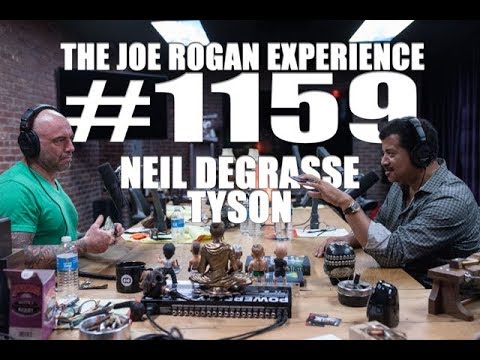
What Tyson talks about
Neil deGrasse Tyson joined The Joe Rogan Experience in 2017 to discuss science literacy, education, curiosity, and ways to make learning engaging for the public.
Also known as: JRE #1159; Joe Rogan Experience 1159.
Tyson argues that the biggest problem in education is not that people dislike learning, but that they are bored by it. He says schools should produce lifelong learners whose curiosity stays alive after graduation.
He connects science literacy to everyday life, showing how scientific thinking fuels technology, careers, and even military and civic applications. The conversation also touches on his books, StarTalk, and Cosmos as ways to make science engaging to the public.
Joe Rogan hosts the conversation and Tyson speaks at length throughout.
In his words
“You make learning stuff about astrophysics fun.”
“They just don't want to be bored.”
“They're all born scientists.”
“You should say to yourself, "Damn, I want to learn more.”
“Be that teacher to your students.”
Key points
- Curiosity is natural in children and should be preserved, not suppressed.
- Education should make people want to keep learning after school ends.
- A good teacher’s passion can change a student’s life more than the curriculum itself.
- Science is everywhere, from telescopes and x-ray machines to airport security and power tools.
- Public science media works when it combines entertainment with real ideas.
- Scientific literacy helps people understand technology, history, and even politics of power.
Full transcript: Neil deGrasse Tyson, Joe Rogan Experience #1159 (2017)
So, why aren't there flying cars? You just jump right in. You don't say, "Hi," you don't say, "How's the wife already? How's the wife? How's your book? It's been on The Times bestseller list for how many weeks?" Oh, that, The Astrophysics for People in a Hurry. That's been on the New York Times bestseller list for 67 weeks. That's pretty intense. It's great. That's a lot for any book, much less for a science book. And so that tells me, while all these Trump books are wafting in and out, this is bobbing like a cork on the ocean waves as the book of the moment that either praises Trump or criticizes or it criticizes them, come in and off of
that list. So this tells me that there is this unserved hunger that people have. There's a curiosity that this is serving. And it's—Astrophysics for People in a Hurry—that's kind of a, that's very purposefully juxtaposed. It's like "Neurosurgery in Four Easy Steps," you know? If you saw a book with that title, you have to pick it up. Wonder what's going on? Well, not to kiss your ass again, but I always say this about you, and I think it's important: you make learning stuff about astrophysics fun. And that's what's missing. You know, it's not that people don't like to be educated, that they don't like to learn—they just don't want to be bored.
That's a perceptive point, because, you know, think of the image we have of, let's say, you're in a school where most people don't go to college. If you're in high school, and the last day of school comes, what do people do? They toss their papers in the air as they run down the steps. "School's out!" No, but what's the rock song? (music) Forever, right? So that attitude must mean the school didn't train you to embrace curiosity, right? That learning was a chore, and now the chores are over. Yeah. So I think the educational system needs an adjustment. Forget whether or not you go to college, because you're going to spend
years not in school than in school, even if you do go to college. What you want, I think, are lifelong learners, lifelong curiosity. Yes, where once you are trained and your curiosity is stimulated—the curiosity we've all had as children—your children don't need to be taught to be curious. They are curious to the point of destruction of whatever it is they touch. "Oh, what is this egg on the counter? What is this glass? What is this plate? What's under a rock? What happens when I pull a leg off a daddy long-legs?" You know, they are experimenting with the world. We don't think of it that way, but that's what it is. They're all born scientists. And I say this often: you spend the first years of a child's life teaching it to walk and talk, then you spend the rest of
its life telling it to shut up and sit. It's, this is the wrong combination. So, speaking as an educator, I think a missing component of school is, is that the teachers, is that the curriculum—I don't know—but when you get out of school, you should say to yourself, "Damn, I want to learn more." It's almost universally accepted that that's when your learning ends. When you get out of college, it's over; you say you're done. And if it doesn't, you're ossified in line. And that's how, when the job market shifts, you're not ready for it, because you don't know how to think, you don't know how to learn, right? No, and it's the difference in the workplace between the person who gets an assignment. "I, Joey, Janet, I need you to do this." "That's not in my job description. I'm not trained
for this." That's one kind of person in a workplace. Another kind of person is, "But here's a new task. I need you to do it." "Wow, I've never seen that before. Great! Let me figure it out." They’re two completely different species of human being. And what the world needs more of is the second case, where you take a new task and you say, "Wow, I get to learn. I'm going to learn on my own. I'll ask people who know more." You just—you just embrace the act of learning to satisfy your curiosity. And I think this book is capturing that in the public. I must be doing something. Yeah. Yeah. 60—how many weeks? 67 weeks. Yeah, yeah, that's a lot of weeks. Yeah. Every morning I wake up, I'm calm, but I'm really not calm. I'm saying, "Holy [ __ ]."
Sorry, you're alive. Can I say—can I say [ __ ]? I could say it. Isis, we're human. People think you're a robot; now they know. This is, it's a great sign, I think. And I think your podcast is a great sign as well: the success of your podcast and the success of a lot of science podcasts. That's excellent. You notice that there's a rise of science-curious podcasts out there. Stuff to Blow Your Mind is one that I really enjoy, right? I really love Radiolab. They've always got elaborate, interesting science, the annual perennial favorite that so many people probably—the best, right? Yeah. And yours as well. And I love Chuck, nice shout-out to Chuck. Nice. Oh, Chuck, we love Chuck. He's great. But what you're doing is you're making learning interesting, and that's why it's so fun.
It's, it's, it's, it's—there's excitement to it. He brings a comedian like Chuck on with you, things get silly, but they're also curious. And you're getting these experts, and everyone's talking about these various subjects. And as you know, not only yourself as an exemplar of this, stand-up comedians are some of the smartest people in the world. They have it—that they have that far. So, stand-up comedians are perceptive people, yes, and for sure. And they're aware, and they notice things that you don't notice. They see the same things you do and get to shape it in a way you never thought.
Possible. And then you end up laughing at other things. At yourself. Was it your idea to do your show with stand-ups? So, what we have there—there was several of us who have created this concept. There's Helen Matzos, one of the partners, and there's another one who's now left, but I get his name in a minute. There were three of us: David Gamble was his name. The three of us got together and applied for a National Science Foundation grant. What we said was, there are programs out there that serve people who already know they like science, but who serves the people who don't know they like science, or better yet, the people who know they don't like science? There's nothing for them because they've
already rejected it. They're not gonna tune in to Science Friday because they don't like science, right on NPR. Right? So what we thought was, suppose we bring in a celebrity. We've all that the pop culture draw. This is the pop culture scaffold. We bring in this scaffold and glad the scaffold with science because whatever the celebrity does, it doesn't matter. There's gonna be science in that person's life. We had the guy who portrayed Gollum in Lord of the Rings, a lot of getting that suit, that he underwear exactly. So what we did was, we interview him and we talked about the technology necessary to
portray Gollum. He portrayed that live. That was not some later animation. He is live, and he's got his whole body wired up for this, and he is that voice, and he is portraying it. So, whatever it is that you have done, that you do, there is such because it's evidence that science is everywhere. You're not gonna, you can't say, "I'm done with science. Let me sell my textbook and move on to other things," because practically anything else you do has been touched by science. And so StarTalk is a celebration of that and then a jump species. And so now we're on TV now. Alright, this is a TV show on National Geographic Channel, StarTalk. And since you started this, by the way, I didn't come here to talk about you. You
started this. Where's our fourth year in a row? We're nominated for an Emmy for Outstanding Informational Programming. Are you gonna keep doing Cosmos too though? 'Cause Oh, Cosmos. So, I have one week remaining out of like seven shoot days to finish shooting Cosmos: Possible Worlds, premiering Spring 2019. That's the third installment of Cosmos. If you trace the first one to Carl Sagan back in 1980. Okay. You are—I used your segment on wolves on how wolves became dogs. Oh, showed it to my kids. And that's right. See the little wheel spinning like whoa. Yeah, that's how dog became a dog. What you didn't see is I'm sitting at
the campfire in this snowy environment and they got wolves walking around me. They're on these fishing wires because they—they are not dogs. Right? Okay. They debate over the [ __ ]. They want what? Correct. And when they're looking at you, it's like, should I rip his neck out now or later when I'm more hungry? Right? They're not—there's no eye contact with them because they, you know, they don't see you as anything other than something that could possibly eat. And so you can interact with them the way you would with ordinary dogs. So they're on these fishing, you know, high-tension fishing wire that you can't see against the snow, and they're like hooting and hollering around me as I described. And the name of that show is And the Wolf Shall Become the Shepherd.
Yeah, my friend did a commercial with the wolf. And there's this commercial where he's running up this mountain and the wolf is there. And at the end of the commercial, they had to get the wolf to snarl. So what the trainer does is he shows the wolf some meat and then he pulls the meat away from the wolf, and the wolf snarls. And they're like, and then the commercial's over. He's like, "No no, there's no working after that." Like, "There's no Yukie not gonna be near the wolf," right? Like that switch is turned on—done. Yeah, and it's crazy. Like once that thing snarled, everybody just backed off. And the trainer let everybody know, like, once I get to this point, we're done.
Like there's no more. Everybody can [ __ ] out of here. All three of these Cosmoses—the original one with Carl Sagan, the one that I had the privilege of hosting in 2014, and 2019—are co-written by Ann Druyan and she's the widow of Carl Sagan. Oh my. But she kind of was in his shadow back then, but she's hugely creative and highly enlightened. And so most of the sort of the soul energy, if you will, that makes Cosmos distinct from other documentaries where you're sort of sitting there learning, you put your thinking cap on,
your learning cap on—in Cosmos it's your feelin' cap. You're not only learning, you're also feeling the science and its relationship to you, to civilization, to the world, to the universe. And her infusion of this—she's a highly scientifically literate writer, producer—and so I just give a shout out to her. Just working with her is a minute delight. This Cosmos on Apple TV, or so. Cosmos was, after it premiered on Fox and then went internationally on Nat Geo, it then went to Netflix. So, but I think this run of Netflix is gonna drop until the next one comes in. I think they want
to clear the, clear the landing zone for the next Cosmos. But it went to Netflix. But is it available for anyone to get right now? Oh, right now it should be. I haven't checked. That's a great question. I have it all on my DVR and I'm scared to delete it. Oh, I have like 6% left space. But everyone's DVR looks like I got your Cosmos is in there. Yeah. So thanks. Thanks for having, having them all in there. Who's that, Morgan Freeman show? But through the, through the wormhole? Yeah. Yeah, that's a Joe Rogan thing. Yeah, you didn't have that. I'd be disappointed, huh? I say you're an imposter. You're a fake. It's it's an opportunity to be entertained and learned, which I think is what everybody misses, and I think that's, that's what's
Missing in most public education is that people are bored. You take these kids with so much energy, and then you make them sit still and watch something that's not even remotely stimulating by a person who doesn't really care to be there. Right? Right. And they know, they know this. They know this intuitively if not explicitly—that the enthusiasm is absent. Yeah, they can feel it. Yeah, and just... it's the worst way to learn. It's the worst way. And it's so hard to shake once you get out of that system. It takes forever for a lot of these people to just get their excitement about education back. You know what I say when I address teachers? We all, by the way, I'll do this right now in this room that we have—this only three of us—but let's take a show of hands: in your life
with all the teachers you've ever had, in every class you've ever taken, how many had like a singular influence on who and what you became? Give me a number. It's going to be—I’m betting—it’s five or fewer, probably more like three. Yeah, for teachers. What's your number? Well, theirs was the one that I talked about in your show the last time I saw you. Thanks for coming on. To start, my pleasure. It was a science teacher that I had when I believe I was in seventh grade. Told me that if you really want to hurt your brain, look up and recognize the fact that that goes on forever, that this is infinite, and then just think about what that means: infinite—that there
really is no end to it. So, but how many teachers such as that were so influential on you? That one guy saying that one? So, he was not one class, one? He might be the one. And what do you got for me? It’s like two and a half, and I've had scores of teachers. Yeah, okay, a hundred teachers at least. So, what I tell teachers is: be that teacher to your students. We've all had those teachers. Be that teacher. And in every case, it wasn't because the topic was something you knew in advance you would like; it's because their energy for sharing their passion and love for the subject was palpable. Yeah, and it just spilled out of him and went into the course through your veins and your arteries, and you walk out of
there thinking, "Wow, that was the most interesting thing I've ever done in my life." You don't even care what you get on a test after that because you got touched and you became an enlightened participant in that exercise, in that exploration. Yeah, it's just so hard for them to even get kids' attention though. Yes, unfortunately. That's what's going on. Unfortunate that could be in some places half the energy of the teachers is maintaining order. I think the success of your book, the success of your show, your podcast, and many of these other really intelligent podcasts are showing, though, there's an appetite for this stuff out there. Yeah, and I'm delighted to be a servant of that curiosity. And this—I brought this just because it's not even
out yet. This—the, you're airing like now, live. This is it. You're alive, you are. Okay, so this is like a five-second delay. What is this, Accessory to War? Oh, this is like another book. I just—this is coming out in three weeks. Is this about space war, Accessory to War: The Unspoken Alliance Between Astrophysics and the Military? Ah, yeah. So, so this other book was Astrophysics for People in a Hurry. If you're in a hurry, do not buy People in a Hurry. This is not—this is not what this is. This is not an impulse item at the checkout line. This is, you
got, this is, this is all about, by the way, we know what role the physicist plays in war. The physicist makes the bomb, invents the bomb. The chemist perfects napalm. The biologist weaponizes—anthrax. And the astrophysicist? Well, we sit at the end of a telescope and wait for photons to cross the universe and enter our detector, and we go into conferences and argue about them. So, there is no obvious connection between what we do and military strength, hegemony, dominance, empire building. It's just not obvious. That's why this
subtitle is The Unspoken Alliance. It's not a secret. It's just—it's not there. It's there, but it's not. Nobody's talking about it. Do you realize—I'll just give an example. Okay, if you needed more reasons to think that Columbus was a dick, okay, let me add one to it. When we were kids on Today, yeah. I know, I know. But actually, I do have something slightly redeeming to offer about Columbus if you have the time. I just wanted—okay. Okay, start off with that. You want me to start out with that? Well, how you want to do it? I'll do the dick part. Okay, so on his third voyage, he's in—by the time as of his third voyage he had already planted enough Spanish flags that Spain had
already begun to set up governments and infrastructures in these places he had found, yeah, basically conquered. And so, so in one of the places—I was—it’s in the book accurately, but they think it's Hispaniola, one of the island today. He has to get back, as his third voyage, 1503 or 1504. He's got to get back to Spain. He doesn't have enough resources, not enough food for his crew. So he asked the natives, "Would you please give us some of your stock that you have collected from your farming?" Now this particular group of natives only makes exactly the amount of food they need to tie to the next crop.
They don't have surplus, so they said, "No, we don't have surplus, sorry." Columbus knew that. One week hence, coincidentally, there was going to be a total lunar eclipse, with a moon in its orbit around Earth entering Earth's shadow. The full moon enters Earth's shadow and disappears, and the geometry of that event—it's just a simple lunar eclipse—but the geometry says that sunlight passes around Earth through Earth's atmosphere and takes on sunset colors that leech into Earth's shadow, giving the moon, if you can see it at all, a deep red amber hue, almost the color of blood.
Columbus set, and he knew about this because he had read the tables, the eclipse tables. All right, we'd known enough about the solar system at the time too, we got that. Okay, actually back then, it was just the known world with Earth in the middle of the known universe. That didn't matter. The rhythms of the universe were known. He says to the natives, "If you do not give us food, my God, which is more powerful than your God, will make the moon disappear, and it will turn blood red. That will happen in one week. You have one week to comply." Some of them were skeptical. "What? You can't." Others said, "[ __ ] we got it." To what this guy says, "Look at the ships! They came in, their guns, their power,
their culture, look what they've got." Sure enough, right on cue, the moon begins to disappear according to that. That is a famous woodcut that you know you got this. Oh, some those viewing the video of this, yeah, there's a famous woodcut, and notice the natives bowing to him, and he stands proudly because he knows the science. He knows the astronomy. He knew this, and so he invokes this to dominate people who are not yet scientifically literate, and within seconds of this beginning, they bring him all the resources he wants, and he gets—I, we don't know what happened, you know, back at the island, whether the people survived the winter—but he got
back to the island. That is one microcosm of a set of ways that the universe has been invoked in this. I'll give you another example. Los Alamos, one of the national labs, they today, basically since their inception, are charged with tracking the nuclear arsenal of the United States, our nuclear power, the nukes that would go into nuclear weapons. They think about this. Do you realize they hire astrophysicists? I had colleagues work in there. You know why? Because there's a room—there are two rooms, I mean, I'm simplifying this—but basically there are two rooms adjacent to one another and a computer between the two of them, the most powerful computers in the world. And there is code running on those computers that
calculates the energy yields of hydrogen fusion. That's exactly what an astrophysicist cares about when stars blow up. Okay, the Sun is undergoing nuclear fusion right now, and that's how it's making energy. And when that, when high mass stars die, they explode as supernovae. This is a natural thing going on. Then you, over in the universe, on the other side, that's a classified room. They are calculating yields of hydrogen bombs, and they have lunch together and they compare notes. The government doesn't always have the best people, but if you hire some of the best people to do whatever it is they want, and their calculations happen to relate to a
military project, there you have a two-way street in progress. Why do you think the Hubble telescope, that the mirror issues notwithstanding, which were ultimately fixed when it was first launched, why was that so successful? Earlier versions of the Hubble telescope had been previously launched by the military looking down. That model for that telescope had already been conceived and built and was operating then. We said, "Oh, we want one of those." Okay, but we don't—that's not public that this is going on. We design the telescope, it gets designed. It has the benefit of previous versions of it having been used successfully but looking down, and we look up. This is the
perennial two-way street of astronomy in the old days and in modern times, astrophysics and the invention of the telescope. You ever said anything yet? Oh, you just—you look, you're a good listener. Should I keep—just keep talking by preventing you from interrupting? Okay, fine. Galileo perfects the telescope. He learned that it had just been invented in the Netherlands. The Dutch were opticians, all right? So they invented the telescope and the microscope within a couple of years of one another. This transformed science. When did they invent the eyeglass? The reading glass, the reading glasses earlier than that, but I don't—I don't know when's that. The real advance was putting two lenses in line with one another. Sounds trivial in modern times,
but that was a huge leap, conceptual leap, and what you would accomplish. And in so doing, depending on how you curve them and how you grind the shape of those lenses, you would get a microscope or a telescope, and we're off to the races. That's basically the birth of modern science as we now think of it and conduct it, because you say to yourself, "My senses, I don't trust them to be the full record of what's going on in front of me." You pull out a microscope. Oh my gosh, Leeuwenhoek, he got the microscope, guy. He thought he got a drop of pond water, puts it under his microscope just to think to do this. It's just water. Why do you think that's something
interesting to do? He said, "I wonder." He was curious. He puts it under and sees little what he described as "animalcules," happily swimming animalcules, like the amoebas and paramecia. And oh—oh, it is. And so he writes, he reports on this to the scientific authorities, and they don't believe him. They say, "You know, Van Leeuwenhoek, we think you might have had too much gin before you wrote this letter. Why would anyone believe this? That there's an entire universe of creatures thriving in a drop of pond water." And so the way science
Works is one report. Does not make it true. You need verification. They sent people to the Netherlands to verify his results, and there was the birth of microscopy. And then they looked at everything: cells. You know, they need vocabulary to describe what you're now seeing. Well, that was the journey down small. Then the journey went up big, and Galileo perfects the telescope. He looks up, says, "Whoa! I see craters, mountains, valleys on the moon. The Sun has spots. Venus goes through phases." This became the corpus of evidence for Earth going around the Sun in support of Copernicus' idea that Earth went around the Sun. My point is, what was the second
thing he did with his telescope? He telephoned? No. He contacted the Doge of Venice, invited him to the clock tower, and said, "Look at what this instrument can do for you. As we look out into the lagoon, you can identify a ship's intentions, friend or foe, by its flag 10 times farther away than you can with the unaided eye." Venice bought a boatload of these telescopes in the service of their military defense, and this was a source of money to Galileo. And now he could go look at the universe. This has been a two-way street ever since people have looked up. So this is, this is an
accounting of that. This is, it goes on and on. The first x-ray machines for airports—you’re old enough to remember what? Why would they put in? Because of hijackings to Cuba. Basically, there were armed hijackings of airplanes of American carriers to Cuba, and Congress said, "We got to do something about that." Oh, by the way, there's a company in Boston called American Science and Engineering that was building an x-ray detector small enough to put on a satellite to observe the universe in x-rays. And because no one had moved, use visible light but not x-ray— that's a branch of the electromagnetic spectrum. We think if there're black holes out there, their region surrounding them will give us x-rays. It's a new window on the
universe. And then they said, "Oh my gosh, there's a call for x-ray machines at airports. We've got the technology that we've perfected to put in a fricken satellite." So the technology for those ones you walk through the airport initially came, initially? Yes, yes. Yes. There was a two-way street there. There was, "Oh my gosh, we need this for security. Oh my God, we were using—let's split, let's apply that technology to these detectors." Well, that's been a lot of the stuff with the space program, right? A lot of the stuff that they devised for use on the space station and so many other technologies have trickled their way down in the break. Well, that's our—and that always happens. And even some simple things because people say, "Why spend money up there? We should be spending it down here." But there's an interesting fact here that is almost never discussed.
The people who still think about the universe and study the universe are hugely creative. And the creative energies cannot be prescribed. You can't go to a creative— you might, but I don't know that you'll get their maximum creativity. Say, "I need you to invent a cure for cancer right now. Use that brilliance." I'll try, but the greatest discoveries, the greatest cures, the greatest of these comes from a cross-pollination of interest that people have, that where they were engaged because they were interested just for the sake of being interested. So watch out. Here's an example: the Space Shuttle. It's a glider when it lands, okay? It's got no engines. It’s got flaps. There's a little
bit of brakes and the tires, but that's about it when it comes in, okay? How do you make sure the thing stays on track? Because they kept drifting in winds and this sort of thing. And so they said, "Why don't we groove the road so that the rubber on the runway, so the rubber can align with the grooves and stay in a straight line?" Because rubber doesn't slide well when you have—doesn't slide sideways very easily on grooves. When they realized how effective that was, it's now put on off-ramps to freeways. If there's a freeway off-ramp that's a little tight, not quite banked well enough, it's gonna be grooved. Check it out next time, and you could say, "Well, okay, that's a pretty simple low-tech
solution. Why didn't we, why couldn't we just discover that on our own without the twenty billion dollar a year space agency called NASA?" But you didn't. You didn't. Power tools, cordless high torque power tools were invented to service satellites in orbit by NASA because you can't just plug it into a 120-volt socket when you're floating in space. So the engineer said, "How are we gonna solve this problem? Let's make a high torque power tool." So now NASA invents the height—now that is the only way you're buying a power tool today is that is the cordless variety. All construction sites, they're not looking for a power outlet for these
things. So why didn't we invent this without the twenty billion dollar space—right? You didn't. You weren't, you didn't think about it. You said, "Oh, I can plug it in. This is great." You're not even thinking what you need. So yes, there are all of these applications, but I don't—that's a good reason to do it, but I don't think it's the best way. The best reasons are, "My gosh, don't you want to keep dreaming? Don't you want to keep looking into the future?" That would be ideal. But that's not attractive to people that are spending tax dollars. When it comes to tax dollars, people get super pragmatic and they go, "Why do we need to go to Mars now? What we need to do is take care of this and pay for that and worry about the deficit and the budget." And, you know, so, you know, NASA's budget today
It’s four tenths of one percent of the federal budget. So, you take a dollar—or a ten-cent—I will quantify. Everybody take a dollar bill and imagine that's your tax dollar, and you can cut it to whatever percent you want. So, let’s cut four tenths of one percent off the edge. That doesn't get you into the ink; you’re still in the border around it. All right? You’d barely even notice that you could trim that off the dollar and pay for anything, pay for it. So, my point is, most of the people who say don’t spend it here, spend it there, they think NASA has more budget than it actually does. They just—if you ask them how much...
They think, "Oh, ten percent, five percent, you know, several percent." No, it’s one-half of one percent. So, if you’re gonna tell me that you can take that four-tenths of one percent and spend it on these other problems and solve them, I would say, yeah, go right ahead. But is this where you really want to pull the money from when it’s the only thing that gazes at thinking about tomorrow, just thinking about a future? Well, forget that. Like, you—that’s super important. But for a guy who lives in Cleveland who doesn’t give a [ __ ] about science—oh, excuse me—that’s like the person who says, “Okay, I don’t need the space program. Why do I need a space program? I have my cell phone, and I have the Weather Channel, and I know anything I need.”
This is—you’re using GPS satellites to understand where you are on this Earth. You use it to understand where grandma’s house is when you pull out of it. Who created what? Who created spread spectrum technology that led to GPS and Wi-Fi? Who is that? Hedy Lamarr. Oh, I didn’t know that. Yes. Yes, she’s an actress, 1941. Yes, she did. Recognize for reminding me, super hot. Though that was the problem, nobody cared. Yeah, but yeah, it would take decades to really realize that GPS is launched by the military, and it’s now hundreds of billions of dollars worth of the American economy thriving on this space application. But it was a military...
Intent. Then it was to navigate the surface of the Earth. Yeah, to navigate. And the first Gulf War was the first big use of space assets in the conduct of military operations, I believe. Even when Hedy Lamarr created it with another scientist, the idea behind it was for encoded—encoded transcriptions or encoded information during the war. Well, so that’s a big challenge: how do you encode information? That’s, by the way, the future of this might come from. It’s not—it’s still not clear. The jury’s still out, and there’re sort of opposing views on this. But, you know, you’ve heard about quantum entangled particles, yeah, where I can create a pair of particles that know...
About one another, and now they’re separated in space and in time, and if you observe that other particle, it instantly changes the state of particle BEC, the other particle that’s back where I am. And, by the way, that they communicate instantaneously, faster than the speed of light. When you say "if you observed," do you mean that if you observe it with anything, it doesn’t matter, but you have to do something? You have to do—it has to interact with it, it’s not Wu into Renault, sir. But it’s not what people... but you say that, people go, “Yeah, if I saw that in a secret.” Yeah, so the problem is the word “observed.” People think it’s a psychological thing, but in physics it’s got nothing. It’s a measurement. It’s a measurement thing.
Right. And so, little measuring: if there’s an electron sitting in the middle of this table and all the lights are out, I can say, “I think there’s an electron here, let me find out.” And the moment I turn on the lights, the light interacts—a photon interacts with the electron and kicks it somewhere else. So the more I try to measure its position, the less I know its position. So because you need to—the measurement requires an interaction with it, and on the quantum scale, interactions change the state of the experiment that you’re conducting. We know this, we’ve quantified it, we don’t like it, but we deal with it. And then the act of dealing with it—you can exploit that fact for other purposes. We exploit quantum craziness to birth...
The inductee—the information technology revolution. There is no creation, storage, or retrieval of information without an exploitation of the quantum. So, and by the way, quantum physics as a branch of physics was discovered in the 1920s. If you were around back then, and your tax buddies who don’t like paying taxes, you, what would you have said? “Why are you spending government money on her—on the atom and on molecules if you can’t even see them? What good is it all? I can’t... but would work. I just care about my wood atoms right here. I am.” Yeah, yeah, shove that where your tax dollar is. And so, it would look like you’re wasting your own time and...
Everybody else’s money. It would take decades—five decades, or four or five decades—before we would realize what role that would play in computing, this creation, storage, and retrieval of information. And by some measures, it’s a third of the world’s GDP that’s traceable to what quantum physics does for us on a computing scale. So, anyone—yes? Yes. Well, I mean, there’re ways to do it. There’re certain industries that would still be there without computing, but they’re made more efficient with it. Okay, so UPS tracks all of their trucks with GPS and with computing devices that invokes the quantum. But UPS predates the use of these tools, but you can look at profits relative to their...
Efficiencies that are enabled by these technologies, as well as entire fields that didn't exist before computing. You add all that up, it's a stunning fact. And so, my only point is that you, if you want today to say, "Why study this when we have these other problems?" All I do, like all I do, is take you back to the cave. And let's say, alright, we're in a cave and there's a mountain over there and a valley. And I tell you, I tell the tribe leaders, "I want to explore that mountain and that valley." No, we can't afford to send you out there now. We have to solve the cave problems first before anyone
leaves the cave. We laugh at that. That's an absurd claim to make in caveman days. I don't know if anyone did it, but that's a crazy thought. There are solutions to your problems that might exist and time has demonstrated likely exist by leaving the cave that you can then discover. So for me, exploits is not just space. All the frontiers of the unknown: biology, chemistry, AI, except you know those frontiers. And then you can cross-pollinate them and transform civilization. And then the last example I give, then I'll shut up 'cause I want to hear you talk too. I got—I don't get it. I want to hear you interact with what I'm
telling. Here's one. You ready? Okay. My physics professor in college studied the universe, loved the universe, studied gas clouds between stars, and studied how would you detect a gas cloud if it's not radiating light? Will they give off radio waves? Alright. And he figured out what kind of radio waves they give off and why. And in this, he gained expertise in the nucleus of the atom. And he discovered that the nucleus can resonate depending on the mass of the nucleus. It will—which means depending on what atom it is on the periodic table—it will resonate slightly differently when exposed to the same electromagnetic field. He discovered a new phenomenon in physics called nuclear magnetic
resonance. It would then take a clever medical technologist to say, "Wait a minute. If you can distinguish one heavy atom from another, let me make a machine out of that, put your body in it, and I can then distinguish one kind of tissue from another." And thus was born the magnetic resonance imager, the MRI, arguably the most potent tool in the arsenal of modern medicine, where I can diagnose a condition in your body without cutting you open first. That is based on a principle of physics discovered by a physicist who had no interest in medicine, by the way. The real title should be nuclear magnetic
resonance imaging, but that's the other N word. You're not, so you don't like that. People don't like nuclear, they're less likely to go inside the machine if the word nuclear was on it. But my point is, that was cross-pollination of ideas with clever people on their frontiers looking over the fence at discoveries that are being made. It's how we got the microwave oven. That wasn't invented by a thermodynamic system. Microwaves: this is a World War Two attempt to communicate using microwaves, and they found out some guy's chocolate bar melted in the microwave field. And they said, "What happened there?" And they did some more tests. And of course, the water molecule and other molecules common in food respond to
microwaves. It vibrates them ferociously. And so, you put food in a microwave cavity, the water content of the food vibrates, friction cooks the food. There's still people who today say, "Oh, nucleus," because I think it's so fast, and they have no fear. It's just friction. Okay, friction, yeah. And everybody's scared that it [ __ ] up the food. Well, does it? No, it just heats the water. Get scared. The woohoo people do. Okay, so here's the thing. There's certain foods that don't respond well to the flipping of the water molecule, and one of them is like bread products. It's hard, yeah. It gets chewy and leathery, yeah. And
only if you like overdo what you got to do. It just right, and you're still good. If you overdo it, you can get lead, that's kind of it. I'm trying to think—you wouldn't grill a steak in a microwave. You would heat up the meat uniformly, and that's all it would do. Cooks bacon pretty fast, yeah, but it's a mess and it splatters all over. So you pick the foods that are best for that situation, as you would pick the foods best. You wouldn't put toast in an oven at 350 degrees to bread to make toast. We have toasters for that, right? So different things in your kitchen do things best. You wouldn't make ice cream in your, you know, toaster oven. But people were afraid of microwaves. The one thing they're afraid of, it's not as they're afraid of microwaves, that they're afraid that
of things they don't understand. They're afraid that something's gonna happen to their food that makes it less good. Correct. And it's just, it's nothing. Not knowing that people fear. My wife's friend's mom will not eat something that comes out of a microwave, really. She quotes that as part of what makes her healthy. She drinks a lot of water. She refuses to eat microwave food. The whole life is around not using microwave. She won't eat anything that comes out of her microwave. Okay, I'm glad that she doesn't, you know. She can live a long, happy life as such. Seems to reheat food old-school. Okay. One of the hardest things is reheating lasagna if you don't have a microwave. Oh, true. That's like imposter. You can equip it again; you're gonna cook it again, yeah.
That's a really good point. So, I think microwave ovens were invented for leftover lasagna. Mmm, yeah, just a bowl of pasta just in general. Yeah, soup. Yes, sweet for soup was good. Yeah, so you don't have to worry about it. It's not doing anything to it. It's not sucking any nutrients out or adding any nuclear radiation. Correct? Okay, there's nothing with radiation in the normal sense other than electromagnetic radiation. It's already light from the bulb. We tend to use radiation in the context of stuff that would hurt you, so that would be radiation of high enough energy to hurt you, and microwaves are not in that category. I never even thought about what microwaves do until this conversation, really. Yeah. Yeah, so it's a certain frequency of microwaves.
That beautifully pairs with the water molecule and it vibrates it brilliantly. So, it doesn't work for completely dried things. Yeah, that's why if you put something that has no water in it, it's not really very useful. It happens. It's white eye jerky. There's still some moisture in it. Correct. It's why it heats the food and not the plate. If the plate gets hot, it's not because the microwave oven heated the plate; it's because the food's heat the food. That's why I can usually pick it up at the handles. You can put food on a paper plate. That's right. It doesn't burst a flame. Doesn't burst into flame. This is crazy. You didn't, Joe, what is it between MRI.
And fMRI? Oh, so an fMRI. I don't claim total expertise here, but I'll tell you the little I know. That MRI, they put you in there in your stationary and then they make this map of whatever part of the body they're studying, is typically your head. All right, but you can do it other for your joints and other parts of your body that might require this level of three-dimensional analysis. And it's a 3D map of what's going on in the part that they surveyed, and so you look at it through slices through that section. So, you might see in MRIs of your brain or your skull, and they take slices. As the slices go through, you see like the eye socket come in and then go out again, or the nose cavity, and you can look at it in all three dimensions, front.
To back, side to side, up to down. So, depending on the sophistication of the machine, fMRI is, they are looking at your brain while you were thinking. So, time is now an active coordinate of what's going on, and they're measuring it as they're talking to you. But correct, so they say, "Oh, think the ice cream sundae with a cherry on top, but think of a naked person who you'd want to have sex with." And the F stands for functional, right? And so it's basically a real-time observation of what's going on. Victor, person, there was a woman in India. It's really a highly criticized case, but she was convicted of a crime. I believe it.
Was murder because she had functional knowledge of the crime scene, and the arguments against it were like, "If you're gonna be accused of a crime, clearly you're gonna study the evidence, you're gonna talk to a lawyer, you're gonna go over some things, you're gonna be—I don't know if fMRI is that precise." Yeah, it is. That's why you're very disturbing that this was used in court. It's like, do you remember when these Italian geologists were—I think they were tried because they should have known about an earthquake before it happened, and then scientists had to say, "Hey guys, this is not how it works. Like, this [ __ ] can just happen." Yeah, that's so that no, I don't.
But that's what I do know. Let me share a couple of things with you that I've thought deeply about recently. There are three kinds of truths in the world, okay? 'Cause we're in it like a tree. Let me give you three, okay? The Rudy Giuliani. Okay, ready? True isn't always true. I know, so let me try to, okay, unpack that. Okay, you ready? Okay. Alternative facts. I did something called an objective truth. An objective truth is something that is true whether or not you believe in it, and the methods and tools of science are uniquely conceived to seek out and establish objective truths. And this, I'm referring to the invocation of the scientific method.
No one scientific result, research result, it's true until it is verified by other people's research results using a different experimental method with different wall current from another country. When your competitor says, "I think you're wrong; let me show how you're wrong," and they would reproduce your experiment and get the same result. When you have generally the same results emerging, that is a newly discovered objective truth about the natural world, and when you have objective truths, they're not later shown to be false. Hmm, that's an objective truth. Then you have personal truths. These are truths that you hold dearly. Jesus is your Savior.
Muhammad is the final prophet on earth. You, you know, Abraham is your—these are your personal truths. There's a heaven you're going to. No one is going to take that from you, not in a free country where freedom of expression and speech and religion is protected. Mm-hmm, that's a personal truth. The problem here is you can't convince someone else of your personal truth without some act of persuasion, and in the limit, an act of violence. Hmm, okay, in the limit. In the limit, this—I get holy wars. So, I have this personal truth and I require that you share my personal truth. But why is that a recipe for disaster and not a belief? Because the people who hold a
Belief will tell you that it's a truth, so I don't want to take that usage of the word away from them. Okay, so you're giving them a beautiful nation. I'm giving them the word truth, but modifying it to say personal truth. That's correct. I'm not gonna think they've used it that way for millennia. I'm not gonna, hmm, okay, they feel that it is true and it's true in their bones. I'm simply saying that because it's your personal truth, you cannot require that someone else share it. And in this country, because in the United States, because God is not mentioned in the Constitution itself—a controversial thing in its day, by the way—actually, God is mentioned but in a very insignificant way. That the Constitution is a God-fearing document and
because it's a God-fearing document, it protects your expression of religious faith, because it means the government has no say in who and what you believe or why. If the Constitution said mention God and Jesus, well, there it is, there's Christianity built into the fabric of the country. And if you want to be some other religion, you're gonna have a hard time because we can set laws against it. This is why so many religiously persecuted people came to the United States to escape their country where they could not practice their religion a little differently or a lot differently from what was going on in their homeland. So that is it a problem, though, to call it truth? I would
rather not call it truth. But I'm a big word guy, and I respect what happens to words. I don't always like it, but I respect it. And so I'm gonna say there's an objective truth, which is true whether or not you believe it. There's your personal truth, which is true to you. Third truth is a political truth. Political truth is something that is true because it has been incessantly repeated, and then you just believe it. That what? Okay, what's Hillary Clinton's first name? It's Crooked. Her first name is actually Hillary. Okay, I thought it was Crooked Hillary. This was incessantly
repeated in the Trump campaign. Uh-huh. And that's an absurd example of it. But the point is if you keep saying, if you keep saying that the New York Times is fake news, they just keep saying that. Eventually, people believe it, and it becomes a political truth because the politicians repeated it. So it's a political truth that people believe it, or it's a political truth because people believe it. Which one is it? So again, you're trying to preserve the true, fundamental meaning of the word truth. Yeah. And I've just given up on that. Jordan Peterson and Sam Harris had an infuriatingly frustrating podcast where they went over the meaning of the word truth for more than an hour, and I like,
said you can do that. And philosophers like arguing and debating meaning of things. For me, it's how people are using the word that's the meaning. Okay, I concede that. Well, we can wait. It sings why I don't call myself an atheist. It's why you can look up the dictionary definition of atheist and it kind of applies to me. But what is the definition of atheist in practice? It is what leading atheists do, and it's their conduct, and it's their behavior. That's what they say, and it's their attitude. Mm-hmm. That is what an atheist is today, because they are the most visible exemplars of that word, and most of their conduct I either don't agree
with or simply don't engage in. What don't you agree with? I don't debate religious people and tell them they're idiots. Hmm. I don't— that doesn't work. Whether or not it works, that's just not, it's not in me to do that. I don't purge myself of words that have religious foundations in them. I once, in my Facebook, I had a friend going up in orbit to repair the Hubble telescope, one of the astronauts, and I said, Godspeed. Mm-hmm. And then I gave the astronaut's name. People wrote in the thread, said, I thought you were an atheist. How can you say Godspeed? An atheist got angry with me, and I said, okay, first of all, this phrase is deeply historical in the space program. When
John Glenn was launched, the headline was Godspeed John Glenn. Mmm. And every mission where we sent human beings into space somewhere there is that reference in NASA. Fancy word means—I'll tell you, I'll tell you what it means. Please do. Okay, so, oh by the way, I'll get to that in just one minute. Any time the atheists are arguing that I was using God's speed as a phrase, they all have used the phrase goodbye, haven't they? See you later. Goodbye. Where does that word come from? It's from God be with you. It's a contraction of those three words. And why would you say this? You would say this to someone leaving the city wall where it's dangerous. Okay, back when you had city-states
you're going to your God be with you to bring protection for you between one city and another. Look out for you. So now, what is the source of danger if you're going to space? It's not alien space muggers. It is the fact that you have space marauders. It's the fact that you have high speed, and high speed is the source of essentially any death of anything that's in motion if you were a part of that disaster. So Godspeed is like a space equivalent to God be with you. Really, the origin was just saying, did they say that before there was space
travel? Did they say Godspeed? I don't know the actual origin of the space travel or the term. I don't know how far back it goes, but I do know it became common after John Glenn because they're not gonna say it to Yuri Gagarin because they were all atheists in the Soviet Union. But here in America, in America, Godspeed John Glenn. And I respect that tradition. Hmm. And so I said that, and then they jumped. So if atheists are jumping on me for having said that, clearly I'm not an atheist. And ask me my favorite Broadway musical of all time. What's your favorite? Jesus Christ Superstar. And I still use BC and AD in my writings. Okay.
I still do it. Don't use BCE. I don't use BCE. Hmm, all right, well, see, even you cut a cop attitude right there, right? Yeah. Hmm, I saw your face. You know, I'll tell you why. Okay? Okay, first of all, it doesn't make any sense. BCE is not the current era 2,000 years ago. I'm going to tell you. So BCE, as you know, stands for Before Common Era, right? And CE stands for Common Era. So this is de-religion-ifying AD and BC, not BC, right? Okay. Yet, of course, they reference the same calendar, right? Okay. Well, who invented the calendar we all currently use in modern society? It's called the Gregorian calendar. It was invented by the Catholic Church by
Jesuit priests in the 1580s assigned by Pope Gregory to fix the problems in the calendar because I'm screaming at you here. You can start. It's green. Get crazy. I gotta calm down. I'll bring in coffee. The Julian calendar, put forth in ancient Rome, had one modification to previous calendars. It had a leap day, okay? It had a leap day, and okay, leap day is how often? Every four years. This was good because what are we trying to track? We're trying to track how the Earth goes around the Sun, and so we say, all right, how long does that take? Well, it takes a year. But it turns out we're not actually tracking how long it takes Earth to go around the
Sun without tracking how long it takes Earth to repeat its seasons. And the repeat year that corresponds to our seasons is slightly different from the year that corresponds to how long it takes to go around the Sun, slightly different. And that difference was not recognized in the early calendars. And that difference accumulated so that by the year 1584, the vernal equinox, the first day of spring, did not occur on March 21st. It occurred March 10th. It shifted from the calendar date. That's what happens if you don't match the cycles of things. And the Pope said, we're not having any of this, especially since Easter might land on
Passover, and we try to distinguish ourselves mightily from the Jews. So let's fix this. The Jesuit priest got to study this. They looked at the cycles of the heavens: the Sun, the Moon, the Stars, and they came up with a new calendar, the Gregorian calendar, a modification to the Julian calendar. You know what they had to do to invoke it? That is to take ten days out of the calendar to jump-start, to put the first day of spring back on March 21st. Then this happened in October 1584. Why is there babies on ten days out of the calendar? So now how much rent do you pay? They have to like invent amortized rent, yeah, 'cause you're gonna pay for three weeks instead, you know, twenty days instead of 30. Did they have to figure that out?
Okay, point is, this was hard-earned, and the whole world uses this calendar. It is the most accurate calendar ever devised. You know? Yes. I'll tell you what, okay, you asked, so watch what happens. The leap day overcorrected the calendar. It overcorrected it, overcorrected, yes, yes. So you need a leap here? So no. So the leap day is every four years, that one day every four years was slowly putting too many days into the moments into the year. Okay, the Gregorian calendar figured this out, and it had put ten extra days since the Julian calendar to the Gregorian calendar, ten extra days. First, jump-start, get rid of the ten days. Now everything's lined up again. Okay, now how do you
prevent this from happening again because it overcorrects? How long do you have to wait to remove a leap day that you would otherwise put in? Okay? Okay, that's every hundred years. Oh, so every hundred years, that would be a leap day, you remove the leap day. Now, turns out, that undercorrects it by an even smaller amount. Okay, so how long do you have to wait before you have to put a leap day back in? Every 400 years. Oh God, so the year 2000 was a
century year, which normally would not have a leap day except it's a century year evenly divisible by 400. So they put the leap day back in, and everybody on February—almost everybody, everybody except the astronomers—on February 29th in the year 2000 said it's just a leap year because it's divisible by 4. No, it is a rare leap year. It is a century year divisible by 400. That corrects it back, and so now you have a stable calendar for tens of thousands of years. I gotta give props to the Jesuit priests. I'm not gonna say no. I'm taking the Christianity out of this reference because they figured out the calendar that we all use, and it's a
[ __ ] awesome. Count, sorry to drop an f-bomb. So I'm not just because some atheists are telling me that I rid God out of everything in the universe that I'm not. I'm not doing that. I'm going to say they came up with this calendar. The reasons were because they didn't want to confuse it with Passover. The motivation is whatever it is, but the science is good, and so there it is. So in accessori to war, where we go back many centuries, the editors said, "Well, we should use BCE," 'cause as a liberal forward thing, I said, I am not using BCE and CE. Yep. And by the way, then there was no year 0. You know why there's no year 0? Because the Romans came up with the calendar, and they counted using Roman numerals. And Roman numerals don't have a
zero. Oh, it was not yet invented. No, no. So it went from 1 BC to AD 1. BC is Before Christ. AD is Anno Domini in Latin, the year of our Lord. Wow. Yeah. Now, of course, in Islam and in China and in Hebrew cultures, Israel in particular, they have access to the Chinese calendar, the Muslim calendar. Muslim, of course, dates to Muhammad. Chinese calendar dates to actually a planetary alignment in 4700 BC. If they don't, they use a different system. I use a different system. That's why. And the Hebrew calendar dates to, like...
The beginning of the universe as interpreted in the Torah. So they have access to those, but when conducting international business, they would just simply use the Gregorian calendar. Just get over it. But use it. In China, do they use it constantly and consistently, or do they alternate between the Gregorian calendar and something else? I'm not a Chinese expert, but from what I know of China and my friends and colleagues, for conducting business, the world's business is conducted on the Gregorian calendar with the 12-month calendar with the year as referenced by everybody else. And does it have to be done that way? In terms of, like, is there anyone ever done a study on possibly creating a more effective, more accurate calendar that doesn't invoke leap years and the—
Problem is, the length of the day does not cut evenly to the time it takes Earth to go around the Sun. So there will always be fractions of days that you're accumulating, right? And now, what do you do with them? You wait till you accumulate a day and you put it in or take it out. What did the Mayans—this is enough. Isn't a lunar cycle calendar? It was that accounted based on Venus. And so, yeah, that's a really good calendar. Yeah, it was overstated. Then it was like the really accurate count overstated—overstate it was good, better than anything that came before, and not as good as the ignorant—no, no, Gregorian, Kevin. People love old [ __ ] though. They do, and they want to believe that, especially people who, you know, you want to believe the people 5,000 years ago somehow knew more about the universe than we do. Yeah.
Just know why is that? Why they wanted to believe that? I think—I don't know, for me, that's one of the great puzzles of life. Why do people want to believe that the Egyptians somehow had some access to the universe? Well, they knew something, Martin. They, of course, definitely knew how to find some incredible [ __ ] course, right? But that—yep. Oh, I don't take that away from them. Doesn't the physical, just the presence of these incredible buildings leave the possibility that maybe they had some knowledge that we lost? Lost knowledge is a real thing. Yeah, I don't want to belittle or diminish the significance of real knowledge. We forgot how to draw in perspective, you know, from ancient times. It had to be—
Rediscovered. As I understand, from the artists, had to be rediscovered in the Renaissance. The archway—the Roman arch—had to sort of be rediscovered. Okay, so yes, yes, you can lose knowledge. But if you look at the knowledge we have gleaned using the methods and modern methods and tools of science that go far beyond our five senses and our access to the world, to say that somehow they knew something that we don't, using our tools, that's just false. Sorry, that's just—it's just—that's not possible. But we know the physiological limits of your ability to know what's going on around you, right? And there, people say, "Oh, I have a sixth—
Sense." Fine. But as a scientist, I have dozens of senses, right? Okay, I can measure things that your five senses can't. I can measure the magnetic field around you, their electromagnetic field, how much microwaves are coursing through your body now. We have sensors for this. I can see auras. Fine. I can see other things that are affecting your body now. I can tell you if ionizing radiation is passing through you. I have Geiger counters that can do that. You can't. Oh, you'll finally—you'll eventually learn whether you're exposed to ionizing radiation because you'll get cancer of your organs and your limbs fall off. All right, I concede that we know far more today. Yes, perhaps, no, not even perhaps, than at any other time. Yes, inconceivable history, yes. But—
It is possible that they knew some things like how to build a pyramid. Yes, that we really just don't understand today. I don't know what it means to not understand how to build a pyramid today. We have—we have 150-story buildings. So we're not thinking about pyramid stuff. I can tell you this: Do you know whether the first thing that was built by humans ever? No? No, that's only part of the sins. Sorry, I love your enthusiasm. My sense only barely came out of my mouth. The tallest thing humans built after the pyramids—I think it's a building in Dubai. No? So, in other words, what's the next tallest thing after the pyramids? Oh, right.
After, yeah. What is the next tallest thing we built, stable structure, after the pyramids? What, the Eiffel Tower? Well, yes. 18-whatever. At eighty-nine, eighteen something late 1800s in Paris, the Eiffel Tower. Huh. That was the first stable structure we built as a civilization that was taller than the pyramids. So the Egyptians knew pad and a new architecture. They knew. No one's taking that away from them. But to claim they have some secret knowledge of the functionings of the universe? No, no. Well, people love seeing that kind of stuff. Yeah, it makes for a great TV. But the fact that they didn't have steel and the fact that you're dealing with the very—
Very most recent 2500 BC, and they built. You just have to be more ingenious, more interview, yes. And we otherwise would have to be. Yeah, how do you move the blocks? Howdy? How they make Stonehenge? Those rocks are nowhere in the region. Mm-hmm. They were carted from somewhere. They found a place where those rocks were, would have been mined, removed, and yeah, those are some big-ass rocks. Yeah, as are the one. But it's not less impressive because they're just big. Like, what the—the thing about the pyramids that's so impressive is the precision and the sheer numbers: two million, our best hunters, hundred thousand stones. Our best understanding of Stonehenge is that it's—
A functioning observatory that can actually predict eclipses. So did I get just good? Yeah, bitch-slap you there. (laughter) Solstice. They have, there are holes that are not stones, but there are 56 holes, which is three times the Saros, which is the cycle of eclipses, of the matching of the orbits of the Sun and the Moon in the sky, of the paths of the Sun and the Moon in the sky. And when they match up, you get an eclipse. Is there an observatory guy named— that's absolutely what it is. There's a book published in this in the 1970s by a guy named David Dawkins. It's not Richard Dawkins.
But it's another one of these Hawkings, a Richard Hawkins? Richard Hawkins, Hawking, Hawking, Hawking's damn. When, I'm, dude, damn. What? Well, we got our top crack researchers here. Just look up that, the "Taliban's Book" with Stonehenge decoded. Just look up the title, a book. Anyhow, it's highly convincing, and we were all there with it. There's no— it's essentially just a study of the position of the stones in relationship to where the— okay, Carol Gerald Hawkins. Thank you, yeah. Stonehenge Decoded. So he visited Stonehenge as a kid at age fifteen on an expedition, and he was the expedition head. Oh wow, yeah. So how lucky for you? Yeah, it was good, and that stuck with me, which is why I named this
phenomenon in Manhattan where the Sun sets along the stress. Yeah, yeah. So, so I named it Manhattanhenge, sort of harkening back to my early days thinking about the alignment of the Sun and structures that we might build. So twice a year, for those viewers or listeners who don't know, twice a year the Manhattan street grid, which is not perfectly aligned north-south, the Manhattan street grid will—that the Sun will set exactly on the grid. And I'll agree. And what's up there now, that image, what's not obvious is that picture is taken along a street that is itself three miles long, and then you're crossing the Hudson River, and then
there's New Jersey on the other side. So people try to zoom in on it, but really, what you really should do is zoom out from it, and then you get the vanishing point on it. So yeah, all those are zoom, zoomed in. Let's go to— yeah, that one looks more like, like my photo. I go back to that other one. Yeah, see. So, so that's on 34th Street, the one you see now, and then you get this sparkling effect that happens twice a year, twice. Like that sort of crazy, wild light effect. Yes, it looks— yes, Photoshop dolls. Yeah, there's an image on his Instagram that is linked on my Instagram, the most recent photo. Okay, there he goes. Oh, there's you with the selfie, selfie, right? Oh yeah. So come on down for a fro. Oh yeah, that's strong.
That was my first cell phone. Yeah, I was fourteen, four. Let me see, it was nineteen, probably 1974. Wow, so I would have been 15, I think I've been 14 or 15. So your path of curiosity was set back that goes back very early, right? But that's nothing what we're looking for here. Let's go. But that one thinking it is, so that— no, there's another one. But go back to all of these rivers. Wow. Zoom back out, you see all the pictures there. You go to the bottom left, there you go. Okay, that might be the first ever Manhattanhenge photo. What is that from? I took that in 2001, right? And it got published in 2002 before September 11th. This is July.
I took it before September 11th, right? Right. And then I had a means to publish it and right then, the notice that it's a green light and traffic is ready to knock me over. So no one is in the streets doing this, but now there are tens of thousands of people that pour into the streets on these days. We post what day you're getting Manhattanhenge from the American Museum of Natural History, my day job, and then that goes out, the press gets it, and tens of thousands of people spin with the street, blocking traffic. And if you think of all the ways traffic gets blocked in your day, yeah, it was too many of them by yourself. It's interesting. It's great. Yeah. So that's what it'll become, holding up phones, but it's all because I went to
Stonehenge. Yeah, so it's a— it's also an observatory. So this was it, you that named this? Yeah, yeah. Damn, check you out. Coins, coins. I think say coined it. Yeah, Manhattanhenge because the buildings are like hinges. The hinge is a stone, is a vertical stone. There's a vertical structure. If you made a stone, it's a stone hinge. Why isn't it possible to construct a calendar that doesn't have leap years? What you would have to do, you could do it, but what would happen is it means you care more about the year than you do about the day. So what would happen is you would celebrate the New Year at like 3:00 in the afternoon, right, and then the next year, you've celebrated it at like 12 minutes after 3:00
in the afternoon, and then 20 minutes, you would—it would sort of move through your calendar. And then that means you cared more about the year—the Atari, you care more about the til—I say that right? You— we always want to celebrate New Year's on midnight of the— and by the way, New Year's is celebrated in 24 time zones, not all at the same time, right? So it's interesting. Everyone thinks of that as a moment. Hmm. Yeah, it's really a calendar event. I'm sorry, it's a [ __ ] event. It's celebrated over 24 hours. Yeah, if you're in Thailand, it's 14 hours different. So therefore, if you were to do it astrophysically, you would know the exact moment where we returned in our orbit, and everybody would celebrate that.
Instant mmm. And that would be so. Then the whole world would celebrate the New Year at the same time. That means you value it differently. It's not a midnight celebration. You could do that. I know, Leslie Jill, so it's celestial, yeah, huh. So that would be the only way. Yeah, that's the only way because a day doesn't cut evenly into the year. Those two have nothing to do with one another. There's no reason why that would have... So we, we, we... So in other words, let me say it another way. Just because you're looking like you're looking off in space here. So there's New Year's. Okay, let's count 365 days. When we do that, we
are not at the same place we were when we last celebrated New Year's Day, New Year's Eve. Okay, we're not in the same place in orbit. A revolution is around— You rotate on an axis. You revolve around something else, as those two words, okay? How you use those two words. So we're not in the same place, but we celebrate New Year's anyway. Well, when will we be in the same place? A quarter of a day later, six hours. So we would celebrate the next New Year at 6 a.m. Nobody's won. Those will end in the next New Year at noon, then the next year at 6 p.m., and then the next New Year kind of aligns back again. Well, that's the leap day. The fourth year, you put in a later
Oh, see, so it's our love of the day, yes, that keeps us, yeah, messed up with the world, and it comes to the year. Yeah, wow. You pick one, and then that's how, that's how you do it. And what the Mayans base it on is the moon, right? I didn't—I didn't study their calendar as deeply as I should have and wanted to, especially back in 2012. And everyone said, "Oh, the Mayan calendar runs out, so therefore it's the end of the world." I was thinking, because the Mayans said, sir, the Maya sets out. Like, that was back when, you know, before that had happened. It was, you know, George Bush was
president in like 2007, and everybody was thinking, "Jesus, this is gonna be the end." Oh, they're so... What? So every decade, there's somebody predicting the end of the world. Sure. I'm actually quite entertained by this exercise. Do you remember when they had billboards all around? Okay, just what years? No, that's a different end of the world. That's a guy with a radio podcast church, then yeah. And then the underworld didn't come, and so you pushed it forward. So that's, it's entertaining. We live in a free country. It's evidence that we live in a free country where freedom of speech is protected, and you can practice any religion you want, right? That's—and they didn't learn much science in school. That's a part of it. That's part of the fact that you have this in our world.
I don't mind it, actually. I find it entertaining. But it becomes an issue if people such as that gain power over legislation over the rest of us, because this would count as a personal belief. It's your personal belief the world is gonna end on October 19th in the... that's your present... you're in fine, right? You, but if you now create laws that require I go with that, you just impose your personal belief on me, and your personal belief is not true for everyone. It's only true for you. Yeah, that's a problem. And an objective truth is true for everyone. So if you're gonna have, if you're gonna have governance, you're gonna want to base governance on what is objectively true because it would apply to everyone
independent of your belief system. Hmm. Yeah, I agree with that. And by the way, there—there—there—there—there are things that we're not sure or true yet that we're still researching. That's not what I'm talking about. As an objective truth, check your truth have been verified by multiple scientific studies, not just one study. This was the problem with the cholesterol study. There's a cholesterol study that said everybody on the course to drop their cholesterol levels, okay, saying it would be good for your heart and all the rest of this because a series of countries were studied where they have longevity and low heart, low heart disease, and low cholesterol intake. That study happened to leave out France,
that happened, and it just wasn't in the study and a couple of other places that have high cholesterol intake but don't have higher heart disease. So that study was flawed, but it was hard to replicate it because it went over many years and it was thousands of people. And so everyone just jumped on it. You don't have a scientific truth. And this, this is a general problem with medical results because the press is waiting at the—at the—at the journal editor's office, "Oh, here's a new study that shows that this gives you cancer. Oh, that must be true." And out comes the headline because you want to be the first to report it. Mm. And then that gets emblazoned in people's heads, and not everyone reads the follow-up. No one could duplicate that
study. No, what? So there's a flaw. We don't even know what the flaw is. We know that no one else could get those results. So it goes in the dustbin of scientific research. Most research in any journal of the moment will ultimately show to be wrong. That's the bleeding edge of science. It's a great place to be because you're in the trenches, and you don't know what is true. You can't look up in the back of the book what the answer is to double-check. You don't even know what the question is to ask half the time. Oh, but it's very frustrating for people that don't get it, and correctly, but it's exciting—it's exciting for the science. It's exciting to acknowledge. Yeah. Period.
It's constantly expanding and growing, but it's very frustrating for people that really don't have the time, and, you know, maybe did get some outdated nutrition knowledge. What they need: an answer. No, they didn't answer, right? Yeah, right now. And religion, in many ways, gives you answers right now, without the need to sort of research it or to go on the frontier. The lack of education and the lack of curiosity about is one of the scariest things about new generations of kids, right? Like, when the new generations are coming up, if they know less than the generation before, that's when we really start to freak out. That would be a problem. Although I have good confidence in the 30 and under. Is that millennial? I—how will you have to be? I think Millennials.
Have only ever known the internet and devices so recent. But my son is a millennial, and he's like my kids are Millennials. So they're 20-ish, so not 30s, a little old. So 25 and under, I think, are the Millennials. Yeah. But 30, when they were 10, the internet was around. I know, but they need a different marketing term so you can market to them differently. Yeah. So to me, I would put them in the same bin, just as you were thinking there. But they—they have a different relationship to Science and Technology, of course. They're not—they don't fear the science or the technology. They embrace it because it has shaped the civilization that has enabled their social life. It has. But through this, like, one of the things that I tweeted, I think it was from Scientific American.
Yesterday, maybe was yesterday, that it's a little bit misleading, but one of the things they said is only 64 percent of Millennials have a strong belief. These things, these coasters, are terrible. They look great, but then things stick to the—But how was it made? Of metal? Okay, a metal coaster. Yeah, see? The hell is that sticks? Yeah, that's the issue. Sticks. When it gets moisture. You know about this? We flip this over and you tip it over and then it whatever done that? You know what? Yes. Yeah. Oh, because the pressure, you have the air pressure. Okay, but don't do it, okay?
Subjective truth: 64% of what? Of Millennials? Are not. Or only 64% are convinced the world is a ball, the world is a circle. That lures us. What is this? Fear-o-yd? So what it's called, oblique. I mean, I'd like to see how that question exactly, because if they know that we are oblate, and the thing is asking, is Earth a ball? They'll say no, we're an oblate ball. I'm slightly wider below the equator than at the equator, so we're a pear-shaped oblate spheroid. But it's not a pear that you would find normally, if you found that pear. But this, if I compare the shape like a ball, so these distinctions, these differences and measurements are so small that if you found it on the ground, you would say this is a perfect sphere. Right? Let me.
Tell you how this how good a sphere it is, right? All right. You ever see the schoolroom globes, the geographic globes, and you rub your finger over Nepal and you get the mmm, the Himalayas? Yeah, and you get the Rockies. And so that is a gross exaggeration of reality. Yes. Do you realize if you took Earth with all of its mountains, valleys, and hills, and met, and shrunk it down to the size of a cue ball, it would be smoother than any cue ball every machined? Yes, yes. Think about it. What? Think about this, Joe. Really generous Joe Chill, listen to me right? Okay. Uh, do you know the deepest part of Earth's crust? No. The Marianas.
Trench off the coast of the Philippines in the Pacific Ocean. That's the deepest part. Deepest part goes six miles down. Okay. Okay. So okay, without doing thinking of the depth, sorry, crust exact. Oh no, no, just access to the deepest part of risk crust, the lowest point on Earth surface, the Marianas Trench, right off the coast of the Philippines. The highest point on Earth surface? The tip of K1, K2. Okay. 132. This is Japan, I think. It's K1. What? Why would you name the tallest peak K2? It's a good point. I'm all right. I'm not a mountain climber, but I'm, I'm just thinking where's K1? Okay. With, it's the Himalayan mountains. Okay.
In Nepal. Okay. Isn't it in Nepal? I think it is. Yeah. Yeah. Okay. So now let's say how high up is that? Was 28,000 feet. So it's like five miles up. Okay. Right. The distance between the lowest point on Earth surface and the highest point on Earth surface is 11 miles. That's here to the Comedy Store. That is less than the length of Manhattan. Oh, yet we are 8,000 miles in diameter, and those two points are very far separated from one another. If you are cosmic giant and you came up to Earth and you rubbed your finger over Earth's surface, it.
Would feel as smooth as a cue ball to you. Wow. In fact, in this, in this book, I have a whole chapter called On Being Round, which is all about this. It's all about our perception of what is round and what is not. I had asked you to debate, want them Flat Earth guys? No, I don't. I can't. I'd no, no, we talked about it and we're gonna have a month. I know what we do is, and I think this is a diabolical plot, so that the next time we can ship people on mass into orbit, they all want to be the first in line because they know we're gonna send them. So if they can see the round Earth, they're gonna be the first ones in space just so they can stop annoying the rest. I do.
Have people that have met that don't believe because they... The problem with YouTube videos is it's a problem with a lot of things, but one of the things about being unchecked while you're discussing things is you can say things, you can use big words, you can sound articulate and smooth, and you can do it in a very professional-looking manner or do it passionately. Yes, passionately, convincingly, charismatically, and you're unchecked. But if you did that in front of an expert and you showed them that along the way, they go, "Stop, that's not true. Stop, that's not what works. Right, let me show you why this is incorrect. Let me show you how you can prove this is incorrect. Show your objective truths." But this is not... happy to render
your argument invalid. So people don't have any education and then they watch one of these YouTube clips, they start actually believing that this stuff makes sense because it's unchecked. And I would say it's not about whether they've had education, it's about whether the education they had teaches them skepticism of information and teaches them how to inquire. You realize it's just as intellectually lazy to believe everything you see as it is to deny everything you see. Yes. Why should someone know automatically that earth isn't flat, yet I tell them in the next breath that the entire universe was once as small as a marble? Right, both of those
sound cool, a preposterous, except one has evidence to back it and the other does not, and very strong scientific, theoretical, and experimental underpinnings. So when you are trained to inquire, you don't either believe everything outright or reject everything outright. You're trained to ask questions. You're trained to probe deeper than the layer of information that comes to you. That's what should be taught in school and it's not. They give you a book and say, "Learn this," yeah, and you'll get tested on it, and then when you're done, learn this. Well, listen, also there's a problem with being unchecked or obliquely connected to your first belief. Do you, when you have an
idea and it's in your head, it's very difficult for people to shake that idea. And they start arguing that idea. That idea becomes a part of their identity, and they dig their heels in deeper when an opposing view is presented because they connect themselves to these ideas. Right, it's... it is who they are, right? Right. And so I, I try not to base my character profile on something that is not yet verified as objective truth, and that's a very good thing to do. It's one of the reasons why I don't have tattoos on my body but stretch in my face. Go on. One of the reasons is there's nothing I am so sure about
that I want to put it indelibly on my skin. Well, no, no, that's not... Let me say differently: There's nothing I value in my mind, body, and soul so much in this moment that I want to indelibly etched it on my skin because I want to leave room for me to have a possibly more enlightening thought later. Mmm, that would override whatever was my decision in that moment. And since I count myself among the lifelong learners, I'm learning stuff all the time. They say, "Wow, that's good. I didn't know that." Well, that's even better. What's something you learned recently? So you went, "Oh, okay, let me, let
me think. Hmm, okay," or something I learned recently: I think I knew this when I was a kid, but if you're playing basketball and you're shooting, okay, and you say, "Oh, that didn't go in. Oh my gosh, well you know the rim, they should maybe make the rim a little bigger." IQ score more often. Do you realize two basketballs can fit exactly side by side through the opening of a basketball hoop? Hmm. Really? Yes. I guess that makes sense. Two basketballs, top squeeze? No. It's not a cosmically mind-blowing moment, but that gives you perspective. Next time you watch a basketball game, it's how these guys can fly from the
from the foul line in an airborne slam dunk and not miss because the area of this opening is four times — you do the math — it's four times as large as the ball itself, right, because of the different positions it could be. So there're multiple positions and they can still do it. So it's not that that's easy to accomplish, but knowing this you realize how much easier it is to score than you might have otherwise thought. I wonder if basketball—so that was a recent... that was a recent revelation. That's a good revelation. Yeah, I wonder if basketball players occasionally practice with a smaller hole. I think about this all the
time. I said, if I was a basketball player, you don't want to practice with everyone saying yes because that venue would... that would throw the water off your enjoy your practice with this and a bigger ball. They use a bigger ball? We use a ball sometimes it's almost as big as their... Wait a minute. Is it heavier? No, no, no, no. You don't know, you don't use a bigger ball. It's a thing they did a long time ago. I bet they still don't. They no longer do it because then your grip is different. The grip matters, right? Where your two hands go and what they feel. Yeah, so you want to do it, you use a smaller rim. And in baseball, you throw a faster pitch to give you less reaction time. There a skinnier bat. The pool table is a very small pocket opening — nice four-inch pocket opening is opposed to a five and a half inch, so it's quite a bit if
you're doing it, you're doing it. And so I would also, you know, growing up I played stickball in the street in New York and so you're using basically a broom handle and so when the first time you play baseball officially, it's like, "Whoa, yeah, I've got this huge bat." And so stickball players tend to transfer very well to baseball when you're a kid. Yeah, because your instrument is bigger. It is your a the talent code. No, Daniel Coyle. No. One of the interesting parts about it is Brazilian soccer players, how good they are, and he attributed to a different game that they play with a heavier ball that they do indoors. It's a
Small heavy ball, and because they do it in tight quarters, it involves incredibly fast footwork, okay, and movement. And then these guys take that footwork and movement, and it translates amazingly well to an open soccer field. I wonder if they calculated that, because what you would do is, let's say the ball weighs twice as much, then it would only go half as far when you kicked it, so then you make a field half as large. I don't think they did. Then you can reproduce almost all of the dynamics of the soccer game. I think it was based on just trying to play games, like how far you can rub it in over. If it's balls twice as heavy, you throw it half as far. The field is half the size, right? And then you have a mini-game they survive, right? That makes sense.
There's a whole fun exercise you can do, playing sports on other planets with different ground. It's a very, very fun thing to do if you're a dork, you know. It's funny, occasionally I'll tweet something, and people say, "Dork," and I say, "Yeah, thanks for the compliment, okay, it's already a path. It used to be a dork as well. You give wedgies to the nerds." Yeah, well, the nerds would also be the people that were like — but now a nerd is like, "You can be a science nerd," and people like it. That's a go. Yeah, yeah, I'm an old movie nerd. You can say that. Yeah, or movie geek. Yeah, taking dork. Okay, taking dork and nerd. Yeah, take that. I tell you, I must...
Must have told you this last time I was on your show. When I was a kid, I was bigger than other kids. I was always one of the tallest two kids in the class out of 30, so I was bigger than others in the day. And I was also physically fit and physically active, athletic. But I was squarely in the geek camp, okay? I had my slide rule back in the day, walking down the corridor. You know, you were also wrestling. I was captain of my high school's wrestling team, so I was a geek person who could actually kick your ass, okay? And I saw how my fellow geeks, 'cause that's the community that I so seen card-carrying, were treated by the...
Football quarterback and the popular kids and the kids who are all beautiful, and the ones who — and I imagine my future as a superhero, defender of the geek. So that you put up a little, you know, bat signal, whatever, geeks, they don't put a few digits of pi, and I come flying in and there's a wedgie in progress, right? I would just land and grab the bully and rip them off the encounter, and I've just saved the day. This is my superhero's always the football players, right? Always. It's all because there's — I think they're rewarded for violence. For violence, they also have brain damage weekly, as we've come to discover how [ __ ] up is that you find...
Out high school kids, right? Literally across the board, the majority of people who play football have CTE, right? In as far down as seventh grade. Yeah, what? Yes. ET, remind me, that's Texas for... Chronic Traumatic Encephalopathy. (music) Encephalopathy. Dot. Yeah. Say, like Mike Tyson. Alpha P. So let me tell you that story about Christopher Columbus, please. So the dick story, told you the dick story? Yeah. Now let me tell you just something else. Okay? Okay. I think him coming to America was the most...
Significant thing to ever happen in our species. Whoa. Silence. Not an internet porn. No, that's just porn in another medium, right? Wow. Yeah. So yeah, internet porn is just a matter of degree, not a matter of, yes, does it exist or does it not, right? Okay. I think it was the most significant event to happen in our species. Kind of amazing when you stop and think about the fact that at that point in time, other than the Native Americans who lived here, who lived a nomadic tribal existence, very few people...
That had the wheel, that had firearms, that had all these things that had already been achieved in the rest of the world had made their way to this place. So don't watch. Okay, here's how it worked, right? So you're gonna hear — so I — that you have some skepticism of this claim, as most people would, especially the Columbus haters who are out there. All right. Now, I don't really have any. Okay, so let me, let me describe to you why I think this is true, okay? And then you can tell me whether you agree or not. All right. We are hunter-gatherers. We haven't settled down yet, the early humans, and we're basically wandering, we're...
Following the herds. All right. And then the Ice Age hits. Well, what is an Ice Age? An Ice Age means it is so cold that when the moisture evaporates from the — goes to the clouds, the clouds go over the land, it doesn't rain, it snows. And the snow falls, and then it stays. So the water that had lifted up from the ocean does not return to the ocean. It accumulates on the land. And this accumulation, when it's significant and sustained, we call glaciers. Glaciers is...
Not itself a snowfall. It is compressed snow that's basically changed state into this ice river that flows very slowly back to the ocean. But the oceans are getting drained faster than they're getting replenished. So during the Ice Age, the ocean levels dropped, exposing the Bering Strait land bridge between Asia and what is now Alaska, basically North America. Our ancestors who come out of Africa go into Europe. Some stayed; others kept wandering. Some stayed low above the Mediterranean; others went high.
They populate Asia. They keep walking because there's a land bridge there. They don't even know it's a bridge; it's just more land. So they walk, and they enter North America from there. That's kind of the only way you can go. With South at that point, the weather gets a little better. The Ice Age ends. The glaciers melt back into the oceans. The ocean levels rise, closing the land bridge, stranding a branch of the human species for 10,000 years. Those humans who made it across that land bridge and spread.
Out into North America, Central America, South America have only a few families as their parent genetic—as their genetic origin. Okay? Oh, it's like that. Some research says it's like eight family lineages populated the entire North or South American continent. Then the land bridge breaks. Now you have Europe, Asia, Africa, and North and South America, and they know nothing of one another. Two separate branches of the human species. The Vikings notwithstanding, maybe they found—came over; they didn't time that. Even if they did, their influence was near zero relative to the Europeans. So
We're talking about influence here. This is a branch. Had this continued, this is how you speciated. This is why the species in Australia—that's why you have mammals there would have pouches, all right? No other mammals do that. They split off, and they evolved their own way, okay? So ten thousand years is not enough to grow three heads or, you know, twelve fingers, but our species is separate now. Columbus crosses the Atlantic, makes contact with humans. This is the first time that has happened in ten thousand years. We have rejoined two branches of
the human species. We are now one common genetic group, and that genetic crossbreeding continues to this day. We fly to any corner of the world and mate, okay? And the mating already began immediately. Yes, there were diseases that Columbus brought to North America—much written about that. Less written is that he brought syphilis back to Europe. First cases of syphilis in 1492. Whoa. And then it—yes! What did they have? No problem with it. Well, yeah, I don't know the details of how the physiology of the natives, huh, dealt with that or whether it mutated.
You know, I don't, and many people know that I'm not among them. That's fast. But if you just look at—you look at the graph of syphilis reported syphilis cases in Europe. It all began 1492 when he came back. So what I'm saying is this was a hugely significant event: the rejoining of the branches of the human species. But, you know, I would imagine that makes sense. That is the most important. And by the way, Native Americans, you know, this famous, infamous problem with metabolizing alcohol, okay, with Native Americans—you know where else has their problems? The Chinese. They do. Yes, yes, yes. So it's an Asian issue. Well, so who stayed in it? So you look at who
populated North and South America after the, you know, before the land bridge is whoever was right at the edge of Asia. Right then, the land bridge is so-so. Asians and, and North American and the natives of North and South America have more in common with each other because of this than most other pairs of groups you might grab around the world. But my point is, obviously, we—there's a lot to blame Columbus for, but he just happened to be the guy who did it first. Europe was coming to the New World no matter what. Everybody was trying to find a faster trade route to the Indies. And so if, what if it wasn't Columbus? It would have been Arnolds, Mednick, or whatever. It doesn't matter. Somebody did that, and the rest is, as
they say, history. Wow. So, personally, I think it's the most significant thing to happen in our species. Otherwise, we'd still be two stranded branches of humans. It would be fascinating, though, like Australia stranded, to see what would happen if this had gone on for hundreds of thousands of years, hundred thousand—that would have been a different story, right? Yeah, and your immunities would be different. Your—yeah. Well, that's the big concern about aliens, right? One of the big concerns is that there's some sort of a virus you pick up from somewhere. I think that's harder to accept. So, for example, what are the chances that an oak tree would catch whooping cough? Not so
good. We're two different species, so viruses tend to be very species-targeted. Yeah, but what about species? Sure, they can jump species. But so there's a jump mammal to mammal, does it vertebrate to vertebrate. But, so yes, that can happen. But the more different the life-form is, it is sensible to suppose that the less likely you're gonna share the same diseases. That's all. But NASA, regardless, has safeguards in place in the event that that happens. So it's called the Planetary Protection Program at NASA. It's got as a whole division of masks; it's protecting Earth from bugs that could be coming from space on our own
spaceship that we bring back and it protects destinations from us. There's certain sterilization levels that we invoke. The Cassini spacecraft—we plunge that back into Saturn in its death when we were done with it and ran out of money. We're done with it. Plunged into Saturn to vaporize. We didn't leave in an orbit around Saturn. Why? Because it might have crashed into one of Saturn's moons that might have life. And if someone had sneezed on the spacecraft before it got launched, we don't want to contaminate the life that we were later gonna one day want to study. So that's why we plunged it into Saturn. That is why. Because they were worried about, let, maybe, it hitting Europa once it's
Dead and you can't track it or guide it anymore, then it's a—it's a wild card. It might hit your Europa. Europa is a moon of Jupiter, but yeah, Enceladus—there are other moons that have sort of ocean water, they're water worlds basically. And so, the concern is that we would introduce life. Suppose we did. It crashed and then we go back later and find life, and it has DNA just like here—but was it our life that we contaminated with? That you don't want to confuse the future science of it. So that's—that's the plan. Can you even watch a science movie, like science fiction movies? I know you had a real problem with Gravity. Boom. Yeah. Alright, so I—let me set the record straight here. Okay? I mean, let me just go.
On record. Okay, okay. I've been deeply misunderstood with my comments on movies. Deeply misunderstood. Deeply, deeply. And so I've just stopped. Most last time you saw a movie comment in my Twitter stream, we haven't, you haven't. I've kind of just stopped. Wasn't the Matthew McConaughey movie, did you comment on that one? Oh, Interstellar, just... Oh, that's the last one I commented on, a big way, right? You've done... Yeah, I'm done. Because people then thought I've just been nitpicky. I did one. It's not fun going to movies with you. Yeah, why would you do that? Tyson will just say that can never happen. And so, so my
Intent was, my intent did not match how people received my intent. My intent is, here's an observation that I think if you understood this, it would enhance your appreciation of the movie. Let me give an example. Please do Star Wars: The Force Awakens. They've got one. Was that... that's the one that introduced BB-8? Okay. That's the most recent? No, no, no, this is like four movies ago now, plus I've lost track, because there's another one. Okay. So the one to introduce BB-8, cutest, cutest ever. Okay, our cute little fella. And in there, they have their like the updated Death Star, right? Okay, remember the old Death Star has enough power to destroy a planet, and that's devastating. This one...
It can suck energy out of a star so that the star no longer exists. Hmm. Then it could take these energy beams and kill six planets at once. It's no longer just a one-planet killer—six or eight, whatever the number was. It was like high single digits. Okay, well, I did the math on this, and I tweeted, and I said, first, okay, they did take all the energy from a star; you become a star, but let's not—maybe they've got a containment mechanism, I'll give it to them, it is the future after all. Honey is the future, but what a long time ago in a galaxy far—yeah, that's another, another, another universe of civilizations. Okay, mass, but they have Lightspeed and
We don't. So, it's the future of our technology, even if it's the past of our time. So, you do the calculation, and I forgot the number, but I calculated how much energy is stored in a star. That's enough energy to explode a thousand planets. Oh my gosh, they underrepresented the energy that it sucked out of the Xhosa star, out of the snow. Hmm, and I thought this could have been more badass than even they came up with in this movie. That is the nature of my comments: mmm, not, "what could this happen?" Could it not happen? Let me give you a...
Perspective. Okay, well, so, so 20% of people just get pissed off. 80% really liked it, and they want more. But that 20%, they cut me no slack. And I'm only doing this for people to enjoy, and if I have that level of hate mail, I don't need to continue it. I'm sorry to basically stop. I just thought to myself, but I don't have the urge to share them. I still have the thoughts. I gotta teach you the art of post and drop, okay? This is what you do: you post something, know people gonna get mad, you drop your phone and you walk away. Do that, man. Can't be reading those [ __ ] comments. Not it's.
Dealing with too many human beings—no, I got that. I get that. But, but you don't, because you're still changing your behavior. Here's my morons, here's my rebuttal. Your rebuttal? My rebuttal is: if you're watching a movie that takes place in 1958, it's a period piece, and there's a car from 1960—oh yeah, and I'll be crazy. And someone who's a car expert points that out, you say, "Hey, he's an expert. That's pretty good." Do you complain that the person noticed that? No, you praise their expertise. I get mad at the movie if— you get mad at the movie if you're watching a Jane Austen period piece, and as 1870, whenever they took place, and someone gets out of the carriage with tie-dyed bell-bottoms, you would cry foul, right? That would take you.
Up, I'm exaggerating there. Obviously, it could be a top hat instead of a derby. You would cry foul if you were a costume designer, and we would all be impressed by that level of knowledge that you exhibited. Mmm-hmm. I am bringing a level of science to bear on a movie that is no different from anybody else's expertise. Who is out there that we have praised for that invocation, yet people are not granting me that latitude to make those comments? I don't like these generalizations. I don't like "this is true," but I don't like your saying people are not doing this now. A small vocal minority that are [ __ ], and those are the people that you're altering your behavior for. That's what I think is ridiculous about them. No, because my people would enjoy it. When are you?
Talking about gravity and the fact that hair wouldn't do that, and the space stations weren't that close together, right? Right. You'll see it in the sky, right? Right. But it's [ __ ]. No, my tweets or offerings not—but I'm not—that's the problem. The only problem is you're reading responses. No, what you're doing is wonderful. No one's getting people 20%. Freak out is high for that [ __ ]. Is 20? Listen, hey, I don't believe those numbers here, man. I'm alright when it's 5%. Then I take notice. But you say 20%, like what are you doing, calculations? You actually do know. I scan a hundred of them, I see 20 of them. That's just run into 20 [ __ ]. So 20.
[ __ ] out of the millions and millions of people that, father, you have decided to reach out and you're altering your behavior for [ __ ]. I like those quotes. I like when you, when you, when you break things down because I didn't know those things. And I like thinking about, like, the hair and gravity. I was like, oh yeah, the [ __ ] [ __ ] be standing straight up. And the only reason why I mentioned about hair is because every photo of anybody with long hair when it happened to you, but it was long hair in space, it's standing up on edge. It's a completely obvious thing that was omitted from the filming of Gravity. Yeah, but you have to have hair and makeup; they have to have a reason to exist. So, what I might do, I might take a poll. I might put it by my puzzles. I'm a servant.
I don't want to force-feed curiosity. Have to listen on your feed? Anybody force feeding anything? You pretty offerings out there, like you said, there's no force feeding. You're not knocking on someone's home, "Wake up, [ __ ], read my [ __ ]." That is true. I'm not forcing myself on your property. Put the shotgun down. You're going to hear me talk about your movie. Listen, man, I said about BB-8. I said first, I said BBS way cuter than R2D2, and I used like five A's in the way just to start a fight because that's a fun fight, right? Then I said, by the way, Artoo, BB-8, a smooth metal rolling spherical ball would have skidded uncontrollably on sand in the whole.
movie, is moving around on sand, right? Yeah, it would. That's why you deflate your tires. That's why you deflate your tires to drive on sand. That's correct. Wow. Have you ever tried riding a bicycle on sand? It's impossible to get pong. I'd imagine that, and that's with rubber tires. Imagine steel tires. You're not running on sand dune. Holy... oh, my gosh. Oh, yeah. Well, the hardest things you do for talked about getting into shape. Yeah. So it will work if you have a hard surface just below it, a dusting of sand, right? Then you course. Yeah, then you can dig into it. I've ended some resistance and then connects to the hard surface. So I posted this and people say you're ruining the movie for me, you're…and then people start [ __ ] again.
When you say people, you're just listening to [ __ ]. Smart people gonna read that, go, oh yeah, yeah, this is stupid. It would roll around. Yeah. I'm [ __ ] things you track, but, red, you know, it actually happened as a result. I think I'm getting phone calls from producers. Oh, there's a little bit of science we want to make sure that you don't tweet about. So good, you're keeping them on point. As you know, I might be most famous among movie commenting for the final scene in Titanic. Okay, now, if you knew about this, what would you say about the—we know where the Titanic sank, the longitude, the latitude. Yes. We know what time of day. Oh, to Mars. So at the POV,
point of view of Rose as she's looking up deliriously to the sky, there's only one sky she should have seen and was the wrong sky. Not only the left side of the sky, it was worse than that. The left side of this guy was a mirror reflection of the right side of the sky. Did you call James? It was lazy. Because I called it. Didn't know Repledge back in 1996. I saw it when it first came out. I noticed instantly. And because I know the sky, I… this is what I… yeah. Okay, so no reply. Five years later I bump into him at a meeting NASA hosted. A meeting with some explorers and some scientists. I brought it up to him and he says, well, at the time I was not overseeing post-production and that's when we added that. So I immaturely wanted to grovel at
my feet for forgiveness. Did you? Yeah, I wanted him to. But that's not what happened. So then five years after that, I brought it up again when I bumped into him, and then he said, you know, last I checked Titanic has earned more than a billion dollars worldwide. Imagine how much more it would have earned if I'd gotten this guy correct. That's a stupid answer from an [ __ ]. It was—it should be tweeting, you know? So, so let's…but that's an ego answer, but it's not the end of the story. So, so that was okay, I have nothing more I can say here 'cause he's right. Okay. No, he's not. He's right. No, it made a lot of money and it would have made the same amount of money. That's true. But
that's not the point. But he [ __ ] up. [ __ ] don't say how much money. A week later I got a phone call. So, hi, I forgot his name. John Smith. Hi, John, how can I help you? Is this Dr. Tyson? I said yes. He said I work post-production for James Cameron. Mm-hmm. He's producing a director's cut where he's adding new footage, and he tells me you have a sky he could use. Yes. Oh, so the centennial release of Titanic released in April 2012. I mean, oh yeah, that's right. Yes. So there was a 2012. I
Feel like you and I had this conversation? I think we might have. (laughs) I just put this in context. Yeah, so, so, he actually put in—so he did come through. So here's what happened: Seth MacFarlane calls me up and said, "I'm making a movie about a talking teddy bear and I need to know the sky over a town outside of Boston in 1985 on Christmas Eve, looking north-northeast. You got a sky?" I said, "I get back to you." Half an hour later, I send him the sky. That was the sky that the kid wished on for Ted came to life. So Ted had the correct sky and Titanic did not. So, first on, first correcting, it's Ted one,
Titanic zero on that, right? So the point is that people started thinking about it. And if the highest compliment I ever got was Andy Weir, who wrote The Martian, he said to himself while he was writing the novel—because he's an engineer, so he has the fluency, and he also knows how to write, he's right creatively—he said, "If Tyson were looking over my shoulder, would he tweet about this or not?" And so that put him on notice to make sure that his calculations were accurate. And The Martian is one of the most entertainingly accurate explorations of how to invoke science to not die that there ever was. So for me, that was a very
high compliment, and it was kind of worth it all of the naysayers to know that Andy Weir came through on that. Yeah, so why stop? Well, maybe, maybe I'll change. I think you need to learn how to post and drop. Just think about it like this: posted, boom, walk away, walk away, just go do something else, man. You don't need to look at that [ __ ] you don't need to look at what people are gonna say. Make sure that there's no typos, that's always like no. Yeah, it is, isn't it amazing? Yeah, I got fat thumbs. Me too. I care though. I'm sure you do about how people can think about what I wrote. Mm-hmm. If it's a way that I had not
considered. Okay, I like knowing. It makes me a better communicator. When I'm in front of an audience, I'll know what percent will think one way versus another, and I can modify what I'm saying to be more precise and—to, as we say in physics, to reduce the impedance between the signal and the receiver, so that there's a better match between the communicator and the audience. I understand that. But surely you have told jokes that people just took the wrong way. Oh yeah, the right way, they just didn't like what I was, so yeah, yeah. But it's surely like, you see the word "cuck" in a response, you know, versus an [ __ ], right? There's certain things you just see like your "cuck," like
Okay, enough listening anymore. Now I know what you are. Yeah, right. You see that, like you, you spend all the time staring at the [ __ ] sky instead of filling the blank. Those are just [ __ ]. Well, I have pretty thick skin, so it's not that it upsets me. It's that I'm here to serve you, not to piss you off. Are you not there to serve? I'm an educator. There's some people—I'm an educator. They're looking to get angry. Maybe I can bring them around. You can't. The arrogance of thinking that you could fix thirty-plus years of worthless [ __ ] living with a couple of tweets. Okay, you know something? I don't even want to take you up on that challenge, 'cause you're probably right. I'm
telling you, you got a lot, you gotta walk away. But for most people, myself included in those most people, I enjoy those tweets, so I don't want—something. Here's one: So I tweeted something, and somebody responded to somebody else's tweet and said, "You know, I don't really like Tyson. He's so pompous." Mmm. Okay, so, so I tweeted back to that person and I said, "Thanks for your note. Could you please share with me the single most pompous thing you've ever seen me do?" And he wrote back, "You said, 'Damn, you would have to be reading my tweets.'" What? You now,
put me on the spot. I can't think of anything right now, but overall, I really like your work. I think—put nothing forward. Yeah, that happens all the time because people are just shocked that you respond. But plus, there's people can get into a stereotype mode where there's, "That person is that, and therefore everything then just decide that's the legacy that I write." Right? You can't listen to those people. Do smart for this, and other people said, "Look, the dude wrote a book called Astrophysics for People in a Hurry." Yeah, you'd say, "How pompous is that?" That's not right. Hello? Right? Your science educator I interviewed on StarTalk. Yes, you were one of my guests, but so too was Katy Perry. Now you go there, people get pissed off 'cause they just—'cause she's a nothing,
a pop star. 'Cause I said she wanted—she wrote a song about bunnies and aliens, and I wanted to find out what she was thinking. Yes, yes, her song. She is a line about it, which I'm loving it. So there's always ways you can—you [ __ ] Russell Crowe a few times, or what's named Peters. Sorry, Russell. I don't get Brand Peters. Wrestle Pete is a good friend of mine. Like, "Joe, what the [ __ ]? I don't..." I just come back from Italy. Oh yeah, very confused. Yeah, my brain's zoning a little out of it, out of it. Try to keep you awake for your friend Russell. No.
Sorry, she [__] Russell Brand says it. I didn't know, I didn't think, I didn't know any of this. You're married? I didn't know this. So he's like an alien, is my point. He's a very odd duck. Oh, I see. Yeah, he's a—he's a brilliant guy, but he's—he's out there, and he'd be like one of those guys that would be in Men in Black, aliens that they're tracking. To remember that scene in the headquarters, there's a big, "Right, we're going to cover alien." Yeah, all aliens. Yeah, they're like Michael Jackson was there, people who just—there's something a little different about them, you know? So there's people that really do believe that—believe that there's aliens amongst us. Again, that, we learn, a free country, I'm fine. But, well, you know, what happens? Evidence at some point should matter. But you find
out about, like, Russian agents that have been living in, like, New Jersey for like thirty years? That's the whole premise of The Americans. Americans? Yeah. Well, it's a real story. To me, really, has happened on multiple occasions. And so they wonder, well, if the Russians are willing to do that, what do the aliens want to do? Yeah. So just find me one. Yeah, maybe there are. Are you open-minded to that? Of course. Oh my gosh, no, who doesn't want to meet aliens? I wish, I would love to meet the aliens. They're going to have technology that we don't have to compare notes. I wanna—oh my gosh. Do you, by the way, in the movie Arrival with the— which one? Arthropod? Okay, there's—and there's two Arrivals. Well, there's an earlier Arrival
with Charlie Sheen. Yeah, that's a good one too. So this one is, you know, it's like a septopus lands, yes, certain freaky things that speak in ink. Okay, so we can ink, right? So ice—so they sent a physicist and an anthropologist—not anthropologist—a linguist. And I tweeted, I said, you know, if aliens come, I would not send a physicist and a linguist. I would send an astrobiologist and a cryptographer, man. But then the linguist got all upset and they started piling, piling on the linguist. PI? Yeah, she's not a linguist.
She was a what? If it's ant—if you're an anthropological linguist—ortho, they all are. But you just look up the title, what her profession was. But anyhow, so, so they all piled up, piled up. That's—that's fine. Bollocks. SAT, because how many linguists are ever shown in a film? So this was their time in the sun. It's a big moment. So I get it, that's fine. But there are a couple of things. So, for example, there she is making these circles, and they're interpreting them, but it's making them on glass. So how do they know we weren't seeing them the mirror image of what he was trying to communicate? That that was not addressed in the film. But yeah, I'd want to meet the aliens. As they did there, they brought the military, of course. That it would be a likely fact, but because your protection is of
extreme importance. But here this happens in all sci-fi movies: you go up to this thing and you get lifted up against the force of gravity. At that point, I would just put down all my weapons because stuff is going on that's way beyond your understanding of the laws of physics. Yeah, you know, it's like pulling out your pistol and shooting at the spacecraft that crossed half the galaxy to come to you. What are you doing? Yeah, they are clearly superior to you in ways that you don't even know yet. So just find another way to do your talking rather than sending bullets their way. But isn't that always the case in every film? I mean, it's always part of the narrative is that the primitive people [__] it up for the advanced civilization that's coming here too.
Buzzer. Yeah, it's never been good for the less technologically advanced civilization ever, ever, ever. Yeah, right. And going on right now, currently. And by the way, undiscovered tribes—not to sound pluggy—but this one of the profiles here is of Captain Cook. Ah, just a quick thing. I've visited Hawaii only a couple times in my life. One of the times I saw Don Ho, the show? Yes. Yeah, oh my gosh, and he was like, he only sat down, he was like big and heavy and old, and he died a couple of decades ago. But hey, yeah, Don Ho, he just tells Hawaiian stories. And one of them was about Captain Cook and he said that someone asked about, whatever happened to Captain Cook. You know how he replies? He
says nobody's ever seen him. He's making things. He's pickin' Captain Cook of lake. So his rumors are that he was eaten by, yeah, Pacific island natives. But that happened to a lot of pirates. So watch what happens. So the Brits and Captain Cook to the South Pacific. Why? Well, you look at his marching orders, it's oh, there's what's called a transit of Venus that's going to take place visible only from the South Pacific. This is where Earth in our orbit and Venus, its orbit, are such that when Venus passes
between us and the Sun, it actually is exactly between us and the Sun. You can watch it move—this circle move across the Sun surface and then look through a device. That device with its filters were fine. Okay, so if you measure that, you can learn the exact scale of the solar system. So you learn deep scientific knowledge about how far away the planets are and how far away the Sun is from the Earth. It was not known with precision before that measurement was made. So Captain Cook goes on his voyage to do this. Well, it's a pretty expensive voyage. Oh, oh wait, flip over the marching orders. Oh, open the envelope. While you're there, use these new navigation techniques that use the Sun, Moon, and stars.
And map every coastline you find and bring that information back to us within ten years of Captain Cook navigating the South Pacific, as well as the northern coast of Australia and New Zealand. Within ten years, Britain took control over those coastlines. They became part of the British Empire hegemony at its finest on the premise that he's observing something about the universe. But there was a tandem role that he played I did not know. They knew that much about the cycles of the planets that they could be there, they knew accurately, they could be part of the motivation, part of the
motivation of knowing any of this was navigation. Around the globe was navigation. How you gonna know where you are on Earth? You can get your latitude; that's just the altitude, the height of Polaris, the North Star, above the horizon and measure that at night. You can wait that long. Where do you know where you are? Vert in longitude? Ships would be shipwrecked, millions of dollars worth of commerce would be at the bottom of the ocean because they didn't know where coastline was. And the only way you can measure coastline is see if you have good navigational tools and tactics, which involves an accurate chronometer, a timekeeping device for your prick, and knowing what the Sun, Moon, and stars are doing in your sky. So the astronomer in
that day was crucial to the mapping of the Earth. And whose mapping earth is it? Just geologists for fun? No. It is nations wielding power over regions beyond their own coastlines. And that's—I have a quote here, that's where this quote comes from. I got a guy from seventeen, whenever I get here, stood 1757, James Ferguson, 1757. Here's his quote: "Of all the sciences cultivated by mankind, astronomy is acknowledged to be, and undoubtedly is, the most sublime, the most interesting, and the most useful, for by knowledge derived from this science not
only the bulk of the Earth is discovered, but our very faculties are enlarged with the grandeur of the ideas it conveys. Our minds exalted above their low, contracted prejudices." Oh, I gotta drop a mic on that here. Boom. Drop that mic. So notice he lists mapping the Earth first. Then he talks about how it exalts in our grandeur. Hmm. So yeah, it's an exercise in dominance, in hegemony, in power under the guise of studying. Well, it's not so much; it's just they call fate. They did it together if they matter to one another. Yeah, I was part of it.
It's part of it and they're using a sextant for all this. So sextant helped. There's an octant a little earlier. The people and the Muslims used an astrolabe. Okay, you've got, by the way, what's the number? It's a third or two but I forgot that the fraction around one-half of all stars that have names in the night sky have Arabic names because, in the Golden Age of Islam, a thousand years ago, navigation was a big deal, and they navigated using astrolabes, which is sort of the—the Islamic counterpart to the sextant and the octant that were used. What is left of Europe? A sphere that relates, a gorgeous—oh, then their works of art. They're brass, they're edged.
There's righty I sell them. You can buy replicas, but you know, I can get original. See, find astrolabe? Yeah. Yeah, astrolabe. What that looks like? Oh yeah. So there's a—there's a thing that hangs down there. There are different discs that you can replace depending on where you are on Earth to be to know where you are more accurately. So this is all navigation. So that it was almost like clips for a GPS device. Yes, they're gorgeous. They're completely gorgeous. Wow, what the [ __ ] you carry them with? Found that somewhere you go? Okay. Aliens a bit? Yeah. Yeah, exactly. If you didn't otherwise, you know, you're history. Look at this. That's about the size of a heavyweight champion's bell
buckle. Buckle, bet. So what is that thing doing? So yeah, depends where you are, runners, when you want. That's what I'm saying. So this is—we're talking about this was, you know, a thousand years ago, say, you know, this is seven hundred years ago, six hundred years ago, five. The Ottoman Empire is spreading their influence and they've got—they've got astrolabes. So this is Islam. Did you don't even learn about this in school? Could you only hear about the rest of Europe, Christian Europe? So this mask an incredible looking device, yes. And these are dials that turn. It looks like underneath tattoo. Like there's a rhyme or reason to it with all the claws and everything. It completely looks like art. It looks like some bizarre, looks like an alien. Yeah. Yeah, so
again, if you're only listening, just just google astral astrolabe and then look at any of them. That's a primitive, a more primitive one was simpler one. And so that's 1602. So no, so that one, that has the spirit of an astrolabe, but I don't know that if they would have called that an astrolabe. The others, they go way back. And so the most decorated ones are the ones from the Middle East. But anyhow, the point is GPS is no different from the navigation tools in concept from the navigation tools that Captain Cook invoked for Britain to then take control over all the South
Pacific. That they did it. Is where are we? And do we know this information with precision? And so, and what happens if an enemy force takes out our GPS and we have so much dependent on it? What are we going to do? We've got people now worrying about working on using navigation by pulsars. Can't take those out because those are cosmic. They're sending highly timed pulses that reach Earth in different places on the sky, and by measuring them and the time delay between one and the other, you can actually localize yourself on Earth's surface with extremely high precision and without any
Use of satellites—that's the future of navigation, where you were insulated from a rogue nation that might want to take out your satellites. Pulsars, pulsers, and by the way, the Trump Space Force. You know, there are many people, a whole lot of Trump haters out there, but if you want to hate Trump rationally, you want to not hate him no matter what he says. You want to evaluate statement by statement what he says, right? That's what you want to do. He says, "I want a Space Force." Well, let's think about that. Okay, in the Second World War there was the Air Force, except they were not their own branch; they were part of the army. It was called the Army Air Force. And then we realized that command and control in the air needs different kinds of soldiers there because they have to be pilots.
It's a different kind of decision-making, different kinds of tactical actions you would have in the theater of operations. And so it was sensible to spawn off a new branch of the military called the Air Force. No one today would question whether that was a good idea. Today, you should know that operations in space, in the vacuum of the universe, are a different regime that you're operating in from moving through the air. Your hardware looks different, your strategies are different, your decision, your command and control is different. So it's not a crazy idea. Just because it came out of Trump's mouth doesn't make it a crazy idea that you might want a Space
Force. In fact, I had proposed the Space Force in 2001 when I was on a commission appointed by George W. Bush to explore the future of the United States aerospace industry, a commission of 12. So I put it on the table. We had Air Force generals, former members of Congress, people from Lockheed Martin, and people said, "Well, the Air Force is currently overseeing space, the United States Space Command." So everybody was happy with it, and so I found that's okay. Let's not worry about it if everybody's happy, but as long as the needs of our presence in space grow, but more importantly, the size of our assets as long as that continues to grow, what else would a military do
beyond protecting your borders? They would protect your assets. And our space assets by day, by day, are growing by leaps and bounds. So it's not as is meaning like satellite, satellite station and the value of those. It's not just the cost of the satellite, it's the value that the satellite adds to you, right? The military is now creating a whole other GPS system that will be exclusive to them, and then they're gonna see the current GPS too. And what have we done with GPS? This hard-earned engineering and physics and orbital mechanics, what have we done with the GPS? We now use it to find out who you want to mate with. "Oh, someone's in your area." Yeah, that's what this is—Tinder. This is
Grindr. This is show me many people within 20 square blocks of where I am. That's a GPS mate on Grindr. I did look at the definition: mate implies you're making a baby. Yeah, who you gonna have sex with? Fine. Yeah. Yeah. So that has a certain economic value to society. In sodas, Uber does all the things. So does UPS tracking their trucks. Yeah. So it's not the cost of the satellite, it's the value of the satellite to our economy. You'd want that protected. Make sense? Is there a Space Force currently? Is it real? How do they recruit? The United States Space Command. So is there anybody who's in general? If we make a Space, there's generals in the Air Force overseeing
Space Command. So if you're gonna make a Space Force, you would offload, you would offload the space activities of the Air Force Space Command to this US Space Command, primarily to the Space Force, and then add or subtract from that in whatever way is sensible given the needs. If we have a Space Force, you know what? I wanted to see—what I want them to protect us from: asteroids. How about that for an offense program? That makes sense. Okay, you want the government involved in that? Shouldn't be someone a little bit more thorough? Guess not. How it works—it’s not scientists. Yeah, you just made a blanket anti-government.
Yeah, Asian? 'Cause you're just anti-government guessing. People say, "Okay, so private enterprise is not good at doing expensive things that have never been done before, right? Need government money. Government, government does it first." Okay, right. Then you learn where the hostiles are, where the friendlies are, what patents you need to make this happen. Then the venture capitalists meeting about whether I'm gonna make a buck on it has some teeth in it. They say, "How much will this cost?" "We'll know because the government did it and we think we can do it for half that price." "Is it dangerous?" "Yes, the government did this and they lost two people, but we will put protections in so we won't have that risk." "What is the return on the investment?" The government got no return because that wasn't
it. It wasn't the objective. But here's how we can bring it so I'll do it second. I won't do it first. This is how you get the Dutch East India Trading Company. They were not the first Europeans to the New World because where's the edge of the earth? Where will you find India? What will you get? What you don't know any of this? I'm screaming at you, sorry. You don't know any of this. Columbus does it first and he can tell you where there's food and where this isn't, where there isn't and where they want to kill you and where they don't. Then you hand that information to the mercantilists and they make a buck after the fact. So they come in, they come in. Yeah, that's how you do it. That's how modern airplanes came about. People are making planes in their garage. The government said this could be a cool
Thing, let's pay them and have them compete to carry airmail. New kind of mail, mail delivered by air. Oh, that's cool. So now I make an airplane because I want that contract. You say no? You want the contract, you make an airplane. That cat has more cargo, a better engine, you're cleverer. Now you just took the contract from me. Now I make a bigger airplane because I said, "Oh, I see what he did there, but now I can improve on that." Now wait a minute, I don't need to carry mail, I can carry people. And thus is born commercial. Yeah, they're carefully... The government basically bankrolled it, as did prize money for accomplishing...
Certain achievements, like Lindbergh. No one talks about the fact that there was cash money available to him for having flown across the Atlantic solo first. Cash money. "No, kid, yeah, I did it for the money." Yeah, as most of them did. Fly the longest, the highest, the fastest. Each of these had money associated with it. So this drove the marketplace. It was not whether you could make a product out of it initially because you got to get over the early humps, you got to get through, you got to know what it is that works and what doesn't. So is there a plan with the Space Force? Are they gonna make space weapons and spaceships? There's a treaty in the 1960s to which we are signatory.
Okay, and I talked about in an accessory to war. It's, again, I hate— I feel so bad for doing this plug it, baby. No, I feel so— let me hold it then. No, yeah, you can, you hold it. Yeah, yeah, yeah. I just feel—but it is the unspoken alliance between astrophysics and the military. You look beautiful with that blank, you primarily because there is a bow and arrow here. Other being shot by Centaurs Aries that became a weapon and a missile at a tenure. Your bow and arrow guy? Yeah, last I checked. Yeah, you've got a freaking bow and arrow in the back room here. Yes. What are you afraid? Practice when the zombies come, run out of bullets.
Yeah, I'm pulling this chick from Walking Dead. Oh, seems to be the best weapon. Everybody runs out of bullets, right? Zombies are slow and her weapon is in fact this, totally. Yeah, so was I saying before I interrupted myself, Space Force, who's paying attention out there? Weapons, asteroid weaponizing space. So this is outer space treaties, but Treaty for the Peaceful Uses of Outer Space, and it was in 1967. There's some modification since then, but that's the basic one and we are signatory to it, and so are the other major countries of the world. Yeah, didn't we just break out of the Paris Accord? Let's break out of that goddamn space [ __ ] [ __ ]. It's a beautiful document. It tries to be very forward-looking. If there's an astronaut from another...
Country who is at risk, then you will go to help them without question. It's very kumbaya. Okay, so one of my sort of, now that I'm old and tired and I just, I'm a realist, it's why should we promise to not kill each other in space when we are not successful at doing that here on Earth and we don't even promise tonight—to promise to do it here, honor? Yeah, who are we to say, "Oh, well, we'll kill each other there, but in space we'll all hold hands." Maybe. You know, I don't have that much confidence in human conduct, right? I've become cynical over my years and I'm angry. Demonstrate to me that on...
Earth you'd know how to not kill one another, then I'll believe your Space Treaty. So I'm saying here now, given that there is a treaty, it says you can't put heavy weapons in space. As I detail in one of the... I'll, by the way, I have a co-author on this. I started doing this twelve years ago and was like, I will never finish this for a thousand years. So I brought in a co-author, Office Lang, who is a longtime editor of my essays that I've written for Natural History Magazine. Just give a shout out to my co-author. How does that work? So the, in this case, sort of takes your stuff and stitches in. This particular case, there's a lot of ways we collaborated. Some of them I just dictated entire chapters to her but leaving out certain details that would...
Require a nitty-gritty of sort of research just to get the right numbers in the right year and the right commander and the right this, but I know broadly how it happened and in what sequence. And so then she would take that and shape that into a chapter. Other places I would say, you know, this happened, this happened, and that happened. She would say, "Well, that wouldn't fit the narrative as it's coming together. Let's drop the middle one and take the other two." And I say great. So I'd write that up and she would stitch it, she would graft it, is a better word, into the rest of what was going on. So this is, even though there are places here where I speak in first-person, it's actually, it's a co-written project. It's not ghostwritten, it's not I'm just putting my name but somebody else wrote. I mean, I write, I know how to write, so...
We're co-authors on this. But thanks for asking, that was good. So, so the here's a problem that we detail here. People said, "I don't want weapons in space." Okay, there's nothing more useless than a space weapon relative to Earth's surface. Okay, if you're in space, you're in orbit, take it through. If I use your skull here, that's okay. Okay, if this is Earth. Okay, let's do everything more spherical here, I guess, not. I'm using your skull, so okay, all right, so this is Earth, okay, and I've got a satellite in orbit around the Earth, okay, and I say, "Okay, I want to weaponize the satellite, put a bomb in it, and I want to drop it over some city." Some bad person wants to make that decision.
Right, well, what's the city want it? Well, it's up here, so I'm gonna drop it halfway there. So you got it? Well, no, it's not just that. These are not very high above the planet, and so you have to, like, change the orbit to align it so that it goes over your target. Satellites don't go over every spot on Earth, right? They only go over the orbit that had been preset for it. Okay, we can already destroy a city with an intercontinental ballistic missile, and we can aim that. We can aim a missile to any place on Earth, and we'll get there in less than 45 minutes and destroy the whole city with nuclear weapons. We can already do that. There is no advantage to putting nukes in space if that's your
objective. Not only that, suppose there's a rogue satellite, and it's messing with you. It's beaming energy particles at you, and you want to take it out. How are you gonna take it out? You're gonna destroy it. Oh, now you break it into a million pieces, a thousand pieces. Now each piece is moving 18,000 miles an hour and puts your own satellites at risk. That's the modern equivalent to, in the First World War, when they said, "Oh, we have a good idea. Because we can't shoot them in the trenches, let's gas them out." So they have the mustard gas. Oops, the wind changed directions, and all of a sudden, you become a victim of your own weapon. Such as would happen in space if you go in and start exploding satellites
out of orbit. So war in space is a different thing. It's not what you think it would be. So what would they do? So the Outer Space Treaty allows peaceful use of outer space and allows you to have defensive things in space, not offensive. For defensive purposes, it allows that. So treaty aside, though, yeah, what could you do? Could a rogue state take out our GPS satellites? Okay, but we render the military blind, and then you won't be able to pick up your Uber, you won't have anyone to have sex with tonight. That's the range of stuff that GPS applies to, right? And so it'll affect our economy and will affect our security, and then our Navy can't talk to the Air Force, the Air Force can't talk to it, and that would be bad.
Mmm. Army's wars are no longer fought just by how many soldiers you have lined up at the border. It's what have you done strategically to render your opponent, just to render, to weaken your opponent or render them incapable of fighting you. This is why the attacks on September 11th worked, because we had a policy that if someone wants to hijack a plane, you follow their instructions. You do not deny them their requests because the assumption was that if you deny their request, they will start harming people, and if you follow their requests, it will delay when they harm them, if they harm them at all, and
maybe everyone will end up safe. It was not in the game plan that they would crash the plane on purpose. Okay, so September 12th, you will never again be able to do that to an American plane. Forget the extra x-rays that we're doing. A pilot will never relinquish the cockpit ever again, no matter who they're torturing in the back of the plane, no matter what they're doing, even if it's shooting people one by one, because the plane going down takes everybody out. So that was a pretty easy door to close, literally and figuratively, but no one saw it coming. You know, it drives me crazy when they put that drink
cart—mm-hmm—you know, the hallway, yeah, to protect the pilot, and they opened—I asked them about that. So it's just to delay you a fraction of a second to give them a chance to go in and lock the door. Yeah, right. It's, you have to get through them and the flight attendant that takes an extra second—you can't just run in. Plus, you don't even allow you to stand in the aisle while that's happening, tell you they said. Now if you sit down, correct, so you have to get out of your thing, charge the cart, and get through the cart, and the flight attendant who will be fighting for their life at this point. Okay, and because the plane is everything, right? Yeah, I've seen that opening. No, you can get through there.
Those ladies aren't gonna stop me. Oh, nobody who really is physically—Joe Rogan, I've already [ __ ] thought this through. Well, it's an unfortunate thing that my mind does the point is you can—I would never do it, of course. You don't. I, I thought about not that, but I thought to myself the plane that way because I was like, I witnessed September 11th four blocks, six blocks away, four, six walking blocks. Did you miss that plane hit? No, because that was my view is blocked from the south. So, but I have camcorder footage of the explosion, big explosion, biggest explosion I've ever seen. And by the way, one thing I noticed is that there was no shockwave. I might have been the closest scientist to the event, so I was all I could do was apply
every bit of physics that I know. There was no shockwave. I said, "Well, how can we have an explosion and no shockwave?" And I later learned if you kind of make a deflagration wave, if you add an I as fuel and then you spark it, then the flame moves across the fuel. It's not a shockwave; it's just a deflagration wave, and therefore, there's no shockwave, and so windows are not blown out a quarter mile away as they were in Oklahoma City with the bomb with Timothy McVeigh. Why am I bringing this up? What was I talking about? September 11th, the plane. Oh, yeah. Oh, yeah. So here's something I calculated. I said if I was in a 767 and we're about to
Crash into a building. If I was in the last row of the plane, how much time would elapse before the front row crumbled and it met me in the back row, given the speed of the plane going into the building? 500 miles an hour? Yeah, well, it's probably slower than that by then. I would say closer to 400. It's a known speed, and I don't know it, but I don't think it was because you can't turn at that highest speed, and it had to turn around an aim. I say it's about a second, less half a fraction of a second. It's a fraction. So, the question is tiny: for how long does it take a plane to go...
Its own length, right, when it's going at 400 miles out? Yeah, it's a fraction, so it's like that's it. You can't even process that. So I figured the deaths were pretty quick. Wow. Instantaneous? Yes, basically instantaneous. You are... you are a pulverized pile of goo. Are they planning on making spaceships that can shoot down other spaceships? So here, any space wars would not be war between space and Earth. It would be between stuff in space. That's all—stuff in space. Like space, space? Yeah, space to space. Yeah, here's another question. They're gonna do with all that stuff that's just floating around up there—the debris? Yeah. How about another task of a space force? Why
Don't you clean up space so that we can have tourism and not risk our lives by a paint chip or, you know, going 18,000 more bolt or nut, moving at 18,000 miles an hour? That'll put a hole straight through you. Yeah, right, so yeah, I would like to see the portfolio of a space force, if there is a space force. Broaden the scope of that to include protecting us from asteroids and figuring out a way to clean up the debris of space. Is there a concept in place? No. No, no, no. Boy, when you look at that map— but I know the map is not to scale—but it shows you the known satellites in space. Oh well, it's—it's to scale
In the sense that they're there. There's that many of them. It's just those relative distances—but they have a lot. You can see their orbital line, so it feels crowded, but it's—it's so crazy when you look at it. It's just like, like it's just littered, and we're continuing to launch new things up there. Then I joke, I say one of the reasons why we've never been... tada, an alien is because they came to Earth: "What is all that junk?" "Oh, we're not risking our lab. Let's go to another planet." Yeah, they didn't know the map of where everything was. They had to calculate their income and forget it. They'll just take home. It's not worth it. Yeah, I mean, when you're on your way in, you have to think about it going around. You were visiting another planet that had a civilization and they left a lot of crap in their atmosphere. You—you would... Yeah, well, those—that's not the
Debris. That's those are the satellites. Yeah, so if you know that is debris? No, you got it. So, so the Air Force tracks debris, as does NASA. They both track debris and sometimes launch windows of spacecraft pieces of [ __ ]. That's crazy. So, we're—so crazy. We've only been doing this for 60 years, so you track it, right? Mo's lost the first satellite for sound—Sputnik, excuse me. What year? '62? Far away from you. Slap you. Sorry, it was Sputnik: October 4th, 1957. '57.
The first artificial anything in orbit around the Earth. And on that day there was only one thing. One thing only. Wow. From '57 to 2018, right? So it's 60 years? Wow. One thing. That's crazy. And now, how many things? Well, there's the countless debris, there's hundreds of active satellites, there's thousands if you include the dead ones. And yes, we have no way to clean it up. Maybe it's some big vacuum one day. I don't know. But yeah, space vacuum. They'd have to be valuable. Oh, you know, you could probably sell space debris if you brought it back to Earth. Yeah, people are dumb. They'd buy it. Speaking of debris, speaking of debris...
There was this asteroid that collided with Earth over Chelyabinsk in the Soviet Union, in Russia. Sorry, just near Siberia, in the Ural Mountains, just on the coast of Siberia, on the border of Siberia. That was visible to everybody in broad daylight, and he had to like avert your eyes when it happened, and they felt a shock wave. And the shock wave broke windows and sent 600 people, nearly a thousand people, to the hospital. What happened? Well, because they saw the light and they couldn't, they got up from their table and went to the window to see what had happened. There's a time delay between the shock wave and the
Light, whose light travels fast and sound travels slow. So, we'll go to the windows and the shock wave hits and it blasts broken glass into their face. So it's a big band-aid collision that we had. The injured people all needed basically band-aids. Okay. No one died, but nearly a thousand people were injured. So, at an auction, but that actually exploded and pieces of it were recovered. At an auction, I purchased a piece of that meteorite. But you know, and also, I purchased some of the shards of glass that the shock wave had broken. What do you do with this [ __ ]? I've got it, it's just a habit. I'm on the part of it is a shot across
Our bow. That's what that—no one died but it's a warning. There's no better way to be warned than to have a band-aid cover your injuries that could have vaporized you or rendered your species extinct. What's crazy is the ones that don't even make impact still do devastating damage. Yes, Tunguska. Yes, that did—that one detach Earth? Well, right, it incinerated ten thousand square kilometers of forest. Honk! Holy [ __ ]. Yeah, so if every 15—2013 and there is a way over a half a ton that Peter Rock was a thousand pounds. Oh, yeah, holy... that's just a piece that made it through. Is it iron? Well, the actual piece would have been about the size of this room, so...
A small home. Wow, so that's amazing. That small rock—go back up to that again, please. Look at the size of that. That's not—no, no, that's what's left over, most of it, except for pieces on the explosion as it came through the atmosphere, right? But they're saying that that piece of it weighs a thousand pounds. Do they give the weight of it? Yeah. Okay, it's over a half ton. Yeah. Oh, we have done—yeah, a thousand pounds. That's crazy. That rock is that [ __ ] heavy. Yeah, so it's soda? So yes. Well, I have to read that to know for sure, but I think it was an iron meteorite. I'll tell you something, would I—a knife that was made out of a piece of meat, or as though the beautiful hole? Yeah, it's a kitchen knife that I use. Oh, mine is like a—it's like a
Crocodile Dundee knife. Oh, yeah. Though that's not a knife. Awesome. Ah, that's nice, but it's waiting. I want to make or get someone to make a handle for it. It's just that it's just a metal that would be—that would then be wedged for—it's a forged metal with the blade, but then you get a pearl handle attached to the base of—oh, yeah. So it's a handle this, and it's an unadorned piece of metal that would become a, you know, the right—oh yes, sharpen. Oh, yeah. Where's the [ __ ] handle? There is the metal. Hey, have you ever seen a kitchen knife? The metal goes all the way down, down the center of the handle, and you screw wooden handles on the sides, so you
just need the wooden—I just need the wood or the, or the, if I'm patient, they would be pearl, you know? Yeah, yeah, pearl, pistol. Yeah, so, so yeah, it's part of history, and it's a reminder that if you want to think about the future of civilization, you have to include a defense plan against asteroids. Yeah, the dinosaurs—dinosaurs. I bet if they could, they would have had a space program to not go extinct. I wouldn't know [ __ ]. No. Is there anything that we're doing now other than we're occasionally looking up? Yeah, we're looking with monitoring and cataloging
them. Yeah, but we don't really know what to do. Yeah, so happened the day would come. Well, we know what to do. There's nothing funded with their engineering conferences. How would you deflect an asteroid? How would you destroy us? We see one, and it's a—we see one way, and it's coming 100%, kiss your ass good-bye. That's right. We would—we would have the power to tell you when you would die and what part of Earth it would hit. Yes. People that have very delusional ideas about what we can and can't do with asteroids, and that drives me crazy. We know how—did the scene, the engineering plans—they look very good, but there's nothing in place, right? There's Project Sentinel. You can look at that. It has tasked themselves with organizing world governments to protect Earth from species killing asteroids, and you need the world because you don't know in advance until it's discovered
what part of Earth it's gonna hit. And if it's going to hit in the Indian Ocean, and if Indian—if the surrounding regions don't have a space program, or if are the countries that do have a space program going to sit idle? No. What you want to do is you want to have a fund, and every country pipes in a little bit of their GDP, and then, or whatever, but you know, you measure it however you want it, whatever you think is fair, do it the way—the way the UN does it. Okay, so there's a tax of the world relative to your wealth, and then that money pays to save the world when we find such an asteroid. That's how the Sentinel project, Sentinel
is—has thought this through. So if they're engineers and scientists, ample time—there's possible—there's a possibility that they could actually implement some of these plans. It's all about how much time you have because what you want to do is go out and nudge it. Alright? A little bit. If you a little bit—you just have to give it a sideways velocity relative to its path towards Earth. If you do that early enough, the sideways velocity sort of accumulates, right? Like a ship turning slightly over the ocean over the course of time, it'll deviate quite a bit, correct? So that angle grows. I mean, it's the same angle, but it spreads out, and if—the ocean example is perfect, is a perfect analogy. So if you—that early enough, you do it enough so that it
misses Earth, and it's still out there to harm you in another day, but it won't render you extinct on that passage. How much time do we need today? If I would say, we could probably get something built in ten years. Oh, no. Oh my gosh. So a year? If we have a year. The good thing about species-killing asteroids is that they're large and visible. What about city-killing ones? Them boulders slip through. Yeah, they'll slip through. Yeah, but most of Earth's surface is not city, so it'll probably hit the ocean or land, but yeah, if it does, it would take
out a city. Yeah, there's a branch of government, part of—I don't if it survived the Trump changeover, but it's part of Homeland Security, where it worries about devastation to a region where the grid is taken out as well, so you can't bring emergency services, that'll bring either food, water, medicines, any other form of transportation or communication. How much thaws there to putting in a more robust grid? I—yeah, what you would need is—that's—that's a good point. So you need a grid that can sort of
Rewire itself rapidly to then bring power to a region. That's what you would need, and it would sort of be doing that now, making a grid sort of lightning-proof, you know, power surge proof. I grew up in New York City, where there were a couple of very famous blackouts: one in 1966, another in—when was it? In 1978, I think. And there was like, whoa, how should this—how is this even allowed? You don't have a backup plan? Yeah, you'll have a way to rewire this to redirect the electricity, so yeah, you'd need that, you'd want that. And I thought the new grid is supposed to have those kinds of protections built
into it, but I don't know enough about it to comment. Is one one impact—oh yeah, one big one. Yeah, takes out the grid, takes out the grid. And then what do you have, solar power at your place? We just put in those solar panels. Yeah, you lazy. Ever say that? We have a place in the country, escape. Yeah, that's a good move to have that escape spot. Yeah, you have a place in upstate New York? Yeah, I used to think of it as an escape because we thought of getting it after September 11th. Got it in oh-three, oh-two, something like that. But now it's just a good place for me to read, refuel, and do a lot of good writing there and that sort of thing. Look out for
ticks. Oh, oh my God, Long Island's overwhelmed with ticks. They got a new tick, apparently, that prevents you from eating meat. One of the vegetarian breads. I think it's followed the Lone Star tick, and it prevents you from eating the meat of mammals. Yes, it makes you allergic to alpha-galactose—is that what it is? It's alpha-gal. Another great Radiolab podcast. Yeah, I died of detail. I think the vegans and the vegetarians—I think they, yeah, I think you still eat fish. Yeah, not eat a mammal. Yes, can't eat red meat. It's something in red meat. Yeah, yeah, so that's one of the challenges. Yeah, right, goddamn ticks. Yeah, they are
everywhere. And we looked at it the other day. I have quite a few friends that have Lyme disease, and it's something you do keep for life. Mmm. And quite a few friends, like seven or eight at this point, that have devastating Lyme disease, and it's all East Coast people. Yeah, well, they're making love in the brush. Like, what are they doing? Walking around, going for a hike? Yeah. See, I'm a city person, so even though I moved to come, I go for a hike on my deck. No, just look out on the deck. But you're out there in this gorgeous country; don't you want to go wander around a little bit? No. No, it's honestly not a thought. My wife from Alaska has those thoughts all that, but the power ticks overwhelm her.
Power of curiosity. Those are powerful people in Alaska. That's a different type of—yeah, they're—they're— they're bred differently. Oh, they're strong. Yeah, those people can survive. Yeah, they're—and they have a sense of unity up there. It's really interesting. That unity, I think, comes from the fact that they're all in the same risk factors together. Yeah. And if you and I have the same things that can kill us, that makes us friends. It's also—they're overwhelmed by nature. It's like they're overwhelmed by both its beauty and just the sheer evidence that you're insignificant. I would say they're not overwhelmed; they are whelmed. Yeah, there's the right amount of whelmed. I have a buddy of mine who lived up there, a grizzly bear killed a moose in his driveway.
Like, what? Right? That's the kind of stuff. What, in the driveway? They had to be careful like getting out of the house. Bear cashed the moose. When we first went up there, my brother-in-law, my wife's sister's husband, kept a loaded shotgun over their bed so that when the door starts rattling in the middle of the night, the gun is in his arm's reach. That was good. That was good. Yeah, those [ __ ] things. You ever seen one in real life? I mean, zoo—not a real one, real one. There's a—there's a look. They don't know. I did. No, no. We visited Denali Park, but I saw it 500 yards away. It's not
closer than that. Denali Park, there a little bit habitual eyes too, right? No, it's really a while. Oh, do you know? I confuse it with a Jellystone Park. I'm thinking of something different. You think in a Jellystone Park? Denali Park is where—what's that near? What part of Alaska is in there? It's got—it's got Mount McKinley. It's got Denali, the mountain right in it. So, oh, so where is it? I forgot geographically, but that's not like near the Brooks Range, right? No. I couldn't tell you. I'm not—I'm not mountain-range—it’s sheer size of Alaska. When you actually look over the United States, no, you can superimpose it, you know. Oh yeah. What, you want to know another one? Don't know another one. Yeah, the size of Africa relative to
United States. You've done many times. So excellent. Everything fits in there. Everything fits like five United States, literally. Everything fits in there. Looks like most of the world. Yeah, that's in there. The United States plus Europe. Yeah, [ __ ] crazy. He's a giant place, but, uh, what's really interesting about Alaska is how few people are there, right? You know? I mean, it's such a large intensity. Yeah, population density's so light. But Anchorage is a really cool city. Like, if you go there, you're like, oh, this is a cool last house. Yeah, nice people. But if you go there in the summer, bring some things to cover your eyes. Oh, when you go into bed at night, you're going to bed today. Yeah. Yeah, it's—yeah. So, so my wife said in the winter when they go to school and
Dark. It's not nighttime, just dark. Yeah, they don't use night and day, it's just on light. Yeah, because it's only light for a few hours. Yes, so that's light and then it's dark. You ever see that movie—was it called 30 Days of Night? Vampire movie about Alaska. No? Yeah, the vampires came to us. Actually, I've seen a pretty fun one, a vampire movie in Mylanta. Like vampire movies? I have nothing against them, just know that smarts. They don't talk to me. They don't—I don't—can't put that—I don't see the romance of getting bitten in the neck. Wow. Does that romance is scary, actually. I think the—what's that series? No? Tell me you liked the other series, Underworld. The Under-Eyes? I've seen a few of those. Did you like those? That's fun. Those are the dumbest.
Ones, no, the Twilight fans make fun of. Oh no, I just like the fact that there's a lead woman kicking ass. Those guys, women who could do your show. I love women. Put on your little show. Love when women are winning. Gasps. No, it's just fun. Well then, you must love Alien, the original Alien. Yeah. Talked about Ripley from Aliens. Weaver. She's original female movie badass. Well, no, no, they go before, and I just reminded myself of this—is it Barbara Rigg? Barbarella? No, Barbara Rigg, I think is her name. She was the woman in the original British series of The Avengers. Oh yeah, that's
true, but that was hokey. Like, but she was wearing black leather, that's a new martial arts, and kicked ass. Hmm, wasn't believable, but whatever. What's believable? Like, like when she's shooting that thing, like you bought— you buy it. Like, looks throwing this to me is like to you when you're making fun. Okay, mistakes that they make in these movies about space, this [ __ ] drives me crazy. People just flipping people through the air and down when they fly off buildings. That stuff—you driving me [ __ ] crazy. Actually, I have a tweet. Post it now. It's too long. I
gotta tell you, one of those dangerous guys doesn't put a case on your phone. You have the [ __ ]. Okay, case in your butt, the back. On your phone—your lock screen is the Stonehenge of Manhattan. Yeah. Yeah, yeah, Manhattanhenge. No case on your phone? No, you're a risk too, right? No. So you can think of it as risk-taking or when I got the phone, 'cause I admire how thin this is, right? I'd like technology. Yeah, serving meek. OK. So what I do when I got the phone, I said, let me do this with it. OK, flip it around. Yes, and I reminded myself, why do, in the military cadets,
why do they twirl their gun? Of what possible value is this in combat? Why do they do these things with their gun? And then I realized you're not supposed to drop your gun ever. Hmm. Ever. So if you twirl the gun and you don't drop it, it means stuff can happen to you in combat, and it is always attached to your body. So I said, so when I got my phone, I said, let me just do this. OK, let me just do this. If I pick up the phone, and so when you do that, then you never drop your phone. So it's not that I'm a risk-taker, it's that I've changed my
risk to make it so low that it is essentially won't happen. And you got AppleCare? No. You didn't know you're risk-taker? First, I fix my own damn computer. Second, are you gonna fix your own damn phone if the screen breaks? You're gonna get in there with a screwdriver and pop that [ __ ] out, put the new in. The key word, the key phrase are, there, if the screen breaks, drop it. I also carry relatively expensive fountain pens. What happens with that? I never lose them. Oh, I see what you're saying. If you always lose your pens, Amith, you're not spending enough money. All right, like sunglasses? Exactly. Bet the same pair of sunglasses now for a record number of time, right? Cost you $200 to get [ __ ], lose them. They're
just my favorite one, nice. Time for free. Shout out the Skeleton sunglasses. Oh, Skeleton Optics, his ice lenses, nice. All right, powerful [ __ ], psychic, invented the planetarium projector. Did they realize they didn't make some badass? 1923. 1923. Yeah, but the same sunglasses now. I think you're doing well here, six months. This fat, stupid fingers. So once you do, once you get that, then it doesn't drop. So it's not that I'm a risk-taker, I've changed the risk so that is low enough so that it is on par with other risks that you take routinely. I smoked a lot of pot, dude. This is gonna drop. I keep doing this. Also the things, if you pick up the phone with one hand and it's upside down,
you hold it in places where the center of gravity flips it. But you also have some sort of a skin in the back which is just a sector of Van Gogh's Starry Night. Oh yeah, but it's not—there's no texture to this, it's just slippery. Yeah, oh, it's a skin. It's definitely more texture, you say? Feel that? That's slicker. It's complicated. It's not wise there. But my point is there's no wax there, but it will aid in the friction a little. Scientists, you should recognize this friction is good. Yes. I mean, isn't it one of the things they decided to do to asteroids to change their path? Spray some goo on them, and it'll literally cause more friction in the air and cause them to deviate slightly from their path? No, over a long period of time. I don't know where you
Just pull that out of your ass. Pray in that moment. Know I've read that. I mean, it was some dummy vacuum of space. There is no friction, so didn't—there's some [ __ ] they could put on it if it's traveling right? Yes. Isn't there something they could put on that would aerodynamically change its path? In the vacuum of space there is no aerodynamics. Okay. So it's moving. Others by the time it hits Earth's atmosphere, it's too late. So it happens. So it's—what? There was a coating that they were planning on putting on some aspect of—would it be the act of putting the coating? That's what you would do. Is you may be thinking of there's a coating you can put on an asteroid that differently absorbs sunlight relative to the other side. So
it caused it a spin that put there—that can create a net vector of motion. Many asteroids could protect the Earth from space rock threat. Okay, so there you go, that's some [ __ ]. Mm-hmm. Okay, change him out of sunlight reflected by the space. But you would not do that to the entire rock. You do it to a part of the rock, potentially nudging it away from Earth. Even the accumulated push provided by many thermal photons as they radiate from the—app—wow, the asteroid's surface. Holy [ __ ]. Yeah. Yeah. See, I didn't think that through very well. And somehow you added KY jelly to this. I'm trying to flip this phone still. Yeah.
Yeah, my friend Andrew Santino, he carries this [ __ ] around case free, and I admire him. He's a braver man than I do. We—I sent you a list of topics. Did we hit all of them? Yeah, we hit all of them. We didn't hit innovation in all their cares, worries? No. No. Here's one. Oh, we'd never even got into cars. Yeah, just line cars, why they'll never be flying cars. Yeah, please. Okay, since we're two hours and 40 minutes in, is that allowed? Oh my gosh. Yeah, we're flying. No, but people don't have three hours to do they? Oh, we do it all the time. Really? Yeah. Oh, are you sure? Hundred percent? Yeah. This is not—you sure? Yeah. Average podcast right now. Lavage. Really? Yeah. I'm
honored to please your average. The ones we've done, we've all been like close to three hours. Okay, here is that ding. Oh, oh, it's rude. Okay, so let me—I flipped it. I turned that goddamn switch on. Okay, so let's go back to—let's go back to why anyone would want a flying car in the first place: because they're an [ __ ]. Okay, so here is stuck in traffic. So here at Edison, everybody just watch. Let's say there was only one road. Okay? Okay. That was the width of your car, and you're driving on this road, and there're cars behind you. The fastest you could go on that road is the speed of the slowest car on the road, right? Makes sense? Yes.
This is travel in one dimension. That sucks. What you really want is travel in two dimensions. So you take the road and widen it. Let's make two lanes. Two lanes in one direction. You have to the other way as well. This doesn't matter here. Don't have too late. So now I can go around you, your slow ass car. Mmm. Okay. But—and that's fine. This is a great improvement on one-dimensional travel. Now it's two dimensions. Okay, I can shift left or right, as well as move forward or backwards to move. And the more lanes you
have, the more two-dimensional that is. Okay, so four or five here in Los Angeles. What is it, six lanes each? It's twelve fricking lanes. Okay, you are fully exploiting the two dimensionality of travel. But you still have so many cars that you say to yourself, I want to bypass this traffic. If you went from one dimension to two dimensions, bypassing is just another lane. But now all twelve lanes are plugged, and you want to bypass it. So you're thinking, I need to travel in another dimension. I want to travel in the third dimension. If I do that, I can bypass all these cars. I want a flying
car. Yeah. Okay, well the point is, we already have flying cars. They call helicopters. Well, the helicopters were originally invented for that. They called helicopters. They're noisy. They have to create a downward thrust of air equal to its own weight if you're gonna have a flying car. That's what it's gonna have to do, right? They're noisy. They completely disrupt the terrain wherever they fly. So the issue is not that you want a flying car; you want to travel in that third dimension. Hmm. We already do.
That. How do we do that? They call tunnels. They call bridges. When you have a huge intersection, you don't move people through one another. You build one road over the other. You build one road under the other. You are exploiting three dimensions so that traffic can go in perpendicular directions simultaneously. That's what the flying cars would have given you. But we do that at intersections because it would be impossible to move 12 lanes of traffic through an intersection that crossed another freeway. New York City has done
this. We do this. The New York—you’re in the streets, there are too many cars, you can't move. Let's move in the third dimension. Let's build a subway. This sounds like a guy who's trying to sell me something. I'm telling you later than a flying car [ __ ]. You could buy a flying car. The neat—I want you to appreciate moving in the third dimension. The New York City subway system moves a billion people a year, and they all go in the third dimension beneath the ground through tunnels, tunnels that are layered on top of one another. Well, the New York City subways—this is amazing how I could
Move that many people, it's great, but it's not as good as a flying car. It's not as cool as a flying car, but it's as effective as a flying, flying car. Flying car, you just have to get in line. You'd have to get on the subway. You don't have to have a token. You have to go to the turnstile. You deal with some guy who's rubbing his body up against yours. You flying cars, so you just fly around. I'm just saying it's like a boat tunnels but for the air and bridges or flying cars. The beautiful thing about a boat is you just go wherever you want to go. Now, here's the thing, it's kind of, you don't have to call air traffic control, "Okay, I'm turning left. I'm gonna take you to another dimension." No, someone will have to know where the hell your flying car is going, just the same way traffic rules matter in a street you want. It's
not free fall. You know, it is with boats, and you know what happens if a car fails, falls? It's just on the, on the ground. It just stops, right? Flying car fails, you're dead, right? Okay, so I want to add another dimension to this conversation. Oh, a redline Musk's tunnels? Okay, ready? Exactly, exactly. So watch: here's a desk in front of me. Okay, it's a physical desk, and I have a lot of sheets of paper. And so I lay them side by side. I tile the desk with all my sheets of paper; then there's no desk surface left. I ran out of two-dimensional space. If I want to store more pages on my desk, what do I do? I get one of those organizers. Mm-hmm.
I've just introduced a third dimension. So now I could have pages in another dimension sitting above the page that was previously occupying another place that I couldn't have put another sheet. Hmm. That's three dimensions. Yes. Okay, if we were two-dimensional people, we would wonder what happened to that sheet of paper because we have no access to that third dimension. It would just leave our universe at this point. I'll be trying to back out of the showroom and I'd say thank you though; I'm going to go to the flying car place. So now watch, but look at how much you've increased your storage by introducing another dimension. Now imagine a fourth spatial dimension.
We don't have access to that, but we're now filling all three dimensions. And a four-dimensional creature, we'll say, we'll just put it up in this direction. What would be the fourth dimension in that regard? You can't imagine it because our brain evolved in three dimensions. We haven't. We can describe it mathematically. Maybe a wormhole and we passages in LA. So our storage needs would become—you can open the door, put it through this portal to the fourth dimension, right, and close the door and look on the other side of the door and nothing would be there. Yeah, just the way, on the surface of the desk, if you live in the surface test, someone opens the door, they put the paper through the door,
close the door, you look around it, you say, "Where did it go? I have no idea," because you can't even see. You can't imagine that third dimension. We cannot imagine a fourth, but if the world one day gets so crowded that even three-dimensional space has traffic, access to a fourth dimension would greatly help that. That's all I'm saying. Yeah, good luck with that getting people to step through. I still—what is this, Jamie? Some flying thing that just came out. Oh, look at this thing. Wait, does see that part seems CGI, but it's actually flying over grass? Why that's moving. Look at this thing. What is it, solar-powered? I don't know. Off the trailer, like showing it,
describing it. Does it have sound? Does it make sound? No, what it looks like: it looks like a human-sized drone. Yes, it's exactly what it looks like. Okay, what about something like this? What about something like this with really powerful magnets all outside the outer edge so it repels against other drones to run a maglev flying car? So if you get so close—oh, I see—it would be like a force field landing each other. Oh, so it'd be like a bumper car. Yes, but with cushions. Yes, yeah, yeah. Some sort of electromagnetic force field that, you know, everyone agrees that you don't have ones that are attracted to each other but opposed. By the way, see how big that human, human-size drone
drone is? Have you ever heard how loud a drone it is? [ __ ] laughs. Yeah, you can't—you can't even have a conversation. Yeah, my neighborhood flies one around. That's what shotguns are for. Yeah, I wish. I've never fired a gun in my life, but the first time I ever used one, it's to shoot the drone that's gonna be looking through my window at my apartment. Oh, you know, this is [ __ ] [ __ ] on my neighborhood. He flies around all over people's yards but I can't uncork. They already think I'm crazy, no way. I know if I shoot it with a bow and arrow. I'm not sure I'll hit it. By the way, did that video have sound accompanying with it? Has some, some a little bit. There's music and some description of it, music, but there's not the actual sound of those propellers. You know this but they have on their webpage here that it's quieter than a car on a freeway. What, it's quieter than an electric car? No, at 150
feet away, measured at a hundred and fifty feet. That's incredible because it's about the same as a car, as a car. Well, it says motors no count, so that they're counting that as an electric car, though. Oh, they are? Yeah, yeah, clean cars. Okay, is that—but cars today are not in top wear with just energy consumption. Oh, if they're using the same icon to represent, see, they're using the same. So it's an electric car. So it's the sound of an electric car? No, no, there's no engine. But no, don't get deceived there because that's energy consumption. See, energy consumption uses the same icon for electric cars. It does for gasoline cars, and then down no, see it says noise. It shows highway, just car. It doesn't tell you. There's no way 76 dBA is a sound because electric cars far.
Quieter than a regular car, you all—you hear the drone of the tires. No, but what happens is, above a certain speed, the aerodynamic noise is greater than the—so, in a landing airplane, here’s what you do: you live in LA, go to the In-N-Out near LAX, which is right near a landing strip, okay? Yeah, and listen to the sound of the planes as they come in for landing. Most of that sound is airfoil noise, not engine noise. Ah, yeah, which is why you can pretty much still maintain a conversation. You're old enough—we remember a plane would fly overhead in a city, and you'd have to halt your conversation until it finished. Why? What happened?
Engines got quieter and quieter, which enabled people to build real estate closer and closer to airports and not have a sound problem. That's poor [ __ ], but they didn't happen overnight. There was slow and steady. No kidding. Yeah. I never... Boyle boys? I forgot that you had to stop talking when... I remember, in fact, Shea Stadium in New York City, near LaGuardia Airport, the announcers had to stop anytime a plane flew over. They couldn't... they couldn't announce the game. That's crazy. And when the Mets were in the World Series in 1969, Mayor Lindsay redirected the airport traffic to not fly over the World Series games. Wow. I thought that was a badass move.
Event of his mayor Lindsay, yeah, I completely forgot how loud planes used to be. Correct, and now they're—now there it's a sound that's in the, in quote, the noise of the street. You don't even stop and notice it. You didn't even pay attention at all; you barely hear, you barely hear it. And so next time you're at a runway and when it's landing, it's much noisier taking off because it's got a gained altitude, but coming down it's most of that sound is glider noise. And evidence of this is the noise of air going over the airfoil of the fuselage. If you do, you know, the moment they deploy the landing gear next time you're in an airplane when they say, "We are cleared for landing," just listen. Listen to the...
Ambient sound of the plane, then listen to the sound after they deploy. The landing is four times as loud. It ramps up. Hard part because of the sound of the air going around something that is not aerodynamic: the freaking wheels. Oh yes. Yeah, yeah, yeah. I just never, for whatever reason, I never remembered that airplanes used to be louder. Mm-hmm. Yeah, I think about that all the time. So, why can't I have a flying car? It's too... you want the drone flying car? Yeah, yeah. So, you need it. You wouldn't want it. That would look ugly if two of those collided in the sky. But what about my magnets here? What do you—what do you—what? Night now? It's got to have more power to lift the weight of the magnet.
Solar bro, plus you get some testosterone-infused guy who doesn't want to let you ahead of them, try to bump you, then you break the propeller and then you both fall out of the sky. Sky rage. Sky rage. Oh, it's a lot of AI rage. We know, it'll call the herd of testosterone-driven men. Okay, but what if they do it, but the only way they work is through like the same sort of Tesla system that allows them to have, you know, ya know, if you have automated cars, you don't need flying cars. Yeah, you do, because first we—too many of, no, there'll be fewer cars on the road. But how do you figure that? Oh my gosh, automated cars, fewer cars. Yes.
How so? How so? How so? Because, because, what? Your second greatest asset: your car. Most people's second greatest asset spends 90% of its time doing nothing. You drive to work, and it's parked. Oh, you come home and it's parked 90% of its time doing nothing. Okay. I come to work ten minutes after you, a half hour after you, an hour after you. I'm using my car; you ain't using my clutch. I'll tell you right now, you're not using my car. No one's using your fake car. I forgot, this is L.A. Did you go to New York? Happen? Okay. For people with a quick steal, your car is a utility rather than something you're trying to get chicks with on the street corner. Oh, stop. People try to get chicks in New York—don't stop with the...
Cars. There's a lot of people, too. Nobody has cars, but if you do, you're a baller. You got one of them spots, it costs you a thousand bucks a month, baby. I've seen some fancy cars when I've been in New York. There's some fancy cars, but that's not—it's not a hundred percent, it's not a hard percent. Yeah, but that's just that one stupid spot where you could still own the car there, but you'll be delegate relegated to a lane where you won't be able to drive as fast as the... Automatically consider that if you're in a self-driving car and it wants to change lanes, it communicates that to other self-driving cars near it. There's self-driving cars tell you to
[ __ ] off the Joe Rogan upload. I feel like it wouldn't change anything if there are automated cars in Los Angeles. I really do. I don't think there'd be any less traffic. I just think they're going to make a lane that'll take automated cars and it'll go 120 miles an hour and watching everybody with their wasted horsepower in there—in there is negative traffic stuck in traffic. Yeah, I was—tweet: I was in LA and I was in like a Prius and we passed a Lamborghini doing 40 miles an hour. And that was just
Seemed so embarrassing. Mmm. The Lamborghini, still maybe doing 30 miles out, we're doing 40 miles an hour. We passed a bay. Better? No. It was like, why do you have a Lamborghini? Because there's some times when there's no one on the road, you got a Lamborghini's drive late at night. The Lamborghini is the peacock feathers, as best as I can judge. Your Jevon one? No, they're wonderful. It's a merit, marvel of engineering and science. I should appreciate it. It's good. They can go zero to 60 in two and a half seconds. You're still burning gas. Oh, you don't like gas. Not if I don't have to. Did you prefer electrical if you had a car, if you lived it, if for whatever reason the
planetarium decided, "Look Neil, you're the best ever and we opened up the most amazing spot ever. It's in Los Angeles, California. Would love you to relocate and bring a start on the car." I'd, if I was forced to relocate and I had only one car, I'd get an electric car. Probably attempt to get a Prius or a Tesla. Would you go? Oh, definitely Tesla. Oh yeah, you wouldn't? Yeah. I mean, like you know, performance clothes, Cheez Whiz Prius. I'm just saying. That's an important car that set a lot of other manufacturers into motion. Yeah, try to, you know, if there's a dynamic, it's a shitbox. It is a dynamic. That's where a nice car, least one thing happens and then you drive something else makes that happen. But when you plug your car into the wall,
you're not asking yourself, "I wonder where this power comes from." It could come from any one of a dozen sources. Right? Like hydro, it could, pet solar panels, tidal energy, you could come from nukes, it could come from oil or coal. Come from any of them. What about clean coal? Have you heard about this clean coal? The president's been tweeting about it, clean coal, all capital letters, like whoa. I didn't know about that. I thought it was just [ __ ] cold. Yeah, I don't. So here's my point: if you can power things with a choice of a dozen sources of energy, then those sources of energy compete with one another for your business. Mmm. As the price of oil goes up, you say, "I'm not going to generate power
with oil. We're gonna use that." And I have a wind farm and I come online. I'm going to sell you my wind energy. And, and I see you're the power company. You buy my wind energy. You send that power to the wall outlet and you charge in your car. Don't know and don't care where that energy came from. Wow. There's a book called Turning Oil into Salt. Look it up. So we can mention drain oil and assault. Correct? Why would you do that? There was a day when salt was a strategic commodity. Yes, there was. No other known way to preserve food from the autumn harvest to the spring set of crops. So food got salted. Okay? Yeah, that's, there's the book.
What's the woman's name again? Leavitt and An Corrin? Okay. So I'm now describing the thesis of that book. Okay, Turning Oil into Salt. So here's what you do. So we had salt. If I took away your salt reserves, you would starve over the winter. So everybody knew where their salt came from. Everybody knew how much their salt cost. Do you know, do you realize that Grant, General Grant destroyed the salt reserves of the Southern Confederacy, knowing that that would force them faster to surrender because they wouldn't have food reserves to last through the winter? I, growing up, Ned did not understand the phrase, "You are the
salt of the earth." Salt gives you high blood pressure. What do you, what do you mean? The salt is-- stop saying that. Sodium does. No, yeah, doesn't have too much, right? No. Yeah, no, let's get that in a minute. Let me finish the thing. So they give them something wrong with you for that. So there's whether it's chronic or not. That I agree with you there. Feel chronic high blood pressure, it's not just us. Right? Right. But I, I can increase my blood pressure now by not peeing and taking and ingesting salt. By not peeing? Why would you not pee? Well, because you retain the water and it gets good pump. Through this is what the salt does, you retain the liver. And let me get back to
the, okay. So, so I said salt of the earth. Why is that a compliment? I remember thinking of myself, but there was a day when salt really mattered. Okay. All right. So, um, so what happens? The nineteenth century, we figure out how to can foods. Mmm. You can have berries and put them—we can then, we, you seal—you can make preserves. The name of the food is what it is, right? It's preserved. Okay. So now, week—that's another way to protect your food to have it last through times when you don't have crops. Wait a minute. Refrigeration.
Get—we have a lecture. I can refrigerate. Wait a minute. I can now freeze food. Hmm. I got a half dozen ways I can eat over the winter and only one of them is salt. So now salt has lost its strategic value, lost its mojo, lost its mojo. It's still there. We still eat salted foods and as a, you know, over flavor but it's a different thing. Culture, it's a different thing now. It's a matter of choice, not a matter of necessity. A lot of great foods came out of that, you know, the salted pork and the bacon and the very tasty foods came out of that movement. Okay.
So right now, when you buy salt, do you know where it came from? No. Unless you get Hawaiian salt, they should get gourmet salt from Earth foods. You just buying Morton Salt. You know where it came from? No. Do you remember how much it cost? No. It's too cheap. Grieve if you'd even remember that. Okay. If you're gonna turn oil into salt, what you're doing is you're turning energy into salt. That's the value of a plug in the wall. Design a car that can run on five different kinds of energy, then oil has to compete with the other kinds of energy. Oh, I see what you're saying. So have an engine that works on hydrogen. Correct. Yeah, yeah, yeah. It sells batteries. So
They have hybrids now that work on two different things. It's a start. But my point is, if you do that, then we no longer fight wars for oil. Maybe you don't fight for freedom. How about freedom? Bro, freedom isn't free. Free. We just did three hours. Three hours. Holy crazy, how time flies by, dude. Astrophysics for people in a hurry. That's, this is old. Hurry. On the New York Times bestseller. Seven Rays Effect. 67 weeks. 67 Effect. The unspoken alliance between astrophysics and the military.
That's not even a yes siree to war. You can pre-order, of course. You can pre-order, but it's not out. They’d like it if you'd free work, so they know how to print. Then the thing, we got your greasy hands. That's if you're not in a hurry. I'm learning some things. You're not. Look, I'm reading. Uh, don't buy this book if you're not in a hurry. Yeah, this is a long-form book. Yes, and gentlemen, you got to do some thinking. There's no pictures. Check. That's why you never know. Neil deGrasse Tyson, ladies and gentlemen. Oh, start talk radio. It's a podcast. It's also Nat Geo. Yeah, it's not about Sirius XM channel 121, the Insight Channel I might have. And Cosmos. Look for Cosmos in the spring. You know the date isn't announced yet. Thank you, sir.
We got a boat. Always love you, man. Love you too. All right, everybody. (music)
From YouTube captions, lightly punctuated for readability. Timestamps link to the video above. Errors are possible.
Cite this recording
Neil deGrasse Tyson, “Joe Rogan Experience #1159 (2017)”, 2017. Transcript and video: Thinkers Archive, https://thinkersarchive.com/neil-degrasse-tyson/science-literacy-joe-rogan-2017/
Quoting a passage? Link to its exact moment: every timestamp above has its own anchor (for example https://thinkersarchive.com/neil-degrasse-tyson/science-literacy-joe-rogan-2017/#t-133).