Neil deGrasse Tyson on Communication & Writing
Neil deGrasse Tyson treats science communication as the art of protecting curiosity, defeating boredom, and helping people feel both empowered by evidence and connected to the universe.
- Science communication should make people want to learn more, not feel lectured or bored.
- For Tyson, science literacy is less about memorized facts than about sustained curiosity and questioning.
- Great communicators make science human, warm, and connected to everyday life and public decisions.
- He uses wonder, humor, and big perspective to help people feel smaller in ego but larger in connection.

“I like about Starry Night, it's not what van Gogh saw that night; it's what he felt.”Joe Rogan Experience #1347, 2017 · 0:04
The first job is to make learning irresistible
Tyson’s starting point is simple: most people are not rejecting knowledge itself; they are rejecting dull experiences. That makes boredom the enemy of science communication. If people leave a conversation, class, or show wanting to keep going on their own, the communicator has done the real job.12
He puts responsibility on the communicator, especially the teacher or host, to create that spark. Passion matters because it can turn science from a school subject into a living appetite. In his view, the goal is not just to deliver content, but to produce a person who keeps learning after the formal lesson ends.34
Science literacy means curiosity, not fact collecting
Tyson defines science literacy in a way that shifts the focus from memorization to mindset. What matters most is whether a person still wonders about the world and remains willing to ask new questions. Curiosity is not childish in his framework; it is the mark of an active, youthful mind.56
That is why he prefers questioning over passive acceptance. Science communication should model how to think, how to test, and how to stay open to surprise, rather than asking people to recite approved answers. He also values comfort with uncertainty, because discovery depends on loving questions as much as answers.78
Warmth and feeling help people see what facts alone can miss
Tyson does not treat science communication as cold transmission of information. He wants it to feel human and emotionally reachable, the way a good conversation lowers defenses and invites attention. That is part of why he admires ways of seeing that combine accuracy with feeling.1011
His broader point is that people notice more when an idea is elevated beyond the ordinary. Art does this by filtering reality through feeling, and science communication can do something similar by turning familiar things into objects of wonder. When done well, science stops feeling remote and starts feeling alive.1112
“I like about Starry Night, it's not what van Gogh saw that night; it's what he felt.”Joe Rogan Experience #1347, 2017 · full transcript →
Good science communication links ideas to real life and public choices
Tyson repeatedly connects science to practical life rather than treating it as a luxury topic. Scientific thinking shapes technology, economies, health, and public policy, so a scientifically disconnected society puts itself at risk. For him, this is why science communication is not optional enrichment; it is civic infrastructure.
He is especially concerned when science denial influences decisions that affect everyone. People are free to hold opinions, but once those opinions drive policy on issues like climate or vaccines, the consequences spread far beyond the individual. Science communication therefore has a public-duty dimension: helping citizens and leaders understand enough to listen to evidence.14
The deepest payoff is perspective
Tyson’s science communication aims at more than comprehension. He wants people to feel their place in a vast universe in a way that reduces ego and enlarges connection. That cosmic perspective changes priorities by reorganizing what seems important and by making human commonality more visible.1617
He describes that perspective not as diminishing, but as expansive. A person can feel humbled by the scale of the universe while also feeling more connected to it. That blend of humility and belonging is one of his signature effects as a communicator.181920
Tyson on communication & writing, in his own words
“…you have to learn to love the questions just as much as the answer…”
Where to watch
 Neil deGrasse Tyson on Cosmos and Dark Universe: Why Science Matters2014 · 72 min · full transcriptBest for seeing how Tyson makes science feel warm, human, and philosophically meaningful, not just informative.
 Neil deGrasse Tyson on Cosmic Perspective: Curiosity, Science, and Space2014 · 69 min · full transcriptBest single statement of his view that science literacy is curiosity, questioning, and firsthand engagement.
 Neil deGrasse Tyson on Science Literacy: Learning Without Boredom2017 · 201 min · full transcriptBest for his argument that boredom is the real obstacle and that teaching should create lifelong learners.
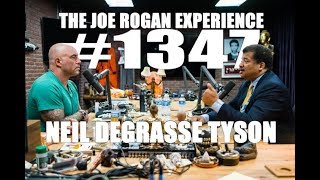 Neil deGrasse Tyson on Science And Skepticism: Art, Water, and Black Holes2017 · 141 min · full transcriptBest for how he connects science communication with art, skepticism, and consequences in public life.
 Neil deGrasse Tyson on Cosmic Discovery: From Mars to Pluto2011 · 143 min · full transcriptBest for watching him explain changing scientific knowledge with humor, openness, and comfort with uncertainty.
Questions people ask
- How does Neil deGrasse Tyson think people should handle new tasks at work?
- What did Neil deGrasse Tyson say about intelligent design and science?
- What did Neil deGrasse Tyson say about science and the economy?
- What did Neil deGrasse Tyson say about science denial?
- What does Neil deGrasse Tyson think schools should do?
- Why does Neil deGrasse Tyson think space exploration is worth funding?
Sources
Every quote above, word for word from the transcripts. Numbers match the text.
“They just don't want to be bored.”
“You should say to yourself, "Damn, I want to learn more.”
“Be that teacher to your students.”
“I don't blame the students. Yeah. I'm blaming the system where you can't wait to get out of school, which means they're not teaching curiosity. Because if they did, staying in school would be fulfilling that. And if they did, leaving school would birth you the rest of your life as a curious person where you continue to learn. That's what school should be about, and it's not. And that's what you're…”
“…my personal definition of science literacy is: how much do you still wonder about the world around you?”
“To remain curious is to remain young.”
“Would it be cool if one year, instead of the word "Believe," they put the word "Question?”
“…you have to learn to love the questions just as much as the answer…”
“Science is an enterprise that should be cherished as an activity of the free human mind…”
“I like about Starry Night, it's not what van Gogh saw that night; it's what he felt.”
“You make learning stuff about astrophysics fun.”
“But what I'm saying is not everyone embraces everything that science does, and some will cherry-pick it. You have the science deniers for global warming, you have science deniers with vaccines, you have science deniers with GMOs. You know, there's all manner of science denying going on in modern society. And, you know, we in a free society, what are you gonna do, right? That people can think what they want, but if thinking what they want influences policy, which then affects everybody, then your science denial has consequences to the economic health of the nation.”
“…the cosmic perspective reorders what is important in this world…”
“We are special because we are the same.”
“I feel large. I feel connected to the universe.”
“The humblest person in this world is the astrophysicist…”
“We are a way of the cosmos to know itself.”
How this guide was made: drafted with AI from the full transcripts of the recordings cited, then checked: every quotation must match a transcript word for word and be the speaker's own words, and an independent review gates accuracy. Methodology and corrections.