Jim Simons on Codebreaking
For Jim Simons, codebreaking was where abstract math met data, algorithms, and computers, teaching habits of model-building that later shaped his investing.
- Codebreaking gave Simons hands-on training in algorithms, computers, and data-driven modeling.
- He enjoyed the process itself: invent an attack, test it efficiently, and see if the signal is real.
- The main carryover to investing was methodological, not topical: study patterns, build models, and follow them.
- He valued doing things differently and working with strong collaborators, which fits both codebreaking and later Renaissance.

“What we were supposed to do is, uh, break Russian codes.”Simons Foundation short biography talk, 2022 · 5:05
Codebreaking was the bridge from pure mathematics to applied pattern-finding
Simons’s early intellectual life was driven by the beauty and clarity of mathematics. He describes math as something natural to him, and that taste for structure came before any practical application123.
Codebreaking mattered because it put that mathematical mindset into a setting where the goal was not proof but extraction of signal from difficult data. At IDA, the assignment was concrete and adversarial: break Russian codes, which forced him to connect abstract reasoning with real-world inference5.
That is why this period stands out in his story. It was not a rejection of pure math; it was the moment when mathematical taste met algorithms, evidence, and computation in a practical loop that he later reused elsewhere6.
“What we were supposed to do is, uh, break Russian codes.”Simons Foundation short biography talk, 2022 · full transcript →
He loved codebreaking because it was an iterative game of attack, test, and discovery
Simons did not describe codebreaking as dry technical work. He liked designing an attack, building an efficient algorithm to test it, and seeing whether anything emerged from the data6.
That matters because it shows what attracted him: not just answers, but the process of searching intelligently. In his telling, codebreaking had the excitement of hunting for a hidden pattern, with the added discipline of checking whether the pattern actually held up6.
This helps explain why the experience stayed with him. He had found a style of work that combined creativity, computation, and feedback from reality, which is different from pure theorem-proving but still deeply mathematical6.
The lasting lesson was to build models from data
Simons is explicit that the later value of codebreaking was methodological. He says that making models, looking at data, and using models to interpret the data were habits he learned there6.
That same logic later appears in his approach to markets. He saw that price patterns might be studied mathematically or statistically, built models that improved over time, and eventually let models replace judgment-driven fundamentals8.
In his mature form, this becomes a discipline of trusting the model once it has earned that trust. He describes the operating principle simply: follow what the model says.
Codebreaking fit his instinct to do what others were not doing
One of Simons’s broadest principles is to avoid running with the pack. He advises finding a different way of doing things or a different class of problems to attack, and presents that as central to his own path10.
Codebreaking fits that principle well. It is specialized, technical, and rewards unconventional attacks rather than conventional prestige moves. The same instinct later appears in his conviction that trading could be systematized, which pushed him away from standard discretionary methods toward a research-driven one.
So codebreaking was not only training in tools. It also matched his temperament: attack hard problems differently, search for hidden regularities, and let careful testing decide what works106.

“And the first is just to do something that everybody else isn’t doing. If you run with the pack you’ll probably lose. You might win, but more likely you’ll lose. Try to come up with a different way of doing things or different set of problems to attack. And I think, anyway, that's what I did.”Public Lecture 1, University of Maryland, 2014 · full transcript →
He saw success in this kind of work as collaborative and partly lucky
Simons does not present success as a solo triumph. He emphasizes partnering with the best people available and says collaboration amplifies what one person can do12.
That view helps make sense of both codebreaking and Renaissance. Work based on data, models, and algorithms improves when strong people challenge one another and combine different skills12.
He also leaves room for contingency. Even when discussing major success, he says luck matters and that being in the right place at the right time plays a role. That keeps his view of codebreaking practical rather than romantic: use skill, use good partners, and recognize that outcomes are never entirely under your control12.
Simons on codebreaking, in his own words
“What we were supposed to do is, uh, break Russian codes.”
“And the first is just to do something that everybody else isn’t doing. If you run with the pack you’ll probably lose. You might win, but more likely you’ll lose. Try to come up with a different way of doing things or different set of problems to attack. And I think, anyway, that's what I did.”
Where to watch
 Jim Simons on Mathematics And Quant Investing: From Proofs to Markets160 min · full transcriptBest for hearing Simons directly connect codebreaking to designing algorithms, testing attacks, and learning to model data.
 Jim Simons on Mathematics to Quant Investing: From Geometry to Markets2007 · 61 min · full transcriptShows how his love of pure mathematics eventually fed into a more applied, systematic style of thinking.
 Jim Simons on My Life in Mathematics: From Geometry to Quant Investing2014 · 52 min · full transcriptUseful for the link from cryptology to statistics, modeling, and the habit of obeying the model once built.
 Jim Simons on Quantitative Investing: From Math to Medallion2016 · 88 min · full transcriptBest for the transition from intuition-driven trading to the belief that markets could be systematized.
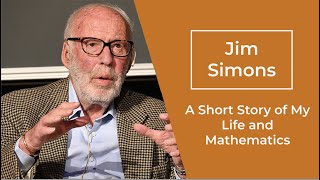 Jim Simons on Math and Philanthropy: A Short Story of My Life2022 · 16 min · full transcriptShortest route to the core biographical fact that his IDA work was codebreaking, and that ideas can lead to unexpected places.
Questions people ask
- How did Jim Simons go from intuition-based trading to quantitative investing?
- What did Jim Simons say about choosing partners and working with other people?
- What did Jim Simons say about how to succeed in mathematics and business?
- Why did Jim Simons think his IDA experience mattered for Renaissance Technologies?
Sources
Every quote above, word for word from the transcripts. Numbers match the text.
“It was very natural and I I always liked it.”
“It was just a beauty. It was just a beauty of it.”
“I was just a kid who just liked thinking.”
“What we were supposed to do is, uh, break Russian codes.”
“But I really liked that whole process. I liked everything about it. I like designing an algorithm uh you know coming up with some attack, designing an efficient algorithm to uh to test it out and uh seeing how it came out. I mean you know it was uh like fishing or something. I don't know. I actually I don't like fishing because you never catch anything. But here I felt uh we might catch something every once in a while. And uh it was a lot of fun. I liked I I liked it all. And I'd never seen anything like that. So um yes, you're right. Later on that experience of making models, looking at data, making models to try to interpret the data uh was certainly learned there. Uh and I if I hadn't been there uh I think the the business that we built later would never have occurred.”
“And in looking at the patterns of prices, I could see that there was something we could study here, that there were maybe some ways to predict prices mathematically or statistically. And I started working on that and then brought in some other people and gradually we built models, and the models got better and better, and finally the models replaced the fundamental stuff. So it took a while. I would have thought with your background in mathematician this would have almost occurred to you immediately, like you would have straight away seen this. Well, what was the 2-year delay? >> Well, two things. I saw it pretty early but, and I brought in a guy who was a…”
“And the first is just to do something that everybody else isn’t doing. If you run with the pack you’ll probably lose. You might win, but more likely you’ll lose. Try to come up with a different way of doing things or different set of problems to attack. And I think, anyway, that's what I did.”
“Partner with the very best people you can find. And some people want to work alone their whole lives, but partnering is a great thing. And it amplifies what you can do. But you have to choose your partners carefully. I’ve been lucky enough to have wonderful partners, both in the financial business and in mathematics, and now in the foundation. So work with the best people you can find because that’s going to make your work better.”
How this guide was made: drafted with AI from the full transcripts of the recordings cited, then checked: every quotation must match a transcript word for word and be the speaker's own words, and an independent review gates accuracy. Methodology and corrections.
