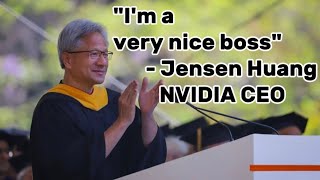
Serve The Mission
The mission is the boss: stay humble, do the needed work, and learn from near-death.
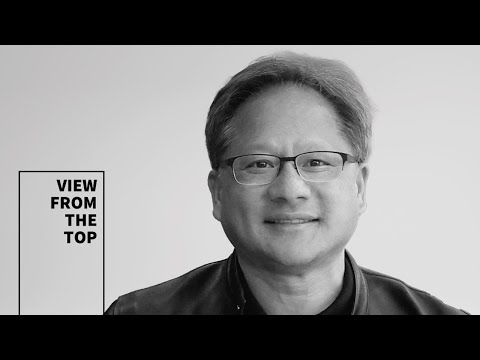
“It's not a word, but have a core belief.”Stanford Graduate School of Business interview, 2024 · 55:19
The lesson
For Huang, the mission is the boss. NVIDIA was not built around status, titles, or a fashionable market; it was built around a core belief about what computers should do: solve problems ordinary computers cannot. That kind of mission gives you a standard for decision-making that is bigger than your ego, because the question stops being "What do I want to do?" and becomes "What does the mission require now?"12
That is why he is willing to do unglamorous work, including building both the technology and the market at the same time. If the mission matters, you do not wait for perfect conditions or for someone else to prepare the path; you help create the conditions yourself. Service to the mission often means doing work that feels beneath your role, outside your job description, or uncertain in payoff.34
This also changes how you interpret setbacks. Huang does not treat pain and suffering as signs that you chose badly; he treats them as part of becoming capable of important work. In his view, hardship can build resilience and agility, which matter because long missions inevitably include mistakes, reversals, and periods when survival is not guaranteed.56
A mission-centered mindset also requires humility about time. Huang describes a very long horizon: care for the craft, keep tending the work, and let compounding happen. When you stop chasing quick validation, you can survive near-death moments, learn from them, and return to first principles instead of panicking or protecting your pride.78
So the practical discipline is simple: hold tightly to purpose and loosely to status. Take the hard assignment, the messy repair job, the market-creation work, or the painful feedback if that is what the mission needs. Huang's example suggests that endurance is easier when you genuinely love the work and see yourself as serving something worthwhile rather than defending an image of yourself.
4 principles from Jensen Huang
Let the mission outrank your ego
Choose a standard that is bigger than personal comfort, prestige, or short-term recognition. When facing a decision, ask what best advances the real purpose of the work, not what best protects your identity.
“It's not a word, but have a core belief.”
Do the needed work, even if it is not glamorous
Important missions often require creating missing conditions yourself, not just executing inside an existing lane. Be willing to do market-making, repair work, coordination, or other dirty work if that is what progress demands.
“We had to go invent this new market.”
Treat pain as training, not disqualification
Difficulty does not automatically mean you are on the wrong path. Use setbacks and strain to build the resilience and adaptability required for long-term work.
“I wish upon you plenty of pain and suffering.”
Think in decades and tend your craft
Long missions need patience and repeated care. Instead of asking whether effort is paying off immediately, ask whether you are becoming better at the craft and moving steadily toward meaningful contribution.
“I hope you find a craft.”
In his own words
The quotes behind the lesson, word for word from the transcripts. Numbers match the lesson above.
“It's not a word, but have a core belief.”
“And so that became the company's mission, to go build a computer, the type of computers, and solve problems that normal computers can't. And to this day, we're focused on that. And if you look at all the the problems that that, in the markets that we opened up as a result, it's, you know, things like computational drug design, weather simulation, materials design. These are all things that we're really, really proud of. Robotics, self driving cars, software, we call artificial intelligence. And then, course, we, we drove the technology so hard that eventually the computational cost went to approximately zero and then enabled enabled a whole new way of developing software where the computer wrote the software itself, artificial intelligence as we know it today.”
“We had to go invent this new market.”
“I go forward in time, and I look backwards. So you asked me a question that's exactly from a computer vision pose perspective, exactly the opposite of how I think. I never look forward from where I am. I go forward in time and look backwards. And the reason for that is it's easier. I would look backwards and kind of read my history. We did this and we did that way and we broke that problem down. Does that make sense? And so it's a little bit like how you guys solve problems. You figure out what is the end result that you're looking for and you work backwards to achieve it. And so I imagine NVIDIA making a unique contribution to advancing the future of computing, which is the single most important instrument of all humanity.”
“I wish upon you plenty of pain and suffering.”
“Your pain and suffering will strengthen your character, your resilience, and agility, and they are the ultimate superpowers.”
“I have cared for my garden for 25 years. I have plenty of time.”
“I hope you find a craft.”
Reflect
- Where in your work are you protecting status or comfort instead of serving the mission directly?
- Think of a recent setback or near-miss. If you treated it as training rather than embarrassment, what would you learn and do next?
- What is one piece of unglamorous but necessary work you have been avoiding that would materially help the mission if you took it on now?