The Jensen Huang Course
After graduating, you will understand Huang’s playbook for building platforms: first-principles strategy, accelerated computing, AI factories, agentic software, simulation, robotics, and durable organizations.
- 12 chapters
- 91 verbatim quotes
- 28 recordings
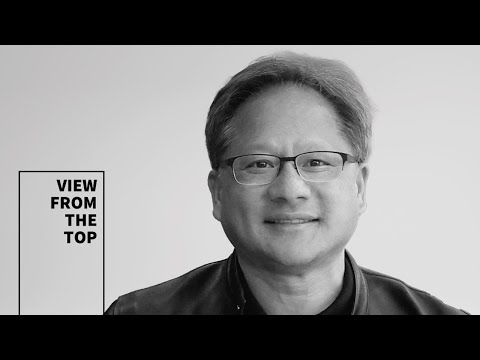
“I go forward in time, and I look backwards. So you asked me a question that's exactly from a computer vision pose perspective, exactly the opposite of how I think. I never look forward from where I am. I go forward in time and look backwards. And the reason for that is it's easier. I would look backwards and kind of read my history. We did this and we did that way and we broke that problem down. Does that make sense? And so it's a little bit like how you guys solve problems. You figure out what is the end result that you're looking for and you work backwards to achieve it. And so I imagine NVIDIA making a unique contribution to advancing the future of computing, which is the single most important instrument of all humanity.”Stanford Graduate School of Business interview, 2024 · 45:23
About this course
Jensen Huang is the co-founder and CEO of NVIDIA, founded in 1993. NVIDIA began in computer graphics and GPUs, then became central to accelerated computing, deep learning, and modern AI infrastructure.
Huang is worth studying because he explains technology as strategy: why computing changes, how markets are created before they look obvious, and why chips, systems, software, developers, and customers have to be designed together.
This course is built from real recordings and Q&A already in Thinkers Archive. Each chapter pairs Huang’s own talks and interviews with focused answers so you can learn his core ideas in order.
Curriculum
- Build Future BackwardsStart with the future you believe in, then work backward to today’s impossible problems.
- Bet On NonmarketsCreate the market before it exists—even when the bet hurts.
- Accelerated ComputingThe base idea behind NVIDIA: use specialized parallel computing when general-purpose computing runs out of steam.
- Create PlatformsHuang’s biggest lesson is not to sell a component, but to build the next computing platform.
- Design the StackModern AI performance comes from co-designing chips, networks, software, systems, and data centers.
- AI FactoriesData centers are becoming factories that manufacture intelligence in the form of tokens.
- Reasoning Changes ComputeAI gets more useful when it thinks longer, but that makes inference a giant systems problem.
- Agentic SoftwareThe next software stack is built around models that plan, use tools, remember, and act.
- Simulate the WorldBefore AI acts in the physical world, it needs virtual worlds, digital twins, and synthetic data.
- Physical AIRobots, vehicles, and machines are the next frontier of AI because intelligence must move into the world.
- Lead for Hard ThingsHuang’s management style is built for long horizons, shared context, public learning, and pain tolerance.
- Serve The MissionThe mission is the boss: stay humble, do the needed work, and learn from near-death.
- GraduateFinish every chapter to earn your certificate.








has graduated from The Jensen Huang Course, completing all 12 chapters on Jensen Huang's ideas, in his own words.
- Work backward from a future you believe in, especially when the market does not yet exist.
- When general-purpose computing slows down, build specialized accelerated systems that change the economics of work.
- A real platform is not a product; it is chips, systems, networking, software, libraries, developers, customers, and partners reinforcing one another.
- Create technology and create the market at the same time, because new computing eras often need both to be invented together.
- Treat the data center as the new computer and the AI factory as the new industrial machine.
- Measure AI infrastructure by useful output: token throughput, latency, energy efficiency, reliability, and cost per unit of intelligence.