Build Future Backwards
Start with the future you believe in, then work backward to today’s impossible problems.
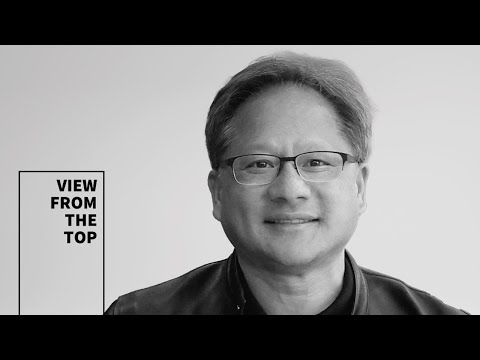
“I go forward in time, and I look backwards. So you asked me a question that's exactly from a computer vision pose perspective, exactly the opposite of how I think. I never look forward from where I am. I go forward in time and look backwards. And the reason for that is it's easier. I would look backwards and kind of read my history. We did this and we did that way and we broke that problem down. Does that make sense? And so it's a little bit like how you guys solve problems. You figure out what is the end result that you're looking for and you work backwards to achieve it. And so I imagine NVIDIA making a unique contribution to advancing the future of computing, which is the single most important instrument of all humanity.”Stanford Graduate School of Business interview, 2024 · 45:23
The lesson
Huang’s method starts with a picture of the future, not a projection from the present. He says he goes forward in time and looks backward, then breaks the problem down from the end state he wants to reach1. That approach depends on a core belief about what matters, because without that belief, working backward has no anchor2.
For NVIDIA, that core belief was not simply to make faster chips. The company’s purpose was to build computers that solve problems ordinary computers cannot, and that mission later expanded into fields like drug design, weather simulation, robotics, self-driving cars, and AI3. In Huang’s framing, the point is to make a distinctive contribution to the future of computing, then organize present decisions around that goal1.
This future-backward method also shaped NVIDIA’s first market choice. Huang explains that the company picked 3D graphics and video games early, even when the market was still small, because it matched the larger mission and offered a path to prove the technology. But the company could not wait for a mature market to appear; it had to create the technology and the market together4.
That same logic shows up again in NVIDIA’s later bets on AI. Huang argues that when a team genuinely believes in a future, and that belief is grounded in first principles rather than trend-following, it should pursue the hard work required to make that future real5. The result is not just invention for its own sake; it is building the tools and frameworks that let new applications and industries actually form around the technology.
Working this way requires patience and resilience. Huang connects important work with long horizons, craft, and the willingness to endure difficulty rather than expecting the path to feel easy789. Future-backward thinking is demanding because you often begin before the market fully exists, but that is exactly why first-principles conviction matters.
5 principles from Jensen Huang
Start from the future end state
Define the result you want to exist in the world, then work backward to the problems that must be solved today. This helps you avoid being trapped by current constraints or by incremental thinking.
“I go forward in time, and I look backwards. So you asked me a question that's exactly from a computer vision pose perspective, exactly the opposite of how I think. I never look forward from where I am. I go forward in time and look backwards. And the reason for that is it's easier. I would look backwards and kind of read my history. We did this and we did that way and we broke that problem down. Does that make sense? And so it's a little bit like how you guys solve problems. You figure out what is the end result that you're looking for and you work backwards to achieve it. And so I imagine NVIDIA making a unique contribution to advancing the future of computing, which is the single most important instrument of all humanity.”
Anchor strategy in a core belief
A first-principles strategy needs a stable belief about what your organization is for. Use that belief to judge opportunities: if a project serves the mission, it may be worth pursuing even before the path is obvious.
“It's not a word, but have a core belief.”
Create the market while creating the technology
If your idea points to a real future, you may not find a ready-made market waiting for you. You have to shape adoption, applications, and demand at the same time you build the underlying capability.
“We had to go invent this new market.”
Pursue hard things when first principles support them
Do not act on hype or hearsay; act when you have reasoned conviction about a future that matters. Then commit to the difficult work, because hard problems are often where unique value is created.
“And so if you believe in that future and you don't do anything about it, you're gonna regret it for your life. And so we always... You know, I always tell the team, do you believe what... Do we believe this or not? And if you believe it and start grounded on first principles, not random, you know, hearsay. And we believe it. We've gotta... We owe it to ourselves to go pursue it. If we're the right people to go do it, if it's really, really hard to do, it's worth doing, and we believe it. Let's go pursue it. When we pursued it, we we launched the product. Nobody knew.”
Expect long timelines and difficulty
Important contributions usually require patience, resilience, and sustained craft. If the market is early or the problem is unusually hard, that is not necessarily a sign to quit; it may be a normal feature of meaningful work.
“I wish upon you plenty of pain and suffering.”
In his own words
The quotes behind the lesson, word for word from the transcripts. Numbers match the lesson above.
“I go forward in time, and I look backwards. So you asked me a question that's exactly from a computer vision pose perspective, exactly the opposite of how I think. I never look forward from where I am. I go forward in time and look backwards. And the reason for that is it's easier. I would look backwards and kind of read my history. We did this and we did that way and we broke that problem down. Does that make sense? And so it's a little bit like how you guys solve problems. You figure out what is the end result that you're looking for and you work backwards to achieve it. And so I imagine NVIDIA making a unique contribution to advancing the future of computing, which is the single most important instrument of all humanity.”
“It's not a word, but have a core belief.”
“And so that became the company's mission, to go build a computer, the type of computers, and solve problems that normal computers can't. And to this day, we're focused on that. And if you look at all the the problems that that, in the markets that we opened up as a result, it's, you know, things like computational drug design, weather simulation, materials design. These are all things that we're really, really proud of. Robotics, self driving cars, software, we call artificial intelligence. And then, course, we, we drove the technology so hard that eventually the computational cost went to approximately zero and then enabled enabled a whole new way of developing software where the computer wrote the software itself, artificial intelligence as we know it today.”
“We had to go invent this new market.”
“And so if you believe in that future and you don't do anything about it, you're gonna regret it for your life. And so we always... You know, I always tell the team, do you believe what... Do we believe this or not? And if you believe it and start grounded on first principles, not random, you know, hearsay. And we believe it. We've gotta... We owe it to ourselves to go pursue it. If we're the right people to go do it, if it's really, really hard to do, it's worth doing, and we believe it. Let's go pursue it. When we pursued it, we we launched the product. Nobody knew.”
“I wish upon you plenty of pain and suffering.”
“I have cared for my garden for 25 years. I have plenty of time.”
“I hope you find a craft.”
Reflect
- What future do you believe in strongly enough to work backward from, instead of just extending today’s trend line?
- Where in your work are you waiting for a market, permission, or certainty that may only appear after someone builds the technology and the use case together?
- Which current project is based on first-principles reasoning, and which one is mostly based on imitation or hearsay?
Check your understanding
Go deeper
 Jensen Huang on First Principles: Build the Future Backwards2024 · 56 min · full transcript
 Jensen Huang on AI and Resilience: Find Your Craft2024 · 32 min · full transcript
 Jensen Huang on Leadership and Craft: Pain, Tenure, and AI2024 · 65 min · full transcript
 Jensen Huang on Artificial Intelligence: How AI Became Real2025 · 148 min · full transcript