Bet On Nonmarkets
Create the market before it exists—even when the bet hurts.
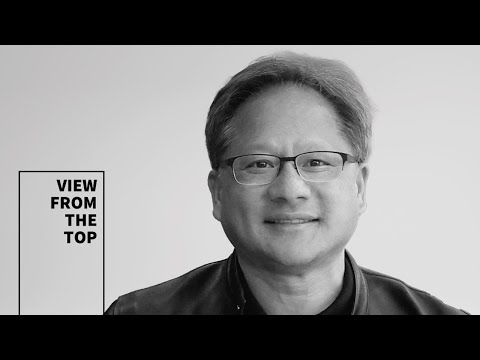
“I go forward in time, and I look backwards. So you asked me a question that's exactly from a computer vision pose perspective, exactly the opposite of how I think. I never look forward from where I am. I go forward in time and look backwards. And the reason for that is it's easier. I would look backwards and kind of read my history. We did this and we did that way and we broke that problem down. Does that make sense? And so it's a little bit like how you guys solve problems. You figure out what is the end result that you're looking for and you work backwards to achieve it. And so I imagine NVIDIA making a unique contribution to advancing the future of computing, which is the single most important instrument of all humanity.”Stanford Graduate School of Business interview, 2024 · 45:23
The lesson
Huang’s pattern is to aim at markets that barely exist yet, as long as they follow from a strong first-principles view of computing. He describes NVIDIA’s job as building computers that solve problems normal computers cannot, then opening the markets that appear once that capability becomes real1. That is why he can say the company had to invent a new market rather than wait for demand to show up in familiar numbers2.
To make this kind of bet, Huang works backward from a future state instead of projecting forward from the present. He imagines the end result NVIDIA should help create, then breaks the path down step by step3. In practice, this means asking whether you truly believe a future is coming; if you do, and that belief is grounded in first principles rather than fashion, then the right response is to pursue it before the market looks obvious4.
CUDA shows what this looks like operationally. Huang argues that creating a new computing platform is hard because users, developers, and installed base depend on one another; without one, the others do not show up5. His answer was to endure near-term pain, including the costly decision to put CUDA on GeForce, because a real computing company needs one architecture that spans its chips and gives developers a broad target to build for6.
This bet only works if the platform becomes useful enough that an ecosystem can compound around it. Huang’s view is that accelerated computing required new algorithms, libraries, and rewritten applications, which is why building the platform took decades rather than a product cycle7. Once that work starts to pay off, the flywheel becomes visible: CUDA compatibility creates installed base, applications attract users, the market expands, and the larger market funds more research and software, strengthening the platform again8.
The deeper lesson is that nonmarket bets are not reckless bets. Huang pairs conviction with patience, saying he has time to keep tending the garden, and that mindset fits long platform plays whose returns arrive much later than their costs9. When the bet is right, the reward is not just one product’s success but the creation of entirely new categories of software and computing that were impossible before101.
5 principles from Jensen Huang
Start from a future you believe in
Do not size the opportunity only from today’s demand. Define the end state that should exist, then work backward to the capabilities and steps required to make it real.
“I go forward in time, and I look backwards. So you asked me a question that's exactly from a computer vision pose perspective, exactly the opposite of how I think. I never look forward from where I am. I go forward in time and look backwards. And the reason for that is it's easier. I would look backwards and kind of read my history. We did this and we did that way and we broke that problem down. Does that make sense? And so it's a little bit like how you guys solve problems. You figure out what is the end result that you're looking for and you work backwards to achieve it. And so I imagine NVIDIA making a unique contribution to advancing the future of computing, which is the single most important instrument of all humanity.”
Create the market with the technology
Some important opportunities have no established market to enter. In those cases, you must build the enabling technology and help create the demand, use cases, and category at the same time.
“We had to go invent this new market.”
Accept short-term pain for platform scale
A platform bet often looks financially unattractive early because adoption requires broad compatibility and distribution before revenue is obvious. Huang’s example is funding CUDA broadly even when it hurt profits, in order to establish one computing architecture across the company’s products.
“Put c on top of FP 32 was called... We call CG. That CG path took us to eventually CUDA CUDA step by step by step We... Well, putting CUDA on GeForce, that that was a strategic decision that was very, very hard to do because it cost the company enormous amounts of our profits, and we couldn't afford it at the time. But we did it anyways because we wanted to be a computing company. A computing company has a computing architecture. A computing architecture has to be compatible across all of the chips that we build.”
Solve the chicken-and-egg problem deliberately
Platforms fail when developers, users, and installed base all wait for one another. Break the loop by seeding enough installed base and tools that developers have a reason to build, which then pulls in users.
“CUDA has now achieved a virtuous cycle. This rarely happens. If you look at history and all the computing architectures, computing platforms, in the case of microprocessor CPUs, it has been here for sixty years. It has not been changed for sixty years. At this level, this way of doing computing, accelerated computing has been around... Has... Creating a new platform is extremely hard because it's a chicken and egg problem. If there are no developers that use your platform, then, of course, there will be no users. But if there are no users, there are no installed base. If there are no installed base, developers aren't interested in it. Developers want to write software for a large installed base. But a large installed base requires a lot of applications so that users would create that installed base.”
Be patient enough to compound ecosystems
If the bet requires new algorithms, libraries, and applications, expect a long build period. The payoff comes when the ecosystem starts reinforcing itself, not when the first version ships.
“Accelerated computing its moment has now arrived. However, accelerated computing is a fundamentally different programming model. You can't just take a CPU software software written by hand executing sequentially and put it onto a GPU and have it run properly. In fact, if you just did that, it actually runs slower. And so, you have to reinvent new algorithms. You have to create new libraries. You have to in fact rewrite the application which is the reason why it's taken so long. It's taken us nearly 30 years to get here. But we did it one domain at a time. This is the treasure of our company. Most people talk about the GPU. The GPU is important, but without a programming model that sits on top of it, and without dedication to that programming model, keeping it compatible over generations, we're now CUDA 13 coming up with CUDA 14, hundreds of millions of GPUs running in every single computer, perfectly compatible. If we didn't do that, then developers wouldn't target this computing platform. If we didn't create these libraries, then developers wouldn't know how to use the algorithm and use the architecture to its fullest.”
In his own words
The quotes behind the lesson, word for word from the transcripts. Numbers match the lesson above.
“And so that became the company's mission, to go build a computer, the type of computers, and solve problems that normal computers can't. And to this day, we're focused on that. And if you look at all the the problems that that, in the markets that we opened up as a result, it's, you know, things like computational drug design, weather simulation, materials design. These are all things that we're really, really proud of. Robotics, self driving cars, software, we call artificial intelligence. And then, course, we, we drove the technology so hard that eventually the computational cost went to approximately zero and then enabled enabled a whole new way of developing software where the computer wrote the software itself, artificial intelligence as we know it today.”
“We had to go invent this new market.”
“I go forward in time, and I look backwards. So you asked me a question that's exactly from a computer vision pose perspective, exactly the opposite of how I think. I never look forward from where I am. I go forward in time and look backwards. And the reason for that is it's easier. I would look backwards and kind of read my history. We did this and we did that way and we broke that problem down. Does that make sense? And so it's a little bit like how you guys solve problems. You figure out what is the end result that you're looking for and you work backwards to achieve it. And so I imagine NVIDIA making a unique contribution to advancing the future of computing, which is the single most important instrument of all humanity.”
“And so if you believe in that future and you don't do anything about it, you're gonna regret it for your life. And so we always... You know, I always tell the team, do you believe what... Do we believe this or not? And if you believe it and start grounded on first principles, not random, you know, hearsay. And we believe it. We've gotta... We owe it to ourselves to go pursue it. If we're the right people to go do it, if it's really, really hard to do, it's worth doing, and we believe it. Let's go pursue it. When we pursued it, we we launched the product. Nobody knew.”
“CUDA has now achieved a virtuous cycle. This rarely happens. If you look at history and all the computing architectures, computing platforms, in the case of microprocessor CPUs, it has been here for sixty years. It has not been changed for sixty years. At this level, this way of doing computing, accelerated computing has been around... Has... Creating a new platform is extremely hard because it's a chicken and egg problem. If there are no developers that use your platform, then, of course, there will be no users. But if there are no users, there are no installed base. If there are no installed base, developers aren't interested in it. Developers want to write software for a large installed base. But a large installed base requires a lot of applications so that users would create that installed base.”
“Put c on top of FP 32 was called... We call CG. That CG path took us to eventually CUDA CUDA step by step by step We... Well, putting CUDA on GeForce, that that was a strategic decision that was very, very hard to do because it cost the company enormous amounts of our profits, and we couldn't afford it at the time. But we did it anyways because we wanted to be a computing company. A computing company has a computing architecture. A computing architecture has to be compatible across all of the chips that we build.”
“Accelerated computing its moment has now arrived. However, accelerated computing is a fundamentally different programming model. You can't just take a CPU software software written by hand executing sequentially and put it onto a GPU and have it run properly. In fact, if you just did that, it actually runs slower. And so, you have to reinvent new algorithms. You have to create new libraries. You have to in fact rewrite the application which is the reason why it's taken so long. It's taken us nearly 30 years to get here. But we did it one domain at a time. This is the treasure of our company. Most people talk about the GPU. The GPU is important, but without a programming model that sits on top of it, and without dedication to that programming model, keeping it compatible over generations, we're now CUDA 13 coming up with CUDA 14, hundreds of millions of GPUs running in every single computer, perfectly compatible. If we didn't do that, then developers wouldn't target this computing platform. If we didn't create these libraries, then developers wouldn't know how to use the algorithm and use the architecture to its fullest.”
“All NVIDIA GPUs are CUDA compatible, providing a large installed base and significant reach for developers. A wealth of accelerated applications attract end users, which creates a large market for cloud service providers and computer makers to serve. A large market affords billions in r and d to fuel its growth. NVIDIA has established the accelerated computing virtuous cycle. Of the 300 acceleration libraries and 400 AI models that span ray tracing and neural rendering, physical earth and life sciences, quantum physics and chemistry, computer vision, data processing, machine learning, and AI. We updated 100 this year that increased the performance and features of our entire installed base.”
“I have cared for my garden for 25 years. I have plenty of time.”
“We are now creating software that no humans can write.”
Reflect
- What future in your work do you believe is coming even though today’s market signals still look weak? What first principles support that belief?
- Where are you avoiding a platform bet because the short-term economics look painful? What installed base or ecosystem step would make that bet more rational?
- If you worked backward from the outcome you want five years from now, what would you need to start building now before demand is obvious?
Check your understanding
Go deeper
 Jensen Huang on First Principles: Build the Future Backwards2024 · 56 min · full transcript
 Jensen Huang on Extreme Code Design: Building the AI Factory2025 · 146 min · full transcript
 Jensen Huang on AI and Resilience: Find Your Craft2024 · 32 min · full transcript
 Jensen Huang on AI Factories: The New Token Economy2026 · 140 min · full transcript
 Jensen Huang on Artificial Intelligence: How AI Became Real2025 · 148 min · full transcript
- What did Jensen Huang say about believing in a future before the market does?
- What did Jensen Huang say about putting CUDA on GeForce?
- How did Jensen Huang say CUDA became so successful?
- What did Jensen Huang say about CUDA and NVIDIA's software stack?
- What did Jensen Huang say about the accelerated computing virtuous cycle?