Create Platforms
Huang’s biggest lesson is not to sell a component, but to build the next computing platform.
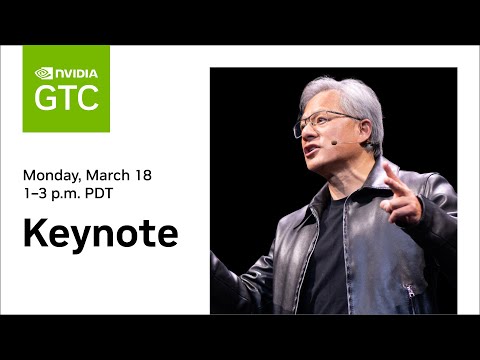
“We are now producing software, using computers to write software, producing software that never existed before. It is a brand new category. It took share from nothing. It's a brand new category. And the way you produce this software is unlike anything we've ever done before. In data centers, generating tokens, producing floating point numbers at very large scale. As if in the beginning of this last industrial revolution when people realized that you would set up factories, apply energy to it. And this invisible valuable thing called electricity came out. AC generators. And a hundred years later, two hundred years later, we are now creating new types of electrons, tokens using infrastructure we call factories, AI factories, to generate this new incredibly valuable thing called artificial intelligence.”NVIDIA GTC keynote, San Jose, 2024 · 9:18
The lesson
Huang’s core platform idea is that major technology waves are not won by selling a single chip or model feature. They are won by defining a new way people build software and run computing. He frames generative AI as a new computing era and a new software category, not a small extension of the old stack123.
He also argues that this shift is bigger because two transitions are happening together. Computing is moving from general-purpose CPU-centric systems to accelerated computing, and software is moving from hand-written logic to trained AI systems456. That is why NVIDIA’s strategy is full-stack: chips, systems, networking, libraries, models, and deployment infrastructure, so others can build on top of it8.
A platform, in Huang’s framing, changes the unit of computing and the economics around it. Instead of thinking of a server as the product, he asks you to think of the data center as the computer and increasingly as an AI factory that generates tokens and intelligence at scale91011. This is why throughput, energy efficiency, networking, and system design matter alongside raw model quality: the platform has to make production practical, not just possible121314.
The next step in the platform shift is that applications are being built on top of AI systems rather than treating AI as one feature inside conventional software. Huang describes a move from models to agentic systems that can reason, use tools, research, and plan, which changes how software is created and what users expect from it1516417. In that world, the platform must support post-training, inference, memory, retrieval, and orchestration, not only model training18.
Finally, Huang extends the platform idea beyond text models into enterprise workflows and physical-world systems. Guardrails, refinement, and domain-specific customization are necessary for real deployment, while shared data and simulation platforms connect design, operations, robotics, and digital twins192021. His lesson is to look for the next layer everyone else will build on: not a component, but the stack, standards, and infrastructure that turn a breakthrough into an industry.
5 principles from Jensen Huang
Build the stack, not just the component
A platform creates value by making many downstream applications possible. Apply this by asking what tools, infrastructure, and interfaces others would need in order to build on your work repeatedly, not just buy it once.
“Accelerated computing and AI have arrived.”
Treat platform shifts as changes in how software is made
Huang’s point is that AI changes software creation itself, because training and adaptation matter alongside programming. When evaluating new technology, look for whether it changes the development process and the architecture beneath the app layer.
“You no longer program the software. You train the software.”
Design for factory economics, not demo performance
A real platform must work at production scale with good throughput, networking, and energy efficiency. In your own work, test whether a system is economically sustainable when usage grows, not just impressive in a prototype.
“In the future, data centers are gonna be thought of, as I mentioned earlier, as an AI factory.”
Build for agents, not only models
The next platform layer supports systems that reason, use tools, and plan across steps. To apply this, think beyond single prompt-response interactions and design workflows where AI can retrieve information, act, and improve results over time.
“Meanwhile, another breakthrough happened, and this breakthrough happened in 2024. Agenic systems started to emerge. In 2025, it started to pervace... To to, proliferate just about everywhere. Agenic models that have the ability to reason, look up information, do research, use tools, plan futures, simulate outcomes, all of a sudden started to solve very, very important problems. One of my favorite agentic models is called Cursor, which revolutionized the way we do software programming at NVIDIA. Agenic systems are going to really take off from here.”
Make platforms usable in real domains
A platform becomes durable when it fits safety, privacy, workflow, and data constraints in actual industries. Apply this by adding the controls, customization, and shared data foundations that let an organization trust and integrate the system.
“They need to set up usage guardrails and refine their models to align with their company's safety, privacy, and security requirements. The industry needs a foundry, a TSMC for custom large language models. Today, we announced the NVIDIA AI Foundations, a cloud service for customers needing to build, refine, and operate custom large language models and generative AI trained with their proprietary data and for their domain specific tasks.”
Moments to watch
In his own words
The quotes behind the lesson, word for word from the transcripts. Numbers match the lesson above.
“The iPhone moment of AI has started.”
“Generative AI is a new kind of computer, one that we program in human language.”
“We are now producing software, using computers to write software, producing software that never existed before. It is a brand new category. It took share from nothing. It's a brand new category. And the way you produce this software is unlike anything we've ever done before. In data centers, generating tokens, producing floating point numbers at very large scale. As if in the beginning of this last industrial revolution when people realized that you would set up factories, apply energy to it. And this invisible valuable thing called electricity came out. AC generators. And a hundred years later, two hundred years later, we are now creating new types of electrons, tokens using infrastructure we call factories, AI factories, to generate this new incredibly valuable thing called artificial intelligence.”
“Except this time, there are two simultaneous platform shifts, in fact, happening at the same time. While we now move to AI, applications are now going to be built on top of AI. At first, people thought AIs are applications. And in fact, AIs are applications, but you're gonna build applications on top of AIs. But in addition to that, how you run the software, how you develop the software fundamentally changed. The entire five layer stack of the computer industry is being reinvented. You no longer program the software. You train the software.”
“Remember at the core of this is two or two platform transitions from general purpose computing to accelerated computing. NVIDIA CUDA and those suite of libraries called CUDA-X has enabled us to address practically every industry and we're at the inflection point. It is now growing as a virtual cycle would suggest. The second inflection point is now upon us. The second platform transition AI from classical handwritten software to artificial intelligence. two platform transitioning happening at the same time which is the reason why we're feeling such incredible growth.”
“At the core, the first thing that's actually happening is the end of CPU scaling and the beginning of accelerated computing data processing. just text completion, speech recognition, all of those kind of basic AI things that are, that are used, recommender systems, that are used and, and data centers all over the world. They are moving- everyone is moving from CPUs to accelerated computing because, they want to save energy. Accelerated computing helps you save so much energy 20 times, 50 times, and doing the same processing. So the first thing that we have to do, you know, as a society is accelerate up every application we can. If you're doing Spark data processing, run it with accelerated Spark so that you could reduce the amount of energy necessary by 20 times.”
“Accelerated computing and AI have arrived.”
“The data center is now the unit of computing.”
“In the future, data centers are gonna be thought of, as I mentioned earlier, as an AI factory.”
“DGX supercomputers are modern AI factories. We are at the iPhone moment of AI. Startups are racing to build disruptive products and business models, while incumbents are looking to respond. Generative AI has triggered a sense of urgency in enterprises worldwide to develop AI strategies. Customers need to access NVIDIA AI easier and faster. We are announcing NVIDIA DGX Cloud through partnerships with Microsoft Azure, Google GCP, and Oracle OCI to bring NVIDIA DGX AI supercomputers to every company instantly from a browser. DGX Cloud is optimized to run NVIDIA AI enterprise, the world's leading acceleration library suite for end to end development and deployment of AI.”
“A daunting challenge is net zero. Every company must accelerate every workload to reclaim power. Accelerated computing is a full stack data center scale computing challenge. GRACE, Grace Hopper, and BlueField three are new chips for super energy efficient accelerated data centers. Acceleration libraries solve new challenges and open new markets.”
“How would we have performed if nothing else changed? And it turns out quite wonderfully. Quite wonderfully. And that's the purple line. But not as great as it could be. And that's where the f p four tensor core, the new transformer engine, and very importantly, the NVLink switch. And the reason for that is because all these GPUs have to share the results, partial products. Whenever they do all to all, all all gather, whenever they communicate with each other, that NVLink switch is communicating almost 10 times faster than what we could do in the past using the fastest networks. Okay. So Blackwell is going to be just an amazing system for generative AI.”
“The second part is your factory throughput. Blackwell is green again, And factory throughput is important because your factory is, in the case of a gigawatt, is $50,000,000,000 A $50,000,000,000 data center can only consume one gigawatt of power. And so if your performance, your throughput per watt is very good versus quite poor, that directly translates to your revenues. Your revenues of your data center is directly related to the second second column. And in the case of Blackwell, it was about 10 times over Hopper. In the case of Rubin, it's going to be about 10 times higher again. Okay? And in the case of now the, the cost of the tokens, how cost effectively it is to generate the token, this is Rubin about one tenth.”
“You no longer program the software. You train the software.”
“Meanwhile, another breakthrough happened, and this breakthrough happened in 2024. Agenic systems started to emerge. In 2025, it started to pervace... To to, proliferate just about everywhere. Agenic models that have the ability to reason, look up information, do research, use tools, plan futures, simulate outcomes, all of a sudden started to solve very, very important problems. One of my favorite agentic models is called Cursor, which revolutionized the way we do software programming at NVIDIA. Agenic systems are going to really take off from here.”
“And the reason why it hallucinated, of course, it could memorize everything in the past, but it can't memorize everything in the future and the current. And so it needs to be grounded in research. It has to do fundamental research before it answers a question. The ability to reason about, do I have to do research? Do I have to use tools? How do I break up a problem into steps? Each one of these steps, something that that the AI model knows how to do, and together, it is able to compose it into a sequence of steps to perform something it's never done before, never been trained to do. This is the wonderful capability of reasoning.”
“And the industry is so excited because this is a pain point for just about everybody who does a lot of token generation today, the AI labs, the cloud service providers. They're really suffering from the amount of network traffic that's causing... Being caused by KV cash moving around. And so the idea that we would create a new platform, a new processor to run the entire Dynamo KV cache context memory management system and to put it very close to the rest of the rack is completely revolutionary. So this is it.”
“They need to set up usage guardrails and refine their models to align with their company's safety, privacy, and security requirements. The industry needs a foundry, a TSMC for custom large language models. Today, we announced the NVIDIA AI Foundations, a cloud service for customers needing to build, refine, and operate custom large language models and generative AI trained with their proprietary data and for their domain specific tasks.”
“Once you get Omniverse connected into your workflow, your ecosystem, from the beginning of your design to engineering to manufacturing planning, all the way to digital twin operations, Once you connect everything together, it's insane how much productivity you can get. And it's just really, really wonderful. All of a sudden, everybody's operating on the same ground truth. You don't have to exchange data and convert data, make mistakes. Everybody is working on the same ground truth.”
“Everything that moves in the future will be robotic.”
Reflect
- What are you currently treating as a feature or component that might actually need to become a platform for others to build on?
- If your product had to operate as an 'AI factory' at scale, what bottlenecks in throughput, energy, networking, or workflow would matter most?
- How would your software design change if you assumed the core user experience will shift from fixed tools to AI agents that reason and use tools?
Check your understanding
Go deeper
 Jensen Huang on Generative AI Platform: The iPhone Moment of AI2023 · 78 min · full transcript
 Jensen Huang on Generative AI and Graphics: The Next Stack2024 · 59 min · full transcript
 Jensen Huang on Blackwell And Generative AI: GTC 2024 Keynote2024 · 123 min · full transcript
 Jensen Huang on AI Platform Shift: From Models to Agents2025 · 92 min · full transcript
 Jensen Huang on AI Scaling: Reinventing Computing for the AI Era2024 · 81 min · full transcript
- What did Jensen Huang say about the AI platform shift?
- What did Jensen Huang say about the iPhone moment of AI?
- What did Jensen Huang say are NVIDIA’s two platform transitions?
- What did Jensen Huang say about generative AI being a new industry?
- What did Jensen Huang say about the generative future of computing?