Philanthropy by Evidence
Choose neglected problems, measure progress, and spend where lives change.
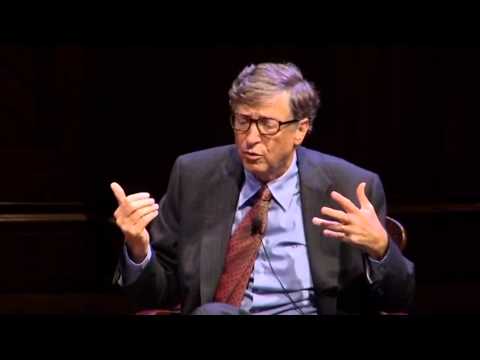
“If you're a poor child, you have fifty times more chance of dying before the age of five than a person in the rich world.”Harvard Campaign Launch Q&A, 2007 · 23:23
The lesson
The Gates Foundation model starts with choosing problems that are both severe and under-served. Gates points to global child mortality as a stark inequity, especially where poor children face far higher risks from infectious disease, and he argues philanthropy can have unusually high impact where markets and public systems invest too little123. That is why the foundation concentrates on areas like global health, where the need is large and the existing incentives are weak.
From there, the foundation tries to work across the whole chain from invention to use. Gates describes a model that funds research to create better medicines, vaccines, and other tools, works to make them inexpensive, and then partners with governments and other organizations to deliver them where they are most needed45. The logic is that breakthroughs alone are not enough; impact comes when better tools become affordable and actually reach people.
Measurement is central to this approach. Gates frames philanthropy as a set of explicit outcome bets: decide what result you want, ask how you will measure it, and then track whether the work is actually changing lives67. This pushes the foundation toward areas where progress can be seen in hard indicators such as vaccination coverage or declines in child deaths, rather than relying on good intentions alone.
That does not mean only funding easy problems. Gates emphasizes sustained focus in areas like polio, malaria, and tuberculosis, where progress can stall if support weakens, and where success sometimes requires driving a problem all the way to zero rather than settling for partial gains8910. The lesson is to respect complexity without using it as an excuse to quit; difficult problems still need disciplined measurement, better tools, and persistence7.
Finally, the foundation's decision to spend down reflects the same bias toward urgency and results. Gates says the organization is now explicitly time-limited and plans to deploy more than $200 billion over the next 20 years, based on the view that money can do more good when used aggressively on today's solvable problems rather than preserved indefinitely1112. In this model, philanthropy is not about institutional permanence; it is about concentrating resources where they can change outcomes fastest.
5 principles from Bill Gates
Choose neglected problems with extreme human stakes
Aim at problems where suffering is large and existing incentives are weak. Gates argues philanthropy has outsized value when it focuses on places and people that markets and governments under-serve, especially poor children facing preventable disease.
“If you're a poor child, you have fifty times more chance of dying before the age of five than a person in the rich world.”
Fund the full path from R&D to delivery
Do not stop at discovery or grantmaking in isolation. Support new tools, push down their cost, and build delivery partnerships so the innovation reaches the people who need it.
“Well, the Gates Foundation is fairly operational. That is, you know, we built teams that are experts on malnutrition, malaria, contraception, and we fund both the research to create new products and get them to be very inexpensive. And then we partner with governments and other philanthropies to actually deliver those, uh, to where they're most needed. Uh, likewise, in our education work, we fund a lot of R&D and then go work partner with the schools to actually try those things out. And, you know, by spending the money sooner than later,…”
Define outcomes before you spend
Start by stating the result you want and how you will measure it. This forces discipline, helps compare options, and makes it possible to learn from both success and failure.
“…what outcomes are you going for, how are you going to measure that?”
Persist on hard problems without surrendering to complexity
Some of the highest-impact problems are messy, politically difficult, and slow-moving. Keep improving tools and tactics, and avoid the trap of backing away just because the last mile is hard.
“So if you stand still, the disease will get out ahead of you.”
Use capital with urgency, not just permanence
A philanthropic institution does not need to exist forever to matter. Gates's spend-down logic is that concentrated resources used in a defined window can accelerate progress more than preserving capital indefinitely.
“…we've actually now made it specifically, uh, 20 years…”
In his own words
The quotes behind the lesson, word for word from the transcripts. Numbers match the lesson above.
“If you're a poor child, you have fifty times more chance of dying before the age of five than a person in the rich world.”
“Yeah. The global health thing was pretty straightforward. It's easy not to be aware of the the number of children who die in the ill health. You know, if you're a poor child, you have fifty times more chance of dying before the age of five than a person in the rich world. And that's partly because you're not getting the right medicines, partly because if you live in Equatorial areas, things like malaria are threatening you and not threatening the the rich countries. So the idea that that's the greatest inequity in the world, you know, jumped out at us both from a visiting Africa and parts of Asia and a numeric point of view. You know, many people think that, okay, Syria is terrible. Yes. It's incredibly terrible. But a few hundred thousand over several years is less than six million per year.”
“When I shift, the beauty of philanthropy is that it's not constrained by this profit motive. And I have to say, I was shocked at how little resources were going into helping the poorest countries. And philanthropic money spent there, if it's spent decently at all, you're always going to have at least 20 times more impact than you can have in rich countries. I mean, there's lots of rich-country philanthropy, you know, we do a lot in education, but the resources are so limited and the key public goods are so underfunded that, you know, in terms of helping all humans, that money is going to go the…”
“Well, the Gates Foundation is fairly operational. That is, you know, we built teams that are experts on malnutrition, malaria, contraception, and we fund both the research to create new products and get them to be very inexpensive. And then we partner with governments and other philanthropies to actually deliver those, uh, to where they're most needed. Uh, likewise, in our education work, we fund a lot of R&D and then go work partner with the schools to actually try those things out. And, you know, by spending the money sooner than later,…”
“…we can't do it ourselves…”
“…what outcomes are you going for, how are you going to measure that?”
“The crucial thing is to never stop thinking and working and never do what we did with malaria and tuberculosis in the twentieth century, which is to surrender to complexity and quit. The final step after seeing the problem and finding an approach is to measure the impact of the work and to share that success or failure so that others can learn from the efforts. You have to have the statistics, of course. You have to be able to show, for example, that a program is vaccinating million more... Millions more children. You have to be able to show, for example, a decline in the number of children dying from the diseases.”
“…zero is very much a magic number in, in eradication…”
“So if you stand still, the disease will get out ahead of you.”
“We need to keep doing that.”
“…we've actually now made it specifically, uh, 20 years…”
“…we'll spend, uh, a bit over 200 billion…”
Reflect
- What problem in your work is important but under-served because normal incentives do not reward solving it?
- If you had to state your desired outcome in one sentence and name two measures for it, what would they be?
- Where are you funding or supporting only the 'idea' stage when the real bottleneck is affordability, distribution, or adoption?
Check your understanding
Go deeper
 Bill Gates on Global Health Philanthropy: Spending Down the Foundation2024 · 61 min · full transcript
 Bill Gates on Philanthropy and Global Health: Harvard Q&A2007 · 55 min · full transcript
 Bill Gates on Poverty and Prosperity: Why the World Is Improving2014 · 67 min · full transcript
 Bill Gates on Philanthropy: Giving Away Wealth and Changing Systems2013 · 25 min · full transcript
 Bill Gates on Global Health Funding: Why Aid Still Matters2019 · 15 min · full transcript
 Bill Gates on India, Philanthropy, and AI: Reading, Health, and the Future2025 · 44 min · full transcript
- Why did Bill Gates choose global health for his philanthropy?
- Why is Bill Gates spending down the Gates Foundation instead of making it last forever?
- Why did Bill Gates say the Gates Foundation should spend down instead of lasting forever?
- What did Bill Gates say about philanthropy in poor countries?
- What did Bill Gates say was the most important work of his life?
- What did Bill Gates say about giving up on malaria and tuberculosis?