Climate to Zero
The goal is not smaller emissions; it is net zero at global scale.
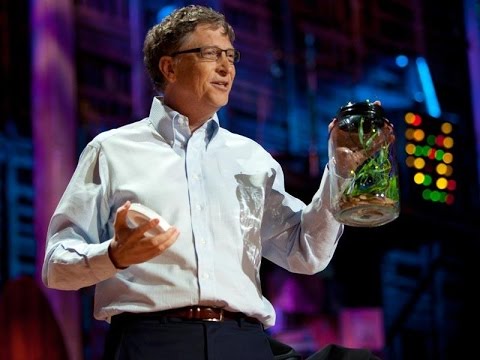
The lesson
Gates frames climate as a scale problem with a non-negotiable destination: not lower emissions, but net zero at global level. He argues that partial progress is useful, but the target has to be eliminating the emissions tied to modern life, because the world still needs energy, transport, buildings, food, and industry while avoiding climate damage12. His climate equation helps make the problem concrete by breaking emissions into population, services per person, energy per service, and emissions per unit of energy; the key insight is that at least one of these terms must fall close to zero if total emissions are to reach zero3.
A core reason this matters is justice, not just atmosphere. Gates repeatedly connects climate to the lives of poor people: energy is essential for development, yet climate damage falls hardest on countries that are least able to absorb crop loss, hunger, and instability4. He also argues that global prosperity is spreading, with more countries moving upward economically, which means the climate plan cannot depend on telling poorer countries to stay poor or use less forever5.
That is why he emphasizes the hardest sectors, especially heavy industry. Electricity, cars, and some visible consumer technologies get attention, but Gates stresses that materials like steel and cement are among the toughest parts of the problem because society needs them at enormous scale and clean substitutes remain costly or immature, as reflected in his focus on industrial manufacturing and the limits of current technologies6. Efficiency helps, but by itself it cannot solve the full problem, because demand for services and development continues.
His answer is to attack the green premium through innovation, then use policy and markets to scale what works. Gates argues that clean options often cost more at first, so brute-force adoption is too expensive; instead, public support for research, pilot projects, standards, tax credits, procurement, and other market-shaping tools can bring costs down over time78. He points to cases where early government buying helped create volume and competition, reducing costs in technologies like solar and batteries, which shows how policy can help innovation cross from lab to mass deployment8.
The overall stance is practical optimism. Gates says the world needs a plan that combines breakthroughs with deployment, and he presents climate as a problem serious enough to demand urgency but still solvable if innovation is directed at the biggest bottlenecks and backed by political action911. For learners, the implication is to think in systems: identify where emissions are hardest to remove, ask what makes clean alternatives expensive, and look for the combination of technology, policy, and demand that can move those costs down at global scale122.
4 principles from Bill Gates
Aim for zero, not just less
Treat climate as a destination problem, not a vague improvement effort. Use the full-emissions lens when evaluating plans: if a proposal cuts some emissions but leaves the core system dirty, ask what closes the remaining gap.
“…this is something that has to get to zero…”
Keep poor countries in the center of the solution
Climate strategy has to preserve the path to development, because energy and material use are tied to better lives. When you assess a policy or technology, ask whether it can work affordably for countries still building prosperity and whether it reduces harms that hit them first.
“The climate getting worse means that many years, their crops won't grow.”
Use innovation to shrink the green premium
If clean solutions cost much more, adoption will stall, especially globally. Support the mix of research, pilots, scale-up, and learning that makes clean options steadily cheaper and more practical.
“We owe the world the innovation.”
Pair technology with policy and markets
Breakthroughs do not spread on their own. Governments can help create demand and reduce risk through research funding, procurement, standards, and incentives that move promising solutions into mainstream use.
“If you gave me only one wish for the next 50, I can pick who's president, I can pick the vaccine, which is something I love, or I could pick that this thing that's half the cost with no c o two gets invented. This is the wish I would pick. This is the one with the greatest impact. If we don't get this wish, the division between the people who think short term and long term will be terrible, between US and China, between poor countries and rich, and most of all, the lives of those 2,000,000,000 will be far worse. So what do we have to do? What am I appealing, to you to step forward and and drive? We need to to go for more research funding.”
In his own words
The quotes behind the lesson, word for word from the transcripts. Numbers match the lesson above.
“…this is something that has to get to zero…”
“But the thing that triggered me to write this book was that the interest level of the younger generation has gotten very high. We saw that in the political discussions on the Democratic side. And so you've got this enthusiasm, and you've got this goal to get to zero by 2050, but there really isn't a plan. You know, people aren't aware of all the sources. They aren't aware of the need for innovations, although in different domains. I thought this was a good time to lay out some of the key metrics and how you get in that 30-year time period all these innovations scaled out.”
“This equation has four factors, a little bit of multiplication. So you've got a thing on the left, c o two, that you wanna get to zero, and that's gonna be based on the number of people, the services each person's using on average, the energy on average for each service, and the c o two being put out per unit of energy. So let's look at each one of these and see how we can get this down to zero. Probably one of these numbers is gonna have to get pretty near to zero. Now that's back from high school algebra, but let's let's take a look. First, we've got population. The world today has 6,800,000,000 people. That's headed up to about 9,000,000,000.”
“The climate getting worse means that many years, their crops won't grow.”
“…by 2035, there should be less than 10…”
“And what I found is that all the batteries we make now could store less than ten minutes of all the energy. And so in fact, we need a big breakthrough here, something that's going to be a factor of a 100 better than the approaches we have now. It's not it's not impossible, but it's not a very easy thing. Now this shows up when you try to get the the intermittent source to be above, say, 20 to 30% of what you're using. If you're counting on it for a 100%, you need a... An incredible miracle battery. Now how we're gonna go forward on this? What's what's the right approach? Is it a Manhattan project? What's the the thing that can get us there? Well, we need lots of companies working on this. Hundreds. In each of these five paths, we need at least a 100 people.”
“If you gave me only one wish for the next 50, I can pick who's president, I can pick the vaccine, which is something I love, or I could pick that this thing that's half the cost with no c o two gets invented. This is the wish I would pick. This is the one with the greatest impact. If we don't get this wish, the division between the people who think short term and long term will be terrible, between US and China, between poor countries and rich, and most of all, the lives of those 2,000,000,000 will be far worse. So what do we have to do? What am I appealing, to you to step forward and and drive? We need to to go for more research funding.”
“Yeah, so the, um, if something costs a lot more right now, you know, how do we even get started? And there, we did have some governments, Germany and Japan, who bought solar power even when it cost more. And so they got the industry going. There was lots of competition, and with that volume, the price came down. And that is such good news. You know, the lithium-ion batteries that are used in electric cars have come down in price. Not like chips, but still pretty good. Solar and wind—land-based wind—have come down a lot. So, those are components of the solution.”
“I don't just see the problem. I also see an opportunity to solve it.”
“The less we emit, the less that sum will be of c o two and therefore the less the temperature. But in some ways, the grade we get there, doing things that don't get us all the way to the big reductions is only equally or maybe even slightly less important than the other, which is the piece of innovation on these breakthroughs. These breakthroughs, we need to move those at full speed, and we can measure that in terms of companies, pilot projects, regulatory things that have been changed. There's a lot of great books that have been written about this. The Al Gore book, our choice, and the David Mackay book, sustainable energy without the hot air. They really go through it and I think can create a a framework that this can be discussed broadly because we need broad backing for this. There's a lot that has to come together. So this is a wish. It's a very concrete wish that we invent this technology.”
“We owe the world the innovation.”
Reflect
- In your field, what is the equivalent of a green premium: the extra cost or friction that keeps better solutions from scaling? What would have to change to bring it down?
- Which part of the climate problem do you naturally pay attention to, and which hard sector do you tend to ignore? Why might that bias distort your judgment?
- How would you design a climate solution differently if you started with the needs of poorer countries rather than the preferences of rich consumers?
Check your understanding
Go deeper
 Bill Gates on Zero Emissions Energy: Innovating to Zero2010 · 30 min · full transcript
 Bill Gates on Climate Disaster: How to Cut Emissions to Zero2021 · 60 min · full transcript
 Bill Gates on Optimism and Empathy: Change the World2014 · 25 min · full transcript
 Bill Gates on Poverty and Prosperity: Why the World Is Improving2014 · 67 min · full transcript
- How did Bill Gates explain the main factors behind carbon emissions?
- What did Bill Gates say about energy breakthroughs and smaller cuts?
- What did Bill Gates say he would wish for to fight climate change?
- Why did Bill Gates write How to Avoid a Climate Disaster?
- How does Bill Gates think climate solutions get cheaper?
- What did Bill Gates say about the scale of the clean energy breakthrough the world needs?