Sundar Pichai on Artificial Intelligence
Sundar Pichai sees artificial intelligence as humanity’s most profound technology shift, valuable because it can expand knowledge, creativity, and productivity if built and deployed responsibly.
- Pichai sees AI as the deepest technology shift humanity has worked on, and still in its early days.
- He believes AI matters because it can accelerate creation, productivity, and human creativity across many fields.
- He treats AI as a horizontal platform change that should improve search, software, science, and everyday products.
- He does not frame AI as replacing the web; he says search should still anchor answers in sources and links.
- He argues the central challenge is advancing AI boldly but responsibly, with safety, privacy, fairness, accountability, and public oversight.
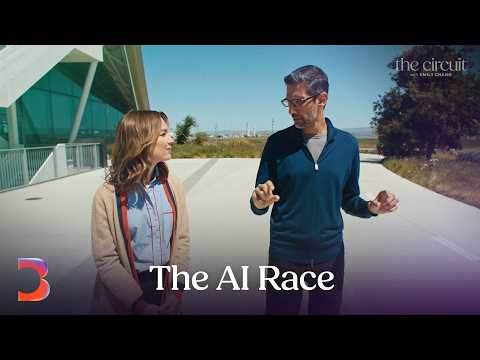
“I think part of what makes Google Search differentiator is while there are times we give answers, it'll always link to a wide variety of sources. Now we've had answers in Search now for many, many years. We are just now using generative AI to do that. So the links will live on. Yes, and, you know, I think it'll always be an important part of Search. There will be times when they want quick answers. My son is celiac, so we did a quick question to see whether something is gluten-free. We just want to know. But often it leads to more things, and, you know, then you want to explore more.”Bloomberg The Circuit interview, 2024 · 7:17
AI is, in Pichai’s view, the biggest technological shift now underway
Pichai consistently describes AI as a once-in-history technology, not just another product cycle. He places it above or alongside the biggest general-purpose technologies because it can affect nearly every field and change how people create, learn, and solve problems12.
He also stresses that this shift is still early. Rather than treating today’s systems as the finished form of AI, he frames the current moment as the beginning of a long innovation wave with much more capability still ahead456.
Part of why he thinks AI is different is that the platform itself can improve and help generate new things. In his view, that makes AI deeper than earlier computing shifts and potentially bigger than the internet itself78.
What makes AI special is its power to expand human capability
Pichai’s core case for AI is not just automation. He sees it as a tool that can multiply human productivity and unlock more creation, letting people build software, media, and ideas more easily than before10.
He often points to AI’s broad usefulness across domains. He describes it as a horizontal technology that can improve search, cloud, Android, self-driving, robotics, and scientific work, rather than living inside a single product category12.
He also connects AI to access and knowledge. He sees it as a way to bring understanding and useful help to more people, which fits his long-running focus on making information more accessible and useful1314.
He sees Google Search evolving with AI, not being replaced by it
Pichai argues that AI changes search by making it more helpful, conversational, and context-aware, but not by removing the role of the open web. He says a strong search experience should still combine direct answers with links to a wide range of sources1516.
That view goes back years in his thinking. He has long described better contextual understanding, follow-up questions, voice, and multimodal understanding as the next step in helping users find what they need171819.
He also emphasizes that Google should anchor AI-generated context in underlying sources and hold a high bar for quality. For him, AI search works best when it helps with quick answers and deeper exploration at the same time2015.
“I think part of what makes Google Search differentiator is while there are times we give answers, it'll always link to a wide variety of sources. Now we've had answers in Search now for many, many years. We are just now using generative AI to do that. So the links will live on. Yes, and, you know, I think it'll always be an important part of Search. There will be times when they want quick answers. My son is celiac, so we did a quick question to see whether something is gluten-free. We just want to know. But often it leads to more things, and, you know, then you want to explore more.”Bloomberg The Circuit interview, 2024 · full transcript →
Google’s AI strategy is to build the platform across models, products, and infrastructure
Pichai presents AI as a company-wide direction, not a side project. He says Google shifted to being AI-first years ago, and now AI is built across its products rather than confined to a lab or a single app211222.
In recent years he has described this as the Gemini era: a period where Google is pushing AI simultaneously through frontier models, consumer products, and developer tools. He highlights multimodality as especially important, with systems designed to reason across text, images, video, and code from the start232425.
He repeatedly returns to the idea that major platform shifts reward patient investment. His framing is that the companies that win are the ones that build useful things people love on top of the underlying innovation, then keep extending that foundation across many surfaces4.

“At Google, though, we are fully in our Gemini era.”Google I/O 2024 keynote opening remarks · full transcript →
Responsibility is not separate from AI progress; it is part of the job
Pichai’s position is that the danger is not simply building AI too fast, but failing to develop it responsibly. He worries about societies turning away from technology’s benefits even as he acknowledges that powerful systems can be misused or cause harm.
That is why he repeatedly calls for safety, fairness, privacy, accountability, and human oversight. He supports regulation and broader public participation, arguing that governments, companies, academics, nonprofits, and independent voices all need a role2729.
He also frames ambition and restraint as compatible. He says Google should make foundational progress toward advanced AI, but do so boldly and responsibly, which captures how he thinks innovation and governance should move together3031.
“We are committed to making foundational progress towards AGI in a bold and responsible way…”Bloomberg The Circuit interview, 2024 · full transcript →
Pichai on artificial intelligence, in his own words
“AI is the most profound technology humanity will ever work on.”
“AI is gonna be bigger than the internet…”
“We are in the very early days of the AI platform shift.”
“I think it'll unleash human creativity in a way that hasn't been seen before.”
“We are committed to making foundational progress towards AGI in a bold and responsible way…”
Where to watch
 Sundar Pichai on Artificial Intelligence: The Biggest Opportunity2024 · 132 min · full transcriptBest for Pichai’s fullest statement of why AI is historically important and how it could expand creativity, productivity, and search.
 Sundar Pichai on Future of AI: Search, Gemini, and Competition2024 · 24 min · full transcriptBest for how he thinks AI changes Google Search, Gemini, and competition while keeping links and sources central.
 Sundar Pichai on the AI Platform Shift: Search, Agents, and Glasses2025 · 41 min · full transcriptBest for his argument that AI is a deeper platform shift than the internet and what comes next in products and agents.
 Sundar Pichai on AI, Privacy, and the Internet2020 · 29 min · full transcriptBest for his clearest public framing of responsible AI, privacy, and the risk of failing to advance the technology well.
 Sundar Pichai on Artificial Intelligence: Google’s Next Inflection Point2016 · 32 min · full transcriptBest for the early inflection-point view showing how long he has seen context, voice, and machine learning as the future of computing.
 Sundar Pichai on Gemini and AI: Google’s Next Platform Shift2024 · 21 min · full transcriptBest for the concise product view of the Gemini era and how Google is spreading AI across its major platforms.
Questions people ask
- What did Sundar Pichai say about AI regulation and responsibility?
- What did Sundar Pichai say about AI-first and how Google uses AI in its products?
- What did Sundar Pichai say about the future of Google Search in the age of AI?
- What did Sundar Pichai say about understanding context in AI assistants?
- What did Sundar Pichai say about whether AI will create new businesses at Google?
- What did Sundar Pichai say about Google’s goal for AGI?
Sources
Every quote above, word for word from the transcripts. Numbers match the text.
“AI is the most profound technology humanity will ever work on.”
“AI is one of the most profound things we will ever work on as humanity.”
“To me, we are just getting started in the beginning of what I think will be a extraordinary decade of innovation…”
“We are in the very early days of the AI platform shift.”
“The thing I always think about, this is the worst it'll ever be.”
“This is the only platform where I think the actual platform, is over time, capable of creating and self-improving and so on.”
“AI is gonna be bigger than the internet…”
“I think it'll unleash human creativity in a way that hasn't been seen before.”
“AI is kind of built into all our products.”
“…to make information universally accessible and useful…”
“AI is the ultimate expression of that…”
“I think part of what makes Google Search differentiator is while there are times we give answers, it'll always link to a wide variety of sources. Now we've had answers in Search now for many, many years. We are just now using generative AI to do that. So the links will live on. Yes, and, you know, I think it'll always be an important part of Search. There will be times when they want quick answers. My son is celiac, so we did a quick question to see whether something is gluten-free. We just want to know. But often it leads to more things, and, you know, then you want to explore more.”
“That's gonna be a core design principle for us.”
“…we felt we were at an inflection point…”
“Understanding context is very, very hard…”
“Understanding context is very, very hard, right? And I think, as humans, we do a very, very good job of it, and, you know, computers are very, very good at certain things, but what's changing, and this is why a lot of us who work in this field are very excited in the last, uh, two to three years, is we now believe we can start doing the kinds of things which are much more intelligent and, you know, understanding context, understanding the situation, being able to understand who's asking it, what's appropriate, are there others listening to it—these are all important things. And I think computing is just beginning to address those things.”
“Look, we are giving context around it, but we are still anchoring it in, you know, the sources we find, you know, but we've always felt a high bar, you know, in Google. I mean, last year when we launched AIO views, I think, you know, people are adversely querying to find errors and the error rate was one in 7 million for adverse real queries. And so, but that was a big, but that's the bar we've always operated as a company. And so I think to me, nothing has changed. Like, you know, Google operates under a very high bar. That's the bar we strive to meet , and you know, our search page results are there for everyone to see. But that comes that natural accountability, and you know, we have to constantly earn people's trust. So that's how I would approach it.”
“Around that time, you know, when I became CEO, I kind of pivoted the company to what we call this AI-first approach. I just feel like no difference from when the internet came or desktop to mobile. It's an even bigger transition. When I fast forward to now, AI is kind of built into all our products. You know, even if you take search, the quality improvements we've gotten by now being able to understand voice, video, images, text, both from an input standpoint and also looking at the information standpoint and putting it all together, it's pretty profound. Conversational AI, I don't think is fully transformed yet. By AI, we are still in the handcrafted stage of…”
“Yes, you know, look, I, I, I deeply care about building, seeing the journey through on AI, right? It's what in 2015 I set the company to be AI first. It's why I was excited to be a CEO too, and I think the next decade is going to be the most interesting there. You said you want to see it through? Yeah.”
“At Google, though, we are fully in our Gemini era.”
“A frontier model built to be natively multimodal from the very beginning…”
“Today, all of our two billion user products use Gemini.”
“…we have to be very responsible…”
“…privacy cannot be a luxury good…”
“We are committed to making foundational progress towards AGI in a bold and responsible way…”
“But I think if you define AGI as AI becoming capable across a wide variety of economic activity and being able to do it well, I think that's one way to look at it. So Google's gonna get us to AGI? You know, we are committed to making foundational progress towards AGI in a bold and responsible way. And so, you know, I'll focus on the effort to do that and do that well.”
How this guide was made: drafted with AI from the full transcripts of the recordings cited, then checked: every quotation must match a transcript word for word and be the speaker's own words, and an independent review gates accuracy. Methodology and corrections.