Stanley Druckenmiller on Macro Investing
Macro investing, for Stanley Druckenmiller, is reading liquidity, policy, and market internals together, then betting aggressively when the odds and timing line up.
- He is a market-driven macro investor, not a top-down economist.
- Central banks and liquidity drive the overall market more than headline earnings do.
- He looks for early signals inside markets, especially credit, cyclicals, defensives, and leading industries.
- The biggest edge is sizing and conviction once the setup is clear.
- Macro requires constant adaptation because policy intervention and algos have distorted old signals.

Macro starts with markets, not with economist forecasts
Druckenmiller approaches macro as a market practitioner first. He explicitly frames himself as someone who reads markets rather than someone who begins with academic models or economist-style forecasts, and he pays close attention to what price action and company-level information are saying about the economy in real time1.
That leads him to favor what he calls the inside of markets: leadership, internals, and relative performance. In his framework, official statistics can tell you where the economy has been, but turning points often show up first in the behavior of stocks, credit, and other liquid markets2.
This also explains why he tries to think ahead instead of investing in current conditions. His macro lens is explicitly forward-looking, centered on where conditions may be 18 to 24 months from now rather than on what today’s data says at face value3.
“…the inside of the stock market…”Economic Club of New York interview, 2019 · full transcript →
Liquidity and the Fed are the main drivers of the big picture
A core Druckenmiller belief is that broad market direction is dominated by monetary conditions. He argues that central banks, especially the Federal Reserve, matter more for the overall market than backward-looking earnings reports do, because liquidity sets the backdrop for risk-taking across assets45.
He is deeply skeptical of prolonged easy money. Across interviews, he argues that suppressed rates, heavy intervention, and balance-sheet expansion distort price signals, encourage leverage and malinvestment, and make markets harder to read cleanly7.
His policy preference is not static dovishness or hawkishness, but restoring market discipline and optionality. He has argued for gradual tightening when money is too loose and criticized frameworks that overmanage expectations or try too hard to engineer outcomes8.

“Focus on the central banks and focus on the movement of liquidity.”The Investors Podcast, TIP232 (2018) · full transcript →
The best macro signals often come from market internals
Druckenmiller’s process relies on observing where stress or strength is showing up beneath the surface. He has emphasized the importance of the inside of the stock market and, in particular, whether economically sensitive groups are outperforming or defensive areas are taking over, because these shifts can reveal changes in growth and risk appetite before headlines do2.
He also watches sectors and industries that tend to lead the cycle. Housing, trucking, retail, banks, and other economically sensitive groups can function as early-warning systems for shifts in demand, credit, or financial conditions, which is why he often talks about them as practical macro indicators rather than just stock-picking domains29.
At the same time, he believes some classic signals have become less reliable because central-bank intervention and bond buying have weakened normal market relationships. That has pushed him to adapt, leaning more on equity internals and other cross-checks when older macro indicators are distorted11.
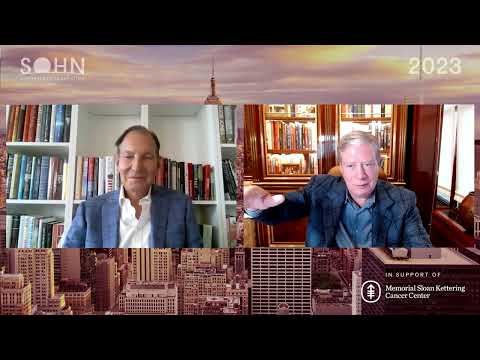
“I think it's naive to not be open-minded to some sort of possibility that affects the banks…”Sohn conference conversation, 2023 · full transcript →
Sizing is the heart of macro investing
For Druckenmiller, being right is not enough. The real difference comes from how much capital you commit when the opportunity is exceptional and how quickly you contain damage when it is not12.
He repeatedly says sizing is most of the game. When the thesis, timing, and market action line up, he wants to increase exposure meaningfully rather than nibble, which is why concentration is central to his style131415.
This approach requires decisive execution. He describes his edge less as superior intellect than as the willingness to act with conviction once he sees the setup, which is why macro for him is not just analysis but also trigger pulling16.
Flexibility matters more than consistency of opinion
Druckenmiller treats open-mindedness as a requirement, not a personality trait. He warns that macro environments change, and investors have to be willing to abandon old models and even their own strongest prior views when the facts change1711.
That flexibility shows up in both forecasting and positioning. He can hold strong views, such as skepticism about soft landings or concern about banking stress, while still acknowledging that timing is uncertain and that the right trade depends on the evolving policy and liquidity backdrop18199.
It also means exiting without attachment. If the reason for the trade is gone, he believes the position should be closed regardless of cost basis or ego, because preserving flexibility is more important than defending a past decision2021.
“I would say the most important answer I give that is keep an open mind…”Sohn conference conversation, 2023 · full transcript →
Druckenmiller on macro investing, in his own words
“I'm more of a market animal than an economist…”
“Earnings don't move the overall market; it's the Federal Reserve Board.”
“Focus on the central banks and focus on the movement of liquidity.”
“You have to constantly innovate and not just be a slave to past models.”
Where to watch
 Stanley Druckenmiller on Macro Investing: Liquidity, Rates, and Signals2018 · 31 min · full transcriptBest short statement of his macro framework: central banks, liquidity, rates, and why broad markets respond to them.
 Stanley Druckenmiller on Macro Investing: Fed Policy, China, and Markets2019 · 61 min · full transcriptBest explanation of using market internals and the inside of the stock market to read the economy.
 Stanley Druckenmiller on Macro Investing: Inflation, Recession, and Signals2022 · 68 min · full transcriptBest on how he connects inflation, recession risk, adaptation, and sizing in real macro decision-making.
 Stanley Druckenmiller on Monetary Policy: Free Money Distorts Markets2018 · 85 min · full transcriptBest on why free money, balance-sheet expansion, and algos have made old macro signals harder to trust.
 Stanley Druckenmiller on Macro Investing: Inflation, Fed Mistakes, AI2023 · 52 min · full transcriptBest recent summary of his market-first mindset, forward-looking process, and concern about policy mistakes.
Questions people ask
- What did Stanley Druckenmiller learn from George Soros about investing and position sizing?
- What did Stanley Druckenmiller say about making money in chaos?
- What did Stanley Druckenmiller say about the right investment posture when markets are volatile?
- What did Stanley Druckenmiller say is the biggest mistake investors make?
- How does Stanley Druckenmiller decide when to sell a loser?
- What did Stanley Druckenmiller say he lost as he became a more experienced investor?
Sources
Every quote above, word for word from the transcripts. Numbers match the text.
“I'm more of a market animal than an economist…”
“…the inside of the stock market…”
“I have found it's very important never to invest in the present. Always try and envision the situation as you see it in 18 to 24 months, and then see if you feel things would be different than they are now. Would security prices reflect that? I think that's probably the biggest mistake investors make is they invest in the present rather than forward looking and looking where the puck's going instead of where the puck is.”
“Earnings don't move the overall market; it's the Federal Reserve Board.”
“Focus on the central banks and focus on the movement of liquidity.”
“If I were trying to create a deflationary bust, I would do exactly what the world central bankers have been doing the last six years.”
“I would raise rates every meeting as long as I could…”
“I think it's naive to not be open-minded to some sort of possibility that affects the banks…”
“You have to constantly innovate and not just be a slave to past models.”
“It's not whether you're right or wrong, it's how much you make when you're right and how much you lose when you're wrong.”
“…sizing is probably 70 to 80% of the equation.”
“…when I'm hot, I'm supposed to turn the dial way up.”
“I think diversification is really overrated…”
“My advantage is not IQ. It's trigger pulling.”
“I would say the most important answer I give that is keep an open mind…”
“…betting on a soft landing to me is a real is a real long shot.”
“…this is easily the most challenging period I've had a confident forecast in my career…”
“If the reason I bought a stock is no longer the case, I don't care what I paid for it. And if I bought it at 60 and it's 50, because the markets discovered the problem before me, I have no emotion whatsoever. Soros was the same way. I didn't really learn it from him, but it was certainly reinforced.”
“Just get over it and move on.”
How this guide was made: drafted with AI from the full transcripts of the recordings cited, then checked: every quotation must match a transcript word for word and be the speaker's own words, and an independent review gates accuracy. Methodology and corrections.