Stanley Druckenmiller on Macro Investing: Hard Landing Risks, AI, and the Dollar

What Druckenmiller talks about
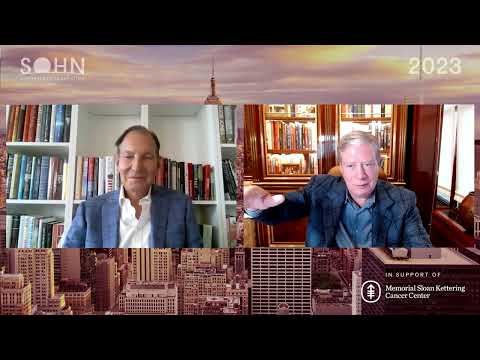
Stanley Druckenmiller joined a panel conversation with Kiril Sokoloff at Sohn 2023 in 2023, discussing hard-landing risks, the macro outlook, AI, the dollar, and capital preservation.
Also known as: Sohn 2023; Kiril Sokoloff in conversation at Sohn 2023.
Stanley Druckenmiller says the current macro environment is the most difficult forecasting period of his career, driven by the post-COVID bubble, rapid Fed tightening, and signs of stress in banking, real estate, trucking, and retail. He argues that a soft landing looks unlikely, though he is careful about timing and says the outlook could still change depending on policy response.
He walks through what a hard landing could mean for profits, unemployment, bankruptcies, inflation or deflation, and asset classes. He highlights commodities, housing, biotech, AI, and gold as possible opportunities, while stressing that position sizing and capital preservation matter more than being fully exposed at the wrong time.
A conference host introduces the session, then an interviewer leads the conversation while Druckenmiller speaks at length.
In his words
“This is easily the most challenging period I've had a confident forecast in my career”
“Don't fight the Fed”
“I think it's naive to not be open-minded to some sort of possibility that affects the banks”
“The curse of the reserve currency”
“I would say the most important answer I give that is keep an open mind”
Key points
- He sees the current macro setup as unusually hard to forecast, with COVID distortions complicating every signal.
- He argues that years of extremely easy money created a broad asset bubble, and that the Fed’s rapid tightening is now testing the system.
- He thinks a hard landing would likely mean lower corporate profits, higher unemployment, and more bankruptcies, though the timing is uncertain.
- He warns that banks are already under pressure from balance-sheet mismatches and commercial real estate exposure.
- He says commodities, housing, biotech, and AI could be major winners if the cycle turns, depending on policy response.
- He is skeptical that the dollar’s reserve-currency status is sustainable if U.S. policy remains reckless.
- He says the U.S. fiscal path and entitlement burden are existential problems that must eventually be addressed.
Full transcript: Stanley Druckenmiller, Sohn 2023 conversation with Kiril Sokoloff
For those that missed it earlier, this year's SEWN corporate sponsor Tegus has come up with a fun idea for SEWN attendees. They've offered to source a custom expert call for anyone in this SEWN audience, which you can do at tegus.com. SEWN, hopefully some of those calls will be used to investigate the ideas that have been presented so far today. We move now to an incredibly interesting interview. Stan Druckenmiller is the founder, CEO, and chairman of the Duquesne Family Office. He's one of the most successful and legendary investors of all time, with an incredible investing track record across decades and through a variety of market environments. He's also a student of history, and I'm sure that his ideas today will be sobering, informative, and balanced. Sam Altman said
earlier that he tries not to make macro predictions, but Stan is in that business, so I expect some macro thoughts that will leave us all thinking. Stan is being interviewed by Carol Sokoloff, the founder of 13D Research and Strategy. Carol too is a student of markets and history, and brings decades of perspective, making him the perfect person to steer the conversation and get into the most important topics with Stan. Gentlemen, over to you. It's always such a great pleasure to be with you. I can't think of anyone in the world I'd talk to you right now. Last year, you told me you thought the U.S. recession would arrive in the last half of '23 or early '24, but he recently told me that
he brought your recession forecast forward. You're hearing lots of anecdotal information from the CEOs you talked to — problems in trucking, problems in retail, obviously credit contraction issues — and you believe that the consensus of a soft landing is very unlikely, and you rate the probabilities of a hard landing as wide. After all, how could we not have a hard landing after 11 years of the greatest monetary stimulus in U.S. history, a 500 basis point increase in short rates over the past year, the developing real estate
crisis in commercial real estate, regional banks have 33 percent of their allowance in that sector, and the bursting of the everything? Could you please elaborate on this? Thank you, Carol. Always good to see you. You conveniently left out part of the punch line, which was when we talked, I told you that I've been doing this for 45 years. I have to make economic forecasts for a living, and this is easily the most challenging period I've had a confident forecast in my career. You've just articulated some of the
reasons — the extreme monetary policy and then the abrupt change — but COVID figures kind of mess everything up. I'm trying to figure out what the momentum coming out of COVID is — is just that and is real or is not real or sustainable or it's not sustainable. Then you go through the Ukraine war, then you've got the whole China reopening. So I want to qualify anything I say, saying in terms of confidence — it's not as much as I would usually have; not that economic forecasting is
an exact science anyway, but we do know a few things. Thanks to you — it was your recommendation — I read Edward Chancellor's *The Price of Time*. As you know, I've been saying for years that my observation was the worst economic outcomes tended to follow asset bubbles. I was only looking at the past hundred years or so, and Edward Chancellor's book, and in a real tour de force, describes how this has been going on for over 500 years and basically every time you've had interest
rates below two percent going back 500 years, it's generally been followed with difficult economic times. So if you look at the current menu, I think it was actually just a little over two years ago I went on national television and said we had monetary policy that was the most reckless and extreme relative to the economic circumstances I had ever seen. And at that time, inflation was two and a half percent, you had a booming economy, you were coming out because of COVID, and it was clear both
vaccine that we were on our way to maybe the most rapid recovery I had seen in my lifetime. I was not surprised about a year later when inflation reached nine percent. I was not surprised that specs went crazy, Bitcoin went crazy, Dogecoin went crazy, equities went crazy. What I was surprised by was that for the next year, while all that happened, Jerome Powell's Fed continued to have their foot on the gas. They continued to buy 120 billion
dollars a bond a month while rates were zero. This obviously led to everything I described then. Realizing they had probably made the biggest mistake in the history of the Fed, they slammed on the brakes. They've raised rates 500 basis points in the last year. We know historically two things, which you've already articulated. Number one, the worst economic outcomes tend to follow too easily engineered asset bubbles, and number two,
big maximum, my business: don't fight the Fed. So I'm sitting here staring in the face at the biggest asset, and probably the broadest asset bubble, forget that I've ever seen or ever studied. It went on for 10 or 11 years and then it's the grand finale. The government spent 5 trillion on COVID, the Fed financed 60 percent of it, and as I just described now, we now have a big hike in interest rates. It's hard to look at that constellation of factors and know that we've only had a few soft landings since 1950. All of them were
preceded by what I would call proactive rather than reactive Fed policy. I believe we're going to have a soft landing. One never knows, but if you're just looking at the odds, they're very tough. In terms of the timing, I have left much less certainty on that than I do on whether we're going to have a hard landing or a soft landing. The timing is difficult, but I will say you've already noted in our shop we tend to use anecdotal information a lot. It's somewhat mixed. Housing, which has tended to lead historically, is actually fairly fairly robust.
Um, travel, restaurants, stuff like that is fairly robust, but other stuff, um, trucking, which has been a guiding light for my firms in terms of economic forecasting with a six to eight month lead time, um, actually since I got in the business is extremely weak. We're hearing bad, bad anecdotes from retail, and then of course you have the—you've already mentioned it—the banking problem. We always knew, um, given what I've already described, there are going to be bodies out there. When you have free money, um, people do stupid things. When you have free money for 11 years, people do really—
Stupid things. So there's stuff under the hood, it's starting to emerge. Obviously, the regional banks recently, we had Bed Bath & Beyond, but I would assume there's a lot more bodies coming. The regional banks—the median regional bank has 43 percent of their, um, loans in commercial real estate. About 40 percent of that is office. As you know, we've had this huge change in lifestyle, um, due to COVID. Number one, the great resignation, but number two, people are going to the office. So we actually have a higher vacancy rate than we had in 2008. So I put all that together and I look also at the inverted yield—
Curve. The timing has always said sort of third to probably fourth quarter of this year to first quarter of '24. But the recent anecdotes, the banking problems, I wouldn't be surprised if the bean counters a year from now, as they tend to do backward looking, say the thing started sometime in the second quarter. I don't know that, but I do this for a living, so I gotta have a forecast. Well, thank you for that, and given all the uncertainties and the difficulty of happening, having an addiction, what is a hard landing look like?
And where are the greatest risks, and how do you best mitigate those things? What's the outcome? The stagnation or deflation, or a combination of the two? But we spoke about this a year ago—I argued that $18 trillion in sovereign credit with the negative yield and interest rates at 5,000-unit-low 5,000s was a really deflationary extreme. On the other hand, for years you've argued that the surest way to create deflation is to build an asset bubble and then burst it. And we're the fourth great super bubble of the last 100 years. So how does this end, and what are the implications of another—
Round of massive monetary stimulus? Well, the easy answer to your question, and the most truthful one, is I don't know. Um, but I'll give it a shot. First of all, when I talk about a hard landing, I'm talking about something, albeit starting from near record margins, it probably encompasses a say, a 20 to 20 percent plus—with an emphasis on the plus—decline in corporate profits. Um, unemployment probably going up from the 3.4 right now to something above five—
Um, probably a number of increases in bankruptcies, which as you know, Carol, are astonishingly low given that we've been in one of the most disruptive economic periods since the 1880s. And until recently, there have been basically no bankruptcies, and they're nowhere near where they were in 2008. Um, in terms of inflation or deflation? Wow, that is really hard. Um, two years ago I was pretty confident inflation was going to go up and go up materially. Now—
It's funny, uh, we had a staff meeting last week, and I said I could make a case in three years for inflation being an eight, or I can make a case for deflation. That's kind of a— that's kind of a wide range in terms of giving an answer, but I would say, um, the hardest thing looking at all this is sort of looking at the money supply. So Ed Heim, who I have unbelievable respect for, has pointed out that we have the most rapid shrinkage in the money supply we've ever had. But it's not that simple because the money supply grew in the high 30s, around 40 percent a few years ago. So if you—
Look at the stock of money, it's still extremely high. So if you make this big mountain and you just come down a little like this, um, yes, the year-to-year-over-change in the money supply is like minus six percent, but there's still a lot of liquidity out there. I think Jamie Dimon said a year and a half ago there was like two and a half trillion in excess deposits, uh, and savings. Uh, we've worked probably a trillion, a trillion and a half of that out, but there's still a stock out there. So trying to time this is difficult. But putting it all together, giving anecdotes, given the fact that we are on our way—
With long and variable lags, we're already a year into it. I would guess inflation will probably come down into the three, three and a half percent range in the next six to nine months. And that's when it gets really hard, because then you're asking me to predict what the Fed will do. And I just told you I was astonished at what the Fed response was in 2000 and 21 and even in early 2022. And in case no one knows, next year is an election year. If they act like Arthur Burns when it goes down to three or three and a half percent and you haven't had enough time where inflation is down and they don't—
And they haven't slayed the dragon, that's where I could see a few years out sort of an inflationary, probably with an emphasis on the stag part—a stagflationary environment. Um, or I am haunted by the previous things I've said and the fact that we've had this massive asset bubble. If you burst it, um, there's a possibility that they can't put Humpty Dumpty back together again. If there's one thing about the consensus that I'd say I'm on the other side of, and I want to be careful with my words here, um, it's this constant repeating that—
This looks like nothing like 2008 or 2007. First of all, those saying it, I don't remember them predicting in 2007 what was ahead of them, and I don't remember people saying the banking system was that weak going in. Um, I am not predicting something worse than 2008, so I don't want to see headlines tomorrow that I said something worse than 2008 is coming. But I think it's naive to not be open-minded to some sort of possibility that affects the banks. They have got themselves in a balance sheet problem.
Um, before the loan losses have started because of, um, obviously the mismatch of liabilities and assets with treasuries on their balance sheet, they're basically holding stuff yielding two, two and a half percent that their cost of funds is five percent on. So, before we even get into an economic contraction, many of the banks already have impaired balance sheets. If you pile on, um, losses in commercial real estate, credit card losses, the stuff that normally happens in recessions, and you take the fact that we have had this big asset bubble going into it, and you take the fact that we just had the most rapid increase in interest rates
from the bottom in history, I think it's just naive not to be open-minded to something really, really bad happening again. It is not my forecast, but as a risk manager, it has to be part of my matrix and my equation and thinking about it. Absolutely. Well, let's, let's go down that train of thought. In a hard landing, what asset classes would perform best? And of course, during the, uh, the time of the Nifty Fifty, seventies, as that bubble burst in 72-74, these so-called basic industry stocks went flat, didn't get anything wrong, and once the Fed started cutting and cutting
you know, in 75, they, uh, absolutely soared. Likewise, during the early 2000s, the internet bubble burst. Commodities and commodity equities, especially oil, held up well, and of course, were the leaders in ensuing decades. So the natural inclination is to reduce exposure to commodities if a hard landing were coming. But history shows that that doesn't always work. So as you're doing your thinking, Bob, how do you evaluate how much exposure to have in these sectors and what events or market action would make you want to take a very large position?
Well, you notice the period you went right to was the period I just also mentioned, which was the Arthur Burns reign with the OPEC increase in 1973, and I think oil went up 400 percent and then Burns taking his foot off the brakes too early, obviously chemicals, oils, stuff like that. And it's sort of a wonderful period. I don't think this is all that different. Again, it's going to depend a lot on government and policymakers' response if we get a hard landing. But one would think
coming out of it, um, there are going to be some great commodities. Copper is in the tightest position, well, frankly I've ever even studied. I'm actually afraid to have a meaningful position in it at this point as we approach the hard landing, um, only because I'm not an idiot and I know what happens to the cyclical factors as a hard landing starts. But coming out of it, um, given the move toward EVs, um, given the usefulness of it and infrastructure spending, which I think a lot of government policies will try and encourage on their way out,
um, it's hard to believe copper won't be a huge beneficiary. The question is, um, when am I supposed to buy it and how big is the exposure? And a lot of how big I would get a position like that again will be policymakers' response if we even get a hard landing. This isn't a foregone conclusion. As I said earlier, this is not an easy forecast place to forecast. The other interesting place, um, is the U.S. housing industry because housing has obviously gone down dramatically, um, given the 500 basis point increase in
interest rates. But we, unlike '07-08, we actually have a structural shortage in single-family homes going into this. So if things got bad enough, I could actually see housing, which is about the last thing you would, you would think of intuitively, could be a big beneficiary on the way out. And then, um, I would say there's always growth, and this is really hard to figure out which names, but biotech has been a big underperformer in the last three to five years, and there are tremendous things
going on in cancer and other areas. There's an article, um, I guess it was in The Economist last weekend about, um, new viral drugs using viruses to conquer bacteria. So that would be a fruitful area. And then, of course, there's AI. Um, I would hope that I haven't been one to buy into fads historically. I played some Bitcoin at the bottom but never really got too, too worked up about blockchain. Um, I did, I did buy the top in, uh, 2000, um, in an emotional moment in the tech
bubble after having sold it. But, um, I actually think, um, yeah, I think is very, very real, real and could be every bit as impactful as the internet, literally, um, going forward, and it could be a beautiful opportunity in a hard landing just like '01-02 were a beautiful opportunity when the tech bubble burst going forward for companies who benefit from the internet. Um, AI could be there. It's funny, um, my firm has only been able to participate in AI by owning Nvidia and Microsoft
and it's not even clear to me, and this is kind of, this is kind of out there, Carl, but it's not even clear to me if we had a really bad recession that Nvidia would even go down. Um, it's kind of a stupid statement, um, giving them multiples on it. But if they bought staples historically in recessions, why wouldn't they grow a company that's obviously going to grow very rapidly? So those are just some interesting thoughts. I mean, we own, we own gold and silver right now. They historically have not done well in hard landings.
But given the, it looks to me like the monetary and the fiscal authorities are kind of at the end of their rope. And given the fact that other countries have decided, particularly autocracies, not to hold their reserves in dollars, I'm betting for the time being, against the history of the performance of gold and hard landings. I could be wrong, and then don't go out and buy gold. I could change my mind in a week or two, folks, but those are just some thoughts to it, to a very hard question. I would say the most important answer I give that is keep an open mind and see how the authorities react to this over the six to nine months because
they could give you very different outcomes, but be open-minded to your question. We're given the boombus that the Fed has created for decades, the free money of the last decade, the excessive post-coded period, and now the risk of a hard landing. If one were to, do you think the independence of the Fed is in jeopardy, and would it be a fatal blow to the utility case for simple facts? You asked really hard questions, Carol.
Um, I think the Fed's independence will survive. I will say it'll be the most risk of that independence that I will have seen in 50 years, so it's not a slam dunk. I think there's a five to ten percent chance if the hard lending got really bad, and people looked back at the record of the Fed the last five or ten years. You already hear people screaming about 500 basis points and the Fed has gone too far and what are they doing. And this is with unemployment at 3.4
percent, 2024, an election year. If things get really bad and they look at the actual record, the guy blew 40 years of credibility in terms of disinflationary mindset and then, like a reformed smoker, maybe if we have a hard landing people say he overadjusted and was wrong again. It's going to come under attack. I hope and believe their independence will survive, but it's not an unreasonable question. I believe certainly isn't. Moving on to
what the government will do in a recession in terms of stimulus, is it possible that we've seen literally the end of the credit cycle and then no more balance sheets left too? Right, it's possible, but these guys never cease to amaze me. Yeah, I don't think they'll go down without a fight. We have, we come into this with fiscal challenges completely unlike any time we've ever been in this situation before. I remember,
in '79 and '80 when Reagan rode in on his white horse, you know, the market was eight times earnings, prices were depressed, and balance sheets, particularly the governments, were nowhere near the situation they're in now. So there's not the room to move in on the monetary or the fiscal front in a reasonable manner like there's been going into other cycles. We basically wasted all our bullets amazingly in the last few years in an economic expansion. But, you know, the government can
always print money and try. Look at what they did in Japan. I mean, they tried everything and it didn't work. The question is, are we there? The answer is, I hope not. Going back to Edward Chancellor and you were kind enough to, with Scott Besson here in my branch west in January, and you asked the question, who's our current society so addicted to government and central bank, and asked him that it's impossible to work our way out of this, and you asked Edward when you thought it
was when past the point of no return, and he said he thought we had. What do you think? I would never just categorically say we pass a point of no return, but you know, I was worried about our fiscal situation so worried about it that 12 years ago, I went out and tried to convince young people on a college tour of what lay ahead of us and was worried about the 2025 to 3035 period because of the demographics of the situation and what might happen with interest expense.
Um, frankly, the period since then has been worse than I ever imagined. So, I don't want to go quite so far as Edward went, but let me just say I'm concerned. I don't know. I'm concerned. It is amazing how America has this culture that always seems to respond and come back, and maybe with a hard landing and a flush out and just a terrible recession that brings back the values and the culture we've all had, we come out of this on the other side. But I mean, it's a scary cocktail that we're
being presented with. Yeah, yeah. I know. So looking at how you navigate these tricky markets, and you've been saying for a year that being short is very dangerous because of these brutal bear market ballots, but if you're a standard long-short hedge fund, how do you position yourself? Oh, Carol, I like—I like concentrated bets. I like fat pitches and then the swing big. And I also like when you don't see a fat pitch,
stand there and let the pitches go by. Two years ago, two years at 15 basis points with money growing at 40 percent, money supply growing at 40 percent, that was a fat pitch. Your risk-reward was maybe if you're dead wrong, the two-year yield goes from 15 basis points to 10 basis points. I thought at the time if I was right, they would go to 200. I have to admit I didn't think they were going to go to 500 in a year. I didn't think the Fed had it in them. I don't see a pitch like that out there right now. I was also very negative on the stock.
Market, um, and I'm not positive on the stock market, but we've come a long way. I'm afraid of the authorities, um, and if I liked the stock market, you know, I would be exposed, and I'm not exposed to it. So my advice would be to a long-short hedge fund: keep your gross low, be open-minded, and if we get a hard landing, um, there are going to be unbelievable opportunities, and I don't want to miss those opportunities by blowing my money now and having some 20 or 30 percent loss where my head is all screwed up.
When those opportunities present themselves, so I'm happy, um, with, with a, with a portfolio right now that is not net short or not in that long, and only about 60 percent gross, because funny things happen. When you need chaos, you know, the playbook I've always used if I expected a bad economic outcome is to own treasuries. Well, with, with 10-year yielding 350 or wherever it is today, um, and Fed funds at five, that's not exactly a fat pitch. What if you're wrong? Um, and what if, what if the Fed panics?
Can you get an inflationary outcome? So that asset class is sort of off the table. Um, we can talk about the dollar in a few minutes. I don't have some massive short dollar position. I may have been a little misinterpreted, uh, in an interview I did a week ago, but it is a position that will move the needle at my firm. Uh, I don't know how long I'm going to stick with it, but that, that is something we're doing. But for, for long-short guys out there, I would say you're going to have unbelievable opportunities in the next couple years. There's a lot of dispersion, um, within industries, and just make sure, just make sure to preserve your capital.
Until they present themselves, and I wouldn't go crazy on the short side for that reason either. But I said, so let's come back to a point you raised earlier and go into more detail on it, and that's the U.S. fiscal situation. So the first quarter of this year we saw the third largest deficit in history, uh, exceeded only by the COVID quarter and the TFC. And what happens in a recession or hard landing can be deficit. And the U.S. didn't extend the charities. We would have had a chance. And now, uh, interest, uh, federal debt is running at 600 billion annual rate.
Even during 2018, when unemployment hit a 50-year low, the deficit never even fell below five percent. And then in the post-COVID boom, which you referred to as being something you've never seen before, the US government ran a deficit of over a trillion, and never in history has a boom economy produced the worst fiscal result. There's a lot of talk about the destiny, but your concern for years has been the net ability of this entitled expense, and by some estimates, the present value of undefined government liabilities is its highest: 200 trillion. And one CBO study shows that
entitlements plus net interest will cost 100 percent of taxes in 2040. So we're all out. Your thinking on this, which you've been talking about for a long time? Well, first of all, the debt ceiling debate is really depressing. Um, look, I hope, um, we don't have a technical default. I think it would be stupid. I think it would be a market event. I think it would be a problem. But it's just amazing—all the catastrophic forecasts from government officials and others and
the focus on the debt ceiling. Um, I gave a speech at USC last week, and I said all this talk about the debt ceiling is like sitting on the Santa Monica Pier, and you've got a 30-foot wave coming in, and you're worried about the Santa Monica Pier being damaged, um, but, you know, 10 miles out is a 200-foot tsunami. Um, and that's kind of the situation here. And to some extent, it's discouraging that the Republicans have given the Biden Administration the debt ceiling to even talk about, because
it enables them to talk about a responsibility. And the real problem is not the debt ceiling is a market event. It wouldn't be—it wouldn't be pleasant, it would be stupid, but the other thing is an existential threat to American capitalism. You just mentioned in 2040—that's not that far away, folks. I mean, think back 17 years. 2006 doesn't seem that long ago. That's 2040. And in 2040, um, entitlements plus interest expense using CBO estimates, which I think are ridiculously low on interest rates, if
we're in that situation, um, are greater than—that's when they cross, become greater than taxes. In 2052, just 30 years using their projections, it's at taxes—it's 117 percent of taxes. And we have an 11 deficit. Assuming a four percent interest rate will give—if you have that situation, interest rates aren't going to be four. So the most annoying thing is probably the Republicans caving in, which they probably needed to if they want to keep their jobs. On the entitlements, look, Jesse James: why do you rob the banks? Because that's where the money is. There's no money
except entitlements. That's where it is. We are absolutely going to cut entitlements in this country. It is a lie, and it is a fantasy to say we don't have to cut entitlements. The problem is we're either going to cut them now, or we're going to cut them later. But if we cut them later, because we will have waited, the interest expense, which is already set under CBO to go from 8 to 27 percent of GDP, will go much, much higher. Um, so it's a choice, and I don't think it's a hard one, because they say how bad it would be for current seniors if we were to do something entitlement. Well, what about future seniors? Why should current
Seniors get a dollar or 100 of a loaf, and future seniors get zero. It makes no sense to me, and until we deal with this, it's going to squeeze out everything else. It's going to squeeze out government investment, it's going to squeeze out private investment, and it's going to have terrible economic consequences. It's just extremely disheartening to watch. Well, Washington Macaron trying to resolve it and paying, he's going through his Harbinger. Well, that's Macaronas, that's quite interesting, and I learned something when I was doing the
uh, preparing the speech for USC because I knew we were in bad shape. The economists have something they call the fiscal gap. That's the amount you would have to raise taxes today to maintain the generosity that you've promised future seniors. And in the United States, that's 7.7% of GDP. What does that mean? That means if you wanted to fix this situation today without touching entitlements, you'd have to raise taxes 40% tomorrow morning and keep the mayor forever or cut spending tomorrow morning by 35% and keep the
mayor forever, although of course it's worse than that, because that would cause the economy to go down and actually tax revenues go down, blah, blah, blah. What was astonishing to me is our fiscal gap is 7.7 percent. France, France, the poster child for social welfare and all that stuff, their fiscal gap is 2.4 percent. So it's less than a third of ours and they're addressing the problem. It's just, it's frankly amazing, really, it's lack of leadership. So this obviously leads us to ask about the dollar, which you referred to.
And the dollar could certainly fall 25 percent to reach equilibrium, but there are other factors that could make it worse. After the freezing of Russian foreign exchange reserves, there's been steady liquidation of barn Central Bank holdings. Even France has reduced its treasury by 25% since March last year. The weaponization of the U.S. dollar is having dramatic consequences. And now you have the possibility that China could continue to grow while the U.S. is in a hard landing. And this, this brings me to one of your favorite themes, and that's the curse of
the reserve currency. So please give me your your outlook for the dollar given everything we were talking about and explain what you mean by the curse of the reserve currency. Well, I think most of the audience has heard of the resource course. If you have oil or some great metal onto the ground, the population doesn't have to work very hard and there's not a lot of innovation going on. So the economy never really innovates and grows dramatically and does the right thing. The best
probably way to explain the resource course is to take the opposite, and that's Israel. They have no resources, they've dramatically outperformed the rest of the Middle East, who has all the resources. The reserve currency is an unbelievable privilege, and unfortunately that privilege, while you have it, allows you, if you choose to do so, to run very myopic policies that don't address the long term and allows you to behave in a way because markets don't check you because you're
being funded by outside sources. Everything we just described: the fiscal recklessness, the monetary recklessness, all that. No other country could have pulled that off. And it's fun and it's great while it lasts, but it enables you to keep digging and digging and digging into a deeper hole until (music) the consequences come to bear. And ironically, it probably to some extent you do it enough, you lose the privilege and then you only have the consequences. So that's why I call it the curse of the
reserve currency. When Britain tried to do fiscal stimulus with mistrust, the market immediately shut them down and they immediately went to a more responsible form of government. We have no check on us. Well, all this craziness we just talked about went on in '21 and '22, the dollar actually went up. Any other place, the market would have rejected it and we would have gotten our house in order immediately. When you're the reserve currency, you can continue digging your own grave until filing your debt and you're under the soil. The things that disturb me the last
decade was what I would call trying to solve the problem of death with Florida. Of course, that was done in the '20s, very unsuccessful, and with free money, there was a massive misallocation of resources. And I was very worried when I saw the pricing of borrowing or risky borrowers at ridiculously no rights that did not reflect risk. And adding going back to your comment about no bankruptcies, sooner or later this has to be resolved and
how do you think it is going to be resolved? Will the government end up supporting everything? Is there a limit, you know, whether it be winners and losers? Well, Donna survive and some won't. How do you think that that ends? I don't know. That is the existential question of our time. If we get in a hard landing, are we finally going to allow creative destruction and capitalism to do its thing with horrible near-term, when I say near-term, one to three year consequences? (music) I think if we do, we'll have a chance
people will go back to work, values will come back, even Gen Z will think maybe they're supposed to work. Maybe we can clean all this out and what's made America great for 200 years could possibly revive. On the other hand, we can go the route we've been going for the last 20 or 30 years, which is try more monetary stimulus, more debt, sort of what Japan has done, and end up in a permanent malaise. We're not nearly, we don't have the firepower we had back then, but I will never forget because it was right after I started Duquesne, 1982.
Volcker intentionally threw us into a recession. He raised rates to 20 percent. We had a horrible recession, um, in '82. Big increase in unemployment. But, you know what? Even politically, Reagan won 49 states in 1984. We got 20 to 30 years of prosperity. We took the pain and we cleaned up our act. I'd never bet and say America is finished, and I would like to try that—I hope they try that experiment again, which is not manipulate things, but, you know, given
given our political history, given the divisiveness, given where we are, it's, it's hard to imagine any politician having the guts, guts to do that going forward. And then, into your earlier question, if a Federal Reserve chairman tries it, um, particularly given the record of the last four or five years, their independence could be threatened. So it's, um, we're in a precarious moment. What came to mind as you were talking is Andrew Mellon's famous statement from the early '30s: "Liquidate labor, liquidate capital, urge the rock from the system."
And of course he was vilified for that, the way things unfolded. And do we have the courage to follow through? He was vilified, and God, a depression would be a horrible price to pay, um, but again, and I don't want a depression and I hope we don't do policies to throw you in a depression. But it is funny to look back. America kind of did okay after the '30s ended, um, and so there are going to be tough choices ahead, and I think we all have to be open-minded and watch and, and see how they go. We don't even know who the
president's coming in 2024. Hopefully it's not going to be Donald Trump or Joe Biden. All right, you suggested that there's a good chance that the coming decade could be a lost decade for, for equity markets. And again, you know, we're dealing in scenarios and building possibilities, but you've obviously gotten through in such a situation. How can we protect our wealth? Yeah, just because I said I expected the market to be flat, same place it was in 10 years, doesn't
mean it'll be a lost decade for investors. You could have made a lot of money, um, in the '68 to '82 period being long the stock market and being long the right stocks at the right time. We had huge bull market rallies from '70 to '72, as you mentioned earlier. You could have made a fortune in oil, chemical, those kind of stocks early on. Then we had another huge rally, obviously from '75 up to the '77 period. So even if we were flat for the next 10 years, there'll be opportunities. I have no doubt. Unfortunately, I'm not smart enough to identify them, but I have no doubt there
will be applications made on top of the model builders in AI where you'll have 100 billion dollar companies emerge. And who knows, with all the dark talk we've had, which is more than I think either of us would have liked to last 40 or 45 minutes, um, AI could be as impactful productivity-wise as the PC was. For all the technology we've had, so much of it has gone into social networks and other things that have not enhanced productivity, um, there are some hopes there. But when I look at marketed 20 times earnings, when I look at margins as high as they are, when I look at the fiscal challenges I just
pointed out and the squeezing of private investment, um, I was asked a question and I answered it: it's, it's, it's hard for me to envision stocks being higher in 10 years. And I think it was in response, so I kept Washington TV and everybody was embarrassed and said, "But I'm bullish for the long term. I just don't want people to go and buy and hold and, and think they're going to make nine percent a year in the next 10 years." I've been wrong before. They might, but that's not, that's not my expectation. He told me when we spoke a week or so ago that MBs is the most popular leader in the Middle East and the people actually, not him. I have to confess that
it was a surprise to me. And what do you think the significance of this is for the Middle East and geopolitics in general? Well, I just think our administration has made him a terrible mistake isolating the sky. Um, he's 37 years old. He's wildly popular not just in Saudi Arabia but in the Middle East. He's a, he's a dynamic, dynamic leader, and it appears to me—and this is more gas analysis—that he's trying to make himself a hegemony in, in the Middle East. Um, I noticed he brought the president of Egypt in, met him at the airport, done a
deal with Iran. He's sort of building this autocratic block within the Middle East, and I think he's probably going to succeed, um, so I just think we've made a huge mistake. Frankly, I think his, um, discouragement is not so much toward the U.S. as the Biden administration. And if we get the right leader, I think this can be repaired underlining think, um, as opposed to no it can be repaired. So depending on who the president is in '24, I think we can get this back. But I think it's imperative we get this back. This
guy's going to be in power for 40 or 50 years. Obviously, we have an energy transition no matter what you think about climate. There's a bridge of at least 10 to 15 years and we don't want him to be in bed with China and not in bed with us. I just think it's a disaster given the whole geopolitical outlook looking forward. Well, let's, uh, let's, uh, move on to happier subjects and some personal questions to finish up here. (music) You and your wife, you want to raise three extraordinary daughters despite enormous family, well, and how did you manage it and what's the
Advice you have for others because they're not in time. But how do you best transfer wealth to the next generation without generating entitlement and the loss of the drive to succeed? I managed it with ridiculous luck. I married someone who I was in love with, and I knew she was very intelligent and had great values, but I had no idea what a great mother she would be. And I've always told young people in terms of parenting, forget quality time, it's quantity time.
All time with your children is quality time. There's no such thing, just like you can just do quality. It's funny because my wife and I had a very different view in terms of how to handle our wealth and the kids. She didn't say no a whole lot, and I thought she was crazy, but in terms of the household, she was the boss. And you're right. We've ended up with three very happy, overachieving, grounded children. I think she gave up her job and made her job being that, raising the children at home and put such effort into
it and spent so much time with them. I tried to spend the time with him I could, and I think rather than preaching to them, they just observed our behavior and our values, and they ended up being great kids. But I'd say I had about three percent to do that, and Fiona had 97 to do with it. So, there was a lot of luck involved. But if you're only as happy as your least happy child, I'm very, very lucky there. They are. Well, people in our business tend to be very focused and driven, but I wouldn't say many of them are happy. But you're a happy man. You've got this
balanced life. You're one of the great philanthropists in America. You have a beautifully evolved spiritual wife who you love, these three lovely daughters, all successful, and you have this balance. And yet, you achieved this phenomenal performance, and you're a happy man. How do you do it? I don't know, Carol. I've just been very fortunate. I've lived the American dream. My mother-in-law says, "I'm idiot's Savant." I agree with her. I don't know why, I just happen to be good at compounding money. I love the business. I love the intellectual stimulation of knowing every event in the world changes some
security price somewhere and trying to figure out the puzzle. So if it works 60 or 70 hours a week and you love your job, there's so many hours right there. We don't do — we're somewhat anti-social, so we don't spend a lot of time doing that stuff, which leaves time to be with our family and do leisure not associated with going out to dinners and society events and stuff like that. Yeah, the philanthropy is just a source of great joy, and I consider it a privilege that we have the money to do it. I don't think it's something we should be thanked for. I
like to say, I like to thank the grantees because they're giving us the joy of funding them, and they're the do-gooders out there changing the world. So, look, given the wife I've lived and living the American dream, if I wasn't happy, that would be bizarre to me. So I've just had an extremely lucky life. Yeah, it's wonderful to hear. Stance, I need to do it. And the last question is your philanthropy. Obviously, you have your fingers in many different pies, many different things are going on. What are you most excited about and what's most interesting in the space? Well, as you know, there's a few things
but as you know, I had the great fortune meeting Jeff Canada back in the early '90s, and he basically was the father of, I would say, the "place matters" thing that Raj Chetty subsequently proved with statistics. But that if you can change your neighborhood, you can clear out some of these pockets in America where kids don't have a shot at the American dream. Because of the success of the Harlem Children's Zone, and because we have a great leader there now, a young leader, Jeff has actually come back to work after retiring, and he's helping roll this out nationally. So through Blue Meridian Partners
and I would say because George Floyd combined with COVID kind of shined a light on the plight of disadvantaged neighborhoods, there's just tremendous new interest from new funders in the place matter space, place space models. So that's something I'm tremendously excited about, sort of taking the Harlem Children's Zone model, finding leaders in other challenged cities and changing them. So, economic mobility. The other one is just cancer. I've been on the board of Sloan Kettering Memorial Sloan Kettering for, I think, 27 or 28 years. The
first 10 or 15 years, we were poisoning people with chemotherapy and hoping it would kill the cancer before it killed them. Then about 14 years ago, they sort of figured it out — mutations, personalized medicine. There just wasn’t one lung cancer; there were hundreds of them. Immunotherapy basically cracked the code, and the cancer therapies are going like this. If you're on an S-curve, we're right here. The lung cancer center we funded there in 2014, the outcomes of survivals over five years for lung cancer were 14 percent; they’re now 58, and that's sort of just what's going on
throughout cancer, so that's really, really an exciting area to see. An area that we're hoping for the same kind of results but it hasn't happened yet is in the neuroscience and neurology place. There we funded a lot of basic research, and we don't have the results of the cancer. I'm hoping we're 10 or 15 years behind it, but I do think the brain will sort of be the last frontier, and you only get success through failures. We're finding out over and over again what doesn't work, but I'm pretty sure they'll figure it out. And then the last thing is the environment. That’s a big bucket.
For us, and, um, there's a lot of money going into, uh, climate, uh, and other things. I would, I would just say there, I've been very disappointed that it's sort of a top-down command and control model. And why we're not doing a carbon tax and forgetting all this government intervention and just letting the market handle it, it's been a big disappointment. But those are our three big buckets: our economic mobility, which obviously really is affected by education; um, to health; and then, through the environment. That's very inspirational when you
Continue to do so many good things with so many people. I'm very grateful for having healthy and happy and change and good work. Well, I think that wraps it up for today, and thank you so much, Carol. It's always great to see you. I, I love talking to you, but your questions are a little too hard. But, uh, it makes it more fun in some ways. (music) Thanks for, thank you, thanks a lot. Have a good day. You too.
From YouTube captions, lightly punctuated for readability. Timestamps link to the video above. Errors are possible.
Cite this recording
Stanley Druckenmiller, “Sohn 2023 conversation with Kiril Sokoloff”, 2023. Transcript and video: Thinkers Archive, https://thinkersarchive.com/stanley-druckenmiller/macro-investing-sohn-2023/
Quoting a passage? Link to its exact moment: every timestamp above has its own anchor (for example https://thinkersarchive.com/stanley-druckenmiller/macro-investing-sohn-2023/#t-128).