Soros’s Sizing Lesson
When the setup is exceptional, concentration—not diversification—is the edge.

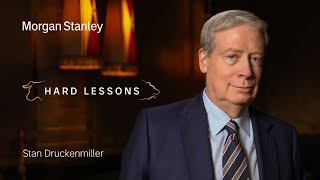
“It's funny, when I went there, I thought I would learn what makes the yen in the market go up and move.Immodestly, I learned I knew much more about that than he did. What I learned from him was sizing. It's not whether you're right or wrong, it's how much you make when you're right and how much you lose when you're wrong. And that was a, that was an invaluable lesson. So, you can have something innate. But if you don't have mentors and people to teach you, you're not going to maximize it as much as you do when you do have them.”Morgan Stanley Hard Lessons interview, 2024 · 7:33
The lesson
Druckenmiller’s sizing lesson starts with a simple idea: the payoff of investing is driven less by your batting average than by the gap between what you make on your best ideas and what you lose on your mistakes. He credits Soros with sharpening this point for him, not by teaching him more about markets, but by teaching him how to press an advantage when the odds were unusually good. In his framework, great returns come from recognizing a rare setup and then having the nerve to act bigger than usual.123
That is why he is willing to say diversification is overrated. He does not mean you should always run concentrated risk; he means that when you have a truly differentiated view, a strong thesis, and the market is liquid enough to express it, spreading capital too widely can dilute your edge. His advantage, as he describes it, is not superior raw intelligence but the ability to commit when conviction is high.45
Conviction, however, is not stubbornness. Druckenmiller pairs concentration with discipline and emotional control, because large positions punish sloppy thinking fast. He emphasizes being unemotional, and when a trade or judgment goes wrong, the job is to recover quickly rather than brood over the mistake. Big sizing only works if you can stay objective under pressure and avoid turning one error into a larger one.678
His style also depends on looking ahead rather than reacting to the present. He wants to envision a future state that others are not fully pricing, then express that view decisively if the opportunity is exceptional. This is the real logic behind concentration: not boldness for its own sake, but a forward view that is both differentiated and actionable.910
The practical limit on size is not just confidence but liquidity and flexibility. He prefers to press views in markets deep enough to enter and exit without getting trapped, and he does not rely on mechanical rules to save him after the fact. That means sizing must be done before the trade with discipline: put the most capital behind the clearest opportunities, but only in forms you can change quickly if the world changes.1112
5 principles from Stanley Druckenmiller
Press rare high-conviction opportunities
Druckenmiller’s core lesson is that outsized results come from the uncommon moments when the setup is unusually good. When you find one, your job is not just to be right but to size it large enough for being right to matter.
“It's funny, when I went there, I thought I would learn what makes the yen in the market go up and move.Immodestly, I learned I knew much more about that than he did. What I learned from him was sizing. It's not whether you're right or wrong, it's how much you make when you're right and how much you lose when you're wrong. And that was a, that was an invaluable lesson. So, you can have something innate. But if you don't have mentors and people to teach you, you're not going to maximize it as much as you do when you do have them.”
Do not diversify away your edge
Concentration makes sense when your thesis is strong and you understand the risks. If you spread capital evenly across mediocre and exceptional ideas, the exceptional ones cannot carry results.
“I think diversification is really overrated…”
Pair size with emotional discipline
Large positions magnify both gains and psychological stress. To use size well, you have to stay unemotional, accept mistakes quickly, and move on without self-destructive hesitation.
“You have to be disciplined, you have to be unemotional…”
Size the future, not the present
Big bets should come from a view of how conditions are likely to look well ahead, especially when others are not seeing the same future. Concentration is strongest when it rests on a differentiated forward view, not on current headlines.
“I have found it's very important never to invest in the present. Always try and envision the situation as you see it in 18 to 24 months, and then see if you feel things would be different than they are now. Would security prices reflect that? I think that's probably the biggest mistake investors make is they invest in the present rather than forward looking and looking where the puck's going instead of where the puck is.”
Only press size where you can stay flexible
A concentrated position is safer when it is held in a liquid market you can change quickly. The point is not to be trapped defending a position, but to be able to act decisively before and after entry.
“I've never used a stop loss in 40 years…”
In his own words
The quotes behind the lesson, word for word from the transcripts. Numbers match the lesson above.
“It's funny, when I went there, I thought I would learn what makes the yen in the market go up and move.Immodestly, I learned I knew much more about that than he did. What I learned from him was sizing. It's not whether you're right or wrong, it's how much you make when you're right and how much you lose when you're wrong. And that was a, that was an invaluable lesson. So, you can have something innate. But if you don't have mentors and people to teach you, you're not going to maximize it as much as you do when you do have them.”
“It's not whether you're right or wrong, it's how much you make when you're right and how much you lose when you're wrong.”
“…it's not whether you're right or wrong it's how much money you make when you're right and how much you lose when you're wrong…”
“I think diversification is really overrated…”
“My advantage is not IQ. It's trigger pulling.”
“You have to be disciplined, you have to be unemotional…”
“Just get over it and move on.”
“I said nothing, I learned not to do that 20 years before, but I got emotional, which I fight every day. I would literally like throw up like once or twice a week, just from anxiety when I'd have a drawdown and so forth. And at some point in my career, I learned that you're going to continue to make mistakes, you're going to continue to get emotional. You're going to continue to have that happen from now and then. But you've got a gift. And just stop torturing yourself for like 48 hours or maybe longer over this because you've been doing this long enough and the record is there long enough that it's no longer like random accident, which I did not believe for like 15 years. So the hard lessons have been like hundreds of mistakes, but that they're just a moment in time. And when you have these drawdowns and if there's money managers listening to this and you're good, it's easier said than done. Just get over it and move on.”
“…you envision the future, particularly in a way that others have not…”
“I have found it's very important never to invest in the present. Always try and envision the situation as you see it in 18 to 24 months, and then see if you feel things would be different than they are now. Would security prices reflect that? I think that's probably the biggest mistake investors make is they invest in the present rather than forward looking and looking where the puck's going instead of where the puck is.”
“I don't use a, like, a number. I know that's a discipline system…”
“I've never used a stop loss in 40 years…”
Reflect
- Think of a time when you had a strong view but acted too small. What kept you from sizing it appropriately?
- Where in your work do you diversify out of habit rather than because the opportunities are equally attractive?
- What process would help you distinguish a truly exceptional setup from a merely exciting one?
Check your understanding
Go deeper
 Stanley Druckenmiller on Risk and Trading: Charts, Conviction, Discipline2009 · 83 min · full transcript
 Stanley Druckenmiller on Macro Investing: Size, Flexibility, and Trump2016 · 39 min · full transcript
 Stanley Druckenmiller on Entitlement Reform: Why the Young Are Getting Squeezed2013 · 32 min · full transcript
 Stanley Druckenmiller on Investing Lessons: Invest, Then Investigate2024 · 28 min · full transcript
 Stanley Druckenmiller on Future Vision: Seeing Ahead First2024 · 71 min · full transcript