Simon Sinek on Values & Beliefs
Simon Sinek sees values and beliefs as the foundation of trust, loyalty, and long-term leadership because they guide behavior more deeply than incentives, rules, or short-term interests.
- Trust comes from shared values and beliefs, not reliability alone.
- People and customers commit more deeply when they feel they belong to a shared cause.
- Strong leaders and organizations start with why: purpose, cause, and belief.
- In the long run, decisions should flow through values before interests.
- Culture weakens when success grows but the original why becomes fuzzy.
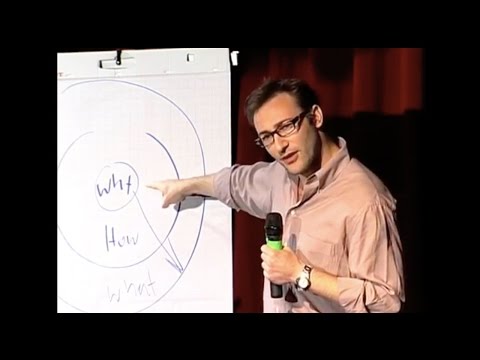
“Again, the goal is not just to sell to people who need what you have, the goal is to sell to people who believe what you believe. The goal is not just to hire people who need a job, it's to hire people who believe what you believe. I always say that, you know, if you hire people just because they can do a job, they'll work for your money, but if you hire people who believe what you believe, they'll work for you with blood and sweat and tears. And nowhere else is there a better example of this than with the Wright brothers. Most people don't know about Samuel Pierpont Langley. And back in the early 20th century, the pursuit of powered man flight was like the dot com of the day. Everybody was trying it. And Samuel Pierpont Langley had, what we assume, to be the recipe for success.”TEDxPugetSound talk, 2010 · 7:49
Values create loyalty, not just transactions
Sinek draws a sharp line between getting someone to buy and earning their loyalty. People may purchase for many practical reasons, but loyalty appears when the relationship becomes personal and identity-based, when people feel that doing business with you expresses something they believe about themselves.67
That is why he keeps returning to the idea that people respond to why, not only to what. The aim is not broad appeal to anyone with a need, but connection with people who believe what you believe. In his view, shared values are what turn repeat business into devotion and voluntary followership into something durable.89101112
The "why" is the clearest expression of values and belief
For Sinek, values and beliefs are not an add-on to strategy. They sit at the center of the Golden Circle as the why: purpose, cause, and belief. Organizations that can state why they exist communicate in a way that reaches the part of people that drives behavior, which is why purpose-led communication inspires more effectively than feature-led communication.1314
This also explains his distinction between authority and leadership. Someone can hold power, but leadership exists only when people choose to follow. That choice happens when people are inspired by a cause they recognize and want to be part of.15161718
Values should govern decisions before short-term interests
Sinek's infinite-game thinking makes values practical. Because business and leadership have no final finish line, the question is not who wins once, but who can stay in the game with trust, will, and resources intact. In that kind of contest, enduring values matter more than temporary advantages.19202122
His test is simple: run decisions through values first, then through interests. He argues that this does not guarantee the easiest outcome in the moment, but it makes leaders and organizations predictable, and predictability is what allows allies, employees, and customers to trust them over time.232425
This is also why he says the goal is not merely to beat a competitor, but to outlast one. Organizations built on values focus on becoming better versions of themselves and improving their culture, products, and leadership year after year.26272829
Culture breaks when success outgrows the original belief
Sinek thinks one of the hardest problems in growing organizations is keeping the founding belief clear as the company scales. As more layers of management appear, more people must make decisions on behalf of the organization. If the why is fuzzy, people fall back on metrics, politics, or convenience, and the culture starts to split.30
He describes the results in human terms: stress rises, passion drops, and performance suffers. The answer is not to reinvent the cause every time leadership changes, but to carry the original cause forward with clarity so that people can keep making aligned decisions.3031
Values show up in hiring, discretion, and human connection
Sinek applies shared beliefs directly to hiring. He says the goal is not simply to recruit people who can perform tasks, but people who believe what the organization believes. Skill matters, but belief is what produces commitment, sacrifice, and the feeling that the work means something.32
He makes a similar point about rules. Trustworthy cultures do not depend on blind compliance; they depend on people using judgment in service of shared values. That is why he says trust is not confidence that people will follow rules, but confidence that they will know when to break them for the right reason.3334
And because trust is human, he thinks values have to be reinforced in real relationships, not only through systems or digital communication. Real conversation, physical presence, and human interaction help people sense whether values are truly shared.353637
“Again, the goal is not just to sell to people who need what you have, the goal is to sell to people who believe what you believe. The goal is not just to hire people who need a job, it's to hire people who believe what you believe. I always say that, you know, if you hire people just because they can do a job, they'll work for your money, but if you hire people who believe what you believe, they'll work for you with blood and sweat and tears. And nowhere else is there a better example of this than with the Wright brothers. Most people don't know about Samuel Pierpont Langley. And back in the early 20th century, the pursuit of powered man flight was like the dot com of the day. Everybody was trying it. And Samuel Pierpont Langley had, what we assume, to be the recipe for success.”TEDxPugetSound talk, 2010 · full transcript →
Sinek on values & beliefs, in his own words
“Trust comes from a sense of common values and beliefs.”
“People don't buy what you do they buy why you do it.”
Where to watch
 Simon Sinek on Trust and Purpose: Why Values Matter2010 · 17 min · full transcriptBest single talk for his direct claim that trust comes from common values and beliefs.
 Simon Sinek on Purpose-Driven Leadership: Start With Why2010 · 18 min · full transcriptShows how shared belief drives buying, following, and the power of starting with why.
 Simon Sinek on Infinite Games: Lead for the Long Run2018 · 56 min · full transcriptConnects values to long-term leadership, discretion, and surviving the infinite game.
 Simon Sinek on Start With Why: Leadership, Loyalty, and Trust2012 · 61 min · full transcriptExpands the link between belief, loyalty, trust, and inspired leadership.
 Simon Sinek on Infinite Games: Why values beat short-term strategy2013 · 10 min · full transcriptBest short explanation of why decisions should run through values before interests.
 Simon Sinek on The Infinite Game: Lead for the Long Haul2018 · 91 min · full transcriptUseful for understanding how values support a Just Cause, trusting teams, and constant improvement.
Questions people ask
- How does Simon Sinek explain the biology behind decision making?
- What did Simon Sinek say about competition and infinite games?
- What did Simon Sinek say about leadership and why people follow leaders?
- What did Simon Sinek say about loyalty versus repeat business?
- What did Simon Sinek say about technology and human connection?
- What did Simon Sinek say about trust and shared values?
Sources
Every quote above, word for word from the transcripts. Numbers match the text.
“Simply doing everything that you promise you're going to do does not mean people will trust you.”
“Trust comes from a sense of common values and beliefs.”
“Trust is a feeling. Trust is a human experience.”
“When we're surrounded by people who believe what we believe something remarkable happens: Trust emerges. Make no mistake of it, trust is a feeling, a distinctly human experience. Simply doing everything that you promise you're going to do does not mean people will trust you. It just means you're reliable. And we all have friends who are total screw ups and yet we still trust them. Trust comes from a sense of common values and beliefs. And the reason trust is important, is because when we are surrounded with people who believe what we believe, we're more confident to take risks.”
“That's what creating a circle of safety is.”
“The problem is none of them breed loyalty.”
“There are a million reasons why people will do business with you that have nothing to do with you. You happen to meet some checklist that they have. They happen to hate your competition more. There's a difference between repeat business and loyalty. You see, repeat business means I'll do business with you over and over and over again. Loyalty means I'm willing to turn down a better product at a better price to continue to do business with you. And it's the loyal ones, those who feel like they belong, those who, doing business with you, gives them some sense of identity or belonging—those are the ones. Those are the ones who do great, and the reason is it becomes personal. It becomes personal.”
“People don't buy what you do they buy why you do it.”
“The goal is not to do business with everybody who needs what you have.”
“The goal is to do business with people who believe what you believe.”
“People don't buy what you do; they buy why you do it.”
“The goal is not to surround yourself with people who need what you have.”
“Why, I mean what's your purpose, what's your cause, what's your belief? Why does your organization exist? Do we really need another company to do what you're doing? Do we really need another one? Why did you get out of bed this morning, and why should anyone care? As a result, the way we think, the way we act, the way we communicate is from the outside in. It's obvious. We go from the clearest thing to the fuzziest thing. We tell people what we do. We tell them how we're different or how we're better or how we're special, and we expect some sort of behavior—a vote, a purchase, support, whatever it is. But not those leaders with the capacity to inspire. Regardless of their size,…”
“The neocortex is responsible for all of our rational and analytical thought and language. The middle two sections make up our limbic brains, and our limbic brains are responsible for all of our feelings, like trust and loyalty. It's also responsible for all human behavior, all decision-making, and it has no capacity for language. In other words, when we communicate from the outside in, yes, people can understand vast amounts of complicated information like features and benefits and facts and figures. It just doesn't drive behavior. When we can communicate from the inside out, we're talking directly to the part of the brain that controls behavior, and then we allow people to rationalize it with the tangible things we say and do. This is where gut decisions come from.”
“Leaders hold a position of power or authority, but those who lead inspire us.”
“We follow those who lead, not because we have to, but because we want to.”
“All leaders have one thing and one thing only: followers.”
“Leaders hold a position of power or authority, but those who lead inspire us. Whether they're individuals or organizations, we follow those who lead, not because we have to, but because we want to. We follow those who lead, not for them, but for ourselves. And it's those who start with "why" that have the ability to inspire those around them or find others who inspire them. Thank you very much.”
“The game of business is an infinite game.”
“There are no winners and losers.”
“Our values are enduring, and this is what is the foundation of an infinite contest.”
“In infinite games, because there are no winners and losers, what happens is players drop out of the game when they run out of the will or the resources to continue to play.”
“…we run all decisions through our values first…”
“Ideally, we want to run all of our decisions through our values. These are what make us enduring. Our values are enduring, and this is what is the foundation of an infinite contest. So you consider up here is where our values lie, what I call the why, our values, right? These things are infinite; they're enduring. Right down here you have what I call the what. These are our interests, and they are finite. And ideally, what you want to do is you run all decisions through our values and then through our interests.”
“Ideally, what we do is we run all decisions through our values first, and though it may not always go our way—just like I said, we make decisions all the time that aren't always in our interests, like bringing an injured bad guy and putting him in our hospitals. Not our interests, but what that does is it makes us predictable, and it makes our allies trust us because they know what we stand for, and they will either stand with us or they'll stand against us. And together, we will go through the infinite contest for as long as it takes.”
“The goal is not to beat your competitor. The goal is to outlast your competitor.”
“The goal is to make a better product this year than you had last year.”
“Because the infinite player understands sometimes your product is better and sometimes it's not. Sometimes you're ahead and sometimes you're behind. The goal is not to beat your competitor. The goal is to outlast your competitor. What you find is that the infinite players don't actually compete against their competition. They compete against themselves. The finite players are the ones who wake up every day trying to beat somebody else. The infinite players the ones who say, how can we be a better version of ourselves, how can we advance our metrics, how can we make our product more refined, more beautiful than they were last week.”
“And there's no such thing as winning or being the best. There's only ahead and behind. And the only true competitor in an infinite game is yourself. The goal is to make a better product this year than you had last year, to ensure that your culture is stronger this year than it was last year, that your leaders are growing at a stronger pace this year than they were last year, that everything about your organization, your systems, everything is improving, improving, and improving. It's constant improvement. There is no end to this game. It's a game of constant improvement, which means if we have to completely reconfigure how we think about leadership for the infinite game, it begs the question, "Well, how are we supposed to lead in the infinite game?" There are five things that have to happen to really…”
“The problem is, as they grow, as what they do becomes more successful, they can no longer rely on themselves. They have to hire somebody who hires somebody who hires somebody who hires somebody... who has to make a decision. Based on what? And what they do starts to grow. That metric. The problem is why they do it starts to go fuzzy. And this is the biggest single challenge any organisation will face. It's this thing right here, the thing that I call 'the split'. Symptoms of the split inside an organisation are when stress goes up and passion goes down. Symptoms of split are things like when the old-timers, the people who were there from the founding, from the beginning start saying things like, "It's not like it used to be. It doesn't feel the same anymore.”
“Company, which is to lead the people. You know, you can't lead nobody leads a company. You lead people. You manage a company. A company is nothing more than a structure. And the funny thing is, when companies start to have financial problems, they hire somebody to fix this, but it's this that went fuzzy. And so the opportunity for succession is not to hire the brilliant engineer, but to hire somebody who doesn't want to reinvent the why, but simply take the torch that was already lit and say, now I will carry it into the next generation.”
“Again, the goal is not just to sell to people who need what you have, the goal is to sell to people who believe what you believe. The goal is not just to hire people who need a job, it's to hire people who believe what you believe. I always say that, you know, if you hire people just because they can do a job, they'll work for your money, but if you hire people who believe what you believe, they'll work for you with blood and sweat and tears. And nowhere else is there a better example of this than with the Wright brothers. Most people don't know about Samuel Pierpont Langley. And back in the early 20th century, the pursuit of powered man flight was like the dot com of the day. Everybody was trying it. And Samuel Pierpont Langley had, what we assume, to be the recipe for success.”
“We don't trust people to follow the rules. We trust people to know when to break them.”
“All she revealed to me is that she doesn't feel safe in her own company, and her leaders do not trust her to do the job for which she has been trained to do. And guess who suffers? Us and the company. The reason we love flying Southwest Airlines is because the company trusts them to do the job they have been trained to do, and they use discretion. We don't trust people to follow the rules. We trust people to know when to break them. And the problem is, in a fear-based society, people fear for their own jobs more than common sense.”
“You cannot form trust through the internet.”
“What we need is more handshake conversations.”
“For the exchange of information and the exchange of ideas, technology is absolutely wonderful for speeding transactions, it's wonderful for resourcing and finding people, but it is terrible for creating human connections. You cannot form trust through the internet. There's something called a mirror-neuron which they've recently discovered that is one of the things that contributes to how people relate to each other and how we empathize. It's the feeling you get, it's the same part of the brain that lights up -- they did these pictures-- they did MRIs. They gave people a picture of someone smiling. And then in our own brain, when we see someone smiling, the same part of the brain lights up when we smile. It's what creates empathy and it is necessary to create trust. Again this very human bond.”
How this guide was made: drafted with AI from the full transcripts of the recordings cited, then checked: every quotation must match a transcript word for word and be the speaker's own words, and an independent review gates accuracy. Methodology and corrections.
