Simon Sinek on Leadership
Simon Sinek sees leadership as a choice to serve a cause and protect people so they feel safe enough to trust, grow, and choose to follow.
- Leadership is not rank; it is the choice to take responsibility for people.
- People follow leaders who start with purpose and belief, not just tasks, perks, or pressure.
- A leader’s job is to create safety and trust so people can cooperate, speak up, and do their best work.
- Great leadership begins with empathy and is learned through practice, not granted by promotion.
- Leadership should be played as an infinite game: build for the long haul, improve constantly, and serve a Just Cause.
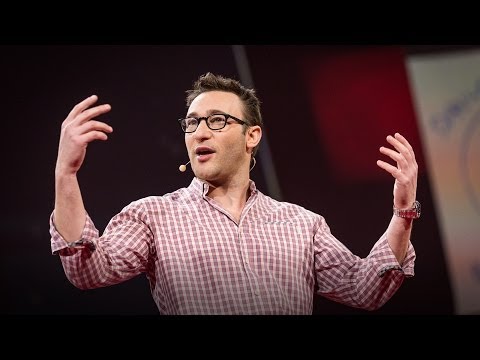
Leadership is a choice to care for people, not a title
Sinek draws a hard line between authority and leadership. A person can hold power, seniority, or a big job and still fail to lead, because leadership begins when someone chooses responsibility for other human beings. That is why he defines leadership as a decision rather than a position or rank.1234
In his view, the central duty of a leader is not control, status, or personal advancement. It is caring for the people in one’s charge and helping them rise. This makes leadership fundamentally relational: if no one willingly follows, authority alone is not enough.5678
“Leadership is a choice. It is not a rank.”TED Talk, 2014 · full transcript →
People choose to follow when leaders start with why
For Sinek, leadership becomes inspiring when it begins with purpose. He argues that people are moved less by features, instructions, or incentives than by a cause or belief they recognize as their own. Leaders create commitment when they make clear why they exist, why the work matters, and why anyone should care.91011
This is also why he distinguishes loyalty from simple repeat behavior. Pressure, deals, and other forms of manipulation may produce compliance or transactions, but they do not create deep trust. Lasting followership grows when people feel that by joining the leader or organization, they are expressing something they believe.121314
The same principle applies to hiring and culture. Sinek says leaders should not simply gather people who can perform a task; they should attract people who believe what the organization believes. Shared belief is what turns work from contract into commitment.101516
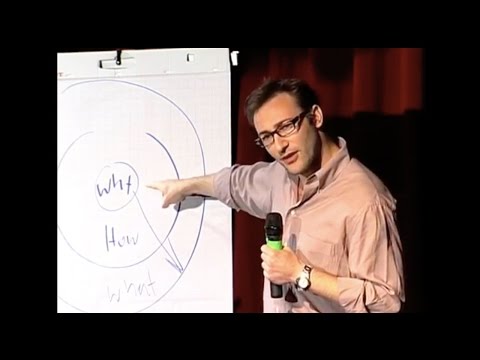
“People don't buy what you do they buy why you do it.”TEDxPugetSound talk, 2010 · full transcript →
The leader's practical job is to create a circle of safety
Sinek repeatedly returns to one operational definition of leadership: protect the people inside the organization. When leaders shield their teams from internal fear, politics, and destructive competition, people can direct their energy toward solving real problems together. This is the foundation of trust and cooperation.17181920
He is explicit that safety does not mean comfort or low standards. It means people know they belong, can ask for help, can admit mistakes, and can tell the truth without humiliation or punishment. When fear dominates, people become quiet, guarded, and compliant rather than creative or courageous.21222324
This is why Sinek praises leaders who are willing to absorb pressure themselves. He argues that strong cultures are built when people trust that others around them would protect them too, which makes generosity and sacrifice reciprocal rather than naïve.252620

“I see you. I value you. And I've got your back.”TED Talk, 2013 · full transcript →
Empathy is the starting skill of leadership
Sinek does not treat leadership as a personality trait reserved for a few. He calls it a skill, which means it can be learned, practiced, and improved. That matters because many organizations promote capable individual performers without teaching them how to care for the people who now depend on them.2728
His answer is empathy. Leaders must be interested in what people are going through, not only what they are producing. Empathy helps a leader understand context, respond wisely, and build the trust required for honest performance.295
Empathy also requires real human contact and difficult conversations. Sinek warns against hiding behind purely rational tools when the issue is emotional or relational, and he argues that leaders need the courage to have uncomfortable conversations with care and boundaries.3031
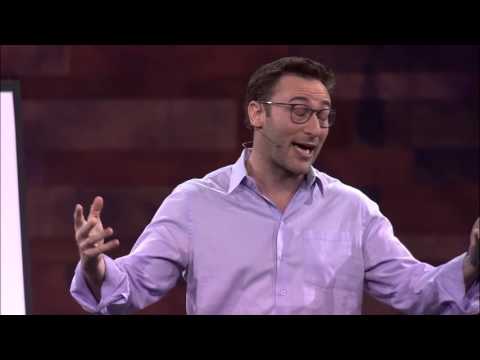
“You want to be a great leader? Start with empathy.”Conference talk, 2019 · full transcript →
Great leaders sacrifice self-interest for long-term stewardship
Sinek’s leadership philosophy is anti-short-term at its core. He argues that the cost of leadership is self-interest, meaning leaders must be willing to give up personal comfort, ego, or immediate metrics when those things conflict with the well-being of their people. In his framing, protecting numbers at the expense of people is the opposite of leadership.341718
This connects directly to his idea of the infinite game. Leadership is not about beating rivals once and declaring victory; it is about building an organization that can keep playing, improving, and serving over time. That requires a Just Cause, stronger culture, and constant improvement rather than obsession with competitors.3536373839
Seen this way, leadership is stewardship. The leader carries a cause forward, develops other leaders, and passes the torch rather than trying to win attention for themselves. Service is not a soft add-on in Sinek’s view; it is where purpose, fulfillment, and durable leadership all meet.404116

“You have to have a Just Cause.”Talk, 2018 · full transcript →
Sinek on leadership, in his own words
“Leadership is a choice. It is not a rank.”
“Leadership is not a rank. Leadership is not a position. Leadership is a decision.”
“…it's about taking care of those in our charge…”
“We follow those who lead, not because we have to, but because we want to.”
“They would sooner sacrifice the numbers to save the people.”
“Leadership is the responsibility for those around us—to see those around us rise.”
Where to watch
 Simon Sinek on Safe Leadership: Why Great Leaders Create Trust2014 · 12 min · full transcriptBest short explanation of why leadership means creating safety and putting people ahead of numbers.
 Simon Sinek on Empathy and Infinite Games: The Game You're In2019 · 35 min · full transcriptBest for understanding empathy as a learnable leadership skill and why leadership starts with caring for people.
 Simon Sinek on Start With Why: Leadership, Loyalty, and Trust2012 · 61 min · full transcriptBest for how purpose and belief create followership, loyalty, and trust.
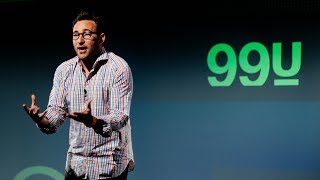 Simon Sinek on Leadership and Trust: Why Leaders Eat Last2014 · 46 min · full transcriptBest for the deeper case that leaders should sacrifice self-interest to protect their teams.
 Simon Sinek on The Infinite Game: Lead for the Long Haul2018 · 91 min · full transcriptBest for seeing how Sinek connects leadership to long-term, infinite-game thinking and a Just Cause.
Questions people ask
- How does Simon Sinek say great leaders create trust?
- What did Simon Sinek say about leadership and why people follow leaders?
- What did Simon Sinek say about loyalty versus repeat business?
- What did Simon Sinek say about the real job of a leader?
- What does Simon Sinek say about hiring people?
- What does Simon Sinek say about leadership and succession in companies?
Sources
Every quote above, word for word from the transcripts. Numbers match the text.
“Leaders hold a position of power or authority, but those who lead inspire us.”
“Leadership is a choice. It is not a rank.”
“Leadership is not a rank. Leadership is not a position. Leadership is a decision.”
“Leadership is a choice. It is not a rank. I know many people at the seniormost levels of organizations who are absolutely not leaders. They are authorities, and we do what they say because they have authority over us, but we would not follow them. And I know many people who are at the bottoms of organizations who have no authority and they are absolutely leaders, and this is because they have chosen to look after the person to the left of them, and they have chosen to look after the person to the right of them. This is what a leader is.”
“…it's about taking care of those in our charge…”
“Leadership is the responsibility for those around us—to see those around us rise.”
“All leaders have one thing and one thing only: followers.”
“We follow those who lead, not because we have to, but because we want to.”
“People don't buy what you do they buy why you do it.”
“The goal is to do business with people who believe what you believe.”
“Why, I mean what's your purpose, what's your cause, what's your belief? Why does your organization exist? Do we really need another company to do what you're doing? Do we really need another one? Why did you get out of bed this morning, and why should anyone care? As a result, the way we think, the way we act, the way we communicate is from the outside in. It's obvious. We go from the clearest thing to the fuzziest thing. We tell people what we do. We tell them how we're different or how we're better or how we're special, and we expect some sort of behavior—a vote, a purchase, support, whatever it is. But not those leaders with the capacity to inspire. Regardless of their size,…”
“The problem is none of them breed loyalty.”
“Trust is a feeling. Trust is a human experience.”
“There are a million reasons why people will do business with you that have nothing to do with you. You happen to meet some checklist that they have. They happen to hate your competition more. There's a difference between repeat business and loyalty. You see, repeat business means I'll do business with you over and over and over again. Loyalty means I'm willing to turn down a better product at a better price to continue to do business with you. And it's the loyal ones, those who feel like they belong, those who, doing business with you, gives them some sense of identity or belonging—those are the ones. Those are the ones who do great, and the reason is it becomes personal. It becomes personal.”
“Again, the goal is not just to sell to people who need what you have, the goal is to sell to people who believe what you believe. The goal is not just to hire people who need a job, it's to hire people who believe what you believe. I always say that, you know, if you hire people just because they can do a job, they'll work for your money, but if you hire people who believe what you believe, they'll work for you with blood and sweat and tears. And nowhere else is there a better example of this than with the Wright brothers. Most people don't know about Samuel Pierpont Langley. And back in the early 20th century, the pursuit of powered man flight was like the dot com of the day. Everybody was trying it. And Samuel Pierpont Langley had, what we assume, to be the recipe for success.”
“Company, which is to lead the people. You know, you can't lead nobody leads a company. You lead people. You manage a company. A company is nothing more than a structure. And the funny thing is, when companies start to have financial problems, they hire somebody to fix this, but it's this that went fuzzy. And so the opportunity for succession is not to hire the brilliant engineer, but to hire somebody who doesn't want to reinvent the why, but simply take the torch that was already lit and say, now I will carry it into the next generation.”
“Great leaders would never sacrifice the people to save the numbers.”
“They would sooner sacrifice the numbers to save the people.”
“That's what creating a circle of safety is.”
“The only variable are the conditions inside the organization, and that's where leadership matters, because it's the leader that sets the tone. When a leader makes the choice to put the safety and lives of the people inside the organization first, to sacrifice their comforts and sacrifice the tangible results, so that the people remain and feel safe and feel like they belong, remarkable things happen.”
“Safety is not about being comfortable.”
“The louder the fear, the quieter the truth.”
“They will do what is asked but not more.”
“I see you. I value you. And I've got your back.”
“Because they would have done it for me.”
“And he gave me the same answer that everybody in his position gives: because they would have done it for me. Now, if you think about it, in the military they give medals to people who are willing to sacrifice themselves so that others may gain, and in business, we give bonuses to people who are willing to sacrifice others so that we may gain. We have it backwards. Wouldn't you like to work in an organization in which you have the absolute confidence, the absolute knowledge, that other people that you may or may not know who work in the same organization as you would be willing to sacrifice themselves so that you may survive? And I'm not talking about giving your life. I mean, we don't even like to give up…”
“Leadership is a skill like any other.”
“Being in charge. It's about taking care of those in our charge, and I don't think people realize this, and I don't think people train for this. When we're junior, our only responsibility is to be good at our jobs. That's all we really have to do. And some people actually go get advanced educations so that they can be really good at their jobs: accountants or whatever, right? And you show up and you work hard, and the company will give us tons and tons of training on how to do our jobs. They'll show us how to use the software. They'll send us away for a few days to get trained in whatever it is that we're doing for the company. And then they expect us to go be good at our jobs.”
“You want to be a great leader? Start with empathy.”
“We don't teach leaders how to have uncomfortable conversations.”
“The next time you want to tell somebody something, email is fantastic for the exchange of information, right? It's fantastic. Here's the report you wanted. The meeting's at 4:00. Fantastic. What did you think of my idea? Do not reply on an email. That's an emotional question. Email is a rational tool. You get up from your desk, you walk the 30 feet, and you say, "Wanted to tell you what I thought of your idea," and I promise you, not only will that information be better received, but you will start to create relationship because oxytocin starts to get released.”
“The cost of leadership is self-interest.”
“…there are two kinds of games: there are finite games and there are infinite games.”
“The goal is to make a better product this year than you had last year.”
“You have to have a Just Cause.”
“And there's no such thing as winning or being the best. There's only ahead and behind. And the only true competitor in an infinite game is yourself. The goal is to make a better product this year than you had last year, to ensure that your culture is stronger this year than it was last year, that your leaders are growing at a stronger pace this year than they were last year, that everything about your organization, your systems, everything is improving, improving, and improving. It's constant improvement. There is no end to this game. It's a game of constant improvement, which means if we have to completely reconfigure how we think about leadership for the infinite game, it begs the question, "Well, how are we supposed to lead in the infinite game?" There are five things that have to happen to really…”
“Executives, and this was under the Steve Ballmer days, I would say about 70% of the executives spent about 70% of their presentations talking about how to beat Apple. At the Apple Summit, 100% of the executives spent 100% of their presentations talking about how to help teachers teach and how to help students learn. One was obsessed with their competition; the other one was obsessed with where they're going. So at the end of my presentation at Microsoft, they gave me a gift. They gave me the new Zune, which was the competitor to the iPod Touch when it was a thing, right? And I have to tell you, this piece of technology was spectacular. It was beautiful. The user—…”
“Our sense of joy and fulfillment and love and purpose comes from our ability to serve another human being.”
“Great organizations and great movements light torches that can be passed.”
How this guide was made: drafted with AI from the full transcripts of the recordings cited, then checked: every quotation must match a transcript word for word and be the speaker's own words, and an independent review gates accuracy. Methodology and corrections.