Simon Sinek on Empathy
For Simon Sinek, empathy is the starting point of leadership: seeing people as human beings, creating safety for them, and supporting them through struggle rather than treating them as output machines.
- Empathy is where great leadership starts, not an optional soft skill.
- A leader’s job is to care for people, not just demand performance from them.
- Real listening means making the other person feel heard, not rushing to fix them.
- Empathy creates psychological safety, and safety makes honesty and better work possible.
- Empathy needs boundaries and accountability; support does not mean rescuing people from responsibility.
Empathy is the first act of leadership
Sinek treats empathy as the beginning of leadership, not a nice extra. His basic standard is simple: if you want to lead well, start by caring about the people who depend on you as human beings.12
That is why he defines leadership less as status and more as responsibility. The core job is not to hold authority over others, but to look after them.234
He also insists this can be learned. Leadership is a practice, which means empathy is not just a personality trait some people have and others do not.5
Empathy means asking what someone is going through
For Sinek, empathy is practical. It means pausing before judgment or pressure and becoming curious about what another person may be carrying. That applies at work, in friendship, and in moments when someone is struggling.16
He contrasts this with the common urge to fix, advise, or push for output. In his view, people often need presence before they need solutions, which is why he emphasizes sitting with someone in difficulty rather than immediately trying to solve them.6
This is also why he reframes emotional struggle as part of ongoing fitness rather than a personal defect. Empathy grows when we expect ups and downs in people rather than demanding constant steadiness and performance.
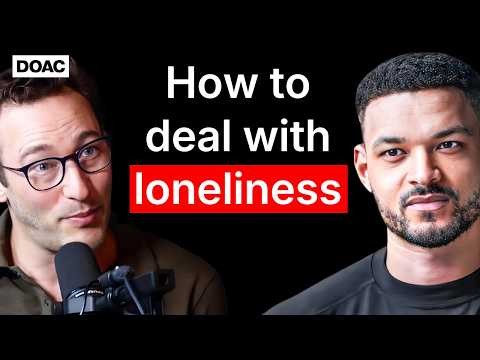
“I need somebody to sit in the mud with me…”The Diary of a CEO interview, 2022 · full transcript →
Listening is only real when the other person feels heard
Sinek draws a sharp distinction between hearing words and actually listening. Listening is successful only when the other person experiences being understood.10
That requires attention to meaning, not just literal content. Instead of preparing a rebuttal or offering instant advice, the empathetic move is to stay with the person long enough to understand what they are really trying to say.10
He sees this as a central human skill, and one that becomes more valuable, not less, in a world obsessed with speed and output. Human growth depends on keeping skills like listening, empathy, accountability, and conflict resolution alive.11
Empathy creates safety, and safety unlocks honesty
Sinek links empathy directly to psychological safety. People do better work when they feel protected, valued, and backed by the people around them.13
When fear dominates, truth goes quiet. In that kind of environment, people may comply, but they stop contributing their full judgment, creativity, and honesty.1415
This is why empathy is not softness in his framework. Safety is not the same as comfort; it is the condition that lets people speak up, take risks, learn, and stay connected to a shared mission instead of slipping into self-protection.1613
Empathy works best with boundaries and accountability
Sinek does not treat empathy as endless emotional exposure or permissiveness. He argues that empathy has limits: caring for someone does not mean taking over their problems.
The same goes for helping. He argues that support is collaborative, not a takeover: others can assist, but each person still has to take responsibility for their own choices and growth.1819
This makes his view of empathy both warm and demanding. You care deeply, you stay present, and you tell the truth, but you do not confuse care with removing accountability.1920
Empathy reflects an infinite view of people and work
Sinek’s wider philosophy helps explain why empathy matters so much to him. He argues that life and business are not mainly about beating rivals in the short term, but about sustaining people and purpose over time.
In that frame, empathy is not a drag on performance. It is part of building institutions and relationships that last, because people stay committed when they feel seen and served rather than used.2324
That is also why service sits so close to empathy in his thinking. Fulfillment comes through serving other human beings, and leaders are at their best when they orient around care rather than self-centered achievement.24
Sinek on empathy, in his own words
“I need somebody to sit in the mud with me…”
Where to watch
 Simon Sinek on Empathy and Infinite Games: The Game You're In2019 · 35 min · full transcriptBest single talk for his core claim that empathy is where leadership begins and that leaders exist to care for people.
 Simon Sinek on Psychological Safety: Why Trust Unlocks Performance2013 · 32 min · full transcriptShows how empathy becomes psychological safety, and why safety drives honesty, trust, and stronger performance.
 Simon Sinek on Loneliness and Mental Fitness: Sit in the Mud2022 · 120 min · full transcriptBest for understanding empathy in moments of loneliness, struggle, and the need for presence instead of fixing.
 Simon Sinek on Purpose-Driven Leadership: Help Others to Help Yourself2022 · 105 min · full transcriptBest for his practical standard of listening: the other person should feel heard, with accountability still intact.
 Simon Sinek on Vulnerability and Leadership: Why Both Matter2021 · 53 min · full transcriptUseful for seeing how empathy relates to vulnerability, boundaries, and trust in mature relationships and leadership.
 Simon Sinek on Human Skills: Why AI Can't Replace Growth2025 · 126 min · full transcriptPlaces empathy among the human skills that must be practiced deliberately in an age obsessed with efficiency.
Questions people ask
- What did Simon Sinek say about Maslow's hierarchy of needs?
- What did Simon Sinek say about the real job of a leader?
- What does Simon Sinek mean by helping someone being a team sport?
- What does Simon Sinek say listening really means?
- What is Simon Sinek most afraid of about how he’s living his life?
- Why does Simon Sinek talk so much about mental health and mental fitness?
Sources
Every quote above, word for word from the transcripts. Numbers match the text.
“You want to be a great leader? Start with empathy.”
“…it's about taking care of those in our charge…”
“Being in charge. It's about taking care of those in our charge, and I don't think people realize this, and I don't think people train for this. When we're junior, our only responsibility is to be good at our jobs. That's all we really have to do. And some people actually go get advanced educations so that they can be really good at their jobs: accountants or whatever, right? And you show up and you work hard, and the company will give us tons and tons of training on how to do our jobs. They'll show us how to use the software. They'll send us away for a few days to get trained in whatever it is that we're doing for the company. And then they expect us to go be good at our jobs.”
“Leadership is a choice. It is not a rank. I know many people at the seniormost levels of organizations who are absolutely not leaders. They are authorities, and we do what they say because they have authority over us, but we would not follow them. And I know many people who are at the bottoms of organizations who have no authority and they are absolutely leaders, and this is because they have chosen to look after the person to the left of them, and they have chosen to look after the person to the right of them. This is what a leader is.”
“Leadership is a skill like any other.”
“I need somebody to sit in the mud with me…”
“Listening is when the other person feels heard…”
“There's a premium on being human.”
“I see you. I value you. And I've got your back.”
“The louder the fear, the quieter the truth.”
“They will do what is asked but not more.”
“Safety is not about being comfortable.”
“…helping someone is a team sport…”
“And I think that it's not about giving up on someone, it's that it's a—it's that it's a—that helping someone is a team sport. Success is a team sport. And if you find that you're the only player in their life when they should be the primary player, you can only be—you can only do the assists. You'll never be the one making the baskets. That's their job, right? But if they won't take the pass, then at some point, you stop throwing the ball. And, um, it's not about giving up on people. It's that they have—it's about accountability to take responsibility for oneself.”
“We don't teach leaders how to have uncomfortable conversations.”
“The only question is which is more effective to get people to join and stay and do hard work?”
“Our sense of joy and fulfillment and love and purpose comes from our ability to serve another human being.”
How this guide was made: drafted with AI from the full transcripts of the recordings cited, then checked: every quotation must match a transcript word for word and be the speaker's own words, and an independent review gates accuracy. Methodology and corrections.
