Simon Sinek on Decision Making
Simon Sinek sees good decision making as purpose-led and values-filtered: start with why, build trust, and choose for the long game rather than short-term wins.
- Decisions are driven less by facts alone and more by purpose, belief, trust, and the part of us that feels before it explains.
- The strongest choices begin with why: a clear cause or belief that guides what you do and how you do it.
- In an infinite game, you should run decisions through values first, not just short-term interests or metrics.
- Better leadership decisions create trust, loyalty, and a circle of safety rather than compliance through pressure or manipulation.
- A good decision is not mainly about beating rivals; it is about improving, enduring, and outlasting over time.
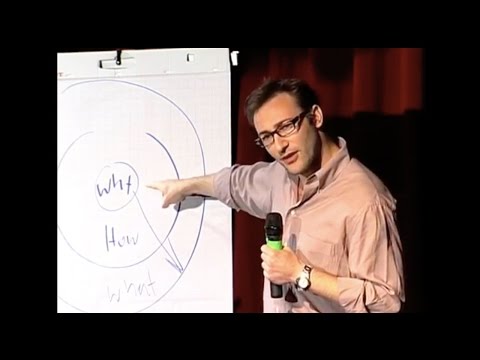
Decision making starts with why, not just with what
Sinek’s basic view is that people do not make their strongest decisions from features, options, and surface facts alone. They decide from purpose, cause, and belief, and then often justify those choices afterward with rational explanation123.
That is why he keeps returning to the question of why an organization or person exists in the first place. For Sinek, better decisions come from clarity about purpose before tactics, products, or arguments about being better than someone else42.
This also changes how leaders persuade. If you want commitment rather than mere compliance, you have to connect decisions to a shared belief so people feel that the choice fits who they are and what they stand for567.
Why decisions feel like gut calls: biology, trust, and belief
Sinek explains decision making through the structure of the brain. Rational thought and language can process facts, but behavior, trust, loyalty, and what we call gut instinct come from the limbic system, which is central to decision making and hard to put into words38.
That helps explain why many choices feel right or wrong before we can fully explain them. In his view, when leaders speak only in terms of what and how, people may understand the information, but it often does not move behavior; when leaders start with why, they reach the part that actually drives decisions38.
This is also why trust matters so much. Trust is not just a logical assessment but a human feeling, so decision environments that build trust lead to stronger followership, loyalty, and better judgment under uncertainty910.
Run decisions through values first, then interests
Sinek’s clearest practical rule is that decisions should be filtered through values before interests. He says enduring values belong to the level of why, while interests are finite and immediate, and healthy leadership keeps that order straight1112.
This matters because values make behavior predictable. Even when a values-based choice is costly in the short run, it tells employees, customers, and allies what you stand for, which builds trust over time1314.
By contrast, decisions based only on convenience, quarterly advantage, or self-interest may look smart in the moment but make a leader or institution unreliable. For Sinek, predictability rooted in values is a strategic strength, not a soft extra1214.
The best decisions are made for the infinite game
Sinek argues that business and leadership are infinite games, which means there is no final victory state where you have permanently won. Because of that, the right decision is usually not the one that beats a rival today, but the one that helps you stay in the game and keep improving151617.
That changes the standard for evaluating choices. Instead of asking whether this move helps us win now, he pushes leaders to ask whether it strengthens the organization’s ability to endure, adapt, and outlast competitors over time1819.
In this frame, your main competition is your own previous level of performance. Better decisions improve product, culture, systems, and leadership year after year rather than chasing the illusion of being definitively the best2021.
Leadership decisions should create safety, agency, and loyalty
For Sinek, decision making is never just an abstract exercise; it shapes how people feel inside a team. Leaders are responsible for helping others rise, and that means making choices that create a circle of safety where people can admit mistakes, ask for help, and use judgment2223.
This is one reason he warns against manipulation. Pressure can produce a transaction, but it does not produce loyalty, and decisions made in fear usually narrow judgment and reduce common sense2425.
He prefers leaders who trust people with discretion rather than leaders who rely only on rigid rule-following. In his view, mature decision making means building cultures where people understand the purpose and values well enough to know when flexibility is the right call2625.
How to apply Sinek’s approach to your own choices
Start by clarifying your why. Sinek says your why is not a target like money, status, or fame, but a deep-seated purpose, cause, or belief, and the task is to discover it rather than invent it227.
One practical way to do that is to look backward at moments when you felt fully alive in the work, especially times of flow and meaning even when the work was hard. Those patterns can reveal the belief underneath your best decisions2829.
Then use that why as a filter. Ask whether a choice reflects your values, whether it builds trust, and whether it helps you keep playing the long game. If the answer is yes, Sinek would likely see it as a strong decision even if it costs you something in the short term121418.
Sinek on decision making, in his own words
“People don't buy what you do they buy why you do it.”
“…we run all decisions through our values first…”
Where to watch
 Simon Sinek on Infinite Games: Why values beat short-term strategy2013 · 10 min · full transcriptBest short explanation of why decisions should be run through values first and judged by the standards of an infinite game.
 Simon Sinek on Purpose-Driven Leadership: Start With Why2010 · 18 min · full transcriptBest starting point for understanding why purpose and belief drive decisions more than features and facts.
 Simon Sinek on Infinite Games: Lead for the Long Run2018 · 56 min · full transcriptBest for applying infinite-game thinking to competition, culture, judgment, and long-term decision making.
 Simon Sinek on The Infinite Game: Lead for the Long Haul2018 · 91 min · full transcriptBest for the full leadership framework behind long-term decisions, including Just Cause and circle of safety.
 Simon Sinek on Start With Why: Leadership, Loyalty, and Trust2012 · 61 min · full transcriptBest for seeing how trust, loyalty, and inspiration shape the quality of decisions inside organizations.
 Simon Sinek on Finding Your Why: Purpose, Optimism, and Work2026 · 65 min · full transcriptBest for discovering your personal why so your own decisions are anchored in purpose rather than status or money.
Questions people ask
- How does Simon Sinek explain the biology behind decision making?
- How does Simon Sinek explain the brain and decision making?
- What did Simon Sinek say about competition and infinite games?
- What did Simon Sinek say about values in leadership and decision making?
- What does Simon Sinek say about hiring people?
- Why did Simon Sinek say trust matters in an infinite game?
Sources
Every quote above, word for word from the transcripts. Numbers match the text.
“People don't buy what you do they buy why you do it.”
“Why is this: it's this deep-seated purpose, cause, or belief.”
“The neocortex is responsible for all of our rational and analytical thought and language. The middle two sections make up our limbic brains, and our limbic brains are responsible for all of our feelings, like trust and loyalty. It's also responsible for all human behavior, all decision-making, and it has no capacity for language. In other words, when we communicate from the outside in, yes, people can understand vast amounts of complicated information like features and benefits and facts and figures. It just doesn't drive behavior. When we can communicate from the inside out, we're talking directly to the part of the brain that controls behavior, and then we allow people to rationalize it with the tangible things we say and do. This is where gut decisions come from.”
“Why, I mean what's your purpose, what's your cause, what's your belief? Why does your organization exist? Do we really need another company to do what you're doing? Do we really need another one? Why did you get out of bed this morning, and why should anyone care? As a result, the way we think, the way we act, the way we communicate is from the outside in. It's obvious. We go from the clearest thing to the fuzziest thing. We tell people what we do. We tell them how we're different or how we're better or how we're special, and we expect some sort of behavior—a vote, a purchase, support, whatever it is. But not those leaders with the capacity to inspire. Regardless of their size,…”
“The goal is to do business with people who believe what you believe.”
“People don't buy what you do; they buy why you do it.”
“Again, the goal is not just to sell to people who need what you have, the goal is to sell to people who believe what you believe. The goal is not just to hire people who need a job, it's to hire people who believe what you believe. I always say that, you know, if you hire people just because they can do a job, they'll work for your money, but if you hire people who believe what you believe, they'll work for you with blood and sweat and tears. And nowhere else is there a better example of this than with the Wright brothers. Most people don't know about Samuel Pierpont Langley. And back in the early 20th century, the pursuit of powered man flight was like the dot com of the day. Everybody was trying it. And Samuel Pierpont Langley had, what we assume, to be the recipe for success.”
“Um, so the human brain, brain, the, the, there's a part of the brain called the neocortex, which is our Homo sapiens brain. It's the newest part of our brain. It's responsible for all of our rational thought and language. It's just not responsible for decisions. This is where the what exists, right? It's very rational, easy to see, tangible. The limbic part of our brain is responsible for all of our feelings, like trust and loyalty. This is where gut decisions come from. It's also responsible for all of our behavior, but it has no capacity for language, which is why it's hard to put feelings into words. This is why we use analogies and metaphors all the time. Um, and so when we start with why, you're actually talking to the decision-making part of the brain.”
“Trust is a feeling. Trust is a human experience.”
“We follow those who lead, not because we have to, but because we want to.”
“…we run all decisions through our values first…”
“Ideally, we want to run all of our decisions through our values. These are what make us enduring. Our values are enduring, and this is what is the foundation of an infinite contest. So you consider up here is where our values lie, what I call the why, our values, right? These things are infinite; they're enduring. Right down here you have what I call the what. These are our interests, and they are finite. And ideally, what you want to do is you run all decisions through our values and then through our interests.”
“Our values are enduring, and this is what is the foundation of an infinite contest.”
“Ideally, what we do is we run all decisions through our values first, and though it may not always go our way—just like I said, we make decisions all the time that aren't always in our interests, like bringing an injured bad guy and putting him in our hospitals. Not our interests, but what that does is it makes us predictable, and it makes our allies trust us because they know what we stand for, and they will either stand with us or they'll stand against us. And together, we will go through the infinite contest for as long as it takes.”
“The game of business is an infinite game.”
“There are no winners and losers.”
“In infinite games, because there are no winners and losers, what happens is players drop out of the game when they run out of the will or the resources to continue to play.”
“The goal is not to beat your competitor. The goal is to outlast your competitor.”
“Because the infinite player understands sometimes your product is better and sometimes it's not. Sometimes you're ahead and sometimes you're behind. The goal is not to beat your competitor. The goal is to outlast your competitor. What you find is that the infinite players don't actually compete against their competition. They compete against themselves. The finite players are the ones who wake up every day trying to beat somebody else. The infinite players the ones who say, how can we be a better version of ourselves, how can we advance our metrics, how can we make our product more refined, more beautiful than they were last week.”
“The goal is to make a better product this year than you had last year.”
“And there's no such thing as winning or being the best. There's only ahead and behind. And the only true competitor in an infinite game is yourself. The goal is to make a better product this year than you had last year, to ensure that your culture is stronger this year than it was last year, that your leaders are growing at a stronger pace this year than they were last year, that everything about your organization, your systems, everything is improving, improving, and improving. It's constant improvement. There is no end to this game. It's a game of constant improvement, which means if we have to completely reconfigure how we think about leadership for the infinite game, it begs the question, "Well, how are we supposed to lead in the infinite game?" There are five things that have to happen to really…”
“Leadership is the responsibility for those around us—to see those around us rise.”
“That's what creating a circle of safety is.”
“The problem is none of them breed loyalty.”
“All she revealed to me is that she doesn't feel safe in her own company, and her leaders do not trust her to do the job for which she has been trained to do. And guess who suffers? Us and the company. The reason we love flying Southwest Airlines is because the company trusts them to do the job they have been trained to do, and they use discretion. We don't trust people to follow the rules. We trust people to know when to break them. And the problem is, in a fear-based society, people fear for their own jobs more than common sense.”
“We don't trust people to follow the rules. We trust people to know when to break them.”
“The opportunity is not to invent a why. It's to discover a why.”
“I look at the past and I find the times where for whatever reason they were in flow.”
“Working hard for something we don't believe in is called stress. Working hard for something we love is called passion.”
How this guide was made: drafted with AI from the full transcripts of the recordings cited, then checked: every quotation must match a transcript word for word and be the speaker's own words, and an independent review gates accuracy. Methodology and corrections.

