How does Simon Sinek explain the biology behind decision making?
Simon Sinek says decision-making is driven by the limbic brain, not the neocortex. The neocortex handles rational thought and language, but the limbic brain controls feelings, trust, loyalty, and behavior without language. That is why people often say a choice “doesn’t feel right” even when the facts look convincing.
“The neocortex is responsible for all of our rational and analytical thought and language. The middle two sections make up our limbic brains, and our limbic brains are responsible for all of our feelings, like trust and loyalty. It's also responsible for all human behavior, all decision-making, and it has no capacity for language. In other words, when we communicate from the outside in, yes, people can understand vast amounts of complicated information like features and benefits and facts and figures. It just doesn't drive behavior. When we can communicate from the inside out, we're talking directly to the part of the brain that controls behavior, and then we allow people to rationalize it with the tangible things we say and do. This is where gut decisions come from.”
Key takeaways
- Appeal to the part of the brain that drives behavior.
- Expect people to rationalize decisions after the fact.
- Gut feelings matter because decision-making is partly nonverbal.
Context
In the middle of his TEDxPugetSound talk, Sinek ties the golden circle to brain biology to explain why some messages inspire action. The quote above is taken word for word from the recording's transcript.
In the transcript
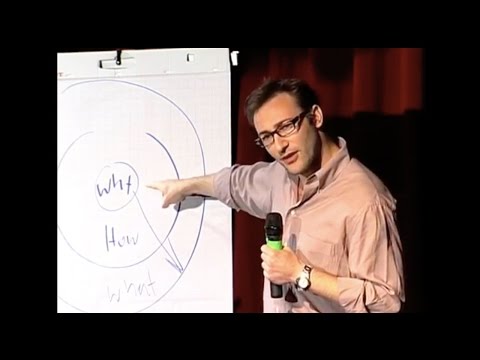
…None of what I'm telling you is my opinion. It's all grounded in the tenets of biology. Not psychology, biology. If you look at a cross-section of the human brain, looking from the top down, what you see is the human brain is actually broken into three major components that correlate perfectly with the golden circle. Our newest brain, our Homo Sapien brain, our neocortex, corresponds with the "what" level.
The neocortex is responsible for all of our rational and analytical thought and language. The middle two sections make up our limbic brains, and our limbic brains are responsible for all of our feelings, like trust and loyalty. It's also responsible for all human behavior, all decision-making, and it has no capacity for language. In other words, when we communicate from the outside in, yes, people can understand vast amounts of complicated information like features and benefits and facts and figures. It just doesn't drive behavior. When we can communicate from the inside out, we're talking directly to the part of the brain that controls behavior, and then we allow people to rationalize it with the tangible things we say and do. This is where gut decisions come from.
You know, sometimes you can give somebody all the facts and figures, and they say, "I know what all the facts and details say, but it just doesn't feel right." Why would we use that verb, it doesn't "feel" right? Because the part of the brain that controls decision-making doesn't control language. And the best we can muster up is, "I don't know. It just doesn't feel right." Or sometimes…
Topics
What others said about decision making
More questions about Simon Sinek
- What does Simon Sinek say about hiring people?
- What did Simon Sinek say about leadership and why people follow leaders?
- How does Simon Sinek say great leaders create trust?
- What does Simon Sinek mean when he says leadership is a choice, not a rank?
- What did Simon Sinek say about the real job of a leader?
- What did Simon Sinek say about why leaders should sacrifice for their teams?
How this answer was made: the quote is checked word for word against the transcript of the recording and confirmed as the speaker's own words; the summary above it was drafted with AI from that transcript and quality-checked. Methodology and corrections.