Simon Sinek on Trust
Simon Sinek sees trust as a human feeling built when leaders create safety, shared purpose, and values people can rely on.
- Trust is a feeling, not a policy or performance metric.
- People trust most when they feel safe and protected by leaders.
- Shared values and belief create deeper trust than reliability alone.
- Trust grows through real human contact, consistency, and service.
- Long-term, trusting teams outperform fear-based cultures and short-term thinking.

Trust starts as a feeling of safety
Sinek’s basic claim is that trust is not something leaders can demand. It is a human feeling that shows up when people believe they will be protected, valued, and not sacrificed for short-term results. That is why he ties trust so closely to leadership and psychological safety.123
In his view, the job of a leader is to create the conditions where people can relax their self-protection and focus on the mission together. When leaders protect people inside the organization, people become more willing to cooperate, help one another, and do difficult things. When leaders protect numbers instead of people, trust erodes.4563
He is careful to distinguish safety from comfort. A trusting environment is not one where standards disappear or where nobody is challenged. It is one where people can take risks, speak honestly, and contribute without fear of humiliation or punishment.78
Leaders build trust by sacrificing self-interest
For Sinek, leadership is not about status or authority. It is a choice to look after other people, especially when it costs something personally. He repeatedly says leadership is not a rank or position, but a decision to take responsibility for those around us.171819
This is why sacrifice sits at the center of his idea of trustworthy leadership. He says the cost of leadership is self-interest, and he praises leaders who would rather take a hit in results than expose their people to unnecessary fear. Trust rises when people believe their leaders would protect them, not trade them away for performance.2045
He also connects trustworthy leadership to service. People find meaning by serving others, and leaders earn trust by helping those around them rise. In practice, that means absorbing pressure, making hard calls based on values, and creating an environment where people feel they belong.212223
“The cost of leadership is self-interest.”99U conference keynote, 2014 · full transcript →
Trust grows through human contact, honesty, and small repeated interactions
Sinek does not treat trust as something built in a slogan, a retreat, or a single dramatic moment. He says it grows slowly through repeated, ordinary interactions in which people show care, attention, and consistency. Those small moments are what turn coworkers into relationships and relationships into trust.24
He is especially skeptical that trust can be built through digital efficiency alone. Technology is useful for exchanging information, but he argues that real trust depends on human interaction, empathy, and the kind of connection people get face to face. That is why he calls for more direct conversation rather than hiding emotional issues inside transactional tools.25262728
This also shapes how he thinks about vulnerability. Openness can strengthen trust, but only when it comes with boundaries and intention. Trust is not built by broadcasting everything; it is built by honest, appropriate human connection that helps people feel seen and safe.29

“What we need is more handshake conversations.”TEDxMaastricht, 2010 · full transcript →
Trusting teams are essential for long-term performance
Sinek’s case for trust is moral, but it is also practical. Fear-based cultures may produce compliance, yet they suppress truth, creativity, and discretionary effort. When fear gets louder, people stop speaking candidly, protect themselves, and do only what is required.83031
By contrast, trusting teams make it possible for people to admit mistakes, ask for help, and keep improving. That matters because Sinek sees business and leadership as an infinite game, where the goal is not to win once but to stay in the game and become stronger over time. Trust is one of the conditions that allows that kind of resilience and learning.323334
In this sense, trust is not separate from performance. It is one of the foundations of enduring performance. Organizations that chase short-term wins at the expense of trust may gain briefly, but they weaken innovation, engagement, and cooperation over the long run.35

“The louder the fear, the quieter the truth.”TED Talk, 2013 · full transcript →
Sinek on trust, in his own words
“The cost of leadership is self-interest.”
“The objective is to perpetuate the game, to stay in the game as long as possible.”
Where to watch
 Simon Sinek on Safe Leadership: Why Great Leaders Create Trust2014 · 12 min · full transcriptBest short overview of why trust comes from leaders who protect people instead of sacrificing them for results.
 Simon Sinek on Trust and Purpose: Why Values Matter2010 · 17 min · full transcriptBest explanation of trust as shared values and beliefs, not just reliability or competence.
 Simon Sinek on Psychological Safety: Why Trust Unlocks Performance2013 · 32 min · full transcriptBest for understanding psychological safety and how fear silences truth and effort.
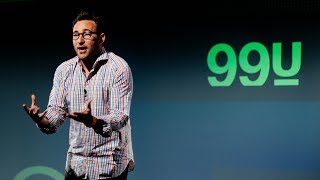 Simon Sinek on Leadership and Trust: Why Leaders Eat Last2014 · 46 min · full transcriptBest deep dive on the circle of safety, sacrifice, and the human drivers behind trust.
 Simon Sinek on The Infinite Game: Lead for the Long Haul2018 · 91 min · full transcriptBest for seeing how trusting teams fit into Sinek’s infinite-game view of leadership.
Questions people ask
- How does Simon Sinek say great leaders create trust?
- What did Simon Sinek say about loyalty versus repeat business?
- What did Simon Sinek say about technology and human connection?
- What did Simon Sinek say about trust and shared values?
- What does Simon Sinek say about how trust is built in teams?
- What does Simon Sinek say about trust in leadership and rules?
Sources
Every quote above, word for word from the transcripts. Numbers match the text.
“Trust is a feeling. Trust is a human experience.”
“I see you. I value you. And I've got your back.”
“The only variable are the conditions inside the organization, and that's where leadership matters, because it's the leader that sets the tone. When a leader makes the choice to put the safety and lives of the people inside the organization first, to sacrifice their comforts and sacrifice the tangible results, so that the people remain and feel safe and feel like they belong, remarkable things happen.”
“Great leaders would never sacrifice the people to save the numbers.”
“They would sooner sacrifice the numbers to save the people.”
“If you get the environment right, every single one of us has the capacity to do these remarkable things…”
“Safety is not about being comfortable.”
“The louder the fear, the quieter the truth.”
“Simply doing everything that you promise you're going to do does not mean people will trust you.”
“Trust comes from a sense of common values and beliefs.”
“When we're surrounded by people who believe what we believe something remarkable happens: Trust emerges. Make no mistake of it, trust is a feeling, a distinctly human experience. Simply doing everything that you promise you're going to do does not mean people will trust you. It just means you're reliable. And we all have friends who are total screw ups and yet we still trust them. Trust comes from a sense of common values and beliefs. And the reason trust is important, is because when we are surrounded with people who believe what we believe, we're more confident to take risks.”
“People don't buy what you do; they buy why you do it.”
“The problem is none of them breed loyalty.”
“There are a million reasons why people will do business with you that have nothing to do with you. You happen to meet some checklist that they have. They happen to hate your competition more. There's a difference between repeat business and loyalty. You see, repeat business means I'll do business with you over and over and over again. Loyalty means I'm willing to turn down a better product at a better price to continue to do business with you. And it's the loyal ones, those who feel like they belong, those who, doing business with you, gives them some sense of identity or belonging—those are the ones. Those are the ones who do great, and the reason is it becomes personal. It becomes personal.”
“Why, I mean what's your purpose, what's your cause, what's your belief? Why does your organization exist? Do we really need another company to do what you're doing? Do we really need another one? Why did you get out of bed this morning, and why should anyone care? As a result, the way we think, the way we act, the way we communicate is from the outside in. It's obvious. We go from the clearest thing to the fuzziest thing. We tell people what we do. We tell them how we're different or how we're better or how we're special, and we expect some sort of behavior—a vote, a purchase, support, whatever it is. But not those leaders with the capacity to inspire. Regardless of their size,…”
“The problem is, as they grow, as what they do becomes more successful, they can no longer rely on themselves. They have to hire somebody who hires somebody who hires somebody who hires somebody... who has to make a decision. Based on what? And what they do starts to grow. That metric. The problem is why they do it starts to go fuzzy. And this is the biggest single challenge any organisation will face. It's this thing right here, the thing that I call 'the split'. Symptoms of the split inside an organisation are when stress goes up and passion goes down. Symptoms of split are things like when the old-timers, the people who were there from the founding, from the beginning start saying things like, "It's not like it used to be. It doesn't feel the same anymore.”
“Leadership is a choice. It is not a rank.”
“Leadership is not a rank. Leadership is not a position. Leadership is a decision.”
“Leadership is a choice. It is not a rank. I know many people at the seniormost levels of organizations who are absolutely not leaders. They are authorities, and we do what they say because they have authority over us, but we would not follow them. And I know many people who are at the bottoms of organizations who have no authority and they are absolutely leaders, and this is because they have chosen to look after the person to the left of them, and they have chosen to look after the person to the right of them. This is what a leader is.”
“The cost of leadership is self-interest.”
“Leadership is the responsibility for those around us—to see those around us rise.”
“Our sense of joy and fulfillment and love and purpose comes from our ability to serve another human being.”
“Ideally, what we do is we run all decisions through our values first, and though it may not always go our way—just like I said, we make decisions all the time that aren't always in our interests, like bringing an injured bad guy and putting him in our hospitals. Not our interests, but what that does is it makes us predictable, and it makes our allies trust us because they know what we stand for, and they will either stand with us or they'll stand against us. And together, we will go through the infinite contest for as long as it takes.”
“Relationships are formed this way. We're waiting for a meeting to start and we go, "How's your dad? I heard he was in the hospital." "Oh, he's really good. Thanks for asking. He's actually at home now." "Oh, I'm really glad." "It was really amazing." "I know. It was really scary for a while." That's how you form relationships. "Hey, did you ever get that report on—" "Oh my god, no, I didn't. I'll help you out." "I totally—I can help you out with that." "Really?" That's how trust forms. Trust doesn't form in an event, in a day. Even bad times don't form trust immediately. It's the slow, steady consistency. And we have to create mechanisms where we allow for those little innocuous interactions to happen. But when we allow cell phones in conference rooms, we just—Okay, have the meeting.”
“You cannot form trust through the internet.”
“What we need is more handshake conversations.”
“For the exchange of information and the exchange of ideas, technology is absolutely wonderful for speeding transactions, it's wonderful for resourcing and finding people, but it is terrible for creating human connections. You cannot form trust through the internet. There's something called a mirror-neuron which they've recently discovered that is one of the things that contributes to how people relate to each other and how we empathize. It's the feeling you get, it's the same part of the brain that lights up -- they did these pictures-- they did MRIs. They gave people a picture of someone smiling. And then in our own brain, when we see someone smiling, the same part of the brain lights up when we smile. It's what creates empathy and it is necessary to create trust. Again this very human bond.”
“The next time you want to tell somebody something, email is fantastic for the exchange of information, right? It's fantastic. Here's the report you wanted. The meeting's at 4:00. Fantastic. What did you think of my idea? Do not reply on an email. That's an emotional question. Email is a rational tool. You get up from your desk, you walk the 30 feet, and you say, "Wanted to tell you what I thought of your idea," and I promise you, not only will that information be better received, but you will start to create relationship because oxytocin starts to get released.”
“Vulnerability minus boundaries is not vulnerability.”
“They will do what is asked but not more.”
“All she revealed to me is that she doesn't feel safe in her own company, and her leaders do not trust her to do the job for which she has been trained to do. And guess who suffers? Us and the company. The reason we love flying Southwest Airlines is because the company trusts them to do the job they have been trained to do, and they use discretion. We don't trust people to follow the rules. We trust people to know when to break them. And the problem is, in a fear-based society, people fear for their own jobs more than common sense.”
“That's what creating a circle of safety is.”
“The objective is to perpetuate the game, to stay in the game as long as possible.”
“And there's no such thing as winning or being the best. There's only ahead and behind. And the only true competitor in an infinite game is yourself. The goal is to make a better product this year than you had last year, to ensure that your culture is stronger this year than it was last year, that your leaders are growing at a stronger pace this year than they were last year, that everything about your organization, your systems, everything is improving, improving, and improving. It's constant improvement. There is no end to this game. It's a game of constant improvement, which means if we have to completely reconfigure how we think about leadership for the infinite game, it begs the question, "Well, how are we supposed to lead in the infinite game?" There are five things that have to happen to really…”
“The willingness to sacrifice for a cause.”
How this guide was made: drafted with AI from the full transcripts of the recordings cited, then checked: every quotation must match a transcript word for word and be the speaker's own words, and an independent review gates accuracy. Methodology and corrections.


