Simon Sinek on Start With Why
Sinek’s central claim is that lasting leadership and loyalty begin with a clear purpose and belief, because people commit more deeply to why you exist than to what you sell or how you operate.
- Start with purpose, then explain how, then what.
- People commit more strongly when they share your beliefs, not just need your product.
- Inspiration builds loyalty; manipulation may drive action but not trust.
- A why is a cause or belief to discover, not a slogan to invent.
- Trust and high performance grow when purpose serves others and is shared by a community.

“There are a million reasons why people will do business with you that have nothing to do with you. You happen to meet some checklist that they have. They happen to hate your competition more. There's a difference between repeat business and loyalty. You see, repeat business means I'll do business with you over and over and over again. Loyalty means I'm willing to turn down a better product at a better price to continue to do business with you. And it's the loyal ones, those who feel like they belong, those who, doing business with you, gives them some sense of identity or belonging—those are the ones. Those are the ones who do great, and the reason is it becomes personal. It becomes personal.”USI lecture, 2012 · 26:20
Start With Why means lead with purpose, not features
Sinek’s basic framework is simple: most people and organizations talk from the outside in, beginning with what they do and maybe how they do it. He argues that inspiring leaders reverse that order and begin with why: purpose, cause, and belief. That is the heart of Start With Why.12
For Sinek, the point is not that products and tactics do not matter. It is that they become more compelling when they are attached to a deeper reason for existing. He repeatedly argues that people respond most strongly when they understand the belief behind the work, not just the work itself.342
Why matters because people look for belief, identity, and belonging
Sinek says the aim is not simply to reach anyone who could use what you offer. The stronger goal is to attract people who believe what you believe. In his view, that is what turns a transaction into a relationship.5678
This is why Start With Why is tied to loyalty. Sinek draws a sharp line between repeat business and real loyalty: people may buy again for convenience or price, but loyalty means they stay even when alternatives look better. That deeper bond comes from identity, belonging, and shared values.910
He extends the same logic to hiring and culture. If people join only for a paycheck, they work for the money; if they join because they believe the cause, commitment is much stronger.8
“There are a million reasons why people will do business with you that have nothing to do with you. You happen to meet some checklist that they have. They happen to hate your competition more. There's a difference between repeat business and loyalty. You see, repeat business means I'll do business with you over and over and over again. Loyalty means I'm willing to turn down a better product at a better price to continue to do business with you. And it's the loyal ones, those who feel like they belong, those who, doing business with you, gives them some sense of identity or belonging—those are the ones. Those are the ones who do great, and the reason is it becomes personal. It becomes personal.”USI lecture, 2012 · full transcript →
Start With Why is really a leadership idea
Sinek later came to describe Start With Why less as a communications technique and more as a leadership idea. For him, leadership is not about rank or authority but about having followers. People choose to follow when they feel inspired, not pressured.11121314
That is why he contrasts inspiration with manipulation. Pressure, promotions, fear, or other external levers can produce short-term action, but they do not create lasting trust. Leaders who begin with why give people a reason to care and a reason to choose them freely.91516
In this view, leading a company really means leading people. The organization is the structure; the real work is keeping people connected to the original cause so the purpose does not go fuzzy over time.1718

“I didn't realize, um, when I first started writing that I was writing a leadership book.”Book Club with Simon, part 1, 2017 · full transcript →
Trust is built through shared values, not just competence
A major part of Sinek’s view is that why creates trust because trust comes from common beliefs. Reliability matters, but he is explicit that reliability alone is not the same as trust. People trust those who make them feel they are among their own.192021
That trust has practical consequences. When people feel surrounded by others who share their values, they become more willing to take risks, collaborate, and stay committed. When that common purpose weakens inside an organization, stress rises and passion falls.2118
He also emphasizes that trust is human and relational, not merely procedural. Shared purpose has to be lived in real relationships and conversation, not reduced to polished statements.222324

“When we're surrounded by people who believe what we believe something remarkable happens: Trust emerges. Make no mistake of it, trust is a feeling, a distinctly human experience. Simply doing everything that you promise you're going to do does not mean people will trust you. It just means you're reliable. And we all have friends who are total screw ups and yet we still trust them. Trust comes from a sense of common values and beliefs. And the reason trust is important, is because when we are surrounded with people who believe what we believe, we're more confident to take risks.”TEDxMaastricht, 2010 · full transcript →
A why is discovered by looking for patterns of meaning and service
Sinek does not treat why as a branding line you invent on demand. He says every person has a why, and the task is to discover it. His practical method is to look backward for recurring moments of flow, meaning, and energy, especially times when the work felt worthwhile even when it was hard.252627
He also insists that a real why points beyond the self. Purpose, in his view, is connected to service and to benefiting others. Goals like money, status, or fame can motivate for a while, but they eventually run out of emotional power if they become the purpose itself.4282930
When people know their why, Sinek suggests they gain steadiness. Purpose gives context to effort and helps people stay grounded under pressure, because they are working for something bigger than immediate rewards.31
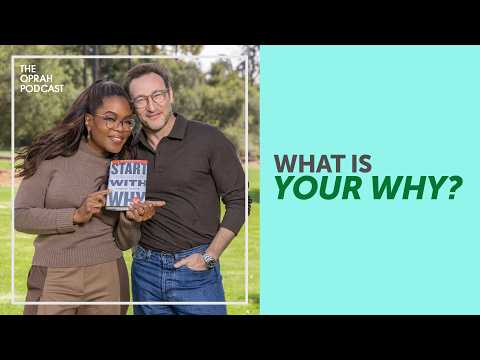
“I look at the past and I find the times where for whatever reason they were in flow.”Oprah podcast interview, 2026 · full transcript →
Sinek on start with why, in his own words
“The goal is to do business with people who believe what you believe.”
“Trust comes from a sense of common values and beliefs.”
“Working hard for something we don't believe in is called stress. Working hard for something we love is called passion.”
“The opportunity is not to invent a why. It's to discover a why.”
Where to watch
 Simon Sinek on Purpose-Driven Leadership: Start With Why2010 · 18 min · full transcriptThe clearest short statement of the Golden Circle and the inside-out logic behind Start With Why.
 Simon Sinek on Start With Why: Leadership, Loyalty, and Trust2012 · 61 min · full transcriptBest for how Start With Why connects to leadership, loyalty, and the difference between inspiration and manipulation.
 Simon Sinek on Start With Why: Book Club Q&A on purpose and leadership2017 · 57 min · full transcriptShows how Sinek himself reframed Start With Why as a leadership book and explains discovering, not inventing, your why.
 Simon Sinek on Trust and Purpose: Why Values Matter2010 · 17 min · full transcriptBest companion for understanding why shared beliefs create trust and what happens when organizations drift from purpose.
 Simon Sinek on Finding Your Why: Purpose, Optimism, and Work2026 · 65 min · full transcriptMost useful for applying the idea personally and figuring out how to find your own why.
Questions people ask
- How does Simon Sinek explain the biology behind decision making?
- How does Simon Sinek explain the brain and decision making?
- How does Simon Sinek think about career and purpose?
- What did Simon Sinek say about trust and shared values?
- What does Simon Sinek say about hiring people?
- What does Simon Sinek say about leadership and succession in companies?
Sources
Every quote above, word for word from the transcripts. Numbers match the text.
“People don't buy what you do; they buy why you do it.”
“Why, I mean what's your purpose, what's your cause, what's your belief? Why does your organization exist? Do we really need another company to do what you're doing? Do we really need another one? Why did you get out of bed this morning, and why should anyone care? As a result, the way we think, the way we act, the way we communicate is from the outside in. It's obvious. We go from the clearest thing to the fuzziest thing. We tell people what we do. We tell them how we're different or how we're better or how we're special, and we expect some sort of behavior—a vote, a purchase, support, whatever it is. But not those leaders with the capacity to inspire. Regardless of their size,…”
“People don't buy what you do they buy why you do it.”
“Why is this: it's this deep-seated purpose, cause, or belief.”
“The goal is not to do business with everybody who needs what you have.”
“The goal is to do business with people who believe what you believe.”
“The goal is not to surround yourself with people who need what you have.”
“Again, the goal is not just to sell to people who need what you have, the goal is to sell to people who believe what you believe. The goal is not just to hire people who need a job, it's to hire people who believe what you believe. I always say that, you know, if you hire people just because they can do a job, they'll work for your money, but if you hire people who believe what you believe, they'll work for you with blood and sweat and tears. And nowhere else is there a better example of this than with the Wright brothers. Most people don't know about Samuel Pierpont Langley. And back in the early 20th century, the pursuit of powered man flight was like the dot com of the day. Everybody was trying it. And Samuel Pierpont Langley had, what we assume, to be the recipe for success.”
“The problem is none of them breed loyalty.”
“There are a million reasons why people will do business with you that have nothing to do with you. You happen to meet some checklist that they have. They happen to hate your competition more. There's a difference between repeat business and loyalty. You see, repeat business means I'll do business with you over and over and over again. Loyalty means I'm willing to turn down a better product at a better price to continue to do business with you. And it's the loyal ones, those who feel like they belong, those who, doing business with you, gives them some sense of identity or belonging—those are the ones. Those are the ones who do great, and the reason is it becomes personal. It becomes personal.”
“I didn't realize, um, when I first started writing that I was writing a leadership book.”
“All leaders have one thing and one thing only: followers.”
“Leaders hold a position of power or authority, but those who lead inspire us.”
“We follow those who lead, not because we have to, but because we want to.”
“The opportunity is to be the leader you wish you had.”
“Leaders hold a position of power or authority, but those who lead inspire us. Whether they're individuals or organizations, we follow those who lead, not because we have to, but because we want to. We follow those who lead, not for them, but for ourselves. And it's those who start with "why" that have the ability to inspire those around them or find others who inspire them. Thank you very much.”
“Company, which is to lead the people. You know, you can't lead nobody leads a company. You lead people. You manage a company. A company is nothing more than a structure. And the funny thing is, when companies start to have financial problems, they hire somebody to fix this, but it's this that went fuzzy. And so the opportunity for succession is not to hire the brilliant engineer, but to hire somebody who doesn't want to reinvent the why, but simply take the torch that was already lit and say, now I will carry it into the next generation.”
“The problem is, as they grow, as what they do becomes more successful, they can no longer rely on themselves. They have to hire somebody who hires somebody who hires somebody who hires somebody... who has to make a decision. Based on what? And what they do starts to grow. That metric. The problem is why they do it starts to go fuzzy. And this is the biggest single challenge any organisation will face. It's this thing right here, the thing that I call 'the split'. Symptoms of the split inside an organisation are when stress goes up and passion goes down. Symptoms of split are things like when the old-timers, the people who were there from the founding, from the beginning start saying things like, "It's not like it used to be. It doesn't feel the same anymore.”
“Simply doing everything that you promise you're going to do does not mean people will trust you.”
“Trust comes from a sense of common values and beliefs.”
“When we're surrounded by people who believe what we believe something remarkable happens: Trust emerges. Make no mistake of it, trust is a feeling, a distinctly human experience. Simply doing everything that you promise you're going to do does not mean people will trust you. It just means you're reliable. And we all have friends who are total screw ups and yet we still trust them. Trust comes from a sense of common values and beliefs. And the reason trust is important, is because when we are surrounded with people who believe what we believe, we're more confident to take risks.”
“Trust is a feeling. Trust is a human experience.”
“What we need is more handshake conversations.”
“If they refuse to shake your hand, even if rationally speaking they've agreed to everything you want, if they refuse to shake your hand, the odds are you won't do business with them. And if you do you feel very nervous about it. This is what trust is, trust is human. It's about human interaction, it's about real conversations. What we need is more handshake conversations. What we need is more handshake discussion, more handshake debate, more handshake friends, more handshake leadership. If we don't then we continue to go through this. and we will not find our own sense of fulfilment and happiness and inspiration. It requires being among people who believe what we believe.”
“The opportunity is not to invent a why. It's to discover a why.”
“I look at the past and I find the times where for whatever reason they were in flow.”
“Working hard for something we don't believe in is called stress. Working hard for something we love is called passion.”
“The golden rule is, um, it has to be for the benefit of others.”
“Um, it's—it’s service. Um, true—true purpose. True purpose is the opportunity to serve those who serve others. There—There was a guy named Matthew O'Reilly, and he was an EMT. It's a 5-minute TED Talk. You can find it on YouTube. And basically what happens is he showed up to a scene of a car accident or bike—a motorcycle accident. And he could tell from this person's injuries that they weren't going to make it. They were conscious, but they weren't going to make it. And, you know, people look at these EMTs and they say, "Am I going to make it? Am I going to die?" And for some reason, we believe that by lying to them, it makes it better.”
“Uh, the golden rule is, um, it has to be for the benefit of others. Um, um, high performance for the benefit of yourself, I don't really know what that means because, at some point, you know, I want to make a million pounds, or make two million pounds. Like, you're going to keep just moving the goal lines and it'll feel like a treadmill at some point. You're, you're going to crash, it's going to happen. Um, but when you live a high performance life for the benefit of others, it's, it's, it's infinite. You can do it forever, and it's rewarding until the day you die.”
“Does knowing your why become ever more important? Because it's something to keep you grounded and keep you coming back to. There's a combination of things I think. Definitely knowing your why is a part of it. Definitely surrounding yourself with people who call you—you know, who tell you you're an idiot—is important. You know, my sister is the first person to be like, "Get over yourself," you know? Yeah, I mean, you know, I can't get away with anything, you know, which is correct, you know. She's known me her whole life. I'm older, so I've got a couple years on her. But I think the other part is the way I view career, which is…”
How this guide was made: drafted with AI from the full transcripts of the recordings cited, then checked: every quotation must match a transcript word for word and be the speaker's own words, and an independent review gates accuracy. Methodology and corrections.


