Simon Sinek on Golden Circle
Sinek’s Golden Circle says the most inspiring leaders and organizations begin with why—their cause or belief—because purpose drives trust, loyalty, and action more deeply than features ever can.
- The Golden Circle moves from why to how to what, not the other way around.
- Sinek says people respond most strongly to purpose and belief, not just products or features.
- Starting with why builds loyalty and trust; manipulation may win transactions but not devotion.
- A real why is discovered, not invented, and it should benefit others.

The Golden Circle starts with purpose, not products
Sinek’s basic claim is simple: the most effective leaders and organizations communicate from the inside out. They begin with why—their purpose, cause, or belief—then explain how they act on it, and only then describe what they do or make. He contrasts this with the more common pattern of leading with what is easiest to point to: products, services, features, and claims of difference.1
For Sinek, why is not a slogan or a revenue target. It is the deeper reason for existence: a cause, a belief, a sense of purpose that gives meaning to the work. He presents the Golden Circle as a way to make that deeper motive visible and intelligible to other people.34
Why matters because people join beliefs before they buy offerings
Sinek’s most famous point is that people are drawn to the reason behind the work, not only the work itself. In his view, a product can satisfy a need, but a clear why creates resonance, identity, and attachment. That is why he says the goal is not simply to sell to anyone who needs what you have, but to attract people who believe what you believe.567
This applies beyond customers. He extends the same logic to hiring and leadership: when people share the belief behind the mission, effort becomes more committed and more meaningful. The Golden Circle is therefore not just a marketing structure; it is a way of aligning the people around an organization with the purpose that gives it life.
Starting with why creates loyalty; leading with what often creates only transactions
Sinek draws a hard line between inspiration and manipulation. Discounts, pressure, fear, novelty, or other external levers may influence behavior in the short term, but he argues they do not create lasting loyalty. They can produce purchases or compliance, yet they fail to build the kind of bond that makes people stay when alternatives look cheaper or better.1011
Loyalty, in his view, is emotional and relational. It grows when people feel trust, belonging, and shared identity, and he treats those as the outcomes of leading with why. That is also why he frames Start With Why as a leadership idea: leaders are the ones who create followers through inspiration, not merely through authority or management.1213141511
“Trust is a feeling. Trust is a human experience.”USI lecture, 2012 · full transcript →
The framework works because it speaks to how decisions actually get made
Sinek links the Golden Circle to a distinction in the brain between rational language and the systems involved in feelings, trust, loyalty, and decision-making. His argument is that when communication starts with what, people may understand the facts, but facts alone do not reliably move behavior. Starting with why reaches the part of us that governs judgment and action, while the what helps people later explain the choice.
This is one reason he thinks many people struggle to explain their deepest motivations. The why is powerful, but it is often harder to articulate than the what. The Golden Circle gives people and organizations a way to express that inner driver more clearly so others can feel it, not just analyze it.4
A strong why is discovered in patterns of meaning and service
Sinek does not treat why as something you make up to sound inspiring. He says it is discovered. To find it, he looks backward at the moments when someone felt in flow, loved the work, and sensed meaning even when the work was difficult. Those recurring experiences reveal the deeper belief that has been there all along.1819
He also gives a moral test for a healthy why: it should be for the benefit of others. Money, fame, and self-focused achievement can be motivating for a while, but he argues they are unstable as purposes and eventually become exhausting. A lasting why points outward in service and makes hard work feel like passion rather than stress.2023
Sinek on golden circle, in his own words
“People don't buy what you do; they buy why you do it.”
“Trust is a feeling. Trust is a human experience.”
Where to watch
 Simon Sinek on Purpose-Driven Leadership: Start With Why2010 · 18 min · full transcriptThe clearest short explanation of the Golden Circle and why starting with why inspires belief and action.
 Simon Sinek on Start With Why: Leadership, Loyalty, and Trust2012 · 61 min · full transcriptBest for how the Golden Circle connects to leadership, loyalty, trust, and the limits of manipulation.
 Simon Sinek on Purpose at Work: Finding Your Why74 min · full transcriptUseful for understanding how why relates to performance, flow, and speaking to the decision-making parts of the brain.
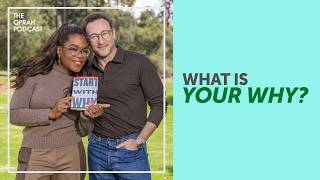 Simon Sinek on Finding Your Why: Purpose, Optimism, and Work2026 · 65 min · full transcriptBest for the personal side of the framework: what a why is and how to discover your own.
 Simon Sinek on Start With Why: Book Club Q&A on purpose and leadership2017 · 57 min · full transcriptHelpful for seeing how Sinek later reframed Start With Why as a leadership idea, not just a communications one.
 Simon Sinek on Start With Why: Purpose, Trust, and Leadership2020 · 50 min · full transcriptGood for hearing how knowing his own why shaped Sinek’s career and his view of trust-centered organizations.
Questions people ask
- How does Simon Sinek explain the biology behind decision making?
- How does Simon Sinek explain the brain and decision making?
- How does Simon Sinek think about career and purpose?
- What did Simon Sinek say about loyalty versus repeat business?
- What does Simon Sinek say about hiring people?
- What is Simon Sinek's golden rule for high performance?
Sources
Every quote above, word for word from the transcripts. Numbers match the text.
“People don't buy what you do; they buy why you do it.”
“Why is this: it's this deep-seated purpose, cause, or belief.”
“…very, very few of us can clearly articulate why we do what we do.”
“People don't buy what you do they buy why you do it.”
“The goal is not to do business with everybody who needs what you have.”
“The goal is to do business with people who believe what you believe.”
“The problem is none of them breed loyalty.”
“There are a million reasons why people will do business with you that have nothing to do with you. You happen to meet some checklist that they have. They happen to hate your competition more. There's a difference between repeat business and loyalty. You see, repeat business means I'll do business with you over and over and over again. Loyalty means I'm willing to turn down a better product at a better price to continue to do business with you. And it's the loyal ones, those who feel like they belong, those who, doing business with you, gives them some sense of identity or belonging—those are the ones. Those are the ones who do great, and the reason is it becomes personal. It becomes personal.”
“Trust is a feeling. Trust is a human experience.”
“All leaders have one thing and one thing only: followers.”
“Leaders hold a position of power or authority, but those who lead inspire us.”
“We follow those who lead, not because we have to, but because we want to.”
“I look at the past and I find the times where for whatever reason they were in flow.”
“The opportunity is not to invent a why. It's to discover a why.”
“Working hard for something we don't believe in is called stress. Working hard for something we love is called passion.”
“The golden rule is, um, it has to be for the benefit of others.”
How this guide was made: drafted with AI from the full transcripts of the recordings cited, then checked: every quotation must match a transcript word for word and be the speaker's own words, and an independent review gates accuracy. Methodology and corrections.