Ray Dalio on Radical Transparency
Ray Dalio sees radical transparency as the practical foundation of an idea meritocracy, where honest disagreement, trust, and believability-weighted decisions help the best ideas win.
- Radical transparency exists to help the best ideas win, not to shock people.
- Dalio ties transparency to trust because problems grow in the dark and disagreement needs to be surfaced openly.
- He adopted it after painful mistakes taught him to ask how he knows he is right and to seek smart disagreement.
- Transparency only works inside an idea meritocracy with fair ways to resolve conflict and weigh views by believability.
Radical transparency is a tool for making better decisions
Dalio does not present radical transparency as an end in itself. He connects it to building an idea meritocracy, a system designed to get the strongest thinking on the table so the best ideas prevail rather than hierarchy, ego, or simple majority rule1234.
In his view, collective decision-making can outperform individual judgment when it is structured well. Radical transparency helps create that structure by exposing reasoning, making disagreements visible, and allowing decisions to be evaluated on merit instead of status56.
He arrived at transparency through painful humility
Dalio links this philosophy to being badly wrong and suffering for it. That experience pushed him away from certainty and toward a habit of questioning his own judgment, especially by asking how he knows he is right and by seeking out smart people who disagree with him896.
That shift matters because his broader view of success starts with recognizing the limits of what you know. He argues that handling not knowing is more important than what you already know, and radical transparency is one way to confront blind spots instead of protecting them116.
Transparency is meant to build trust, not just candor
Dalio argues that radical transparency strengthens trust because it brings hidden tensions into the open. When people do not understand how decisions are made, resentment and factions grow; openness makes it harder for unresolved conflict and bad behavior to hide1213.
He also ties it to meaningful relationships and meaningful work. For him, strong relationships are not built by avoiding conflict but by handling conflict directly, using shared principles that let people say what they really think and still move forward together141516.
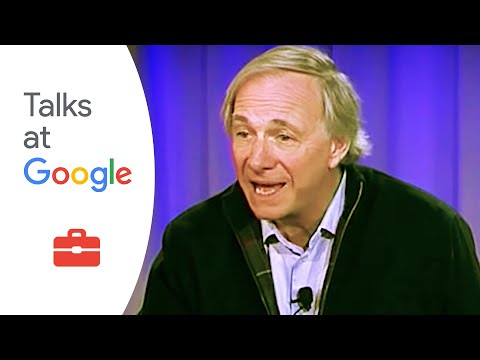
“You know? There's those people who are making the decisions, and you don't really understand it, and you just have to sort of go along with it. And then that becomes a source of tension, and then there are factions and all that, and there's no resolution. You have to have resolution and get past it. So, you know, the the radical truthfulness and the radical transparency brings trust. It also means that bad stuff, it's tough for bad stuff to happen because bad stuff happens in the dark.”Talks at Google discussion, 2017 · full transcript →
Open disagreement needs rules, or it turns destructive
Dalio is not arguing for everyone to argue endlessly or for every opinion to count the same. He stresses that disagreement needs an agreed process for resolution, so people can air differences fully, trust the fairness of the process, and then move on rather than stay stuck in personal tension1617.
That is where believability comes in. In his model, decisions should not be made by autocracy or pure democracy, but by weighting views based on who has demonstrated judgment in that area, so transparency feeds a fairer and more effective decision process6.
In practice, transparency means exposing thinking and testing it
Dalio describes a culture where reasoning is made explicit and visible. In one well-known example, conversations are broadly recorded and accessible, which reflects his larger commitment to making judgments inspectable rather than hidden behind authority18.
He repeatedly connects this openness to writing down principles and decision rules so they can be tested, improved, and applied again when similar situations recur. Transparency, in that sense, is not only about interpersonal honesty; it is also about making your thinking clear enough to examine, stress-test, and systemize192022.
He believes this becomes even more powerful when supported by tools and algorithms that capture judgments and help evaluate ideas consistently. The point is to make decision quality less dependent on any single person and more dependent on a process that can learn2322.
Dalio on radical transparency, in his own words
“You know? There's those people who are making the decisions, and you don't really understand it, and you just have to sort of go along with it. And then that becomes a source of tension, and then there are factions and all that, and there's no resolution. You have to have resolution and get past it. So, you know, the the radical truthfulness and the radical transparency brings trust. It also means that bad stuff, it's tough for bad stuff to happen because bad stuff happens in the dark.”
Where to watch
 Ray Dalio on Idea Meritocracy: Why the Best Ideas Win2017 · 17 min · full transcriptBest short overview of why Dalio pairs radical transparency with idea meritocracy and better collective decisions.
 Ray Dalio on Principles: Radical Truthfulness and Idea Meritocracy2017 · 97 min · full transcriptMost direct discussion of radical truthfulness, transparency, trust, conflict, and how disagreements should be resolved.
 Ray Dalio on Principles and Mistakes: How Pain Becomes Progress2018 · 127 min · full transcriptShows how painful mistakes led Dalio to humility, open-mindedness, and evidence-tested feedback.
 Ray Dalio on Principles and Idea Meritocracy: How to Think Better Together2019 · 66 min · full transcriptUseful for seeing how transparency fits into his larger system of principles, learning, and handling not knowing.
 Ray Dalio on Principles and Decision Making: Truth, Learning, and Success2021 · 90 min · full transcriptBest for understanding the truth-seeking mindset underneath transparency and thoughtful disagreement.
Questions people ask
- How does Ray Dalio make decisions using principles and algorithms?
- How does Ray Dalio make decisions when he disagrees with people?
- How does Ray Dalio test his decision rules?
- What did Ray Dalio say about believability weighting?
- What did Ray Dalio say about idea meritocracy and how the best ideas win?
- What did Ray Dalio say about handling conflict and disagreements?
Sources
Every quote above, word for word from the transcripts. Numbers match the text.
“I wanted to make an idea meritocracy.”
“…the best ideas would win out.”
“I wanna describe Bridgewater as being an idea meritocracy.”
“…an idea meritocracy is to get the best ideas that are available out there…”
“Collective decision making is so much better than individual decision making if it's done well.”
“Rather than thinking I'm right, I started to ask myself, how do I know I'm right? I gained a humility that I needed in order to balance with my audacity. I wanted to find the smartest people who would disagree with me to try to understand their perspective or to have them stress test my perspective. I wanted to make an idea meritocracy. In other words, not an autocracy in which I would lead and others would follow, and not a democracy in which everybody's points of view were equally valued, but I wanted to have an idea meritocracy in which the best ideas would win out. And in order to do that, I realized that we would need radical truthfulness and radical transparency. What I mean by radical truthfulness and radical transparency is people needed to say what they really believed and to see everything.”
“How do I know I'm right?”
“Arrogant? I was incredibly arrogant. I couldn’t have been more wrong. That was the exact bottom in the stock market, and we had this decade of success. It was extremely painful. I lost money for clients. I lost so much money that I had to borrow $4,000 from my dad to pay for my family bills. I had to let people go. It was really terrible, but it turned out to be probably one of the best things that happen in my life because it changed my approach to decision-making. In other words, it gave me a humility, a fear of being wrong that was to go with my audacity, and it let me stress-test, “Am I thinking?”
“…being successful has more to do with knowing how to deal with your not knowing than anything you know…”
“Radical transparency is a very effective tool in terms of building trust and putting things to life.”
“You know? There's those people who are making the decisions, and you don't really understand it, and you just have to sort of go along with it. And then that becomes a source of tension, and then there are factions and all that, and there's no resolution. You have to have resolution and get past it. So, you know, the the radical truthfulness and the radical transparency brings trust. It also means that bad stuff, it's tough for bad stuff to happen because bad stuff happens in the dark.”
“For me, the most important thing in terms of saving really has been relationships, meaningful work, and meaningful relationships.”
“I think the biggest issue is how we deal with conflict and how we have... What are the principles that unite us…”
“Then you have to have agreed upon ways of getting past your disagreement. If you have your disagreements that are gnawing at you and so on, it's like a lower case, a legal case. Okay. You go in. You have a trial. You do it. You get... But you believe that the decision making system is fair. And because you believe it's fair and you've had that opportunity that you can make your, that you say, now we can get past the disagreement and move on rather than being stuck with it. So those are the three things that an idea meritocracy has to have, you know. And so if you think, do you want an idea meritocracy? You have to think about those three things. Okay? So this is the thing. Meaningful relationships and meaningful work together have produced this success because... And then this radical truthfulness and radical transparency, you know, produces an idea meritocracy.”
“Well, there are, you know, there are a number of there are a number of things that are in the book. First first, I think... Let me answer it before I go to that particular one. Whenever there's whenever there's conflict, I recommend that you go to a higher level, one level up. Whenever you have a disagreement, just go to go to one level up with the person that you're in the conflict with or even yourselves when you have a dilemma and look and come up with an agreement of how you should be with each other. In other words, let's say you and I have a disagreement. Okay. Rather than being caught in the anger of that disagreement, to go above and you should say, how do we disagree? How should we disagree? Form a contract of how you should be with each other and make that a practical modus operandi.”
“…we literally tape almost all conversations and let everybody see everything…”
“I started by every time I would make a decision, I would write down the criteria. I did it basically because when I would close out a trade, I wanted then to see how my thinking worked. And then I stumbled across the idea that if I can make that clear enough, I could test how that decision would have worked in the past. I could run it through all countries, all past period of time, and that gave me a reflection on that decision rule. Then I discovered that actually if I could take that criteria and put it into an equation, I could take in data, and it would say, "Bring it to me," and I would make those decisions. I stumbled across the fact that writing down the principal, making it an equation, allowed me to be able to test it and then also allow decision-making to be happening in that way.”
“Well, one of the things that I found valuable was if I write my decision rule out, depending on the nature of the decision rule, I can test how it would have worked in in the past and get some sense of it. Like investment decision rules, I have... I say they have to be timeless and universal. So that means I test them from 1900 to the present. I test them in all different countries. And and being able to specify them then allows me to get a sense of distribution of those types of probabilities. Some things are qualitative and it's different, but I think that being aware of what I was describing in the book of how to think about that probability, you know, and so it helps helps you.”
“Use algorithms to have an idea meritocracy to make better decisions than any individuals could. And that's been really the key to the success. It's one of the... It's in the work principles here. And it's that one of those things that I really wanna emphasize because I think we're now in an era in which when we talk about open source and such things, we're now in an area an era where idea meritocratic thinking can be then systemized to produce better results than any individual can produce.”
“And imagine if they knew what you were really thinking and what you were really like. It would certainly clear things up a lot and make your operations together more effective. I think it'll improve your relationships. Now imagine that you can have algorithms that will help you gather all that information and even help you make decisions on... In an idea meritocratic way. This sort of radical transparency is coming at you, and it is going to affect your life.”
How this guide was made: drafted with AI from the full transcripts of the recordings cited, then checked: every quotation must match a transcript word for word and be the speaker's own words, and an independent review gates accuracy. Methodology and corrections.
