Ray Dalio on Principles: Radical Truthfulness and Idea Meritocracy

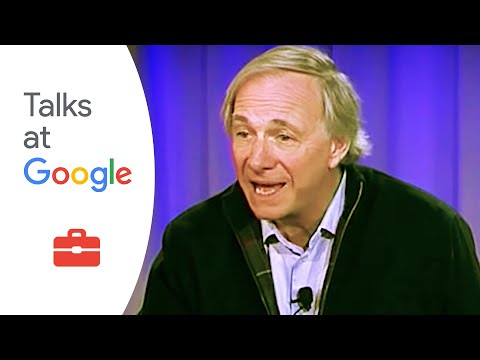
What Dalio talks about
Ray Dalio gave this Talks at Google discussion in 2017 about his book Principles and the ideas of radical truthfulness, radical transparency, and idea meritocracy.
Also known as: Ray Dalio on Principles; Talks at Google discussion; Principles: Life and Work | Talks at Google.
Ray Dalio lays out the core ideas behind his book Principles and how they shaped Bridgewater Associates: radical truthfulness, radical transparency, and idea meritocracy. He argues that meaningful work and meaningful relationships depend on open disagreement, clear principles, and a fair way to resolve conflicts.
He also describes how failure became a learning process for him, especially after his 1982 market mistake, and how pain plus reflection produced better decision-making principles. Dalio connects these ideas to personal growth, management, and the use of algorithms and data to improve decisions.
The conversation broadens into meditation, family, wealth inequality, populism, and the economic outlook. Across all of it, Dalio keeps returning to the same theme: better outcomes come from facing reality honestly and designing systems that help people think more clearly together.
An interviewer moderates audience Q&A, and several audience members ask questions.
In his words
“Pain plus quality reflection would make... Give me progress.”
“I wanna describe Bridgewater as being an idea meritocracy.”
“Radical transparency is a very effective tool in terms of building trust and putting things to life.”
“Who gives a damn what you think?”
“I think the biggest issue is how we deal with conflict and how we have... What are the principles that unite us”
Key points
- Bridgewater was built as an idea meritocracy centered on meaningful work and meaningful relationships.
- Radical truthfulness and radical transparency let people surface real disagreements and stress-test ideas.
- Dalio treats failure as a learning process: pain plus reflection produces principles for the future.
- He says successful decision-making requires five steps: set goals, diagnose problems, find root causes, design solutions, and follow through.
- He describes the 'two yous'—the thoughtful self and the emotional self—and says meditation helps align them.
- He argues that data, believability weighting, and algorithms can improve decisions by making thinking visible.
- He sees rising inequality and populism as major economic and political risks that need practical, metric-based solutions.
Full transcript: Ray Dalio, Principles: Life and Work (2017)
InterviewerSo thank you all for joining us. I'd like to introduce you to Ray Dalio. He's the founder of Bridgewater Associates. He founded it in 1975 and is one of the most successful hedge funds in history. So let's give Ray a nice Google welcome. Thank you for being thank you for being here.
Ray DalioI'm in a stage in my life where I'm entering what I call the third stage of my life. I think of life as being existing in three big stages. The first is that, you know, you're learning from others. You're dependent on others. You're a kid. Second stage of your life is then you're working. Others are dependent on you, and you're trying to be successful. Then after you get to the later stage of life, third stage of your life is others are successful without you. And that you're free, according to Joseph Campbell, free to live and free to die. Okay? So that you have that element of freedom. And so I'm at a stage in my life where, you know, I started Bridgewater out of a two bedroom apartment in 1975, and I've brought it to where it is now.
According to Fortune, it's the fifth most important private company in The United States. It's been successful. It's been good. And that my objective at this particular stage is to help others be successful without me. I learned along the way certain principles. Now, every time I would make a decision, I would write down the reasons I would make that decision. And I put them out. I debated them, and I developed these principles. So think about principles as just being these reasons for making a decision. If you're in this this situation, how do you deal with it? It was also very important to me to operate in a very unusual way that seemed very sensible to me and it's an idea matter... Meritocratic way.
So I wanna describe Bridgewater as being an idea meritocracy. In other words, a real idea meritocracy, which I'll explain and show to you. So real idea meritocracy in which the goals are meaningful work and meaningful relationships. Meaningful work, I mean, you're on a mission, that you feel you're on a mission together to do those great things, and meaningful relationships, meaning, that you care about each other. It's part of a community and to be on that mission together. And that was really good... Great in terms of our success, but it was meaningful work and meaningful relationships through radical truthfulness and radical transparency. That means literally people saying anything that they feel that they wanna say in terms of being polite, of course, but but sharing what they really believe is true and working themselves through to have an idea meritocratic way and to literally record everything for everybody to hear.
So, I mean, literally, there are a combination of videos and tapes of all meetings that happen, so that nothing is hidden. Because you can't have a real idea of meritocracy if you can't see things yourself. And so it's a very unusual, place, and it was the... Really the basis of our success. And I wanna explain that way of operating to you because this idea meritocratic way in which there's meaningful work and meaningful relationships through radical truthfulness and radical transparency so that you could have thoughtful disagreement and have ways of getting past that disagreement to then move on like a legal system. That has been the key to our success. So that's what I wanna try to convey to you. And I'm just gonna take a few minutes to try to go through a few slides to give you a sense of this.
You know, I wanted big audacious goals. I wish big audacious goals for you. Go after your goals, and on your way to your goals, you're going to encounter your problems and your failures. Right? That's gonna happen. Otherwise, you just go straight to your goals. No. That's the learning process. You encounter your failures. Failures is part of the learning process. From the failures, what I found was great is I I started to think of failures as lessons. I started to think of them as puzzles rather than develop emotional reactions to those failures. I started to think pain plus quality reflection would make... Give me progress. So I started to think of almost the failures like puzzles.
That if I could study the puzzles, the puzzles was what would I do differently in the future that wouldn't produce that problem again when it happened? So... And then I would reflect, well, what was the... That? That would be my principles. What would I do differently in the future? If I solve that puzzle, I would get a gem. And the gem was principle, a principle to handle it better in the future because failure is a learning process. It's an essential part of the learning process. If you can realize that and you write down those principles, write them down, it's been fantastic. So we learned those principles, and then it would help me improve, and then I would go on to more audacious goals. And I look at evolution, personal evolution, almost every evolution, evolution of a company, evolution of everything as being this constant looping process that I sort of think of as this five step process.
Right. If... In other words, to be successful, you have to you have to do five things. You have to... First, you have to know what your goals are and go after those goals. Be clear on your goals. And you will encounter problems on the way to those goals. Those will be your barriers. Okay? They're your tests now. Don't just emotionally complain. Think about them as your problems. You have to diagnose those problems to the root cause to get at the root cause. And that root cause might be yourself, what you're doing wrong or what somebody else is doing wrong. So you can't depersonalize it. You have to really look at it so that you make those changes. And when you get at that root cause, only by knowing that root cause can then you design a way to get around that root cause. Like, you're not good at something yourself, it's okay if you find somebody else who's good at the things that you're not good at because nobody can be good at everything.
Right? So... But you have to do that. You just can't keep banging yourself in the wall. So you have to design something that's practical to get around with it, and then you have to follow through and do it. A lot of people come up with designs, but you have to do the thing that's necessary. And by trying that thing that's necessary, again, you will find out. Are you getting to your goals or you'll comp or encounter your next set of problems and so on? And that I believe is the first personal evolutionary process that has helped me. Those rules that I was able to write down and that you can get in these... This book principles, which is why I'm passing them along, though that... Those rules, we were actually able to then to put into algorithms and build decision making processes that replicate the brain. We'll get into that in a minute.
Okay. So, in order, in order to be successful in the markets, one has to be an independent thinker. In order to be an entrepreneur, one has to be an independent thinker and bet against the consensus and be right. Because the consensus in the markets is built into the price. Whatever anybody thinks, that's built into the price. So you have to think... You have to bet against the consensus. And you're gonna be wrong a fair amount of times about betting against the consensus. But in any case, you need to be an independent thinker. And for an entrepreneur, you need to be an independent thinker because the... You're inventing new stuff. You're doing something, and you know... Don't know if you're right. So in order for me to be successful, I needed to have a bunch of independent thinkers in order to have them have, be effective.
Okay. Well, now how are you gonna get this bunch of independent thinkers to agree on anything? Okay. I had to have an idea meritocracy. In other words, I had to have a system that literally systematically allows for thoughtful disagreement so that these idea meritocratic people could then get at the right answer because that's fantastic. If you can have that thoughtful disagreement to get at the right answer, it's very powerful. By having that and then systemizing it, principled systems, a system for having thoughtful disagreement for an idea of meritocracy, we could produce greater amounts of successes. We also produced failures, but we would look at that way, produce our learnings. And that produced, as a result, happy employees who really believe in this idea of meritocratic thing and own the company, intellectually and otherwise, own the company.
And we had happy employees. And then it became easier to attract those types of people, those types of people who believe that, you know, everybody has the right to make sense of things and that there's a power in thoughtful disagreement. And that allowed us to attract more people, and that was the basis of going from the two bedroom apartment to Bridgewater now. So we have about, now we have about 1,500 people, and that's and that's how it works as an idea meritocracy. And I wanna pass that along to you, and I wanna say, okay. So what is an idea meritocracy? You can have your own versions of this. You pick what is fine to you, but three different things are necessary for an idea meritocracy. First, you... Everybody has to put their honest thoughts on the table to see. Now I watch this, and I think it's so many organizations, so many people.
They all keep it bottled up in their heads. Right? You know? And they're critical behind the scenes, and that's bad. So can you put your honest thoughts on the table with other people's honest thoughts so that you understand what people are thinking. Okay? It makes everything, first of all, a lot more efficient. Right? It's terribly inefficient when everybody doesn't know what the other person's thinking. And then also, it doesn't allow ownership. It can't be an idea meritocracy if you just don't work it through. Everybody's talking behind the scenes. We we don't allow talking behind the scenes, but anybody can challenge anything at any time. Okay. Then you have to understand the art of thoughtful disagreement. Okay?
Thoughtful disagreement. So many people react badly to disagreement. You have to change the modus operandi and start your thinking. It should be curiosity. How do you know who's right? How do you know who's wrong? Okay. It should prompt curiosity, not anger. It tends to produce some extent anger because it's like a barbaric animal behavior that what happens is the amygdala part of us has this flight or flight thing, and then it's viewed as an attack. You know? And and you you have to... That's not good. So there are protocols that we have that I won't go into now that I don't have time, but they're out in the book of how do you have the art of thoughtful disagreement to raise the probabilities. Because collectively, you're going if if you have an idea meritocracy and you know how to do this well collectively, you're gonna make much better decisions than individually.
If you just are stuck with the information that's in your head and your opinions, that's that's that's terrible. I believe that one of the greatest tragedies of mankind, such an easy thing to fix, is the people who are stuck with wrong opinions in their heads that they don't put out there and stress test and say... And raise their probabilities of being right. So the art of thoughtful disagreement, you have to understand the author... Thoughtful disagreement that brings in better thinking than you individually has and has a probability of moving you to a better answer than you would have individually. That requires a skill. And so then you have the disagreement. You know, that collective decision making is very powerful. It's done well. But you might still have a disagreement after, those things. You might come up.
Then you have to have agreed upon ways of getting past your disagreement. If you have your disagreements that are gnawing at you and so on, it's like a lower case, a legal case. Okay. You go in. You have a trial. You do it. You get... But you believe that the decision making system is fair. And because you believe it's fair and you've had that opportunity that you can make your, that you say, now we can get past the disagreement and move on rather than being stuck with it. So those are the three things that an idea meritocracy has to have, you know. And so if you think, do you want an idea meritocracy? You have to think about those three things. Okay? So this is the thing. Meaningful relationships and meaningful work together have produced this success because... And then this radical truthfulness and radical transparency, you know, produces an idea meritocracy.
That's it. Okay. The other thing is in order to have an idea meritocracy and in order to have great personal development... Here, when you know what someone is like, you know what you can expect from them. Okay. Can you talk about what people are like? Can you deal with really getting at what people are like? Do you know what you're like? Or are you gonna hide those things and not talk about those things? Okay. People who wanna come into this environment would like to honestly know what their strengths and weaknesses are and work on those so that they can produce better teams, the people who have some weaknesses, can work with people who have corresponding strengths. Okay? And also know about themselves and also be very straightforward that I can hand you that responsibility that, but I can't hand you this responsibility because you appear to have these, weaknesses.
How do you get objectively at the question of whether you have those weaknesses or those strengths? Can we have... Do that objectively? That is really great. So this is an important element that has been fantastic for us, and I'll give you a sense. So this is just making the point that, you know, on a job, quality is needed, than what somebody is like, and the goal is to eliminate that. So I'm just going to give you... So now I use technology and algorithms. I started, you know, twenty five years ago to... And we do... Have done it to a great enormous degree, use algorithms to take principles and put them into making decision making systems. All of our investment decision making is made by replicating our thinking and actually putting them in algorithms and taking in data.
And we do the same thing for about half of our, management processes. And I do believe that we're on the path that we will have, algorithmic idea meritocratic decision making done by algorithms that can see everything and that can make better decisions than individuals stuck in their heads. And because you can specify the algorithm so everybody could see the algorithms, everybody could see the criteria, and they can evaluate the merit of the criteria. But to just give you a little sense of that, what I wanna do is just show you a little clip of one of the tools that we use, and it'll give you a flavor of what we're doing. Okay. So who can hit the clip? In order to give you a glimmer into what this looks like, I'd like to take you into a meeting and introduce you to a tool of ours called the dot collector that helps us do this.
A week after the US election, our research team held a meeting to discuss what a Trump presidency would mean for The US economy. Naturally, people had different opinions on the matter and how we were approaching the discussion. The debt collector collects these views. It has a list of a few dozen attributes. So whenever somebody thinks something about another person's thinking, it's easy for them to convey their assessment. They simply note the attribute and provide a rating from one to 10. For example, as the meeting began, a researcher named Jen rated me a three, in other words, badly, for not showing a good balance of open mindedness and assertiveness. As the meeting transpired, Jen's assessments of people added up like this.
Others in the room have different opinions. That's normal. Different people are always going to have different opinions, and who knows who's right? Let's look at just what people thought about how I was doing. Some people thought I did well, others poorly. With each of these views, we can explore the thinking behind the numbers. Here's what Jen and Larry said. Note that everyone gets to express their thinking, including their critical thinking, regardless of their position in the company. Jen, who's 24 years old and right out of college, can tell me, the CEO, that I'm approaching things terribly. This tool helps people both express their opinions and then separate themselves from their opinions to see things from a higher level. When Jen and others shift their attentions from inputting their own opinions to looking down on the whole screen, their perspective changes.
They see their own opinions as just one of many and naturally start asking themselves, how do I know my opinion is right? That shift in perspective is like going from seeing in one dimension to seeing in multiple dimensions. And it shifts the conversation from arguing over our opinions to figuring out objective criteria for determining which opinions are best. Behind the dot collector is a computer that is watching. It watches what all these people are thinking, and it correlates that with how they think. And it communicates advice back to each of them based on that. Then it draws the data from all the meetings to create a pointillist painting of what people are like and how they think. And it does that guided by algorithms. Knowing what people are like helps to match them better with their jobs.
For example, a creative thinker who was unreliable might be matched up with someone who's reliable but not creative. Knowing what people are like also allows us to decide what responsibilities to give them and to weigh our decisions based on people's merits. We call it their believability. Here's an example of a vote that we took where the majority of people felt one way, but when we weighed the views based on people's merits, the answer was completely different. This process allows us to make decisions not based on democracy, not based on autocracy, but based on algorithms that take people's believability into consideration. Yep. We really do this. And so that you could see believability weighting.
So let's imagine that you have data on everybody so that, you know, you just don't go walking in a room and everybody's got an opinion because... And without actually thinking with some element of score who is more likely to have the better opinion because there's a certain dynamic. You put, I don't know, 10 people in a room, and you're gonna get one of two things. You're either going to have idea merit. You're gonna either have autocratic decision making. In other words, everybody feeds their opinions, and then the guy who is responsible for that then says, okay. Here's my decision based on that. That's more normal. Sometimes you'll go around the room and what does everybody think and then there's a notion to a consensus. And that's not so good either. What's best, what I I did because I really don't know that I have the right answer.
I really don't running the company. This... The reason I did this as it was out of need. I wanna triangulate about people who I believe are... Might might have better thinking or... And if three believable people believe one thing and I believe something else, there's a good chance that I might be wrong. And also, what am I gonna do? How... What about for them? So I like to have these believability scores that is accumulated by data and other people's thinking of who is better and worse at different things. And then you... People can change those scores or take those into consideration. And that's what believability weighted decision making is because it helps the idea meritocracy. Okay. So that's what we do. We'll go to the question and answer. The the important thing here is to talk about idea meritocratic decision making. However we choose to do it and whatever tools we use to get at that is really of subordinate importance to the idea of how do you have that idea meritocratic decision making.
I believe that what you're going to see is if you start to get to this principle decision making and idea meritocratic decision making, what you're going to see is paths, print... The learning of principles for dealing with situations that themselves will be idea meritocratic. So if you have a situation and you're going to, okay, Google to find out what the facts are now, you will increasingly be able to go to Google and find out how you should handle certain things, principles, and and the like in that idea meritocratic way with believability weighted decision making and the alike. So I wanna throw that out there, and then we'll have to our conversation.
InterviewerI'd like to start with you had a concept called the two yous and how that affects our thinking process and also taking feedback. Can you talk about that?
Ray DalioMhmm. Well, the brain actually has a lot of parts in it that are the things that compete with each other to make decisions. But the two big yous are the thoughtful you that is in our conscious mind, and then the emotional you, which is in our subconscious mind. There are a lot of motivations that you probably don't even know that are subliminal, that came from maybe your early childhood or your circumstances that are below the surface, and they're at odds. They struggle with each other. So when you're... Like the issue of would you like to know your weaknesses? Would you like to know what other people really think about you? Yep. Okay. Intellectually, you would like to know those things.
Emotionally, you might not like to know those things. And so when you're dealing with our environment and you say, would you like to have this environment of radical truthfulness and radical transparency? Almost everybody intellectually says it. And when they're going through it, they say it. And you see them also struggle with their emotional selves as they're going through it until they readapt. And when they start to readapt and they say, knowing what's true is good. And, yeah, now I know my weaknesses and I know what other people are thinking about me, and I can approach what to do about it, then they sort of make a transition to the other side. So we have that that are two yous that lead to struggles like, you know, disagreement. You know, disagreement and finding it emotionally difficult.
That's curiosity. Why shouldn't it be a joy? But we have that emotional thing that we have to struggle. So that's the two yous.
InterviewerAnd what are some tips that people can help themselves get through the two yous issue to make them more resilient to feedback?
Ray DalioWell, there are, you know, there are a number of there are a number of things that are in the book. First first, I think... Let me answer it before I go to that particular one. Whenever there's whenever there's conflict, I recommend that you go to a higher level, one level up. Whenever you have a disagreement, just go to go to one level up with the person that you're in the conflict with or even yourselves when you have a dilemma and look and come up with an agreement of how you should be with each other. In other words, let's say you and I have a disagreement. Okay. Rather than being caught in the anger of that disagreement, to go above and you should say, how do we disagree? How should we disagree? Form a contract of how you should be with each other and make that a practical modus operandi.
That's what we do. And then there's also then the ways we do it. So the ways we do it are certain things. First, to know that decision making is a two step process. There's first taking in, and then there's deciding. The capacity to take in the other person's point of view. The knowing... Noticing how your body is reacting, noticing how you are reacting. Am I having my heart rate rise? Can I pause? We have something like the two minute rule. Said, can I have two two minutes? Then that person has the two minutes to say what they want. Having those kinds of protocols, there are a number in the room explained in the book, where there's curiosity, where there's not blocking.
You know, somebody in a discussion will do a lot to block the taking it in. So these protocols... I won't go through them all. But those protocols... Having those protocols in place that you practice are fair. I have created an app called a dispute resolver. Okay? So when anybody has a dispute, you push the button, and there's a path in the dispute resolver. It's explained in the appendix to the book. All the tools are. And you... There. And it describes procedurally what one does depending on the level of the dispute. Like, a very common thing is if you and I have a dispute, one of the simplest things to do is for you and I to agree... Mutually agree on a mediator. Yep. So we agree on a mediator and move forward.
Some others might be matters of principle and almost progresses like legal cases. What's your evidence? What's this? And who is the judge?
InterviewerNow, when you have this dialogue and discussion about feedback and it might turn into a tense situation, like, with disagreement, are there mediums of exchange that you prioritize? Because I I see some people who will go towards email, but when you use email, you miss tone and content and context.
Ray DalioAs a generalization, we want the person to find the medium of exchange that they're most comfortable with Mhmm. Because there are pros and cons to each. Like, some people in the moment feel that they're not as spontaneous in the moment, or they may be more introverted, and they think that they won't present themselves the best in a in a person one on one discussion. So that they would prefer by email to say, listen, I'd like to lay out my thoughts, hear your thoughts by email, and then have that opportunity to have the back and forth. Some people would like to do it other ways. The important thing is that they just agree on what's most effective for them.
InterviewerExcellent. Now, let's say an organization goes through a calamity and there's a trust issue in the organization. How does the company go about rebuilding the trust within employees?
Ray DalioWell, again, I think radical truthfulness and radical transparency is the means of doing it. What what I did, what my experience would be, if you have radical transparency Mhmm. So literally every every crisis I was in, every situation I was in, I would have a camera in that discussion as we looked at the pros and cons of the issue so everybody could see that pros and the pros and cons of the discussion. So you know there's no spin. You have a trust issue if it's hidden behind the scenes, I think, And with that radical transparency, so everybody could see... Just imagine what it would be like here. Okay? For whatever issue that you could see how people are making decisions, literally, that weighing the pros and cons and seeing how they are real.
And it could be anything from the top of the organization to just even somebody firing somebody else so you don't use... Was it done well? That radical transparency and then coming out of it and writing principles as to why did you handle it that way and then putting those principles out so that everybody could debate that principle or look at that principle, not in an enormous time consuming way, but in an effective way. So... And then having an idea meritocratic way where you look at that and you say, okay. That decision was made that way. Maybe that's not the way I would do it, but I now understand the thinking behind it. Because if you don't have that kind of thing, then there's alienation. If you don't have trust and you don't have an appreciation, then increasingly you build an organization in which there's a we and them.
You know? There's those people who are making the decisions, and you don't really understand it, and you just have to sort of go along with it. And then that becomes a source of tension, and then there are factions and all that, and there's no resolution. You have to have resolution and get past it. So, you know, the the radical truthfulness and the radical transparency brings trust. It also means that bad stuff, it's tough for bad stuff to happen because bad stuff happens in the dark.
Audience memberIt's true.
Ray DalioRight? You make it radically transparent, and everybody could bring it up, then everybody owns it. Radical transparency is a very effective tool in terms of building trust and putting things to life. Believe me, none of this is is perfect, but it's certainly been miraculous for us.
InterviewerExcellent. Why do you think organizations aren't going towards radical transparency?
Ray DalioFirst of I think that they inevitably will. Mhmm. I mean, you must know that it's so easy to collect data on everybody. So everybody's gonna know what everybody's like. And then the question is, who's got the radical transparency? Mhmm.
InterviewerYeah.
Ray DalioAnd then what are you gonna do with the radical transparency? You're gonna make what you're doing with it radically transparent? Okay? So I think evolutionarily, we're going to go to this, you know, radical truthfulness and radical transparency because it's gonna be tough to hide. I think it's a control thing and a and a time and cons... Time thing. So let's say control thing means you're a decision maker and all these people have all these different points of view. And how meritocratic is it to hear all this and will never resolve those things? You know, somebody just wants to sort of get on with their decision making. And I think that that's because they're still sort of in this what I believe will be an old world mindset if that it is all in the head Mhmm.
Rather than out of the head and and that notion of how do you make the best algorithmic decision making so it's not in the head. But we still have the it's in my head and I wanna do what I wanna do and I know better and how do I do that. That's that's a big part of it. And then the thinking, of course, about the time of how do you resolve it with all these people so that you have a real time efficient effective way of having an idea meritocracy. Those are the barriers. And then there's this to you thing. Okay? That emotional you thing. Okay. Those are the, I would say, main barriers.
InterviewerNow you said what's important for the mission of Bridgewater is having meaningful relationships. Have you found that with this transparency, you've been able to just, I guess, supercharge the relationships that you've had in the company?
Ray DalioIt's a... Yeah. Like, just say, we don't even have. Yes. Mhmm. But we don't even have to go to the company level.
InterviewerMhmm.
Ray DalioI'm just saying any group of individuals can decide whether they're going to be radically truthful and transparent and on the same mission.
InterviewerExcellent.
Ray DalioYou get five people together Mhmm. And they say we're gonna be on that. And that's largely where it started too because I start the company, and I say, how am I gonna be with each other?
Speaker 4Mhmm.
Ray DalioSo it has... Because that honesty and being on that mission is gonna bring people closer together. It almost brings everybody closer together. The hiding stuff in the absence of trust is bad. And not only the absence of trust, but the... You can't have real ownership if you don't understand and don't have a say. You know? Everybody, and like I'm saying, everybody has the right and obligation to make sense of things. It's powerful. And when you're in it together, something much more magical happens than a paycheck and a job. You know?
InterviewerMhmm. Now when you've created your principles, has there been processes where you said maybe this principle worked at this point, but now we need to reevaluate it?
Ray DalioConstantly. Because like you... So I guess I wanna describe it. I think everything happens, just just about everything, happens over and over again. We instead look at things as individual things that are coming us, so it's like we're in a snowstorm. But if you just sort of say say, what species of thing, what species of encounter am I having? And you write a principle for it, and you write that. Then when the next one comes along again, you see, ah, it's that species. And you go to that principle and you look at it, and everyone's slightly different. And that leads to then the refinement of the principles in those differences. Right? And then to do that transparently is very powerful.
So, yeah, always... And you realize, of course, that no principle is perfect. No principle works. So those different gradations get more fleshed out, become clear. And that's what the that's what the book of principles is about. It's a it's a bunch of these things, and but you'll see how they've sort of evolved from this encounter and that encounter, and you get refinement. And I would urge you individually to do this. It's one of the most wonderful things that's happened to me. You know? When something comes along, some situation, particularly a painful situation, therefore, might signal you don't want another one of those. After you get past your pain, or at the end of it, record your pain and then think about principles and write them down.
How would you handle that type of situation? Write it down like a diary. And when you accumulate those and share those, that's very powerful. I'm going to create an app in which I'm... Not only include... We have an app which we call Coach, which somebody says, I'm in this situation. What should I do? And then they go to that coach and there's... And that relevant principles come up. But rather than just my principles, I'm gonna make it that each successful person, I'm gonna get, you know, I don't know, Larry Page's principles or x y z's principles for that situation. And you have that there. And then you have your own principles, and you write it down so that when you're then in a situation, you could look at that situation and you say, what should I do going to those principles?
So... Because if you start to think of that in the principle way, it's it's very helpful and they will refine.
InterviewerGotcha. Now on the five step process, what's the... Of the five steps, what do people have the most trouble with?
Ray DalioIt's very interesting. It really depends on how their brains work.
InterviewerMhmm.
Ray DalioLike, are some real big picture thinkers who, you know, have no problems with goals. They know where they wanna go, but they have problems pushing through to results. So there are some people in terms of diagnosing things to the root cause. It's a challenge. Everybody has a problem at one of those steps. And we see that by observing themselves as to which step they have a problem with, they begin to understand how their brain works. It's not a problem, though, if they work collectively. Because whatever step they're having a problem with, another person, if they help them with that, can really help them be effective at that step. And that's really the key to success in life.
The key to success in life really is largely knowing what you're not good at and who can help you be good at those things so that you can lean on each other and be effective.
InterviewerExcellent. In the book, mentioned Joseph Campbell's Hero's Journey.
Ray DalioMhmm.
InterviewerAnd what type of impact did his work have on you with your philosophy?
Ray DalioWell, my son gave it to me in 2,014 when I... So way late in my journey, but I was at a particular point in my journey where I was... He gave it to me in... At the late stage, the stage I'm now at. He described returning the boon. And returning the boon is the stage where, you know, you learned a lot. And some people learn a lot, and then they go to retirement. And he was making the point that when you learn a lot, you pass along that to others. And he described it very vividly. Like, I don't like public attention. I don't like all of that. And...
But has... He described it as, you know, at that last stage, how important it is to pass along what you learn. And he described it as a difficult process. And then when you do that so that others are successful with... Without you, then you get to a stage where you're free to live and free to die because you don't have that obligation. So he... That... That's where he caught me. But if you read the book, it's very interesting. Or in in my book, I recounted in a few pages what the hero's journey is. And you start to think about where am I on this path. The hero's journey, just if you you probably don't know the book, Hero of a Thousand Faces is the book, Joseph Campbell. What he did is he he went through a history and myths and so on. He says there's a certain type of person who has a taste for adventure and goes in through that through that and then has their battles and they have the wins and losses.
And then they... Then the mission becomes important. And others become more important than themselves and they rise. We can call that spirituality, whatever that is. But it is the basis of Star Wars. It was the basis of... Anyway, that his book was. So it's that notion of that journey, and it's a good book. In my case, I happen to read it at that particular spot, but in anybody referring to it probably would find, oh, that's me there. You know, one of the biggest things was the abyss. What is your abyss? There will come a time that you are going to have a terrible situation and you're going to, you know, miserable. And and how you reflect on that situation and and whether you have a metamorphosis, a change, a personal change.
Me, in my case, happened in 1982. I was I was dead wrong and and... Publicly dead wrong in the markets. I don't know if I take the time to tell you the story.
InterviewerYou you have the floor.
Ray DalioOh, yeah. So so I I formed Bridgewater in 1975, and I had a, you know, small company. And and I analyzed, and I had done calculations that American banks had lent to emerging countries a lot more money than those countries were going to be able to pay back. And as a result, we wouldn't have debt defaults and, you know, in a debt crisis. And that was a very, very, very controversial point of view. And and it it it turned out in that regard to be right. Mexico defaulted in August 1982, and I thought we're going to have an economic collapse. So because... So I received a lot of attention. I was asked to testify to congress to explain the situation. I I went on Wall Street week, which was a show of the time, and I believed that we were going to have this economic collapse.
That was the exact bottom of the stock market. Exact bottom of the stock market. I could not have been more wrong. Not only was I more more wrong, I lost money. I lost money for me. I lost money for my clients. I was so broke that I had to borrow $4,000 from my dad to help to take care of my family. It was a very, very painful, painful mistake. But with reflection, I would say it was one of the best things that happened to me because it shifted my mindset from thinking I'm right to asking myself, how do I know I'm right? It it gave me the humility that I needed to balance with my audacity. It changed my approach. I had a metamorphosis. And so... And each person is gonna have their own particular challenge that way.
And so what I'm saying is like in Joseph Campbell, that abyss, he describes that experience as you're in the abyss. And then do you have the metamorphosis? And that metamorphosis is kind of like a humility and a worry that you might not get it right. And how do you get the best triangulation? That's motivated the idea of meritocracy, bringing the most best independent thinkers to work for together.
Audience memberMhmm.
Ray DalioSo, that's what that's like. So, anyway, it's a good book.
InterviewerExcellent. Now, we know a lot about your principles, but as far as your father and your mother, what type of principles do they teach you?
Ray DalioWell, my dad was a jazz musician. Mhmm. He worked late at night. He was a... You know, when I think about him, he was a he was a strong, capable man who I didn't see much of because he was playing a lot at night and he would stay there. But in in later years, we we got closer. And my mom, you know, loved me to bits. You know, I had, you know, memories, lots of memories of of her. So I was very fortunate in that I had a mother who loved me and a dad who had strong create character and creativity. I mean, I remember him, you know, in his eighties. He would wouldn't let the snow stand in the way of driving. He'd get out and shovel, and he he went he went through World War two and and that kind of thing. So I met...
And and he was a good man. So I had those role models, and I, you know, that's what it was like.
InterviewerExcellent.
Ray DalioAnd we talked about this earlier. Mhmm. You know? So many people don't have that benefit. So I had all all that that wonderful luxury of family, and then I could go to a school. It was a, you know, an average public school, but I could get that. A lot of people today don't have that, and I think that's a big issue.
InterviewerMaybe we can transition there because we were talking about the psychological wealth of having a good family, but then there's that economic component. And you've been talking a lot about wealth inequality and populism, and I thought maybe you could talk a little bit more about that here.
Ray DalioOkay. Yeah. Look. Is not an ideological Mhmm. I just wanna be clear on. I'm just as I look at this, I look at practicality of it and and so on. And I'm dealing with economics. And there's a mechanics that is, as a result of this, leading to two economies. So they're hidden in the economic numbers, the averages. If you wanna go on LinkedIn, I wrote two pieces that you might find interesting on LinkedIn. I divided the top 40% from the bottom 60%, the majority of people, and I looked at what is the economy of the majority of people like. And if you were to look at that economy, it is a terrible economy. It has not grown. It's the only population that has rising death rates from opiates, from suicides, the greatest change in, in incomes.
It's a it's a bad economy. And then there's this economy on the top. And I I I divided it 60%. I could have divided it 20, 80, and the picture would be basically the same, not only in terms of the usefulness and and so on. The death rates rising, all of this. So it's a phenomenon, and it's coming as a result of a number of things. Technology is a big influence on that. Globalization, in many ways, is a big influence on that. There are other things. But, anyway, that exists. If you have rich and poor together and living next to each other in the same community, and they share a budget or they have to divide the pie, and you have an economic downturn, you're gonna have a conflict.
You're gonna have some form of conflict. And and so populism is an extension of that. This isn't the first time this happened. Like I say, everything's another one of those. So in the study on populism, which is also on LinkedIn if you're interested in reading it, I looked at 14 populist cases and what is a classic iconic populist case like and what... How do they work? And so you could read about those. And there was an iconic way of of populism. So that dynamic of that disparity, that problem, which I think will be particularly important when we have the next economic downturn, which I think probably, yeah, I'm almost certain will be before the next presidential election, which means that I think there'll be a lot of polarity. I think it's a big issue. So that's that's that's the issue.
It's an issue of it's it's both an equitable... An issue of equity, and it's an issue of practicality that we have to deal with that. I would say it should be a national initiative. I would say led by the president or somebody in which you take the metrics. I give metrics for that part part of the population. You could look at the metrics. And you... If you have metrics, is it improving or is it worsening, and what does it look like? And then you have initiatives of how to be able to deal with it. I think that economically, we're not... We're we're... There are many things that could be done. My wife is involved... I live in Connecticut. Connecticut has the highest per capita income in the country, but it has...
It consists of rich people next to a lot of poor people, and the averages exist. And and she works in the school system with what are called disengaged and disconnected youth. A disengaged student is one who goes to school but really doesn't study for tests, doesn't take the test, fails, is basically a failing student. And a disconnected is one that doesn't go to school. They don't even know where they are. They don't come to school. Twenty two percent of the students in Connecticut are either disengaged or disconnected. And you look at the reasons for that, and you look at the cost of what that means, the cost of the... There are programs. I won't get into this a lot, but I've... We we there are programs that keep...
That help to keep the kids in schools and get them engaged that are needlessly not in there. And yet if they graduate from high school, the incarceration rates change. The whole... The crime rates change. Average cost of incarceration is between 85 and $125,000 a year. So you think of the cost of the society that is that is happening there. Anyway, there are those kinds of issues that I think have to be looked at essentially forthrightly. This gotta be viewed as an issue. There's gotta be metrics, there's gotta be processes in place for dealing with it.
InterviewerYeah. If you
Ray DalioAnd that's our biggest economic issue.
InterviewerRight. If you had like a magic wand and you could just write like three pieces of policy that could be passed by our congress and, you know, approved by the senate, what would they be to solve this issue that's going on right now? Or or do you believe it's
Ray DalioWell, I kind of an issue. Again, I believe an idea meritocratic decision. I think that the the big issue, like I was answering before... This other question before we started, I think the biggest issue is how we deal with conflict and how we have... What are the principles that unite us Mhmm. And to be... Bring people together in that sense of, okay, working it through and working it out in a in a bit less selfish way so that we do healthy things. You know? I would, if we were to deal with that other particular issue, like I said, I would I would say there should be a national commission and to address what are the practical ways of dealing with such issues and also clear metrics so there's owning the results of those those changes.
InterviewerYeah. I... After the postwar period, I mean, we had this situation where the the threat of World War two kind of united all Americans towards one cause, and then after World War two, it led to a loss of social progress. And I thought, you know, after nine eleven happened, we we had a period of time where we came together, but then it just kind of collapsed. What Well,
Ray Dalioone of the things... Let me just be clear. One of the things that scares me if you look at history. The history of populism is a... Is really a nineteen thirties phenomenon. Mhmm. And because that was you'll see in this piece that the wealth gap became largest. One tenth of 1%... Top one tenth of 1% of our population's net worth is equal to the bottom 90% of the population's net worth. So that that polarity, you go back to the nineteen thirties after the depression, 1936, 1937, and that led to the the era of populism. A lot of countries... There's left and there's right, there's a sort of a conflict, and a lot of countries chose a strong populist leader. The the strong leaders tend to be more confrontational, tend to be more militaristic, tend to be more nationalistic, and that was that period.
In that period, interestingly, four democracies chose to be autocratic, became dictatorships, chose to because... Try to bring order to it. And one of the common ways of gathering support is to have conflict with an enemy, a foreign enemy. So if... Yeah. Nine eleven brings people together. A common enemy brings people together along that. That's a dangerous dynamic, not just... So when we're dealing with this, I would say that it's more like we have to start to figure out how to deal with these common problems and try to deal with them, you know, more together. That doesn't mean not being tough, but it means, you know, being tough collectively, I think. I'm sorry I interrupted your question. Yeah. But I think I I just wanted to emphasize that particular dynamic.
InterviewerThanks. Yeah. I I see people more identifying for their political party or their own identity and not as much as we're kind of all in this together. It seems like we're kind of splintering here in the country.
Ray DalioIt's this whole idea meritocratic thing. Like, everybody throws out, I think this. I think that. Who gives a damn what you think? I mean, you know, like, just because thinking it doesn't make it true. Does everybody think that because they think it, it's true? Right. How do you resolve and get at what's true?
InterviewerSo it's about creating that contract where we can actually have the rules of having a
Ray Daliocontract Yes. How do figure out what's true? Right. And what to do about it?
InterviewerExcellent. Now, to you, you practiced meditation. What got you into meditation and what has it done for you?
Ray DalioThe Beatles in 1969. Alright. Next question. They went to they went to they went over there to they went to India and they meditated and they came back and sounded interesting. And I started meditating in '25, and it has changed my life. I would I would recommend... I do transcendental meditation. There are all sorts of different types of meditation that I think. It has changed my life. It has been so powerful, and it's probably the biggest gift that I can give anybody because it gives you... I'll I'll describe it, I guess, briefly. It it connects your conscious mind with your subconscious mind and gives you an equanimity and a creativity that you ordinarily wouldn't have. And the reason it does that, mechanistically the way it does it, is by having a mantra, which is a word that mean...
Doesn't have a meaning. It's a sound. Something like, you know, popular one would be om. So you repeat that with your breath, and that means that you get rid of your thoughts because you... If you sit there and say, I'm gonna try not to think, you can't do that. Your thoughts just jump around. And so to get rid of your thoughts, you go to this mantra. You repeat it over and over again. And you're... So you're... When you pay attention to that, you can't be thinking about something. And then eventually, the mantra disappears and you're in a subconscious state. And when you're in that subconscious state, you're you're neither conscious or unconscious. You're in your subconscious state. And that's where... So it's relaxing and it's great and it gives you that equanimity, but it also is where creativity comes from because, you know, you don't don't muscle creativity.
You don't say, I'm gonna work there and get creative. It's more like relaxation. You're... Take a hot shower and this great idea comes to you. So it bubbles up from your subconscious. And so it enhances creativity. And also, would say one of the best things that one can do is reconcile one's subconscious emotional self with one's intellectual self. Because if you can get those things aligned, like if they work in both ways, you're gonna make better decisions. So meditation has given me that kind of equanimity. So I look at things, you know, things I might not wanna happen, but I can approach them calmly and better. So it's a big deal. It's been a big deal for me.
InterviewerHas it helped you like analyze your emotions in the heat of like an argument?
Ray DalioOh, yeah. Helps you sort of go above yourself and your situation. And, you know, you look at, oh, there's Ray and there's the circumstances.
Audience memberMhmm.
Ray DalioYou know? And there it is. And, oh, this thing happens this way. And, okay. So what should be done? Right? Because if you're in it, if you're in that blizzard of things coming at you and you don't distinguish, you know, what type of thing is it, what principle at that higher level, how should I deal with it, you know, you're either gonna be in it or you're gonna be above it at more at that principle, looking down at it and me and that level. And it's much better to be at this level and then go in it and do than... So it helps to bring you to that level.
InterviewerHave you ever found yourself... I find myself in this trap where I'll start meditating and then I'll start feeling much better and good, and I'll say, oh, I don't need meditation anymore, so I'll stop.
Ray DalioIt's been so long for me that what happens is I feel good when I meditate. I mean, I can feel the difference. I can I can sort of say, I need to go meditate? You know? It's that refreshing. Right. So it's always good. It always feels good.
InterviewerYeah. And that's been an advantage too when you're in the investment markets when there's so much noise going around you. Does it allow you to kind of just
Ray DalioYeah. Because life, you know. Right. Family, circumstances, whatever it is, we all have those things.
InterviewerNow, since the book has come out, what have your thoughts been about the reactions to the book? Did you expect the reactions to go the way they currently
Ray Dalioare? Well, when I in 2010, I started to get unwanted pop... Publicity and attention. And so I put out what our internal principles were, and it was download... I was... Just a PDF file, and it was downloaded three and a half million times, and I got a lot of thank yous. I just put it out so to be understood, and that prompted me to lead the the book. I'm, as I say, you know, my inclination, be much more of a private person. I put out this book, and I then decided to go on social media to try to explain and interact with that. And I've found it to be just wonderful. What I'm finding is that...
I guess, I'm finding it's having a big impact. Mhmm. People are are giving me, you know, thanks. They're asking questions about it. They're... It's it's it's having my desired impact of passing along that what what I wanted. And I'm actually really enjoying the interactions on social media
Audience memberMhmm.
Ray DalioBecause it's... It has a certain personalness even though it's impersonal. So I'm, you know, I'm... It's it's good. I feel good about it.
InterviewerExcellent. Now the apps you mentioned in the book, when are you planning to release those?
Ray DalioI don't know, six or nine months or something like that when they're all ready. Yeah. I'd like to make them available for everybody.
InterviewerExcellent. So we're going to take audience questions now. So if you have a question,
Audience memberplease
Interviewergo ahead and jump on the mic.
Speaker 4Hi. Thank you so much for coming. I really enjoyed your commentary about kind of the secret of life and like finding your blind spots. And when you talk about that, it reminds me of like our own Project Oxygen. And we talk a lot about like a lot of the same principles you have in terms of making decisions. So how do you address that? Because I think one way that we address it is through, like, diversity.
Ray DalioI'm sorry. Address what?
Speaker 4Finding your blind spots. Right? So I think versus, like, using consensus as a way to measure believability and correctness. So, like, how do you how do you, I guess, balance those two things? Like, having everyone having a consensus about an idea versus making sure you have a truly comprehensive, yeah, range of opinions.
Ray DalioOkay. What what what you want is the smartest people, most demonstrated, believable people who will then disagree with each other and disagree with you about what the best path is. You don't don't confuse consensus as everybody. Don't fail... Don't make the mistake of thinking that a lot of people have valuable opinions when they may not. So you wanna try to get to what is the most valuable ones, and you wanna try to identify that. So just like if you were going to, you have a medical problem and you think, okay, what should I do about my medical problem? You know, you you don't wanna ask your... Just your friends. You wanna find out who are the most believable people who will disagree with you and your and each other. So you find the... I gave the health case in there, in the book about, okay, you find this doctor, you find that doctor, and you have the...
Them who argue. But one of the greatest ways of going through this type of triangulation is if you get really capable people who will argue with each other. If you have the triangulation about what to do, that'll probably give you a good indication. Okay. Well, that might be the right thing to do, and you'll learn. And when you don't have triangulation, that's where the interesting learning really becomes. Because if you hear two sides of an argument and you hear that debate, you're going to... And then ask your own questions and so on. You begin to probe and you get a richer understanding of the subject matter than you ever could have. And then you can come to that level and and and get that. So I'm not arguing consensus decision making. I'm arguing believability weighted decision making. Believability weighted decision making means finding out in various objective ways in a particular community who would be more reliable and not, and then go all into the room and have the believability weighted decision making made, that is the most effective approach.
So I don't know if I've answered your question.
Speaker 4I guess it's hard because subjectivity is... And I think especially in this era of, like, social pressures, like... And I actually think there's kind of three yous. Right? There's our you, and then there's the the intellectual you, and then there's kind of the pressures of, like, who should we be? Right? And I guess it's hard when you have something subjective. How do you know that it's something that's... It's gets...
Ray DalioWell, the first thing you have to do here is say, do you want to find that out? How are you going to create your idea meritocratic decision making? Will you not compromise it? Because if you are convinced that you must operate this way, you will find the solutions. Okay? You're not probably... Almost everybody is not really on that path. You just tell me it's hard. Okay? If in the book, I'm I'm giving you structure of literally the things that we're doing. Okay? There's a lot that you can go go and just follow that because you said I can't compromise that. But as long as you're gonna keep saying, people say it's gonna be hard to be... Have idea meritocratic decision making and have thoughtful disagreement and do these things believability weighted decision making, you won't have it, and you'll be losing the competitive advantages.
So do you... In your gut, do you really need it? Do you really want it? That's the most important question to answer.
Speaker 4Yeah. I think it's good. Think it sounds like you base that value of, like, wanting that truth, that's how you kind of come to a comfort of of this believability metric is is dynamic and rigorous.
Ray DalioFind it out. Figure it out and get it. Only goal. Next person.
Audience memberAlright. Thanks for your book. I listened to it in the audiobook version, and your voice is very familiar now. One of the things about transparency that you talk about, you argue that it's it's great to have it and you give just one exception that kind of itched me when I read it or listened to it, which was sharing the compensation information from the employees. And you you gave arguments why that wouldn't work, but I could use the arguments for transparency against that. So I was wondering how how you approach that.
Ray DalioOkay. First of all, you know, like everybody to to their own, then there's no... You know, like, you could do it one way. Lots of questions. You can do it one way. You could do it the other way, and who knows exactly which way to do it. And sometimes I say to myself, if you wrestle about which way to do it so much and and you struggle at it, you probably could just flip a coin and decide because it's probably about equally well... Good. So, the question at hand that's being referred is, do I make everybody's individual trans... Compensation transparent? And the reason, I chose not to do that is because I found that, and and instead make very clear metrics and compensation levels by, groups of people rather than putting the particular names to that so that everybody knows if you're doing this well with that generalization, you know where the comp levels are for others.
And the reason I did that is because when I found myself in discussions are with... Is an evaluation of how that guy is doing with other people, and that wasn't good. You know, in other words, if if if all of a sudden you say, you know, Harry's earning this amount, and now I have to describe my relationship and how I'm evaluating Harry, and you're gonna now have to be the judge of how I'm evaluating Harry and all that type of stuff. And that's kinda like not what you're gonna be able to be good at and nor should we do that, where I can... Just in terms of compensation. So I'm radically transparent. The message that I... And the conversation I wanna have to hear is, do you wanna be radically transparent? I wanna make sure we don't get into one of those exactly how radically transparent because I don't really care too much about that.
Do it either way is okay. Fine. But how are you doing on the general concepts that I'm talking about? Okay. What about the taping? What about the, those kinds of idea meritocratic? Those bigger issues because just like the question before, okay, how do we do it? Okay. The big things you can... We can wrestle around here and how you choose that individual thing. I'm just describing how I chose it and why.
Audience memberThank you.
Hi. I just wanted to get your perspective on how you see your sort of organizational principles being adopted more widely in more different organizations. In particular, I think you had the relative luxury, I would say, of being able to... Being the the head of your organization, being able to design the organization to, you know, operate according to those principles. And effectively say, if you don't like the way our principles work in this organization, you can kind of get lost, right? Most of us are not in that position. I was wondering, do you see these principles being adopted more widely by people starting organizations that operate according to a set of principles from day one? Or do you have any advice on how those of us at more of the, you know, bottom level of the hierarchy can influence things at a more local, you know, work group level that
Ray Daliokind Very simply, I think that those people who have the ability to control their organizations will consider this way of operating. And and as you say, the entrepreneurs, the people who can do that will make their choices. And I think we're I know that I'm having an effect on that, and that's helping, but that's good. And then... But people who don't, then we'll start to think about the choices that they have as to where they work. Right? You can come to some environment that is more idea meritocratic and that one that's less idea meritocratic, and you've got a lot of choices. And so for the people who are running organizations, that's also something that's attractive to be able to try that, attract those people. You have to know what your personal values are. For me, like, I could not work in a place in which I didn't have the opportunity to make sense of something.
If if if, you know, like those young people that that criticize me, that is the way it should be, right, in order to do that. And I could not work there. It's for me, it it would be just like eating shit. I couldn't do it. So I... So it's a personal choice. If you feel that's important, you will then gravitate to organizations that are more idea meritocratic and evolution will take its course both because of the entrepreneur, because the individual is doing that.
Audience memberThank you. I'm gonna take
Intervieweran online question real quick. Measurement is a big theme in your book. How do you approach measuring teams whose work has only second order effects? For example, product aesthetics or who prevent bad things from happening so you don't have the counterfactuals.
Ray DalioOkay. The... I I wanna say that in every one of these types of questions when which there's a particular dilemma or problem to solve, it starts off with a mind or a group of minds thinking, how do I solve that problem? And doing that in an idea meritocratic way will give you the best answer to solving that problem, and that is the most important thing. So when I'm asked that question,
Audience memberI
Ray Daliomight give my particular answer to the question. But if I just gave my particular answer to the question, I wouldn't convey the fact that you have the power individually to do that anyway. So we all face that question. How does the group... And when you have a group and you take the second order consequences, and how do you know the decomposition of that? Okay. Well, we could take a little test here of sorts and we could take each person's ideas and say, now we have to figure out the best way to do that. Right? And we can then gather those best ways and come up with that best way, and that is the path. Now on my... That's always the path. If you understand that path, you'll get to the best way you can get to, and that's better than the ways that you have, and then it becomes clear.
So then in our particular case, and I'm... There is a series of evaluations that are very clear evaluations that people make themselves in a believability way about all dimensions of that. So sometimes you can't measure... Sometimes you can measure results directly. In other words, you can measure somebody's batting average or something, the equivalent. And sometimes it needs a critique if we're asking does somebody sing better than somebody else. There's no quantitative measure for that type of measure to see that, but we could sort of say they're critiquing. So such measures can happen at all levels. And so, you know, we do that. Whatever the measurements that we come up with jointly and we think, that's good measurements, we can create metrics about it.
So qualitative things, like, like I... I give the example. Populism. Well, how do I measure? But populism happens over and over again. It's a qualitative thing. But I could start to create that process. I found that by and large, almost anything that I can think of, I can express in an algorithm and a and a rule. The real question is how do you get to that good rule?
InterviewerMhmm. Excellent.
Speaker 9Thank you for speaking with us today, mister Dahlia. My name is Max. And as I'm reading through this book, which I'm thoroughly enjoying, one question I keep coming back to is, assessing the right timing. Right? So because we don't operate in a vacuum, coming up with a correct decision is kind of one thing. Knowing to be radically truthful when giving feedback is one thing. But how do you kind of assess the timing around, giving that type of feedback or coming to those or executing those decisions?
Ray DalioYou know, well, there's a there's a... In the part, chapter on decision making Mhmm. There's a section on on timing, actually.
Speaker 9Okay.
Ray DalioSo you might go to that section on timing. And, you know, by and large, but it... But if... I think you're also asking timing for the feedback. Right. If you're asking time for timing for the feedback, I would say it's con... It's virtually continuous. So that dot collector thing that I did that is giving everybody feedback from everybody and causing people to go above that is happening continuously in every moment of the day. So, people have a, you know, a three sixty review continuously by a lot of people all the time. Right? And so then they they can step back and see the patterns. They can look at it daily if they care to. They... But... And they can step back and see the bigger picture. But it really is very advantageous by doing it continuously because you can connect it to the specific.
In other words, a lot of times somebody will give you an evaluation, and there's a million... An annual review. Think about an annual review and how silly that is. Know, I say, okay. Now you're doing these things, but you can't connect it to the specific by being able to connect it all the time to the specific. You know, you could look back at that and have consultation with other people, say, I handled it this way. What do you think and what? And you can make that very tangible.
Speaker 9Thank you.
Audience memberI have a question regarding the organization group decision. You mentioned that that, you wanted the disagreements to be discussed. I'm wondering if we spend too much time to persuade each other to encourage this disagreement. This may take some time to reach the consensus in the group and miss the opportunity because we take too much time on the group consensus.
Ray DalioWell, there's a... In the book, there's... If if left right, you're talking about a risk that could exist. It's expressed in the book on how to do that so that it doesn't do that. So... And there's a, you know, there's a whole different way. But the important thing here is to explore quickly that notion of how you should make the decision. Because I find since everything happens over and over again on a particular case, if you get down to a very clear way of how you make the decision effectively, you'll be able to move past it. I find that the inefficiency of organizations in which people argue endlessly and don't resolve it is a, you know, is a terrible thing.
But you need the protocols. You need the tools.
Audience memberThank you. I will read the book.
InterviewerI'm gonna take an online question real quick. In your book, you talk about making decisions as expected value calculations. I find estimating payoff a lot easier than estimating probability of success. Given that people in general are bad at estimating probabilities, can you share some techniques you found to work well?
Ray DalioWell, one of the things that I found valuable was if I write my decision rule out, depending on the nature of the decision rule, I can test how it would have worked in in the past and get some sense of it. Like investment decision rules, I have... I say they have to be timeless and universal. So that means I test them from 1900 to the present. I test them in all different countries. And and being able to specify them then allows me to get a sense of distribution of those types of probabilities. Some things are qualitative and it's different, but I think that being aware of what I was describing in the book of how to think about that probability, you know, and so it helps helps you.
Some things I, you know, it's just the mind has got to do by triangulating with others. Right. I think in my business, you know, I I tend to think about that probability of decision making because I also have one of the benefits that I get very clear paybacks. Mhmm. You know, I get graded every day essentially by the performance, you know. Right.
Speaker 10Hi. So having read the book, I definitely agree that... I I I agree with you that having principles is a good thing and they help you spot another one of those kind of situations. But one thing that I didn't quite see covered in the book and I'm curious to hear about is at what point do you decide that you've seen enough of these situations that they need a principle? You know? Because you could have a principle for every event that you see, but then you might be overfitting there. On the other hand, you could wait for too many of these at which point, I mean, you're probably overgeneralizing.
Ray DalioI think what I think what happens... My experience is it's just like a big thing comes along and do you start there. Okay. Now do you have that?
Speaker 10It's And
Ray Daliothen what what what... Know, okay. Now you're doing it. And now another big thing comes along, and you have one for that. And if you do that, then you'll find out whether you're getting to too small stuff. But you you probably won't have a problem with the too small stuff because you'll be struggling with the big stuff. So I have... I don't know. You know? I don't know. 20... I don't know how many principles are in the book, actually. But, anyway, a few 100. And and the reason was because I needed each one. What you find is when you encounter something again, then you start to... Is it a sub principle? Is it another principle? And you get them organized. But just the way I did it was, you know, I I wrote them first by paper, but then I started put dropping them in the BlackBerry when I was thinking and I would take that bits and pieces and I would collect them.
Just your thoughts. So just start collecting them. Make sure you do with the big ones. And, yeah, you don't have to deal with everything.
Speaker 10It's the size of the event. Thank you.
Speaker 11I think the process of decision making and conflict resolution that you're talking about makes a lot of sense, but I'm wondering if, like, a precondition for it is that the group, like, agrees on the general goal, even if not, how to do it. And so that makes... That works well you know, in Bridgewater here at Google. But in, you know, the public policy arena, I'm not sure how that works. These people represent different interest groups, they fundamentally have a different objective. Do you see any modifications that's required for that case?
Ray DalioI think in all relationships, the most... The beginning is defining how you're going to be with each other. I mean, clear rules.
Audience memberK.
Ray DalioSo Bridgewater's rules are different than Google's rules, which are different from the government's rules. Then within any organization, there are subgroups that can decide how we're gonna behave with each other in a way that doesn't conflict with that. So I would suspect that... I I don't know. If I was president of The United States, I would do... Have an idea meritocratic way that might be different than Donald Trump has, who might be different than somebody else has. So you within your group can decide, okay. Do we wanna be idea? Do we... Meritocratic? Can we talk about it these things in this way? Do we wanna be transparent and make those types of decisions?
InterviewerYep. Thank you.
Audience memberMister Dahler, thanks for sharing. My question pertains to the DOT system that you mentioned. Right? So you seem to have calculated the believable score for a person, right, over time collecting information to help you with decision making process. Has there been your dot system been proven wrong where you calculate, say, someone's believable score to be very low when over time it's been shown actually this person is very believable in his... Has that been shown?
Ray DalioWell, I think the way... I think of it more like the way that you're sort of semi describing it. If over time, it's shown to be wrong, quote, wrong, that must mean that you've evolved to the point where you believe that it's... That that verdict is reliable. So that the evolutionary system must have taken you to that spot. The way I look at it is with sample size and with a lot of consensus or processes of coming up with those algorithms, you have an evolutionary process, more data, more process to get at the definition of what is true. And then it's that mechanism that's always constantly evaluating so that there are statistical ways of measuring the...
For a group as a whole, how accurate it is. You might have something that might be something as simple as I would have a test. Like, I could test how you know math. And that could be an objective measure. In some areas, you can't have that objectivity on some notion of creativity much, but you'll have different measures. So the point the point that I'm saying is that you're constantly never good enough, and you're constantly evolving toward better. And that is the best way by comparison to other ways which don't do that.
Audience memberAnd is there a plan to open source this so that the system can be shared and used by many organizations?
Ray DalioYes. I'm going... As I say, I'm going to put that out and and people... So that it would open source so people can write their own algorithms and agree on, together what the best algorithms are so we can make that evolution. And as I say, that probably... I don't know how many months, but maybe a year or something down the line. Thank you.
InterviewerQuestion for me. When you're talking about the evolving process, sometimes it can feel like a shot in the gut over and over again. What what do you do to, like, make yourself feel like, okay. You know, this is critical in my work product, but not critical as me as a human. Like, are there some practices you use?
Ray DalioI think I I think it is critical for you as a human.
Speaker 4Mhmm.
Ray DalioMeaning, I think what you're like and knowing what... And if you can get to the point where you say, I really know what I'm like and I can now objectively deal with that to get anything I want, that's fabulous power. If you're if you're stuck with, I'm... It's a tragedy that I'm weak at this thing and... Or I don't wanna know about it, you won't get anything you want. So I think I think it's it's a it's a personal thing as well as a business... A work thing.
Audience memberI think
Ray DalioDo you think that? I mean, is... Just... I've raised my hand... Ask you to raise your hand. Do you think that that makes sense? Yes or... Yes. If you raise your hand. Okay.
Audience memberCool. Thanks so much for coming. I started reading the principles PDF that was released,
I
think, a couple of years ago. And I'm happy to see now that you've released the book, these ideas of about radical transparency in the workplace have been, I think, coming more to the cultural zeitgeist. So that's really good. Your principles have made you a lot of money. You've had a very successful career, and that's awesome. And so my question is, when you think about your principle of how you've chosen to spend your time since you could have retired many years ago, I'm curious how you thought about that. And, you know, in terms of, like, right now, I think you're using your time to promote these ideas of principles and decision making and radical transparency. And I think, you know, hopefully, it'll have a big effect, in companies in the world. And so I'm curious, like, why you've chosen to do it now instead of earlier and in general, like, how you think about... Because you haven't needed to work for a long time. And so I'm wondering, like, why why you continue to show... Chose to continue to work and how you think about spending your time.
Ray DalioSo first of all, I'm not saying that anything that I'm doing is the right... In answering your question is the right way to do things. I'm just saying it is, for me, the way I'm answering your question just how I do do that. I've I've played the market since I was 12 years old, and I love it. And I'll play them till I die. I like the economics. I just... It's a game. I love it. Okay? But I saw number of years ago, if you step back and you look at yourself from a higher level and you take where are your age, where are you in this cycle as I became 60 and then... And so on, I recognize that it's it's my responsibility to transition well to make, you know, your parents, you. Think about your parents and you.
It's the same dynamic. Okay? How do they transition well so that you're good without them? It becomes almost an instinctual type of thing, and these things come to you at at these things. In terms of retirement, like, I love my game. I love my mission and so on, but it becomes that there's actually a great pleasure in a necessity to have others successful. Me, I've gone in. I fought battles. I've won battles. I've accumulated it, to go in and fight another battle, and then I could go do that, but that's not the most exciting necessary thing for me to do. So the most exciting necessary thing for me to do is to pass those things on, and that's what I have to recognize as my responsibility. And just like I described it, when he, when Joseph Campbell and I read this, says it's totally right. Peace peace for your parents will come when you're good without them and everything is fine.
That's that's true. So it becomes an instinctual type of thing. For me, I... Like, retire, like, I'm just... I don't... I never viewed it that way because I never viewed work that way. I just wanna go have fun. I just wanna have a blast. I'm curious. I wanna do a lot of things. I will be curious and do a lot of things. There's a million things to do. I didn't want to also run my organization anymore. I wanted to have that culture and pass it on and be successful without me, and I was able to transition to others who will then run it. I'm chairman, and I'll still do the investment thing. But whatever is it that excites you out of free choice and no longer obligation. I don't wanna be obligated. Obligated is also a sense of responsibility. So I wanna handle my responsibilities well and then be free of them. Those are the things that motivated me.
Audience memberCool. Thank you so much.
InterviewerI wanna take an online question. Ray, how do you address the tolerance paradox in the organization? While striving for radical transparency? You may have some people who will argue views that undermine open discussion.
Ray DalioWell, I'd wanna know what the views that undermine open discussion are and what the merit is and and find out what that... What what how... Why would you not have that open discussion? I don't understand that. Maybe it is at a time constraint. Is it some other thing? I'd have to see what the impediment to the open discussion would be. Right?
Audience memberI'm interested in reading the book, but I'm just curious what's your believability score at Bridgewater?
Ray DalioI well, I have the highest believability score of the company. But it depends on it depends on what. We rate different levels of believability for what, so I'm referring to the the general score. Okay? That's not determined by me, but anyway, it is determined in other ways that would be objective. But if it... Yeah. If I take a whole bunch of areas, I have, you know, much worse believability scores. There are many who have much higher believability scores in different areas. So it has these fifth... Something like 60 different believability scores.
Audience memberThanks.
Hi. Thanks for sharing all the principles that you've acquired over your lifetime. So thank you for that. My question is slightly off topic, and I don't know if I'll have another opportunity to ask this question in person. So I'm going to ask you anyways. I'm a big believer in value investment, and my, beliefs have been kind of formed by reading of the books by Ben Graham and Sethek Larman. But until recently, I read the book by David Swenson and he mentions that the biggest determinant in portfolio returns is not stock picking, but capital allocation. And I wanna... I'm wondering what's your views on that? Thanks.
Ray DalioWell, because I think what he's referring to that, when he distinguishes stock picking, he's referring to within an asset class, the individual securities chosen as distinct from the differences when he says capital allocation. He's referring to the different types of asset classes. I presume that that's what he's referring to in that way, and that's correct. In other words, the average stock is 60% correlated with the average other stock, you know, so there's a high correlation of stocks. They will go up and down together. And because of that, you're going to... It almost past a certain point doesn't matter how many stocks. So just a few... I cover that, by the way, in the book in terms of the math of literally how...
If I take anything that's 60% correlated and I put more than 10 in, the marginal benefits of diversification are virtually nil so that you're gonna have the stock market or something like that. And then some alpha is the deviation relative to that. Whereas if you have a cap... An asset class, different asset classes, they'll behave very uncorrelated with that. And so portfolio construction based on capital allocation, as he calls it is very important in terms of saying what... That... That's really the key most important thing because of the nature of the correlations of those pieces to get that balance right.
Audience memberThank you.
Thanks for the book. It's great. What is Bridgewater's midterm two year economic outlook for The US?
Ray DalioI think that, I think we're gonna have a lot of stimulation into a lot of profit growth, a lot of stimulation into capacity constraints, and that that's going to raise interest rates. And then there's a sensitivity to those interest rate changes. It's gonna put the Fed in a particularly difficult position, other central banks around the world in a particularly difficult decision. And so if... And I think that probably as you get later in the year, you're going to start to see the question of how does interest rates or Fed policy affect the markets as a general thing and and when that will become negative, when that's a problem. Because we're coming into the end of the cycle, late in the cycle. There's a cycle and there's capacity limitations and stimulation. And as you go late into the cycle, it's never... The Fed never...
Central banks never get it exactly right. That's why we have recessions. We always have recessions. You can't get away from them when that balancing act becomes difficult. That balancing act will become increasingly difficult at the end of this year and the beginning part of the next year, and it will be manifest probably in market behavior. And then in terms of then the the downturn, the economic recession, because we always have them, it, you know, probably maybe later part of that, you know, 2019 or something along those lines, but I can't be... You know, it would be something like that.
Audience memberGreat. Thanks.
Ray DalioMhmm.
Audience memberThank you for coming. I appreciate
Ray DalioMy pleasure.
Audience memberTalk and presentation. One question that I had was, I know that Bridgewater has been producing investment thesis for, well, since the beginning and I... Investment what? Theses.
Ray DalioTheses, yes. Yes. Principles, yes.
Audience memberTo what extent are you willing to... And maybe this is a request rather than anything else's. Are you willing to open those up, possibly past ones and previous examples?
Ray DalioI did a thirty minute video called how the economic machine works Mhmm. Which if you haven't seen, people think is... And so it exemplifies how I think it's gonna be helpful and not harmful to Bridgewater for conveying economic principles and market principles in general. We will not get into our exact algorithms that are going to, you know, that we would say would lessen our ability to do what we do well. Of course. So... But there'll be... You know, I'm writing a book, Economic Investment Principles, which will, you know, I don't know. It might be eighteen months or so
Audience memberout there. I'll look forward to it. Thank you.
InterviewerWell, thank you, Ray, for joining us.
Ray DalioI think there are three... You know your timeline. I... You... You're the boss.
InterviewerWe'll
Audience membersee if we
Interviewercan do it offline, but thank you very much for joining us. We really appreciate it. You wrote an excellent book, and, I hope everyone goes and grabs it. It's phenomenal. Let's give Ray a round of applause.
Transcribed from the audio by speech recognition (Deepgram); speaker labels are automatic. Timestamps link to the video above. Errors are possible.
Cite this recording
Ray Dalio, “Principles: Life and Work (2017)”, Talks at Google, 2017. Transcript and video: Thinkers Archive, https://thinkersarchive.com/ray-dalio/principles-talks-at-google-2017/
Quoting a passage? Link to its exact moment: every timestamp above has its own anchor (for example https://thinkersarchive.com/ray-dalio/principles-talks-at-google-2017/#t-140).