Ray Dalio on Politics & Government
Ray Dalio sees political polarization as a late-cycle danger driven by debt, wealth and values gaps, and weak institutions, and he argues that avoiding breakdown requires a strong middle, effective government, and better ways of dealing with each other.
- Polarization is not random; it rises when debt, wealth gaps, and values gaps intensify together.
- The biggest political risk is internal conflict that weakens trust, compromise, and democratic institutions.
- Dalio thinks the answer starts with a strong middle that can restrain the extremes.
- Good politics is not just ideology; it depends on whether government can actually administer well.
- In the end, national outcomes depend heavily on how people treat one another.
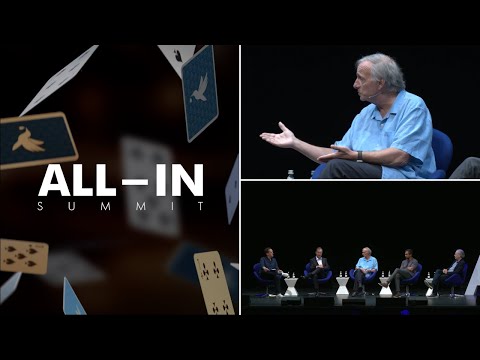
“There are pre-existing conditions that represent challenges.”All-In Summit interview, 2023 · 35:42
Polarization is a symptom of deeper structural stress
Dalio treats polarization as part of a broader recurring pattern rather than as a one-off political event. His framework ties internal conflict to other big forces, especially debt and money, domestic divisions, and rivalry between major powers. He studies these patterns historically because current shocks often have recognizable predecessors.123
In his view, dangerous politics usually emerge after pre-existing pressures have built up for a long time. He points to underlying challenges rather than surface-level partisan drama, especially when financial strains and social divisions reinforce one another. That is why he describes current conditions as containing pre-existing problems that make conflict more likely.45
He also connects national strength and weakness to broad social foundations such as education, fairness of opportunity, and productive capacity. When those foundations weaken, the political center becomes less stable and distributional conflict grows.67
“There are pre-existing conditions that represent challenges.”All-In Summit interview, 2023 · full transcript →
Wealth gaps and values gaps turn politics into a fight over the system itself
Dalio's politics starts with the idea that societies become unstable when large groups feel left behind economically and alienated culturally. He repeatedly links internal conflict to widening wealth gaps and values gaps, not just policy disagreements. When that happens, politics becomes less about compromise and more about existential struggle.89
He is especially worried when neither side expects to fully persuade the other. His view is that permanent disagreement is normal, but a system becomes fragile when disagreement hardens into refusal to coexist under shared rules. That is why he stresses that people will not fully agree and still need a way to live and govern together.1011
He also ties these gaps to long-term economic changes, including the hollowing out of parts of the middle class and domestic productive base. For him, polarization is intensified when people feel the system no longer delivers broad-based advancement or fairness.76

“Populous leaders emerge from both sides and pledge to take control and bring about order. That's when democracy is most challenged because it fails to control the anarchy. And it is when the move to a strong populist leader who will bring order to the chaos is most likely. As conflict within the country escalates, it leads to some form of revolution or civil war to redistribute wealth and force the necessary big changes. This can be peaceful and maintain the existing order, but it's more often violent and changing the order. For example, the Roosevelt revolution to redistribute wealth was relatively peaceful and maintained the existing internal order. While the French revolution, the Russian revolution, and the Chinese revolution were much more violent and led to new internal orders.”Podcast with The Investor's Podcast Network, 2021 · full transcript →
The main danger is the collapse of the middle
Dalio's practical political prescription is clear: a strong middle is necessary to hold a divided country together. He does not expect full agreement between factions, but he does think the center must be strong enough to control the extremes and force workable solutions. Without that, he warns that conflict escalates.129
This is a political as well as moral point. He thinks democracies are most vulnerable when disorder makes people lose faith that normal institutions can maintain order. In that environment, more extreme leaders become attractive because they promise control and clarity.811
So his answer is not simple centrism as branding. It is a functioning coalition in the middle that can produce bipartisan engineering solutions, absorb disagreement, and prevent politics from becoming civil conflict.913
Good governance matters as much as good intentions
Dalio puts unusual weight on state capacity. He highlights the principle that the real test of government is not only what it promises but whether it can administer effectively. For him, political health depends on execution, staffing, accountability, and the ability to make the machinery work day after day.141516
That focus changes how to think about polarization. A country can become more divided if institutions stop delivering competent results, because failure erodes trust and makes citizens more open to anti-system politics. Respect for public service and the quality of the civil service therefore become political stabilizers, not just managerial concerns.1718
He also emphasizes that leadership must balance strength with respect for people and democratic restraint. The problem is not merely weak government; it is ineffective government on one side and overreaching strongman politics on the other.11

“The true test of good government is it's ability to administer…”Paulson Institute conversation, 2021 · full transcript →
How to apply his view: strengthen finances, institutions, and social cohesion
Dalio tends to reduce complex political breakdowns to a few actionable principles. At the national level, he repeatedly comes back to financial soundness and social conduct: countries need to live within their means and treat each other well. He sees those as measurable foundations beneath many other political goals.2021
He also urges people to think historically and systematically rather than emotionally. His method is to study repeated patterns, write down principles, and convert broad observations into clearer rules for action. Applied to politics, that means identifying the indicators of stress early instead of waiting for crisis headlines.2223
Underneath all of this is a simple belief about what matters most. He thinks outcomes depend heavily on how people deal with one another, whether they can sustain community, and whether they can preserve harmony while handling hard tradeoffs.242526
Dalio on politics & government, in his own words
“We will not agree with each other ever.”
“The true test of good government is it's ability to administer…”
“Populous leaders emerge from both sides and pledge to take control and bring about order. That's when democracy is most challenged because it fails to control the anarchy. And it is when the move to a strong populist leader who will bring order to the chaos is most likely. As conflict within the country escalates, it leads to some form of revolution or civil war to redistribute wealth and force the necessary big changes. This can be peaceful and maintain the existing order, but it's more often violent and changing the order. For example, the Roosevelt revolution to redistribute wealth was relatively peaceful and maintained the existing internal order. While the French revolution, the Russian revolution, and the Chinese revolution were much more violent and led to new internal orders.”
Where to watch
 Ray Dalio on Changing World Order: Debt, China, and the Cycle2023 · 42 min · full transcriptBest overview of how debt, internal conflict, and the need for a strong middle fit together in Dalio's politics.
 Ray Dalio on Civil War and AI: America’s Hidden Fault Lines2026 · 43 min · full transcriptMost direct discussion of America's internal fracture, social conflict, and the importance of community and a plan.
 Ray Dalio on Effective Government: Principles, Leadership, and Reform2021 · 53 min · full transcriptBest for understanding why Dalio ties political stability to competent administration and effective government.
 Ray Dalio on Changing World Order: How to Invest in Uncertainty2025 · 25 min · full transcriptShows how Dalio frames polarization as one of the core forces shaping the changing world order.
 Ray Dalio on World Orders and Cycles: Money, Power, Empires2021 · 93 min · full transcriptUseful for the bigger historical cycle behind Dalio's thinking on internal conflict, national strength, and decline.
Questions people ask
- What did Ray Dalio say about effective government and why it matters?
- What did Ray Dalio say about populism and revolution?
- What did Ray Dalio say about tariffs and trade deficits?
- What did Ray Dalio say about the qualities of a great leader?
- What did Ray Dalio say are the two things countries need to do?
- What worries Ray Dalio most about the future?
Sources
Every quote above, word for word from the transcripts. Numbers match the text.
“I needed therefore to study them in history.”
“I've studied these big cycles in history going back five hundred years…”
“…the great power conflict between particularly China and the United States…”
“There are pre-existing conditions that represent challenges.”
“…we are in what is what I call stage five…”
“Yes. The classic cycle, the most important leading indicator is the quality of education. Most importantly, broad based education drawn from the largest population because you can never tell who the talent is going to be, where they're gonna come from. So for example if you look at the Chinese dynasties, the great Chinese dynasties and the Confucian approach, it was meritocratic of everybody could sit for exams and so on, broad base of drawing in the populations. And you see that if you go across societies, because that draws on the largest number of population to get education. And it also that creates a reality and a perception that the system is fairer, equal opportunity, not just one of privilege.”
“So what I mean is, you know, through history tariffs used to be the biggest source of revenue for government throughout most history and in most countries, okay? So it is a... I think it's viewed... It's a totally valid way of raising money and it should be kept in consideration for that and you get the foreigners paying a portion of it. But there's also as part of the big cycle question is the problem that we have that we are not independent. Okay, we've had a hollowing out, this is the big question, know, that we've had a hollowing out of manufacturing the middle class and so on. Now are we going to try to build that and what is the plan to build that or are we gonna continue on with large trade deficits?”
“Populous leaders emerge from both sides and pledge to take control and bring about order. That's when democracy is most challenged because it fails to control the anarchy. And it is when the move to a strong populist leader who will bring order to the chaos is most likely. As conflict within the country escalates, it leads to some form of revolution or civil war to redistribute wealth and force the necessary big changes. This can be peaceful and maintain the existing order, but it's more often violent and changing the order. For example, the Roosevelt revolution to redistribute wealth was relatively peaceful and maintained the existing internal order. While the French revolution, the Russian revolution, and the Chinese revolution were much more violent and led to new internal orders.”
“The amount of debt that we're in represents a—you can't pretend it—it exists. So it represents a challenge. There are a lot of these challenges, but it is not inevitable. What is needed is, first of all, a strong middle, okay, to bring the country together in terms of rather than to have this fighting because if, if we continue the way we will, we're going to have a conflict. And then there needs to be a good engineering, EX-P exercise that's going to produce, but has to be bipartisan, has to be bipartisan with that strong middle taking control of the extremes because neither side's going to win a...”
“We will not agree with each other ever.”
“Well, I think we have to add a principle, the one you had, you gotta have a respect for the people. I don't know if you included that. Some of the qualities you mentioned, you could apply to Adolf Hitler. But we don't want an Adolf Hitler, we want somebody who's got some democratic instincts and recognizes that he's only there temporarily. And that he wants to lead the country effectively, but peaceably, and without dictatorial demands. So, it's a nice balance to be in charge, and maybe less efficient when you have to deal with public opinion and different points of view.”
“What is needed is, first of all, a strong middle.”
“There needs to be a game plan.”
“…my first principle is good governance…”
“The true test of good government is it's ability to administer…”
“Alexander Hamilton put it all in a nutshell. Alexander Hamilton is an old treasury guy, he's a financial guy, he restored the credit of the United States, so he's a hero of mine. He said, "The true test of good government "is it's ability to administer." Not the great policy but can they carry out the policies effectively and economically? And good government is not just high policy, it's making the machine work, day after day, efficiently. Faith of the American people in our government today is really distressing. There have been polls taken every year, ask the same question, see how the trend changes.”
“And you ask how is the government operating, same number of people? It does an awful lot of outsourcing, out-contracting. The defense department, itself, outsources 300 billion a year, or more. Who's minding the store? And I'm not sure we're well enough equipped for those two million people. I headed a commission on the civil service when I left the Federal Reserve, which was in 1987, and there was a big commission, we had ex Vice Presidents, we had ex cabinet officers, we Congressmen, we had a lot of people. We issued a good report. What impact did it have, very little. About how you needed to develop a more effective civil service.”
“Administration, people don't think that when you say business administration, but they think it when you say government administration. But we have a problem in these schools. Many of them have lost sight of how to teach. What are they teaching, what should the curriculum be? How do we train people to oversee all that outsourcing? Hundreds of billions of dollars being outsourced. Who's minding the store? Are people equipped to do that? Have we taught them the right thing? Have we taught them how to manage? Have we taught them how to debate issues as a right of good memorandum? How to deal with other people, other departments. And, so, this little Volcker Alliance is trying to get a kind of marriage, a new marriage, between universities and the government.”
“Be financially sound, earn more than you spend, and be strong in these ways, and pretty much everything will take care of itself.”
“It's most often the case that a nation's greatest war is with itself over whether or not it can make the hard decisions needed to sustain success. As for what we need to do, it comes down to just two things, earn more than we spend and treat each other well. All other things I mentioned, strong education, inventiveness, being competitive, and all the rest are just ways of getting at these two things. It's easy to measure if we're doing them. So like people who wanna get fit, let's get on the program and improve our vitals. Let's do that individually and collectively. My goal for sharing this picture of how the world works and a few principles for dealing with it well is to help you recognize where we are and the challenges we face, and to make the wise decisions needed to navigate these times well.”
“Read history and know these things…”
“Well, I find that almost everything happens over and over again. And we're in this... The blizzard of these things happening. And what I found is that if I'm making a decision that that after I make the decision usually or right at the time, if I pause and reflect and I write my principle down, in other words principle is sort of a recipe, What would I use to... How would I make that decision and what are the criteria around it? I find that I make it much more clear, it becomes clearer and it applies to the next thing that comes along, it'll be that way. Because everything happens over and over and over again, and I think people make the mistake of looking at just the one like it's the first one.”
“…the whole, it all comes down to how people deal with each other…”
“…the highest determinant of happiness is community.”
“Does that worry you? Of course it worries me and then it excites me. You know, what worries me most fundamentally is how people are with each other. Yes. Can we put harmony and. And happiness? Togetherness? Can we resolve decisions? Issues? Can we deal with these issues together? That is the most important thing. I think people I think we emphasize too much the what were the wonderful, remarkable things that we get from a I like will have greater life expectancy and less disease and we can have all of those things. But the question is, do we have harmony?”
How this guide was made: drafted with AI from the full transcripts of the recordings cited, then checked: every quotation must match a transcript word for word and be the speaker's own words, and an independent review gates accuracy. Methodology and corrections.


