Ray Dalio on Idea Meritocracy
Ray Dalio sees idea meritocracy as a way to make better decisions by surfacing honest disagreement, weighing views by credibility, and letting the best ideas win instead of hierarchy or popularity.
- An idea meritocracy is a system where the best ideas win, not the boss or the majority.
- It depends on radical truthfulness and radical transparency so real disagreements can be seen and resolved.
- Dalio built it from humility after painful mistakes and the habit of asking how he knows he is right.
- Views should be weighed by believability, not treated as equal just because everyone has one.
- He also tries to turn decision criteria into principles, equations, and algorithms so decisions can be tested and improved over time.

Idea meritocracy means the best ideas win
Dalio’s basic aim is simple: build a decision-making system where the strongest thinking prevails. He contrasts that with autocracy, where the boss decides, and democracy, where every opinion counts the same regardless of knowledge or track record123.
For him, the point of an idea meritocracy is to get the best available thinking on the table and use it to reach better judgments. That is why he describes it as a process for getting the best ideas available, not just collecting opinions or rewarding status45.
“I wanted to make an idea meritocracy.”TED2017 talk · full transcript →
It starts with humility about being wrong
Dalio’s case for idea meritocracy comes from being badly wrong and learning that confidence is not the same as accuracy. He says success depends less on what you already know than on how you handle what you do not know, and that shift pushed him away from certainty and toward stress-testing his own thinking67.
That is why one of his recurring questions is how he knows he is right. Instead of assuming his judgment should dominate, he tries to expose it to disagreement and reality checks so errors can be found before they become costly973.
He even describes himself as a professional mistake maker, which shows how central error-correction is to his philosophy. In his view, delusion is dangerous, while honest confrontation with reality is what improves decisions1011.
Honest disagreement requires radical truthfulness and transparency
Dalio does not think good collective judgment happens just because smart people are in the same room. People need to say what they really think, see what others really think, and work through conflict openly rather than letting tension hide and harden121314.
That is why he ties idea meritocracy to radical truthfulness and radical transparency. He argues that transparency builds trust, brings problems into the open, and makes it harder for bad dynamics to survive in darkness12314.
He pushes this unusually far, including broad visibility into conversations and thinking. The purpose is not openness for its own sake, but making operations and relationships more effective by clearing up what is actually going on15.
“…we literally tape almost all conversations and let everybody see everything…”TED2017 talk · full transcript →
Not every opinion counts equally: believability matters
A core part of Dalio’s model is that people’s views should be weighed by their merits. He rejects the idea that a view should carry weight just because someone feels strongly about it, which is why he bluntly asks why anyone should care what you think unless there is reason to trust your judgment.
He calls that reason 'believability': a person’s demonstrated strengths, reliability, and fit for the issue at hand. In practice, that means matching responsibilities to people’s capabilities and sometimes reaching a different conclusion than a simple majority vote would produce17.
So his system is neither boss rule nor one-person-one-vote. It is a fairer way, in his view, to make decisions based on who has earned credibility in the relevant domain173.
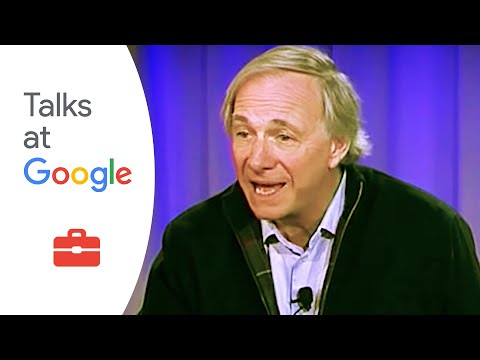
“For example, a creative thinker who was unreliable might be matched up with someone who's reliable but not creative. Knowing what people are like also allows us to decide what responsibilities to give them and to weigh our decisions based on people's merits. We call it their believability. Here's an example of a vote that we took where the majority of people felt one way, but when we weighed the views based on people's merits, the answer was completely different. This process allows us to make decisions not based on democracy, not based on autocracy, but based on algorithms that take people's believability into consideration.”Talks at Google discussion, 2017 · full transcript →
Principles and algorithms make judgment more repeatable
Dalio wants thinking to become explicit enough that it can be examined, tested, and improved. He writes down decision criteria, reviews how they worked, and then tests them across time and different environments to see whether the logic holds up1819.
From there, he tries to translate principles into equations and algorithms. His view is that systemizing decision rules can help produce better results than relying on an individual’s memory, mood, or authority in the moment2021.
But he is not blindly pro-algorithm. He says you need to understand the logic and cause-and-effect behind an algorithm, and you need to remember that the future can differ from the past, so even codified rules still have to be questioned2324.
The culture only works if conflict can be resolved fairly
Dalio thinks disagreement is valuable only if people have a way to get through it and move on. Otherwise organizations split into factions, trust erodes, and unresolved tensions drag on without closure1425.
So an idea meritocracy needs agreed ways of handling conflict. He compares this to a fair process: people get heard, the decision system is trusted, and then everyone can move forward even if they disagreed25.
This is also why he links idea meritocracy with meaningful work and meaningful relationships. In his view, tough and honest engagement can strengthen both performance and trust when people believe the process is fair and aimed at truth rather than politics26.
“Then you have to have agreed upon ways of getting past your disagreement. If you have your disagreements that are gnawing at you and so on, it's like a lower case, a legal case. Okay. You go in. You have a trial. You do it. You get... But you believe that the decision making system is fair. And because you believe it's fair and you've had that opportunity that you can make your, that you say, now we can get past the disagreement and move on rather than being stuck with it. So those are the three things that an idea meritocracy has to have, you know. And so if you think, do you want an idea meritocracy? You have to think about those three things. Okay? So this is the thing. Meaningful relationships and meaningful work together have produced this success because... And then this radical truthfulness and radical transparency, you know, produces an idea meritocracy.”Talks at Google discussion, 2017 · full transcript →
Dalio on idea meritocracy, in his own words
“I wanted to make an idea meritocracy.”
“…an idea meritocracy is to get the best ideas that are available out there…”
Where to watch
 Ray Dalio on Idea Meritocracy: Why the Best Ideas Win2017 · 17 min · full transcriptBest short overview of why Dalio wanted an idea meritocracy and how radical transparency and better decision-making fit together.
 Ray Dalio on Principles: Radical Truthfulness and Idea Meritocracy2017 · 97 min · full transcriptBest deep dive on radical truthfulness, transparency, conflict resolution, and believability-weighted decisions.
 Ray Dalio on Principles and Idea Meritocracy: How to Think Better Together2019 · 66 min · full transcriptShows how principles, humility, and learning from failure lead into his idea-meritocratic way of thinking.
 Ray Dalio on Idea Meritocracy: Algorithms, History, and Decisions2017 · 98 min · full transcriptBest for understanding how Dalio connects idea meritocracy to algorithms, history, and repeatable decision rules.
 Ray Dalio on Principles and Mistakes: How Pain Becomes Progress2018 · 127 min · full transcriptStrong on the personal lesson behind the philosophy: mistakes, humility, and asking how he knows he is right.
Questions people ask
- How does Ray Dalio make decisions using principles and algorithms?
- How does Ray Dalio make decisions when he disagrees with people?
- How does Ray Dalio test his decision rules?
- What did Ray Dalio say about believability weighting?
- What did Ray Dalio say about idea meritocracy and how the best ideas win?
- How does Ray Dalio resolve disagreement in an idea meritocracy?
Sources
Every quote above, word for word from the transcripts. Numbers match the text.
“I wanted to make an idea meritocracy.”
“…the best ideas would win out.”
“Rather than thinking I'm right, I started to ask myself, how do I know I'm right? I gained a humility that I needed in order to balance with my audacity. I wanted to find the smartest people who would disagree with me to try to understand their perspective or to have them stress test my perspective. I wanted to make an idea meritocracy. In other words, not an autocracy in which I would lead and others would follow, and not a democracy in which everybody's points of view were equally valued, but I wanted to have an idea meritocracy in which the best ideas would win out. And in order to do that, I realized that we would need radical truthfulness and radical transparency. What I mean by radical truthfulness and radical transparency is people needed to say what they really believed and to see everything.”
“…an idea meritocracy is to get the best ideas that are available out there…”
“I wanna describe Bridgewater as being an idea meritocracy.”
“…being successful has more to do with knowing how to deal with your not knowing than anything you know…”
“How do I know I'm right?”
“…how do I know I'm right.”
“I'm a professional mistake maker.”
“I think that delusion is not going to help you…”
“Radical transparency is a very effective tool in terms of building trust and putting things to life.”
“I think the biggest issue is how we deal with conflict and how we have... What are the principles that unite us…”
“You know? There's those people who are making the decisions, and you don't really understand it, and you just have to sort of go along with it. And then that becomes a source of tension, and then there are factions and all that, and there's no resolution. You have to have resolution and get past it. So, you know, the the radical truthfulness and the radical transparency brings trust. It also means that bad stuff, it's tough for bad stuff to happen because bad stuff happens in the dark.”
“…we literally tape almost all conversations and let everybody see everything…”
“For example, a creative thinker who was unreliable might be matched up with someone who's reliable but not creative. Knowing what people are like also allows us to decide what responsibilities to give them and to weigh our decisions based on people's merits. We call it their believability. Here's an example of a vote that we took where the majority of people felt one way, but when we weighed the views based on people's merits, the answer was completely different. This process allows us to make decisions not based on democracy, not based on autocracy, but based on algorithms that take people's believability into consideration.”
“I started by every time I would make a decision, I would write down the criteria. I did it basically because when I would close out a trade, I wanted then to see how my thinking worked. And then I stumbled across the idea that if I can make that clear enough, I could test how that decision would have worked in the past. I could run it through all countries, all past period of time, and that gave me a reflection on that decision rule. Then I discovered that actually if I could take that criteria and put it into an equation, I could take in data, and it would say, "Bring it to me," and I would make those decisions. I stumbled across the fact that writing down the principal, making it an equation, allowed me to be able to test it and then also allow decision-making to be happening in that way.”
“Well, one of the things that I found valuable was if I write my decision rule out, depending on the nature of the decision rule, I can test how it would have worked in in the past and get some sense of it. Like investment decision rules, I have... I say they have to be timeless and universal. So that means I test them from 1900 to the present. I test them in all different countries. And and being able to specify them then allows me to get a sense of distribution of those types of probabilities. Some things are qualitative and it's different, but I think that being aware of what I was describing in the book of how to think about that probability, you know, and so it helps helps you.”
“…we could put our thinking in equations and algorithms…”
“So I would say for all of you, as it has been for me, if you put somebody who knows how to write code next to you and then you think whenever you're making a decision, what are my criteria for making that decision? And you slow yourself down and you write them down. That's why I wrote these principles and then there's economic. You could convert those principles which are in words into equations so that the data can come in and make and operate in parallel with you. And that is a... That you must do. That is a phenomenon that in order to be competitive is is necessary. So I think that's what the future looks like. I think that's where we're heading.”
“Two considerations. Do you understand the algorithm? And does the cause effect relationship make sense to you? A lot of algorithmic and machine learning means that the person cannot explain the logic of the cause effect relationship and that's the first sign of danger. The second sign of danger or risk is that the future is different from the past. If you have both of those things, where in the markets the future is both likely to be different from the past and most importantly that whatever is discovered becomes put into the price. Right? In other words, if you discover something great and the algorithm discovers it and other people discover the same algorithm, then what's going to happen is the worst, the reverse. Because everybody finding that...”
“The future is probably going to be a very different version of the present.”
“Then you have to have agreed upon ways of getting past your disagreement. If you have your disagreements that are gnawing at you and so on, it's like a lower case, a legal case. Okay. You go in. You have a trial. You do it. You get... But you believe that the decision making system is fair. And because you believe it's fair and you've had that opportunity that you can make your, that you say, now we can get past the disagreement and move on rather than being stuck with it. So those are the three things that an idea meritocracy has to have, you know. And so if you think, do you want an idea meritocracy? You have to think about those three things. Okay? So this is the thing. Meaningful relationships and meaningful work together have produced this success because... And then this radical truthfulness and radical transparency, you know, produces an idea meritocracy.”
“Bridgewater is an idea meritocracy. That's what I mean. Idea meritocracy in which the goals are to have meaningful work and meaningful relationships. They're equally important. Meaningful work and meaningful relationships, it supports each... They support each other. It's like tough love. Okay? You can care about a person and you can be tougher with them if you care about them. And it's like the Navy Seals. You wanna... You know? So that sentence is an idea meritocracy in which the goals are to have meaningful work and meaningful relationships through radical truthfulness and radical transparency.”
How this guide was made: drafted with AI from the full transcripts of the recordings cited, then checked: every quotation must match a transcript word for word and be the speaker's own words, and an independent review gates accuracy. Methodology and corrections.

